


Indonesia says Turkish KAAN fighter jet deal depends on eliminating US components

5 min read

According to reporting by Indonesia’s Cavok, Indonesia’s contract to purchase 48 Turkish KAAN fighter jets is conditional on the aircraft being completely free of components subject to US export controls.
Indonesia has reportedly made clear that it will only proceed with the acquisition if the KAAN is entirely free of components governed by the International Traffic in Arms Regulations (ITAR). If that requirement is enforced strictly, it would effectively rule out deliveries before the mid-2030s at the earliest.
Indonesia says KAAN deal depends on eliminating US export controls
Cavok reported that Jakarta views US export control exposure as a strategic vulnerability rather than a technical detail. “Indonesia has made it clear that it will only proceed with the acquisition of the Turkish-developed KAAN fifth-generation fighter jet if the aircraft is completely free of components subject to the US export control regime known as ITAR,” the outlet stated.
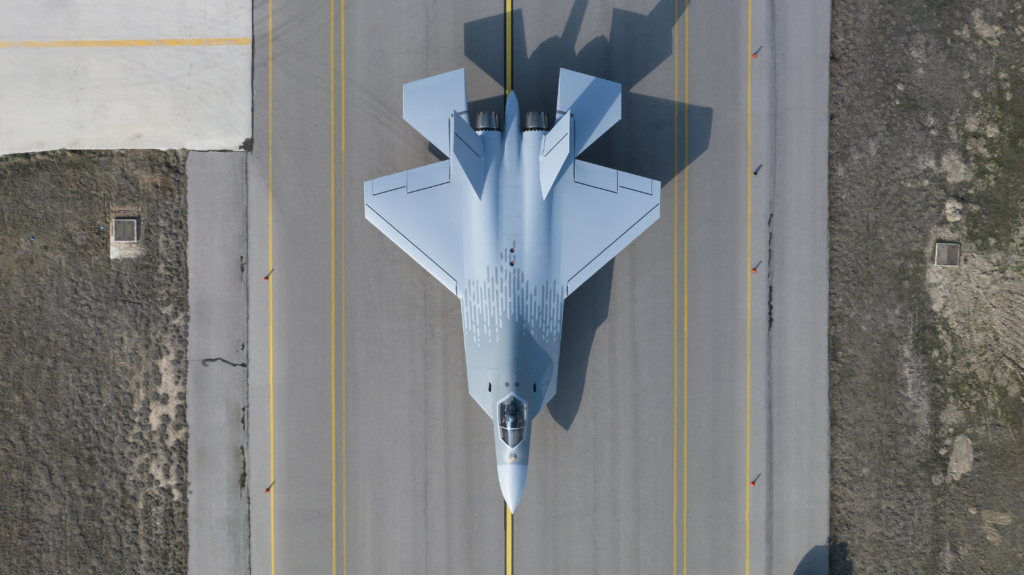
Turkey is currently developing the KAAN through Turkish Aerospace Industries (TAI), with the aircraft now in flight testing and serial production officially targeted for 2028. However, Indonesia’s proposed purchase of 48 aircraft remains under negotiation, and the export-control condition adds significant uncertainty to both timing and feasibility.
At first glance, Indonesia’s position may appear contradictory. The country already operates US-supplied F-16s and is negotiating the purchase of F-15EX fighters after its earlier request to acquire F-35s was rejected. However, Indonesia’s broader defence posture helps explain the stance.
Indonesia remains formally non-aligned and has pursued an unusually diverse fighter procurement strategy to avoid dependence on any single supplier. It is currently purchasing, or negotiating to purchase, French Rafales, South Korean KF-21s, Pakistani JF-17s, Chinese J-10Cs, American F-15s, and Turkish KAANs. It also wanted to purchase Russian fighter jets, but it was blocked by the US’s CAATSA.
Turkish Foreign Minister Hakan Fidan is lashing out at the U.S. Congress for blocking the sale of engines intended for Turkey’s Kaan fifth-generation fighter jet 😄. His frustration reveals how effective the congressional restrictions have been.
— Babak Taghvaee – The Crisis Watch (@BabakTaghvaee1) September 28, 2025
The U.S. government must now go… pic.twitter.com/lTCpA44DOm
The problem, as Jakarta increasingly sees it, is that US export controls do not only apply to US-made aircraft.
Get the latest aerospace defence news here on AGN.
US export controls pose a major challenge for Turkey’s KAAN fighter jet
AGN has recently reported how the US quietly exercises enormous export controls on aircraft around the world, including with fighter jets that aren’t American-made. The US has many levers that it can pull to block or otherwise dissuade a country from purchasing jets.

For a mid-sized aerospace power such as Turkey, producing a modern fifth-generation fighter completely independent of US components, software, and intellectual property is an extraordinarily difficult task.
Even if ITAR-covered parts were eliminated, US authorities could still exert influence through the Export Administration Regulations (EAR) if US-origin technology or know-how is embedded anywhere in the supply chain.
Cavok quoted Indonesian officials as saying that “until a demonstrably ITAR-free configuration is available, Indonesia prefers to wait, even given its strategic and industrial interest in the programme.”
Dışişleri Bakanı Hakan Fidan:
— Sanayi ve Savunma 🇹🇷 (@SanayiSavunmaTR) January 15, 2026
CAATSA ve F-35 konusunda Türkiye ile ABD arasında çözüm iradesi var; bu iradeyi hayata geçirmek için çalışmalar sürüyor ve bu yıl ilerleme bekleniyor. pic.twitter.com/KoUZrTfbpJ
History suggests this caution is not misplaced. The UK has previously blocked Argentina from acquiring aircraft such as the FA-50, Gripen, and Tejas by withholding critical components, while French-supplied Super Étendards delivered to Argentina were rendered unusable due to unavailable parts. The US possesses even broader and more enforceable levers than the UK in this regard.
KAAN’s engine problem could decide Indonesia’s fighter deal
The most immediate and visible obstacle to an ITAR-free KAAN is its engine. The aircraft is currently powered by the General Electric F110, a US-made turbofan whose export to Turkey has reportedly been delayed.
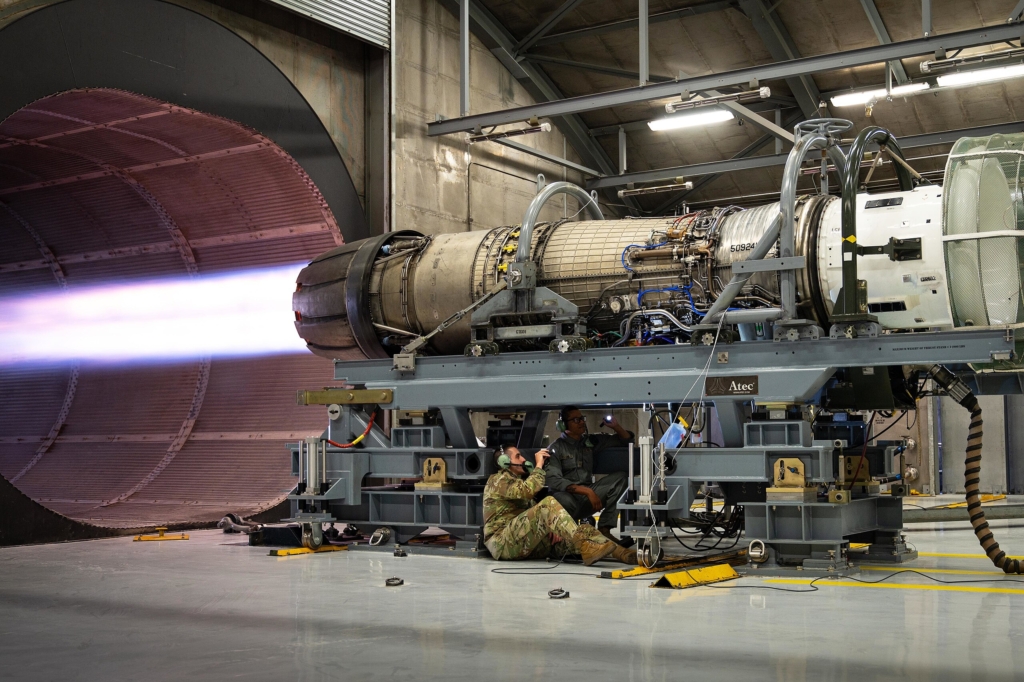
Some Turkish sources have attributed the delay to congressional opposition in Washington, while similar delays affecting India’s GE-powered Tejas programme appear to be linked more to production bottlenecks than geopolitics. Regardless of the cause, the outcome is the same: the KAAN remains dependent on a US-controlled engine.
Turkey is rushing to develop its domestic engine for the KAAN, called the TF35000. According to Turkey Today, the first tests of this engine are expected in 2026, with initial integration expected in 2032. The KAAN with TF35000 engines is not expected to enter service until 2036.
Türkiye’s TF35000 engine program, launched in 2022, is moving faster than almost anyone expected.
— Tugay Er (@TugayEr) December 11, 2025
TEI confirms the first full tests of the TF35000 a purpose-built 5th-gen turbofan designed specifically for KAAN will take place in 2026.
TAI states that KAAN Block-20 will… pic.twitter.com/1dZxmLF1yl
Given that India has tried and failed for decades to develop a competitive fighter jet engine, and China has only recently developed engines to replace Russian engines after decades of development, this seems like an ambitious timeline.
Turkey previously explored a partnership with Rolls-Royce on engine development before opting to proceed independently. Beyond propulsion, the challenge extends to avionics, mission systems, and AESA radar technology, all areas where US intellectual property and export controls are deeply embedded in global supply chains.
What the KAAN case shows about US export control power
If Indonesia’s position holds, the KAAN case underlines a wider reality for emerging fighter programmes. US export controls can shape outcomes not only for American aircraft, but also for platforms developed by allies and partners.
For Jakarta, the issue is not whether the KAAN is capable, but whether it can be delivered without political strings attached. For Ankara, the challenge is proving that a fifth-generation fighter can truly exist outside Washington’s regulatory orbit.
At present, that remains an open question.
Featured image: TAI
Sign up for our newsletter and get our latest content in your inbox.


More from

October 25, 20265 min read


