India’s first seaplane airline gets green light as SkyHop plans Lakshadweep flights

4 min read
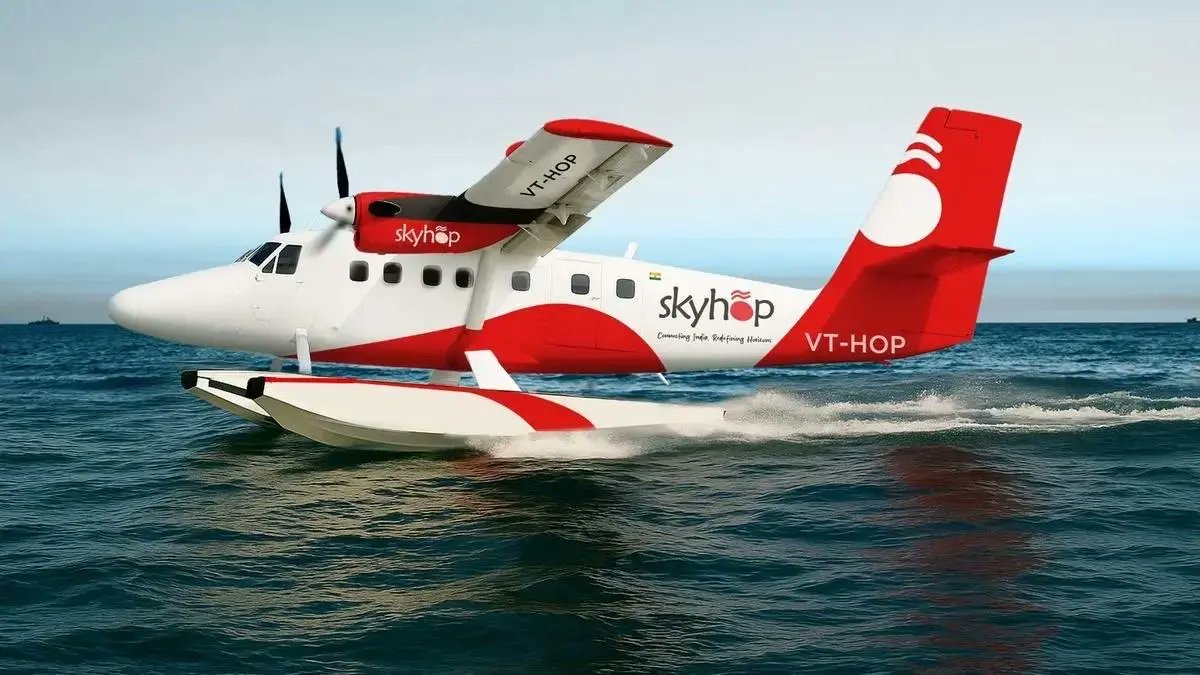
India is set to revive its long-awaited plans for a dedicated seaplane airline as new entrant SkyHop Aviation has secured its air operator certificate (AOC).
As India’s first dedicated seaplane operator, SkyHop plans to begin services in the Lakshadweep area, linking islands together using 19-seat amphibious aircraft. Its choice of platform is the DHC-6 Twin Otter, an aircraft used worldwide for water landings.
SkyHop announced today it had received its AOC from the Directorate General of Civil Aviation (DGCA), clearing the way to begin flights in the coming months.
“Receiving the AOC is an important milestone for us, and gives us the foundation to move ahead with confidence,” says SkyHop Aviation founder & CEO Avani Singh. “Our aim is simple – to offer a safe, reliable and new way of connecting parts of India that are still difficult to access.”
India has previously experimented with seaplane operations, including short-lived services from SpiceJet. However, SkyHop will be the first standalone operator focused exclusively on this sector.
Daughter of SpiceJet’s Ajay Singh to launch seaplane airline for India
SkyHop Aviation is led by founder and chief executive Avani Singh, the daughter of SpiceJet promoter Ajay Singh, placing the venture within one of India’s most high-profile aviation families.
Ajay Singh is widely credited with reviving SpiceJet after reacquiring the carrier in 2015, steering it through financial turbulence and repositioning it as one of India’s leading low-cost airlines.

His tenure has been marked by aggressive expansion, a focus on regional connectivity, and periodic restructuring to stabilise operations in a highly competitive market.
That background gives SkyHop a degree of proximity to established airline expertise and regulatory experience, even as it enters a niche segment that has historically struggled to gain traction in India.
SkyHop to convert FlyBig’s Twin Otters for seaplane operations
SkyHop’s launch fleet will be made up of the De Havilland Canada DHC-6 Twin Otter, a well-known rugged workhorse capable of short takeoff and landing, and widely used in remote and island environments.
The aircraft are already in India, having been previously operated by regional airline FlyBig. Founded in 2021, FlyBig operated four Twin Otters alongside three ATR 72 turboprop aircraft. But the airline struggled to make the financials work, and wound down operations from 2023 onwards, finally losing its AOC in late 2025.
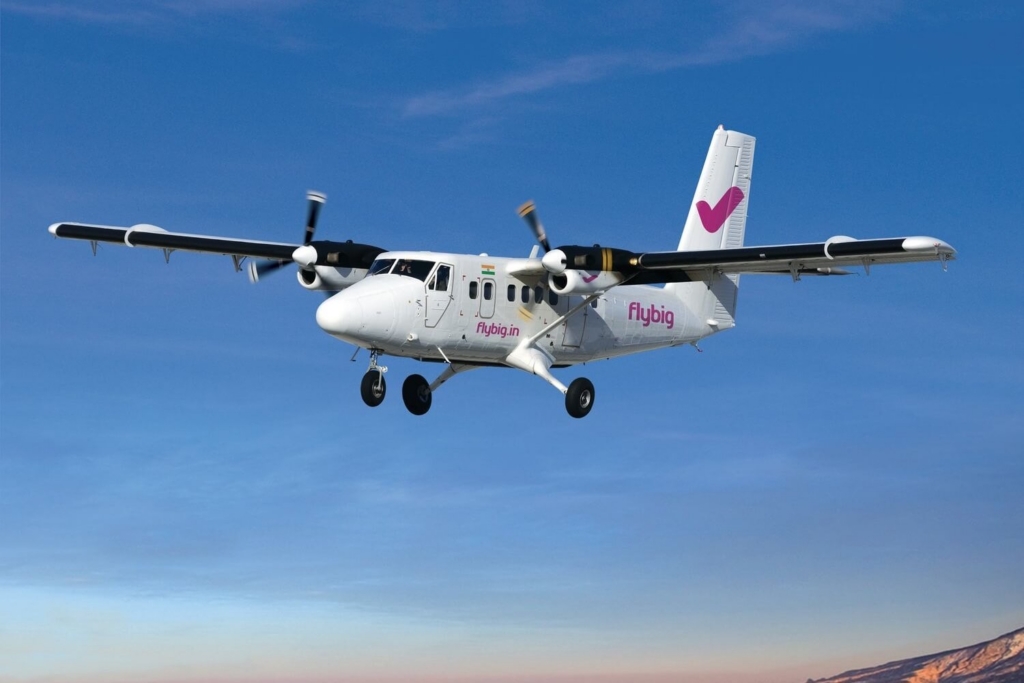
Data from Planespotters shows the four 19-seat Twin Otters were withdrawn from FlyBig’s fleet in October 2025. Two are stored, while one is on lease to Rimbun Air. The final Twin Otter, tail number VT-HIT, has already been transferred to SkyHop and given new registration VT-SHE.
SkyHop will convert these aircraft in India, the first time such a conversion has been undertaken in the country. This involves adding floats and some structural modifications, a process that has already begun with VT-SHE completed and undertaking proving flights.
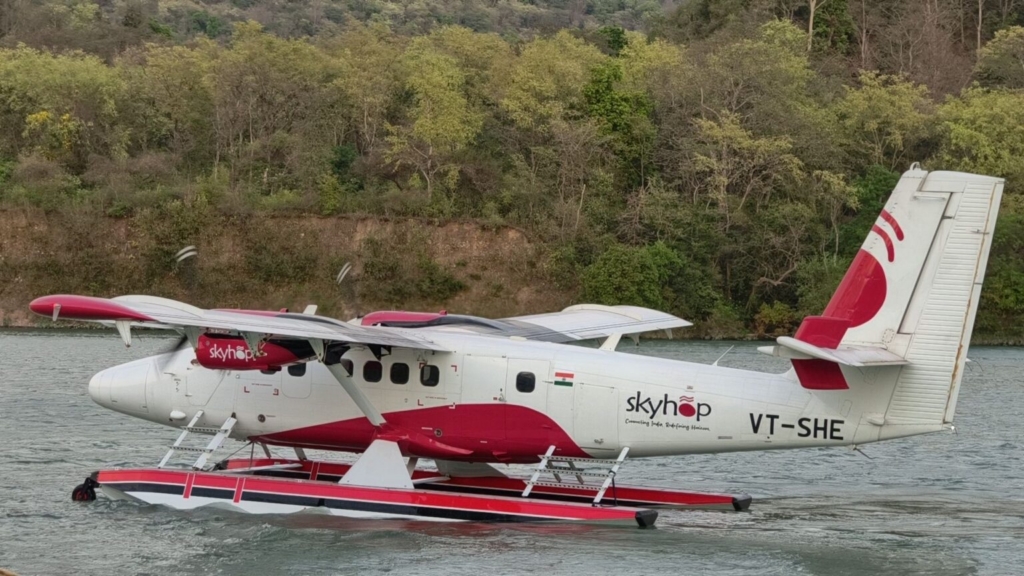
Until now, all amphibious aircraft in India have been delivered in seaplane configuration. Local conversion adds a new skillset to India’s aviation industry, and fits nicely with the nation’s ‘Make In India’ push.
Why Lakshadweep is the perfect proving ground for India’s seaplane services
SkyHop’s choice of Lakshadweep is far from accidental. The archipelago’s geography, made up of dispersed islands with limited aviation infrastructure, makes it one of the few regions in India where seaplanes offer a clear operational advantage.
The model closely mirrors that of the Maldives, where seaplanes have become an integral part of the tourism ecosystem, connecting international gateways with remote resort islands.
For India, Lakshadweep offers a similar combination of:
- High tourism potential
- Limited runway infrastructure
- Short sector lengths suited to small aircraft

However, whether the model can expand beyond niche island routes remains an open question. Previous attempts at seaplane services in mainland India have struggled with inconsistent demand, high operating costs and regulatory complexity.
This time, officials are betting that stronger policy support, including incentives announced by finance minister Nirmala Sitharaman and the inclusion of seaplanes in the UDAN regional connectivity scheme, could provide the foundation for a more sustainable market.
For now, SkyHop’s launch will serve as a test case for whether seaplanes can finally carve out a lasting role in India’s aviation landscape.
Featured image: SkyHop Aviation