FAA approves anti-drone laser for US-Mexico border despite recent airspace shutdowns

5 min read
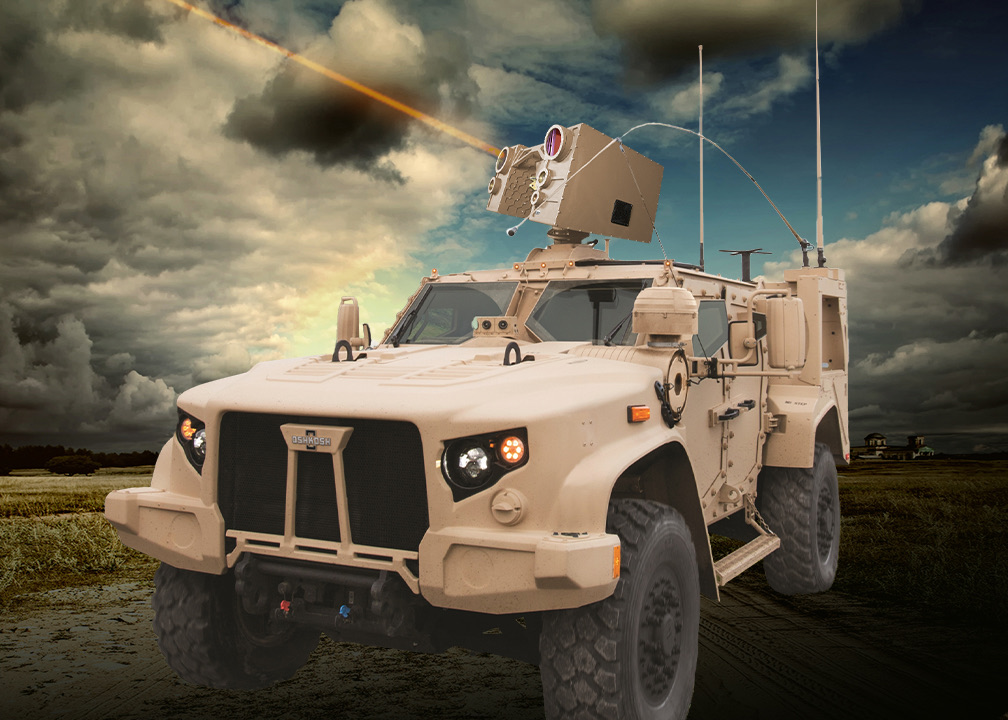
The US Federal Aviation Administration has cleared the Pentagon’s use of a high-energy laser counter-drone system along the southern border in New Mexico, after a joint safety review found that the weapon does not pose an increased risk to civilian aircraft if operated under agreed safeguards.
The decision marks a significant shift in how Washington intends to tackle a growing wave of cross-border drone activity, with officials now prepared to field directed-energy weapons in domestic airspace after a turbulent rollout earlier this year.
“The FAA’s top priority is protecting the safety of the American flying public, and we value the collaboration with the Department of War in that effort,” FAA Administrator Bryan Bedford said.
“Following a thorough, data-informed Safety Risk Assessment, we determined that these systems do not present an increased risk to the flying public. We will continue working with our interagency partners to ensure the National Airspace System remains safe while addressing emerging drone threats.”
The Department of War said the review followed live demonstrations of the system last month and would form the basis for how similar systems are introduced in future homeland missions.
“This successful test showcases the significant advancements we’re making in counter-drone technology to ensure that our warfighters have the most advanced tools to defend the homeland,” said US Army Brigadier General Matt Ross, director of JIATF-401.
“By working hand-in-hand with the FAA and our interagency partners, the Department of War is proving that these cutting-edge capabilities are safe, effective, and ready to protect all air travellers from illicit drone use in the national airspace.”
El Paso airspace shutdown exposed risks of anti-drone laser use near civilian flights
The clearance follows two incidents in February that exposed gaps in coordination between military operators and aviation regulators.
The most serious came on 18 February, when the FAA halted flights at El Paso International Airport after a Homeland Security agency deployed the laser system without completing the required safety review. The agency initially imposed a 10-day airspace restriction, though it was lifted within hours following White House intervention.
Reuters identified the system as AeroVironment’s LOCUST, developed by BlueHalo before the company was acquired by AeroVironment last year. The weapon has previously been spotted mounted on an Infantry Squad Vehicle near the US-Mexico border.
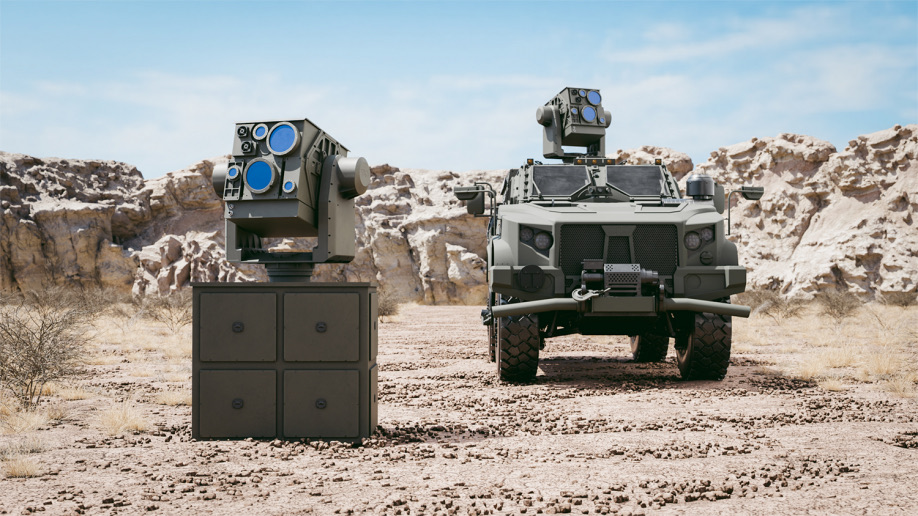
A second incident on 25 February raised further concern when a US military unit using the same system mistakenly destroyed a government drone near Fort Hancock, Texas. The FAA subsequently expanded flight restrictions in the area while officials assessed what had gone wrong.
The White House publicly linked the move to an alleged cartel drone incursion from Mexico, but subsequent reporting suggested the trigger was far more mundane: a Pentagon laser test against what turned out to be a party balloon that had initially been mistaken for a drone.
The episode exposed how quickly operational urgency had overtaken the regulatory framework meant to govern the use of directed-energy systems in shared civilian airspace.
What is the LOCUST laser system and how does it stop drones?
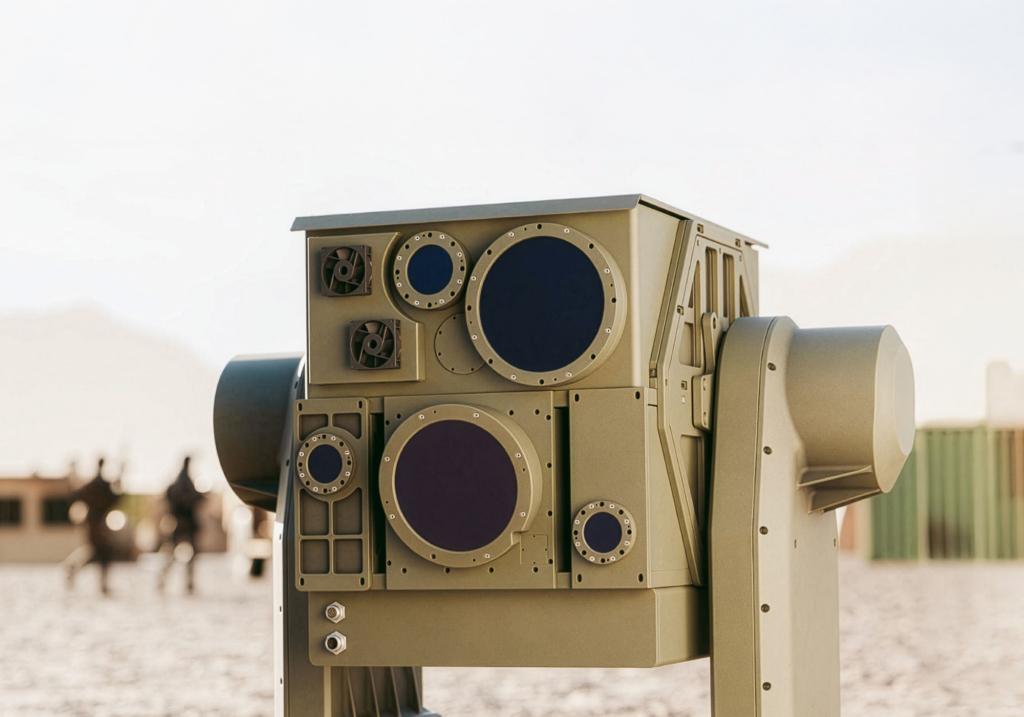
LOCUST is a directed-energy weapon developed by AeroVironment that disables drones using a focused laser beam rather than missiles or gunfire. The system, short for Low-cost Optical Dazzling and Intercept Counter-UAS Technology, is designed to engage small unmanned aircraft by damaging critical components such as sensors or propulsion systems.
The latest LOCUST X3 variant can be scaled from around 20 to more than 35 kilowatts, targeting Group 1 to Group 3 drones. It combines a beam director with AI-enabled detection, tracking and engagement software, allowing operators to identify and engage targets quickly and potentially sustain multiple engagements without the reload limits of conventional air defence systems.
A key advantage is cost and persistence. AeroVironment says LOCUST can deliver engagements for less than $5 per shot, while its modular design allows it to be mounted on vehicles or fixed sites. As drone threats grow, systems like LOCUST are increasingly seen as a way to provide low-cost, high-volume defence alongside traditional interceptors.
Border drone threat drives US adoption of laser-based counter-drone systems
Despite the February setbacks, the Pentagon has continued to push for faster deployment of laser-based counter-drone systems as unmanned aircraft activity along the southern border intensifies.
US Northern Command estimates there are more than 1,000 drone incursions along the border every month, a figure military leaders believe may be conservative.
Officials say criminal groups are increasingly using drones for surveillance, smuggling and route reconnaissance.
For the Pentagon, laser weapons offer an attractive alternative to missiles or gun-based interceptors. Unlike kinetic systems, they can engage targets at the speed of light and, in theory, sustain repeated engagements without the cost of replacing munitions.
But the technology remains sensitive. High-energy lasers require precise tracking, strict control over engagement zones and close coordination with air traffic management systems to avoid unintended hazards.
That is why the FAA’s latest clearance is significant. It effectively creates a framework for how such systems can be used in US airspace without disrupting passenger flights, navigation systems or civilian pilots.
FAA approval marks new phase for US homeland air defence and drone policy
The approval reflects a broader shift in US homeland defence planning, as low-cost drones increasingly challenge traditional security models.
Military planners see systems such as LOCUST as part of a layered response that could eventually be used to protect critical infrastructure, border areas and other sensitive sites.
The real test may come not in controlled demonstrations, but in live operations over one of the busiest airspaces in North America.