


EU–Qatar open skies deal in doubt after negotiator sacked for misconduct


Unions representing airlines, pilots, and aviation workers are lobbying the European Union to block an open skies deal struck with Qatar after one of the lead negotiators for the EU was fired for impropriety in office while the deal was being finalised.
Henrik Hololei, the European Commission’s former director general for transport, was relieved of his duties on 29 January after the conclusion of an internal investigation which found he had broken rules by receiving gifts from Qatar Airways during the negotiations.
Unions urge suspension of the EU-Qatar air services deal
On 5 February, members of the European Transport Workers’ Federation (ETF), together with the European Network Airlines’ Association (ENAA) and the European Cockpit Association (ECA), issued a joint statement calling for the immediate suspension and reassessment of the EU–Qatar Comprehensive Air Transport Agreement.
The calls come following the recent dismissal of Henrik Holotei following an internal disciplinary procedure and an inquiry by the European Anti-Fraud Office (OLAF).
Holotei is alleged to have accepted free flights and other gifts from officials in Doha while negotiating the deal to allow EU airlines wider access to Qatar and Qatar Airways to fly unfettered to the significantly larger EU market.

According to the unions making claims to have the deal struck out, the investigation’s findings have “further weakened the industry’s trust in the negotiation process that led to the current agreement.”
“Pending full clarification of corruption allegations, the agreement should be immediately suspended,” said a joint statement issued by the three trade unions. The lobbies complained that “unrestricted market access to the European Union cannot be the product of compromised negotiations.”
EU transport chief Henrik Hololei dismissed after ethics investigation
Hololei resigned from his job as the European Commission’s director general for transport in 2023 following the opening of the internal enquiry.
He was sidelined to the post of special adviser in the Commission’s international partnership division before finally being dismissed in January 2026 following the conclusion of the investigation into his conduct during his time in the former role.
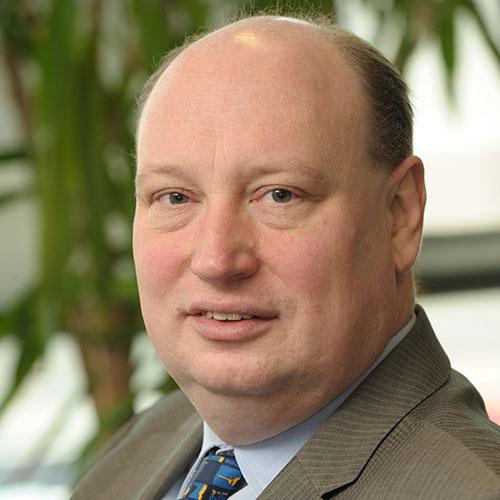
While the Commission confirmed on 30 January that Hololei had been dismissed from his current role due to “administrative infringements,” it did not specifically link his dismissal to the EU-Qatar negotiations.
Concerns grow over fairness and competition in EU-Qatar air agreement
The unions, which are calling for the deal to be scrapped and renegotiated, added that their concerns were all the more justified by the agreement’s failure to deliver an overall economic balance and fair competition since it was applied in 2021.
Such an imbalance “hinders the competitiveness of European airlines, thereby threatening good jobs across the entire aviation chain.”
“Negotiating a strategic air transport agreement with Qatar while accepting gifts and luxurious trips from them raises a major issue of integrity and conflict of interest,” said Chloé Ridel, a member of the European Parliament for the Socialists and Democrats, as reported by Politico.
European Commission defends EU-Qatar air transport deal
Despite the protestations of the unions, the European Commission is continuing to defend the deal between the EU and Qatar and is refusing to yield to the calls for it to be scrapped.
“The EU-Qatar air transport agreement was negotiated at the request of Member States (MS) and EU stakeholders,” said the Commission’s spokesperson for transport, Anna-Kaisa Itkonen, after Hololei’s firing.
“The negotiations were conducted in a fully transparent manner,” she added, concluding her statement by pointing out that the final text had been “endorsed unanimously” by all member states.
Politico reported that a representative of the European Transport Workers’ Federation, Josef Maurer, who participated in the original talks with Qatar, has since complained that they were not transparent, and also complained that the unions had not been represented equally.

“As usual, the EU side was represented by the Commission, with the industry and unions as observers,” Maurer said. “On the Qatari side, the lead negotiator was not a minister but Akbar Al Baker, CEO of Qatar Airways at the time. From the beginning, this was not a negotiation with a government but with their national airline,” Maurer commented.
Arnaud Camus, airline lobby ENAA’s director for competitiveness, added, “What we see today is that there was no transparency throughout the negotiating process, there was the ‘official negotiation’, and other things were going on.”
Camus added that the EU had failed to properly identify the reasons for Hololei’s “quite unprecedented” dismissal, adding to the lack of transparency the Commission was being accused of. “In terms of transparency, that’s level zero,” he said.
“If the Commission has taken the very strong decision to fire Hololei, it means that they have some strong evidence of some misbehaviour by Hololei,” Camus added.
What’s at stake in the EU-Qatar air services agreement?
The agreement, once ratified by all EU members, would give airlines from EU members liberalised access to Qatar’s airspace and Doha’s Hamad International Airport (DOH). In return, Qatar Airways would have unrestricted access to EU markets.
However, as Qatar Airways has greater resources and financial reserves than most EU airlines, and given the size of the EU, unions claim that the playing field is unbalanced and that EU jobs could be at risk as a result.

Although the agreement has been ratified by 15 member states, including Spain, Sweden, Ireland and Hungary, a further 12 countries are yet to ratify the agreement. Leading EU countries such as Germany and France are yet to ratify, raising further doubt over whether the agreement will ever be finalised.
Unions argue that, in light of Holotei’s sacking, the ratification process should be paused until there is full disclosure from the European Commission as to how the original talks took place.
The final agreement has to be approved by all EU members unanimously and would then progress to the European Parliament for a final say on the deal.
Featured image: Magic Aviation / Wikimedia Commons


