How Emirates turned disruption resilience into record profitability

6 min read
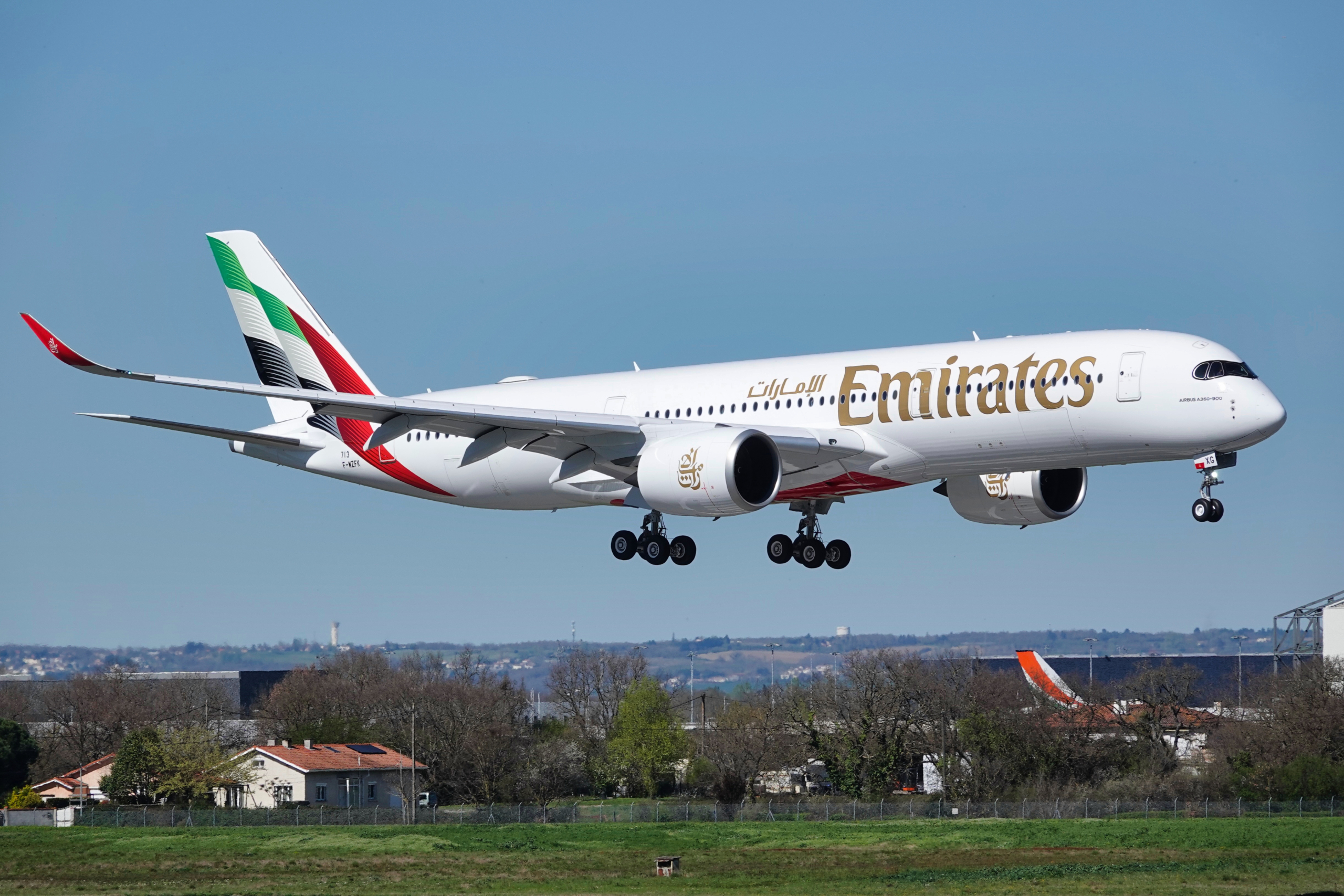
Emirates posted the most profitable year in aviation history in 2025-26, reporting group pre-tax profit of AED 24.4 billion ($6.6 billion) even as war and airspace disruption shook the Gulf aviation market late in the financial year.
The Dubai-based group, which includes Emirates airline and aviation services provider dnata, increased profit before tax by 7% on revenue of AED 150.5 billion ($41 billion). Emirates airline alone recorded AED 22.8 billion ($6.2 billion) in pre-tax profit with a margin of 17.4%, retaining its position as the world’s most profitable airline.
| Metric | 2025-26 | 2024-25 | Year-on-year change |
|---|---|---|---|
| Revenue and other operating income | AED 150.5bn | AED 145.4bn | +3.5% |
| Operating profit | AED 24.2bn | AED 23.7bn | +2.2% |
| Profit before tax | AED 24.4bn | AED 22.7bn | +7.1% |
| Profit after tax | AED 21.0bn | AED 20.5bn | +2.7% |
| Profit before tax margin | 16.2% | 15.6% | +0.6 points |
| Cash assets | AED 59.6bn | AED 53.4bn | +11.6% |
| Total assets | AED 204.0bn | AED 182.6bn | +11.7% |
| Employee strength | 130,919 | 121,223 | +8.0% |
But the significance of the results lies beyond the numbers themselves. The annual report offers a detailed look at how Emirates increasingly operates not simply as an airline, but as a highly integrated aviation ecosystem built around operational control, diversification, technology and long-term resilience.
That strategy was tested directly in late February, when military activity disrupted commercial aviation across the Gulf region.
“On 28 February, military activity massively disrupted global commercial air traffic in the Gulf region, including in the UAE,” chairman and chief executive Sheikh Ahmed bin Saeed Al Maktoum said in the annual report. “Emirates and dnata quickly mobilised to support our people and affected customers, protect our assets, and ensure business continuity.”
Emirates: An airline built for disruption
The final weeks of the financial year exposed the advantages and risks of Emirates’ hub-and-spoke operating model.
Conflict across the region triggered intermittent airspace closures and disrupted flight schedules across the Gulf. Airlines reliant on tightly coordinated long-haul connections faced the prospect of network-wide operational instability.
Yet Emirates responded by rapidly rebuilding connectivity through rerouting, cargo expansion and operational coordination across the wider Emirates Group.
By 31 March, Emirates had restored connectivity to 122 destinations across 65 countries while operating 58% of pre-disruption passenger capacity. At the same time, cargo operations expanded rapidly to maintain freight flows through Dubai.
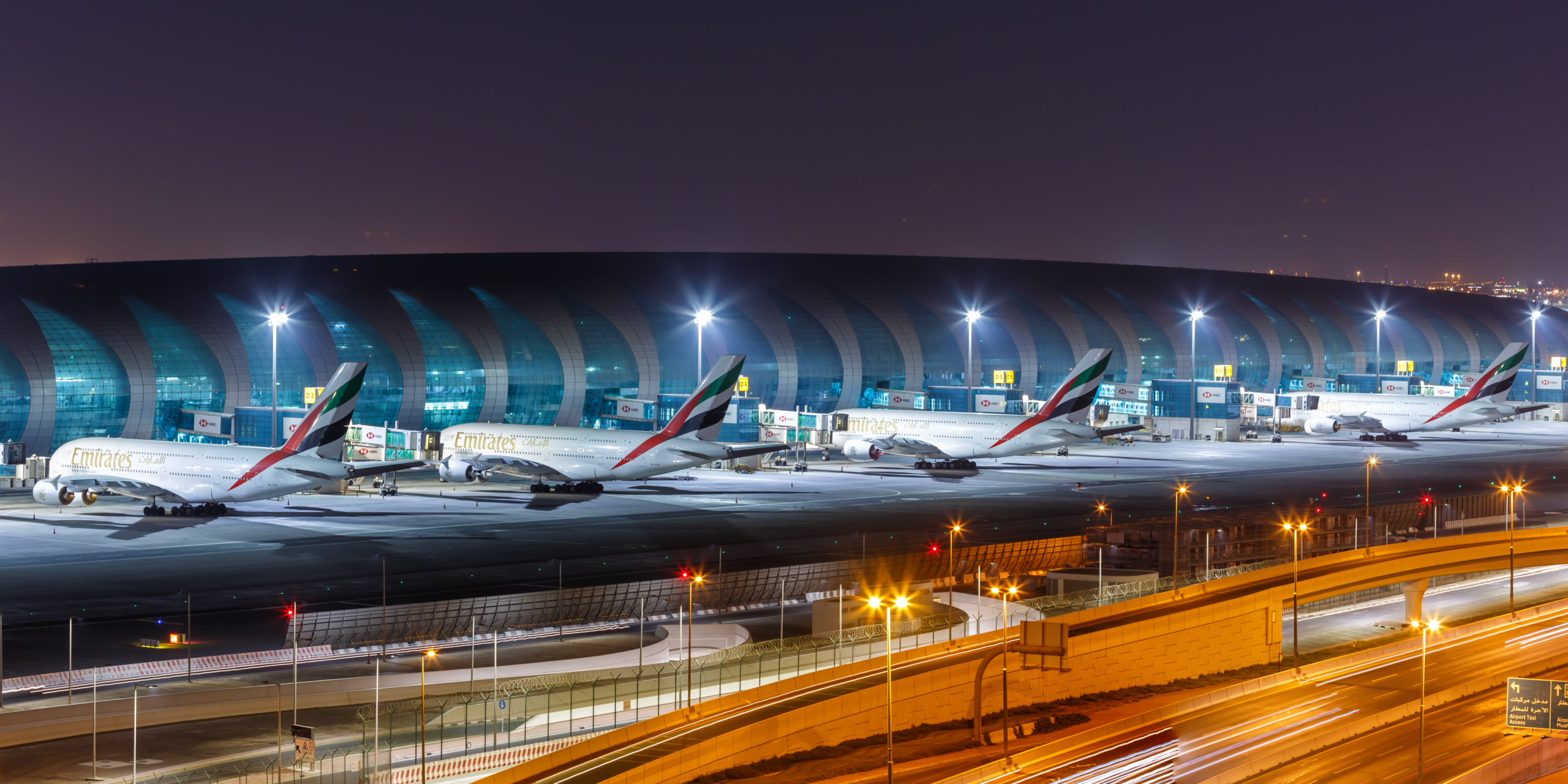
The report reveals Emirates temporarily reassigned 14 passenger aircraft to cargo-only operations while its fleet of 13 Boeing 777 freighters operated at maximum utilisation.
Cargo teams also developed new trucking routes and multimodal logistics corridors to maintain freight movements through the UAE and the wider region.
The report also reveals Emirates remains fuel hedged until 2028-29, a strategic advantage at a time when airlines globally remain exposed to volatility in energy markets and concerns around Middle East fuel supply disruption.
“At dnata and across the Group, our business streams, scale, portfolio mix, and years of investments give us the resilience and agility to address any near-term challenges,” Sheikh Ahmed wrote.
At Emirates, AI becomes an operational tool, not a buzzword
A perhaps surprising element of the report is the detail on the extent to which Emirates has embedded AI across its operations. While some airlines focus their use of AI on customer-facing chatbots or marketing tools, Emirates has applied the technology to improve efficiency, safety and control of operations.
The airline has deployed AI and machine learning systems for turbulence prediction, hazard identification, flight planning and aircraft reliability monitoring. Flight operations tools now prioritise safety-critical information, including NOTAM intelligence, turbulence alerts and operational hazards to reduce pilot workload and improve situational awareness.
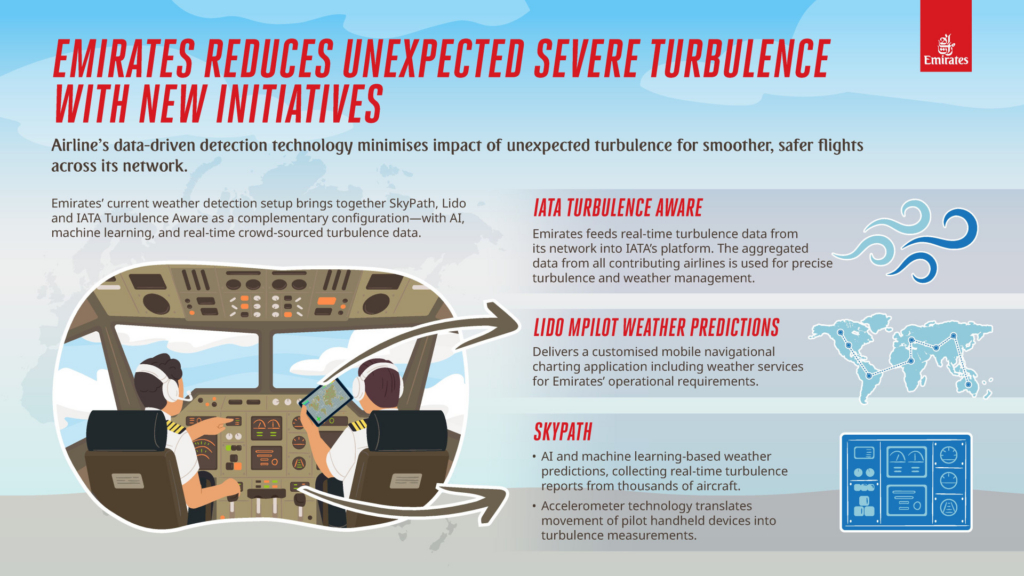
Emirates has also upgraded its global Network Control Centre, bringing operational teams together into a redesigned hub equipped with AI-enabled systems, high-definition monitoring walls and integrated operational oversight tools designed to accelerate decision-making during disruption.
At Dubai International Airport, Emirates uses AI-driven forecasting models to predict lounge passenger volumes three days in advance by location, cabin class and service period. The airline says the system improves staffing and catering efficiency while reducing waste.
Another AI-powered meal forecasting system predicts dish-level demand across more than 300 flights using traveller profiles, route characteristics and historical preferences. According to the report, the system helped Emirates achieve 99.1% first-choice meal availability while reducing food waste by 42 tonnes annually.

The airline is also deploying AI internally through “Ask Emi”, a generative AI assistant used by check-in agents to access procedures and travel rules more quickly during airport operations.
Onboard, Emirates cabin crew are supported through its “One Device” programme, which equips more than 25,000 crew members with digital tools and customer data designed to improve personalisation and onboard service consistency.
For Emirates, technology is becoming more than a standalone innovation programme and evolving into a core operational resilience tool.
Emirates keeps investing in aircradft through uncertainty
Despite ongoing regional instability and continued aircraft delivery delays across the industry, Emirates continues to invest aggressively in fleet growth, retrofits and infrastructure.
During 2025-26, the group invested AED 17.9 billion ($4.9 billion) in aircraft, facilities, equipment and technology.
The airline took delivery of 15 Airbus A350s and five Boeing 777 freighters during the year while also buying out leased aircraft to retain fleet flexibility.
At the Dubai Airshow 2025, Emirates announced orders for an additional 65 Boeing 777-9s and eight more Airbus A350-900s in deals valued at $41.4 billion at list prices. Its total order book now stands at 367 aircraft scheduled for delivery through to 2038.
| Emirates’ current and future fleet includes 277 aircraft in service and 367 on order, with deliveries scheduled through to 2038. | |||
| Aircraft type | In fleet | On order | Total committed |
|---|---|---|---|
| Airbus A380-800 | 116 | – | 116 |
| Airbus A350-900 | 19 | 54 | 73 |
| Boeing 777-300ER | 119 | – | 119 |
| Boeing 777-200LR | 10 | – | 10 |
| Boeing 777-200LRF | 13 | 8 | 21 |
| Boeing 777-8X | – | 35 | 35 |
| Boeing 777-9X | – | 235 | 235 |
| Boeing 787-8 | – | 20 | 20 |
| Boeing 787-10 | – | 15 | 15 |
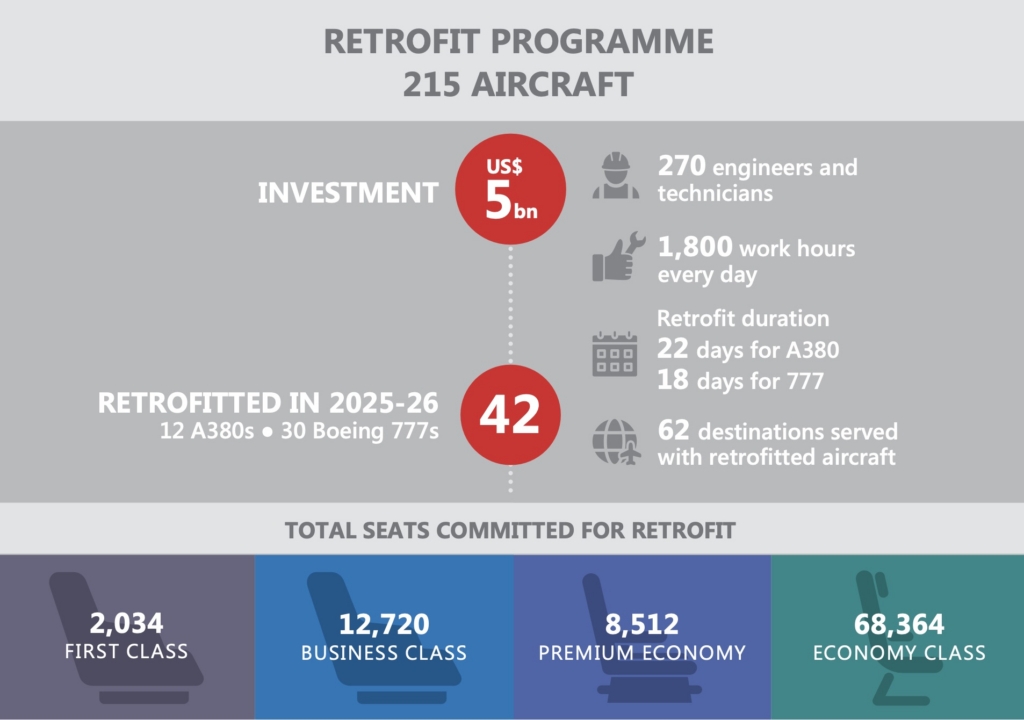
Alongside fleet expansion, Emirates is also midway through one of the largest retrofit programmes in commercial aviation.
The airline is working through a retrofit of 215 aircraft with upgraded cabins, in-flight entertainment systems and Premium Economy seating. The programme currently involves around 270 engineers and technicians working approximately 1,800 hours per day.
Connectivity also remains a major focus. Emirates signed a deal with Starlink during the year to install high-speed onboard internet across much of its fleet, with rollout planned across 232 aircraft by 2027.
As well as investing in the aircraft themselves, Emirates is investing in Dubai to bring manufacturing and maintenance expertise closer to home.
In 2025, Emirates Engineering received Design Organisation Approval certification from the UAE General Civil Aviation Authority, allowing it to undertake major aircraft modifications and establish an independent local design and certification capability.
The group also signed agreements with Safran to manufacture aircraft seats in Dubai and with Rolls-Royce to establish Trent 900 engine MRO capability in the UAE from 2027.
Those investments suggest Emirates increasingly sees long-term operational control and reduced dependence on external suppliers as strategically important.
Emirates: More than just an airline
The annual report ultimately presents Emirates less as a standalone airline and more as a vertically integrated aviation group built around Dubai’s broader economic strategy.
While airlines elsewhere continue to focus on cost reduction and capacity discipline, Emirates appears to be pursuing a different model: investing through uncertainty while building greater control over operations, logistics, technology and infrastructure.
That strategy helped Emirates deliver record profits during one of the most operationally unstable periods Gulf aviation has faced in recent years.
And the group appears confident that the same approach will continue to underpin future growth.
“The Emirates Group enters 2026-27 in a very strong cash position, which enables us to progress with our plans to strengthen our business without knee-jerk cost control measures,” Sheikh Ahmed said. “After all, our fundamentals remain strong.”
Featured image: franz massard / stock.adobe.com
Sign up for our newsletter and get our latest content in your inbox.


More from


October 13, 202612 min read