


Airlink quarantines crew and deep-cleans aircraft after hantavirus exposure scare

4 min read
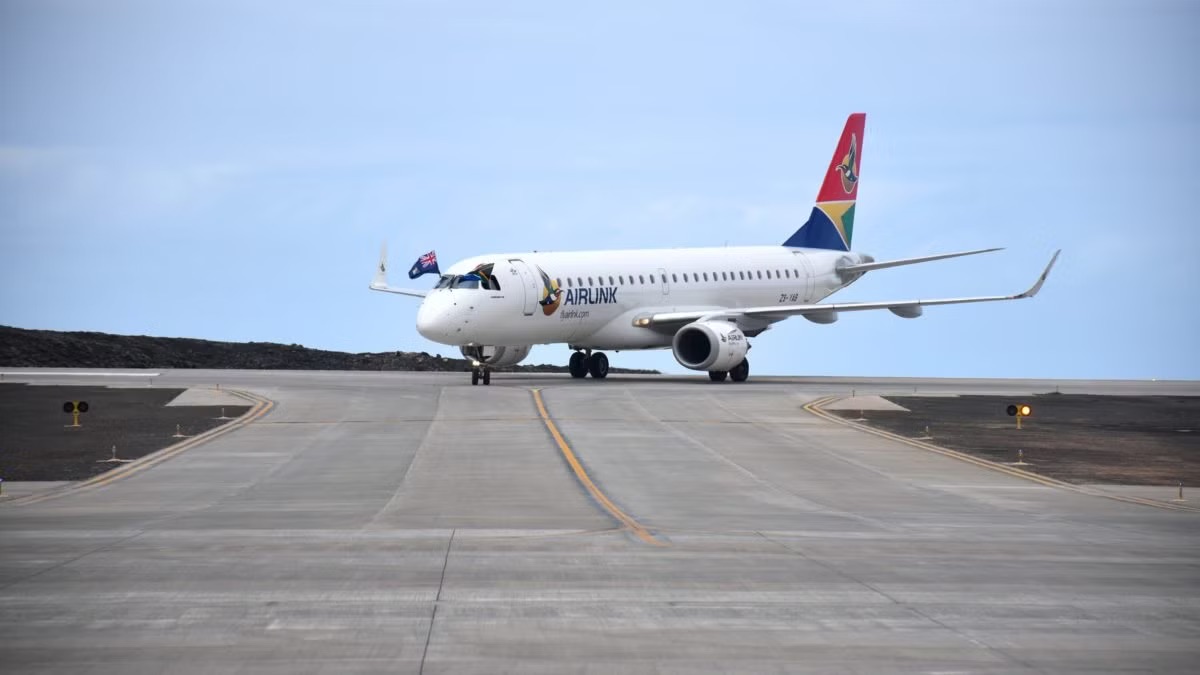
South African airline Airlink has implemented precautionary measures after it came to light that it likely transported passengers with hantavirus from the remote island of Saint Helena to the mainland in April.
Oceanwide Expeditions, the operator of the cruise ship MV Hondius, which experienced the hantavirus outbreak, has confirmed that 30 passengers disembarked the vessel at Saint Helena. This number includes one deceased individual who passed away on 11 April.
From there, there are few options to exit the island. Connecting the remote community to the mainland is a dedicated cargo ship, the MV Helena, which takes around 10 days, and the once-a-week Airlink flight to Johannesburg, taking a more reasonable four hours or so.
Airlink does not have records of how many passengers had transferred from the MV Hondius to the flight on 25 April.
The Saint Helena Government advises it is unable to comment on individual passenger movements, but shared the following:
The UKHSA is working closely with overseas Territory Governments in St Helena to respond to this incident and manage any risks, including putting in place well-established protocols around contact tracing and isolation measures where necessary.
Airlink voluntarily contacts everyone onboard the flight
According to an Airlink spokesperson, there were 88 people on board the flight on 25 April. This included 82 passengers and six crew – two pilots, two cabin crew, and on this occasion, two technicians.
One of the passengers, an unnamed 69-year-old Dutch woman, subsequently attempted to board a KLM flight back to the Netherlands. However, she was refused carriage as she was sick, and died in hospital the next day, 26 April. Passengers from that flight are also being traced.
At the time, Airlink had no way of knowing that some of the people on board the flight could be sick. It wasn’t until 4 May that the WHO published its Disease Outbreak News notice on the cluster.
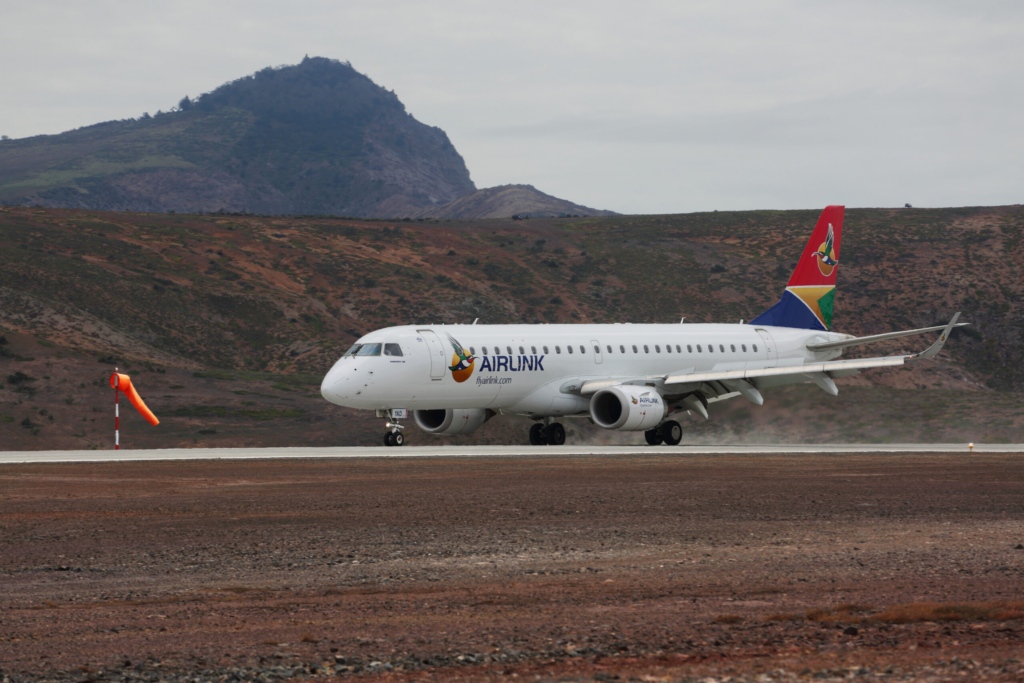
Airlink was first notified on Sunday, 3 May, by South African health authorities that a passenger who had boarded that flight had died, and that the post-mortem results showed it was hantavirus. The airline immediately shared the passenger manifest, along with the seating allocation of all the people on the flight.
The burden was on the Department of Health in South Africa to contact those people. The department had already set up a dedicated call line and email for affected travellers, but Airlink wanted to cover all the bases.
“We thought, let’s just not leave anything to chance,” Airlink told AGN. “We decided to reach out to all those people who were on board and let them know, and make sure that they are aware that if they hadn’t been contacted, here’s a number and here’s an email address for the Department of Health.”
Airlink isolates crew and deep cleans aircraft
As well as proactively contacting everyone on board the flight, Airlink has instructed the crew from that flight to remain at home until further notice.
“We didn’t have to,” the airline shared, “but acting out of an abundance of caution, we sent the crew home.”
At present, there is very little guidance on the correct amount of time to self-isolate following contact with hantavirus. Some nations are calling for 45 days or six weeks, but as yet, there has been no specific communication from the South African government.
As well as taking precautions with the crew, Airlink is endeavouring to ensure its aircraft are as safe as possible for passengers.
“We’ve initiated an aircraft deep sanitisation regime on a daily basis,” the airline told AGN. “At the end of every day, every aircraft now undergoes full sanitisation. That’s in addition to the routine cleaning and servicing in between every flight.”
Which Airlink flight was affected?
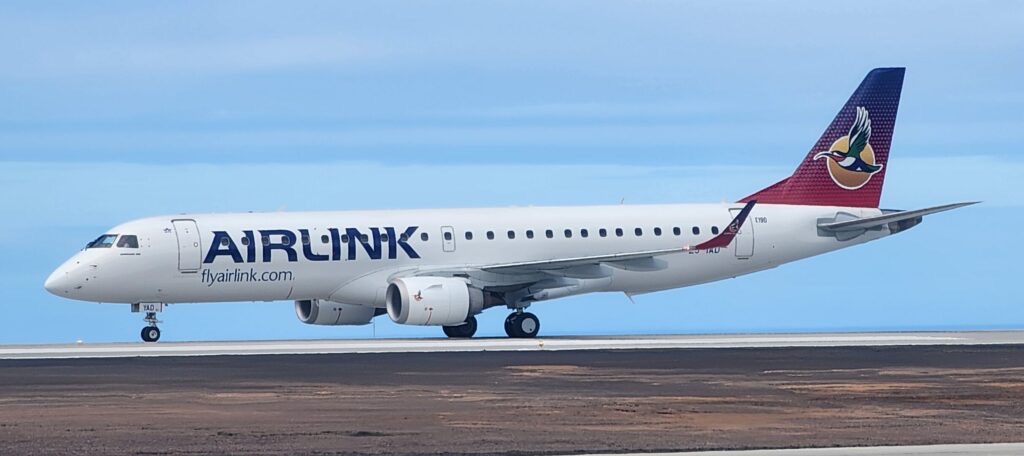
The flight in question was the 14:30 departure from Saint Helena (HLE) to Johannesburg on 25 April 2026.
The service was operated by an 8-year-old Embraer ERJ-190AR with tail number ZS-YAD. Flying Airlink Flight 4Z 132, it departed Saint Helena at 14:21, arriving in Johannesburg at 21:15.
Hantavirus symptoms: What to look out for
| Stage | Symptoms |
|---|---|
| Early symptoms | Fever, headache, muscle aches, chills, fatigue and dizziness |
| Digestive symptoms | Nausea, vomiting, diarrhoea and abdominal pain |
| Severe symptoms | Shortness of breath, respiratory distress, low blood pressure, and potentially life-threatening heart or lung complications |
| Incubation period | Symptoms typically appear two to four weeks after exposure, although onset can occur sooner or significantly later in some cases |
Featured image: Saint Helena Airport


