Electra proves its Ultra Short aircraft can operate from heliports and taxiways

4 min read

A series of flight tests in Virginia has demonstrated a new way for fixed-wing aircraft to access commercial airports, potentially opening up more flexible options for future regional air services.
Advanced air mobility company Electra Aero has completed flights using its hybrid-electric EL2 Ultra Short aircraft at several airports across Virginia. The trials explored the use of helicopter-style instrument procedures and compact landing areas to enable the aircraft to operate away from conventional runways.
The testing formed part of the FAA’s eVTOL and Advanced Air Mobility Integration Pilot Program, known as eIPP, and the Virginia Smart Airspace programme.
Making use of underused airport spaces for fixed-wing operations
At Roanoke–Blacksburg Regional Airport (ROA), the EL2 operated from a heliport located on the commercial airport ramp. Similar operations were conducted at Virginia Tech/Montgomery Regional Airport (BCB) in Blacksburg and Allan C. Perkinson/Blackstone Army Airfield, as well as additional locations in Newport News and Richmond.

Rather than relying exclusively on traditional runways, the aircraft used a range of smaller access points, including heliports, vertiports, taxiways and other areas that have historically been associated primarily with helicopter operations.
The approach is intended to demonstrate how ultra-short aircraft could complement existing airport infrastructure without adding to congestion on conventional runways.
The EL2 tests new instrument procedures
According to a statement issued by Electra, a key part of the programme was evaluating point-in-space instrument procedures and dedicated flight routes designed around the characteristics of Ultra Short aircraft.
Over more than a year of preparation, programme partners worked with the Federal Aviation Administration (FAA) to develop and test approaches and departures that could allow these aircraft to operate safely from alternative landing areas.
During the flights, operational data was gathered to assess how the aircraft performed against the requirements of the proposed procedures. The results are expected to contribute to the development of future guidance for fixed-wing advanced air mobility operations.

The work involved Electra, Virginia Tech, the Virginia Department of Aviation and other programme partners, with PennDOT acting as the lead eIPP participant for Virginia operations.
Electra says the trials are an important step towards its vision of “Direct Aviation” – an operating model designed to bring air services closer to passengers by making use of a wider range of locations.
The company’s EL9 Ultra Short aircraft is being developed to combine the accessibility associated with helicopters with the characteristics of fixed-wing aircraft. Electra believes this could enable regional passenger and cargo services to reach locations that are difficult or impractical for conventional aircraft to serve.
Marc Allen, CEO of Electra, said the Virginia flights demonstrated how Ultra Short aircraft could use existing airport areas in new ways while avoiding additional pressure on busy runways.
Building the foundations for the EL9
The flight campaign is also intended to support the future introduction of Electra’s EL9 aircraft. The company says its Ultra Short technology is designed around six key objectives: increased access, quiet operation, useful payload, practical range, safety and affordability.
The Electra EL9 is a hybrid-electric aircraft being designed as a short-takeoff-and-landing (STOL) aircraft for regional passenger and cargo transport.
The EL9 uses a hybrid-electric propulsion system that combines electric motors with onboard energy generation, aiming to reduce fuel consumption, emissions, and operating costs compared with conventional aircraft.
One of its key features is its ability to take off and land on very short runways, potentially allowing it to operate from smaller airports and airfields closer to cities.
The aircraft is being designed to carry around nine passengers and is intended for routes of several hundred miles.
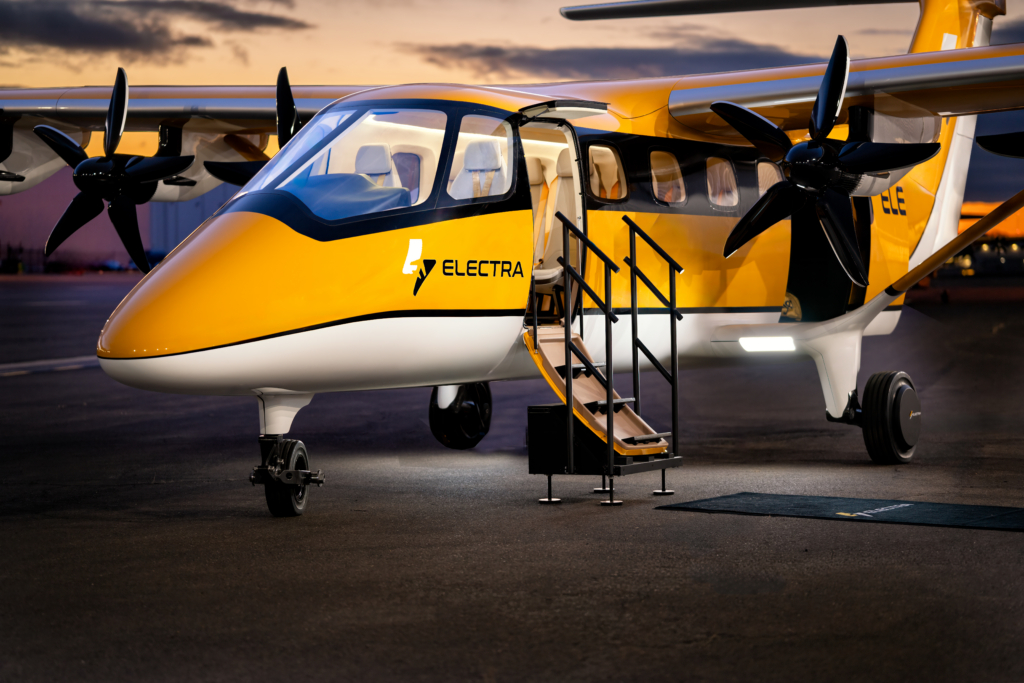
Electra envisions the EL9 for applications including regional air travel, air cargo, emergency services, and military or government operations.
Its development reflects growing interest in aircraft that can provide efficient, lower-emission transportation while requiring less airport infrastructure than traditional regional aircraft.
This latest testing provides an opportunity to develop the operational procedures and infrastructure concepts that could eventually support those capabilities in commercial service.
As advanced air mobility develops, the Virginia programme highlights one of the practical challenges facing new aircraft – not simply developing the aircraft itself, but establishing the procedures, routes and airport infrastructure needed to integrate it into the wider aviation system.
For Electra, the latest flights represent a step towards demonstrating how that integration could work in practice.
Sign up for our newsletter and get our latest content in your inbox.


More from


October 13, 202612 min read