CFM RISE: Singapore to trial open fan engines at active airports in global first

5 min read

For the first time anywhere in the world, a live international airport will be used to test the operation of open fan aircraft engines, with Singapore set to become the global proving ground for one of aviation’s most radical propulsion concepts.
Under a new initiative announced ahead of Singapore Airshow 2026, open fan engine technology will be trialled in real airport conditions at either Singapore Changi or Seletar Airport, allowing engineers, regulators and operators to assess how the next generation of aircraft propulsion could function within a busy, operational aviation environment.
The programme is being launched through a tripartite Memorandum of Understanding (MoU) signed by the Civil Aviation Authority of Singapore, CFM International and Airbus, establishing Singapore as the world’s first airport testbed for CFM’s Revolutionary Innovation for Sustainable Engines (RISE) technologies, with a particular focus on open fan engine architecture.
CAAS, CFM and Airbus sign MoU to develop open fan engine operations in Singapore
Under the newly signed MoU, signed at the Changi Aviation Summit, the parties will develop a comprehensive readiness framework to integrate open fan engines for the next generation of aircraft into existing airport operations, including aircraft system and design considerations, infrastructure modifications, operational procedure changes, safety standards, and regulatory procedures.

According to a statement, the project will also “leverage Singapore’s aviation ecosystem to exchange technical and operational expertise across areas, including airport design, safety protocols, regulatory frameworks, and operational procedures to inform the readiness framework development.
Singapore to host world first open fan engine trials at active airports
Under the plan, the parties will also conduct operational trials of the RISE programme’s open fan engine demonstrators at either Singapore Changi Airport (SIN) or Seletar Airport (XSP) to test and validate the readiness framework and assess the operational feasibility of this new technology. The work is expected to run for several years.
Under the agreement, the studies will investigate how open-fan engines could be integrated into daily aviation activities. Unlike traditional high-bypass turbofan engines, open-fan designs feature exposed fan blades, allowing for larger diameters with lower aerodynamic drag, but presenting a whole new range of ground and airborne safety issues that need to be explored further.

The studies will include how aircraft and engine design choices will potentially interact with existing airport infrastructure, such as taxiways, gates, and maintenance areas. It will also study how operational procedures on the ground and in the air may need to change to support the new technology.
Both Changi Airport, one of the world’s busiest international hubs, and Seletar Airport, which supports business and regional aviation, are being considered as suitable testing grounds.
According to Interesting Engineering, using active airports is central to the effort, as it allows engineers and regulators to observe how open-fan aircraft perform in realistic, high-tempo environments.
How CAAS, Airbus and CFM see the future of open fan propulsion
Han Kok Juan, Director-General of CAAS, said, “CFM International’s and Airbus’s partnership with CAAS to establish in Singapore the world’s first airport testbed for next generation propulsion technologies is a testament to Singapore’s offering as an integrated air hub with strong regulatory expertise where companies can testbed technologies and develop real-world protocols for deployment at scale globally.”
“This first-of-its-kind agreement is a huge boon for the CFM RISE development program,” added Gaël Méheust, President & Chief Executive Officer of CFM International. “These technologies are designed to deliver unprecedented improvements in fuel efficiency (and emissions) in a highly robust future product that can support demanding operations.”
“Now, having the ability to perform a real-world demonstration, from ground handling to maintenance actions, to airport operations, will give airlines and, hopefully, the flying public, confidence in the safety, durability, and efficiency of Open Fan.”
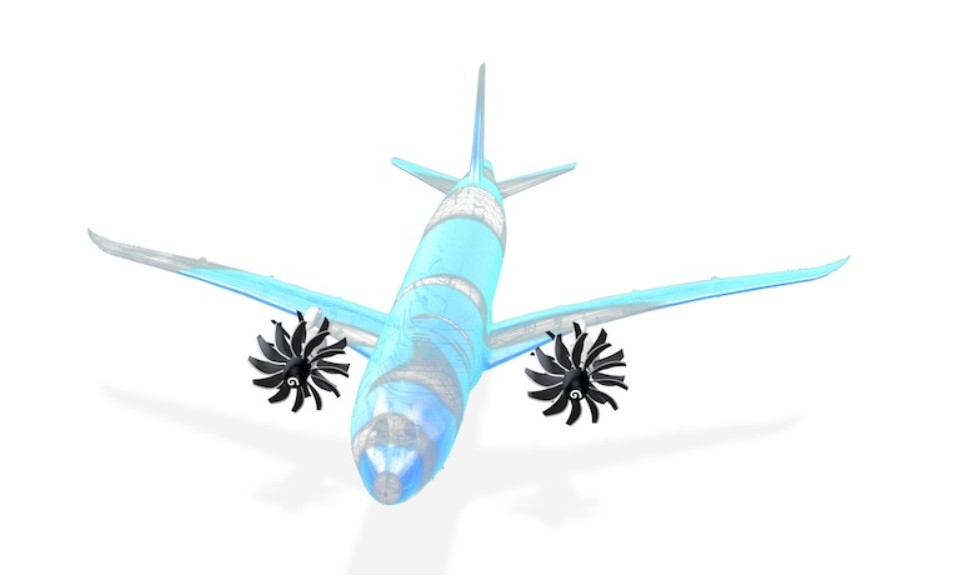
Meanwhile, Remi Maillard, Executive Vice-President Engineering for the Commercial Aircraft business and Head of Technology at Airbus, added that his company was excited to be partnering with CAAS and CFM to take new propulsion system technologies to the next level of maturity by testing them against future operational requirements.
He added that Singapore was the ideal location for these tests, with the city’s state-of-the-art aerospace ecosystem providing an ideal backdrop for the programme.
By linking engine development with airport operations early, the partners aim to reduce barriers to entry when the technology becomes commercially available, which they hope will be in the next ten years.
CFM’s RISE programme and the open fan engine
RISE is a technology demonstration program developed by CFM International, a 50/50 joint company between GE Aerospace and Safran Aircraft Engines, that was first devised in 2021.
The alliance aims to advance next-generation commercial aircraft engine technologies, including the innovative open fan architecture that removes the traditional casing, allowing for a larger fan size with less drag and lower noise.
It is also working on other projects, including advanced engine architectures such as compact cores and hybrid electric systems.
The parties claim that the RISE program prioritises safety, durability, and efficiency, targeting more than 20% better fuel efficiency compared to commercial engines in service today.
The RISE program targets significant fuel savings while meeting durability expectations and “maintaining an uncompromising commitment to safety.”
Beyond propulsive efficiency, open fan engine architecture is being developed to reduce emissions and ensure compatibility with future hybrid-electric systems, positioning it as a cornerstone technology for efficient air travel from the next generation of commercial narrow-body aircraft.
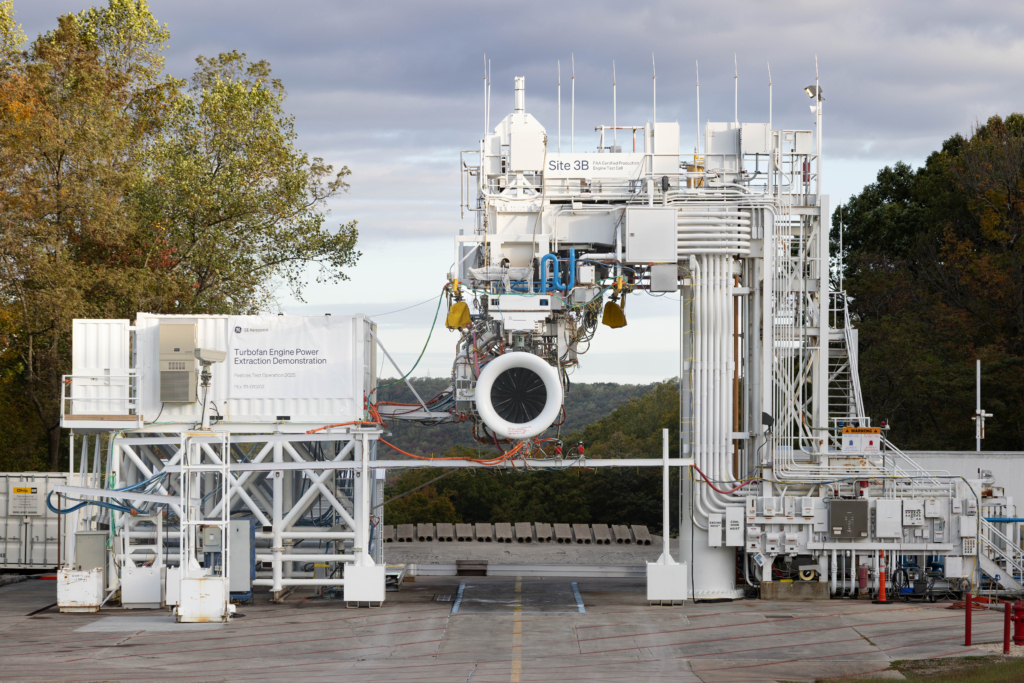
The RISE architecture is being designed to remain compatible with sustainable aviation fuel (SAF) while also supporting longer-term pathways toward the adoption of hydrogen-based propulsion.
Key partner Airbus has previously indicated that its next-generation single-aisle aircraft (a replacement for its A320neo family) could feature an open-fan engine. That aircraft is expected to sit in the 200-seat class, a core segment of the global airline market and could enter service around the second half of the 2030s, according to the European planemaker.
Meanwhile, for CAAS, the collaboration aligns with the organisation’s broader strategy to establish Singapore as a global hub for aerospace innovation. By maintaining a strong regulatory framework with a dense airport ecosystem, the authority aims to promote and support the testing and deployment of advanced aviation technologies, such as open fan.
Featured image: CFM International