


From jumbo jet to architectural landmark: Boeing 747s that found a second life as buildings

5 min read
The retirement of the Boeing 747 from most passenger airline fleets has created an unusual afterlife for the iconic aircraft. While many end up dismantled in desert storage facilities, a handful of the world’s jumbo jets have been repurposed as architecture, serving as office space, hotels, restaurants and event venues.
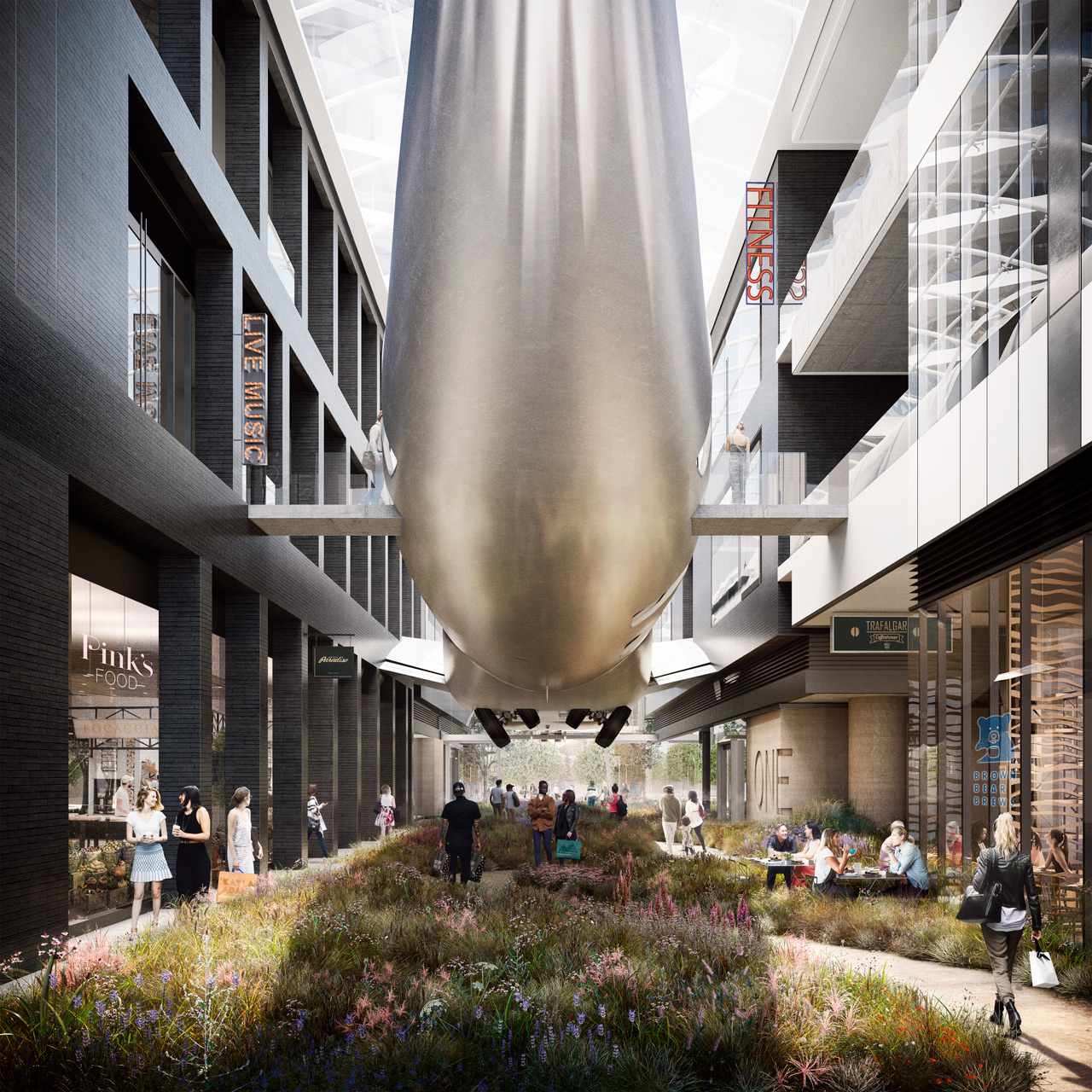
One of the most ambitious projects is underway in downtown Seattle, where developers have installed a Boeing 747 fuselage inside a new high-rise complex—turning a retired airliner into a permanent architectural feature, in a nod to the city’s strong aviation ties as Boeing’s birthplace.
A Boeing 747 suspended inside Seattle’s WB1200 complex
The unusual installation is part of WB1200, a twin-tower residential development in Seattle’s Denny Triangle neighbourhood.
The project—also known as 1200 Stewart—will consist of two 48-storey towers with more than 1,000 apartments, built above an eight-storey podium containing retail space and entertainment venues.
At the heart of that podium is a three-storey indoor galleria, where a retired Boeing 747-400 fuselage will hang roughly 14 feet above a pedestrian walkway connecting Denny Way and Stewart Street.
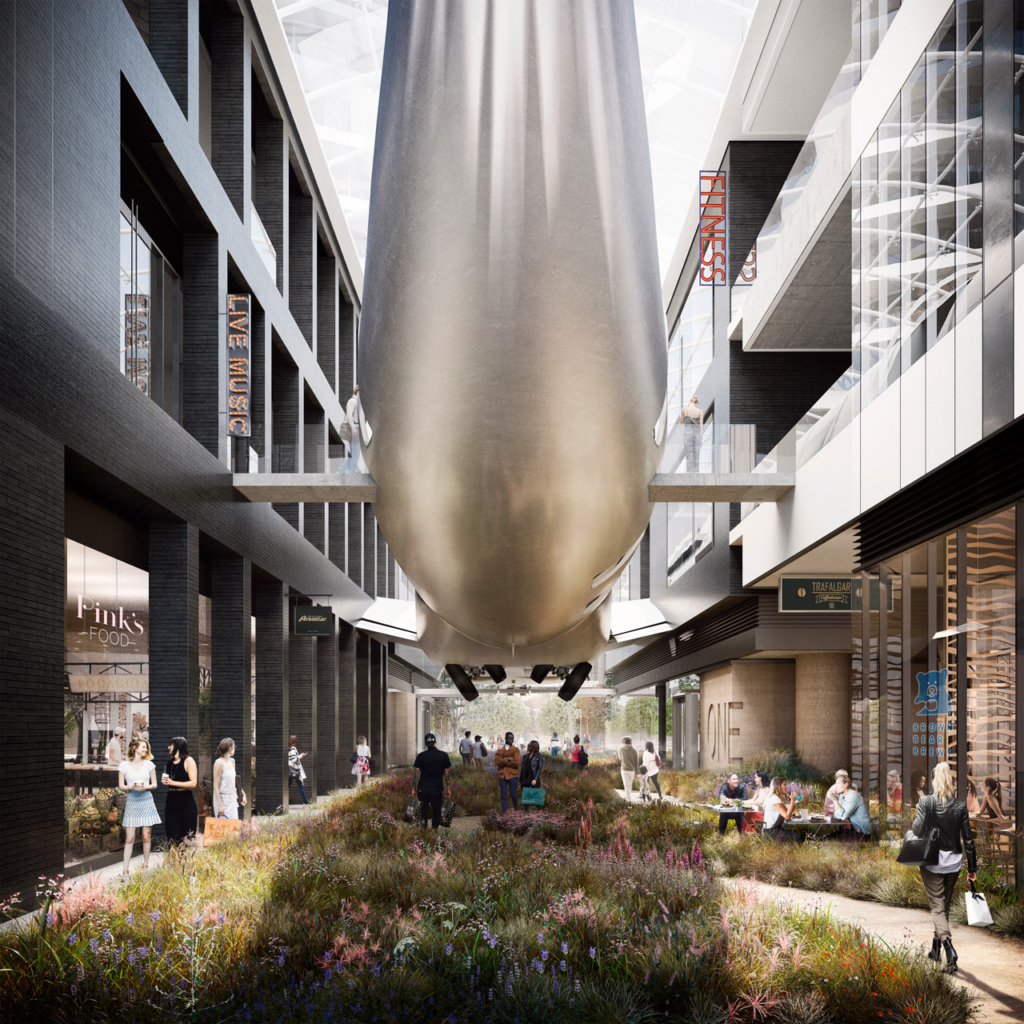
The aircraft itself has an aviation pedigree. It previously flew for United Airlines between 1990 and 2017, before being retired and acquired from a scrapyard in Victorville, California.
To bring it to Seattle, the jet had to be cut into 39 sections and transported by truck before being reassembled inside the building’s structural frame.
Once installed, the fuselage will serve as office space inside the development, transforming the aircraft into a functional building element rather than a static display.
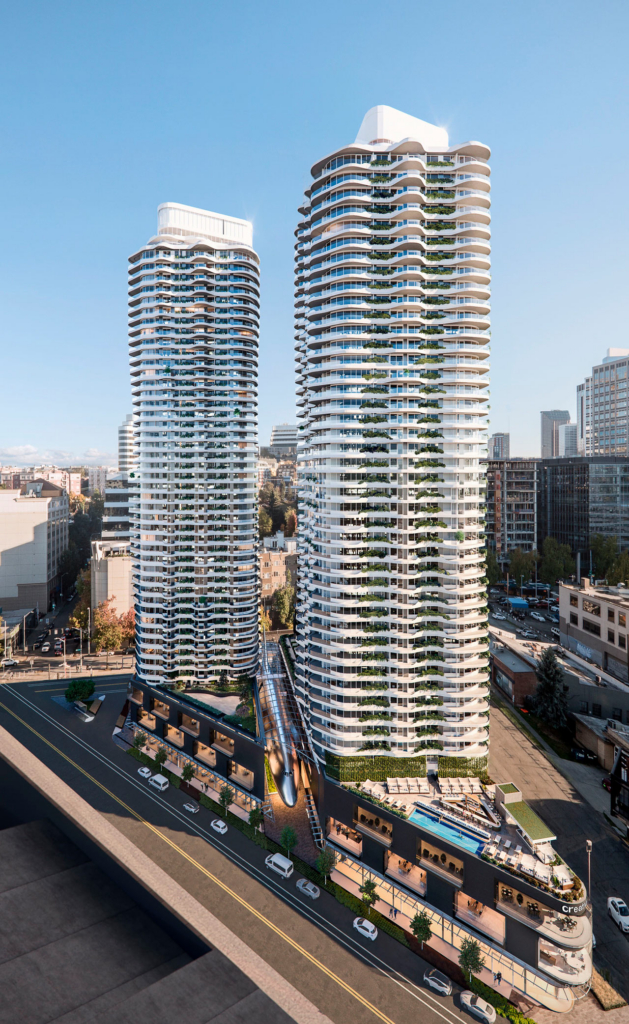
The wider WB1200 complex is also notable in its own right. Designed by Henriquez Partners Architects, the two towers will feature wave-like balconies with planted gardens, along with amenities such as rooftop terraces, a pool, a dog park, and retail space.
As reported by the Seattle Times, the development has experienced several delays since construction began in 2018, due to financial disputes, contractor changes and pandemic-era disruptions. It is now expected to be completed in 2026.
Jumbo jets become luxury homes, hotels and restaurants
Boeing built over 1,500 Boeing 747 aircraft between the late 1960s and 2023, making it one of the most successful and recognisable airliners ever produced.
As airlines retire the four-engine Queen of the Skies in favour of more fuel-efficient twin-engine aircraft, a number of these aircraft are being preserved in unconventional ways.
From luxury homes to hotels, the jumbo jet enjoys a second life—no longer flying across oceans, but becoming part of the landscape.
The 747 Wing House — Malibu, California
One of the most dramatic aircraft conversions is the 747 Wing House, designed by architect David Randall Hertz.
The home incorporates the wings and structural elements of a retired Trans World Airlines Boeing 747-131 (N93106). The aircraft’s wings form the roof of the house, while other sections were repurposed for an art studio, guest buildings, a barn roof, and a meditation pavilion.
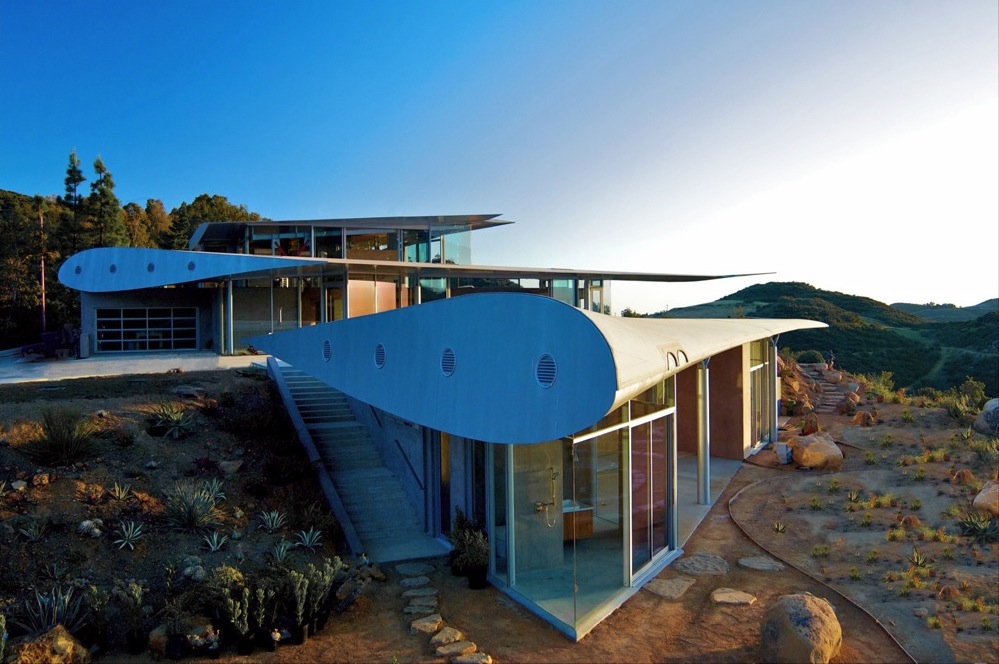
The project, completed in 2011, proved that aircraft components can become structural architectural elements, not just decorative installations.
Jumbo Stay — Stockholm
Another famous example of the architectural second life of this aircraft was Jumbo Stay, a hotel/hostel created from a Boeing 747 parked near Stockholm Arlanda Airport. The aircraft, a Boeing 747-212B (9V-SQE), was originally delivered to Singapore Airlines in 1976.
The architectural conversion of this jumbo jet took one year to complete at a cost of around $3,000,000.
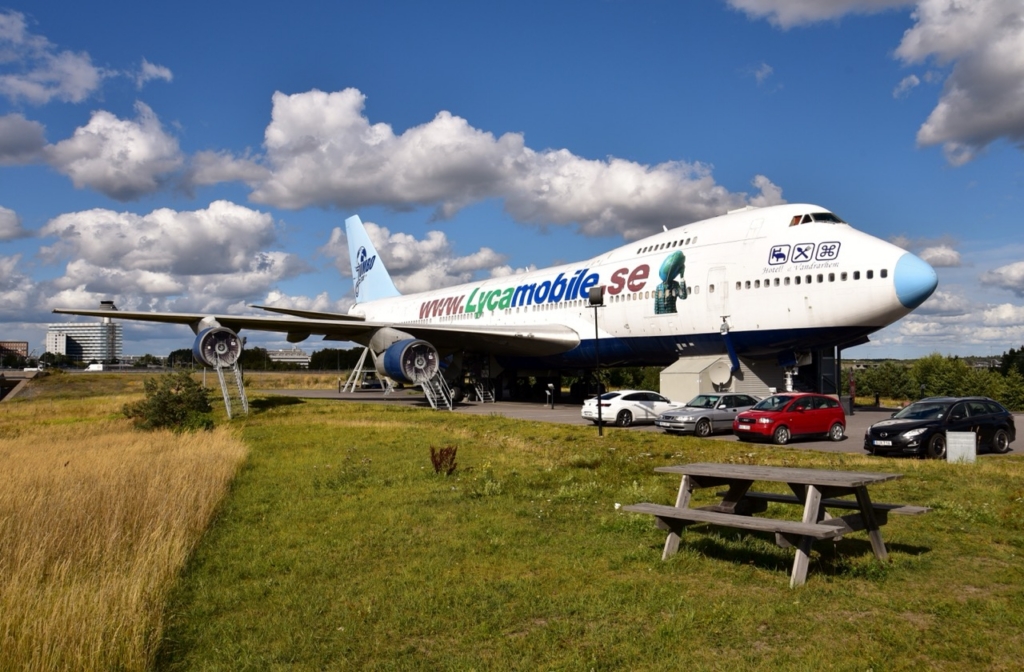
The Jumbo Stay opened in 2009, offering 33 rooms and 76 beds, including a famous Cockpit Suite. Unique rooms were built inside the engine nacelles, wheel wells, and upper deck. The first-class area at the front of the aircraft became the hotel’s café offering breakfasts, snacks and beverages. The upper deck hosted a conference lounge.
The aircraft was permanently mounted on a concrete foundation, with stairs and a lift for guests.
Sadly, the 747 hotel no longer takes resevations. It closed after its owner filed for bankruptcy in March 2025.
Pan Am 747 restaurant in South Korea
The second Boeing 747 ever built (N747PA) also found a second life in architecture. Boeing first used the aircraft for flight testing, then sold it to Pan Am, where the jumbo launched on a promotional tour, drawing attention to Pan Am’s jumbo fleet expansion.
The jet remained in service until Pan Am filed for bankruptcy in December 1991—it was the last Pan Am Boeing 747 to be sold on. The aircraft later served Argentina’s Aeroposta and Nigeria’s Kabo Air, but was finally grounded in 1997 and sold for parts.
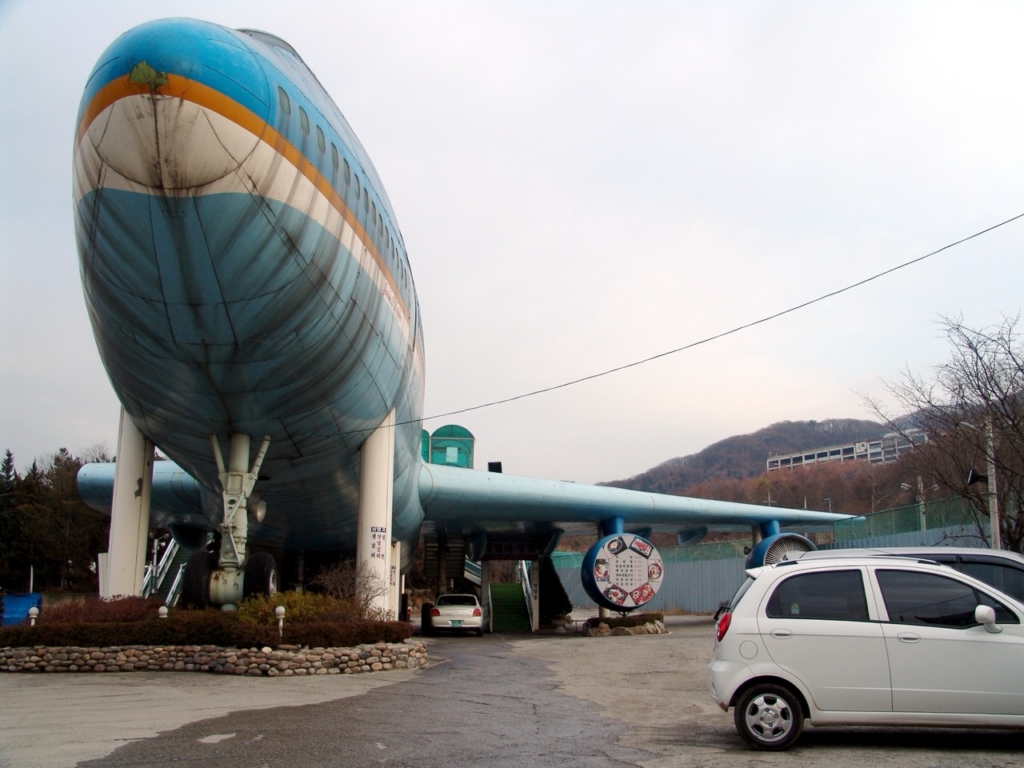
In 2000, a Korean couple converted the aircraft into the aptly named “Jumbo 747” restaurant. They painted the jet to resemble Air Force One. The restaurant closed in 2005, and the aircraft was ultimately scrapped. Still, it remains one of the earliest examples of a jumbo jet reused as a building.
The “party plane” at Cotswold Airport
In the United Kingdom, a former British Airways Boeing 747 (G-CIVB) has been converted into an event venue at Cotswold Airport.
The aircraft—purchased for a symbolic £1 after BA retired its fleet—was transformed into a “party plane” featuring a bar, dance floor and seating areas for weddings and corporate events.
The Boeing 747 is eye-catching but hard to reuse
Repurposing a Boeing 747 presents unique challenges. The four-engine widebody aircraft is enormous:
- Length: around 70 metres
- Wingspan: about 64 metres
- Empty weight: more than 180 tonnes
Unlike smaller aircraft that can be transported intact, 747 conversions usually require extensive dismantling and reconstruction.
However, its unmistakable hump-backed upper deck and massive aluminium structure also make it an appealing architectural statement and an instantly recognisable landmark.
Featured Image: Henriquez Partners


