US Marine Corps begins major AH-1Z Viper and UH-1Y Venom upgrade to prepare H-1 fleet for future battlefield

5 min read
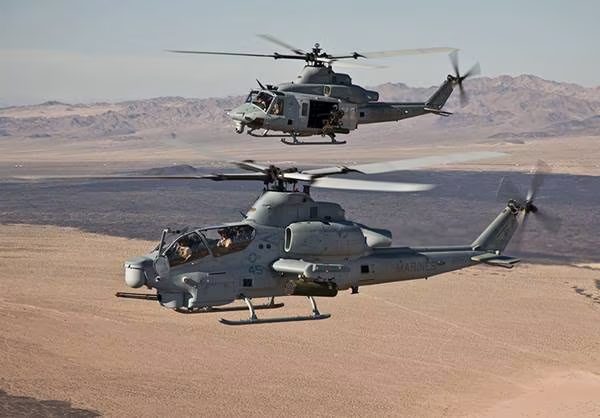
Bell Textron has secured an estimated $300 million contract to begin the next phase of upgrades for the US Marine Corps’ AH-1Z Viper and UH-1Y Venom helicopters.
Under the Structural and Power Improvements for NextGen Effects (SPINE) programme, the H-1 fleet will receive upgraded electrical power and digital systems to support future weapons, sensors, and battlefield networks through the 2040s.
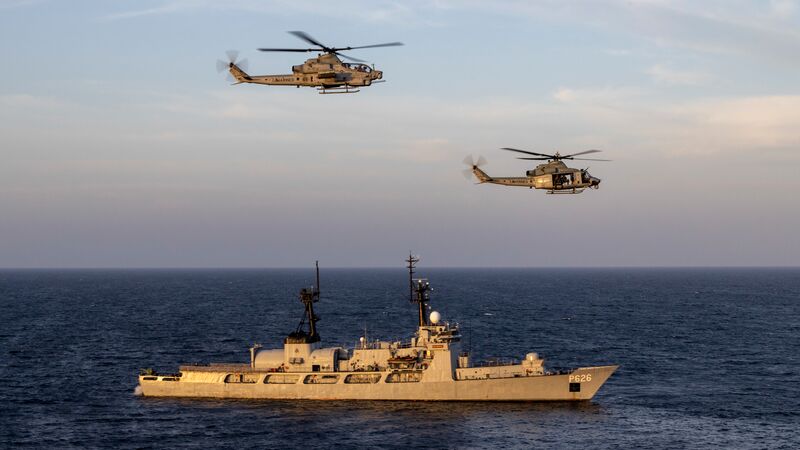
The programme marks the next phase in a long-running effort to prepare the Marine Corps’ frontline helicopters for a battlefield increasingly shaped by digital networks, electronic warfare, and long-range precision weapons.
Rather than introducing a new aircraft, the SPINE programme focuses on upgrading the existing fleet so it can accept new technologies as they become available.
SPINE upgrades will give the H-1 fleet the electrical capacity needed for future sensors, weapons, and battlefield networks
Under the contract, Bell will upgrade 49 aircraft—28 AH-1Z Vipers and 21 UH-1Y Venoms—at its Amarillo Assembly Center in Texas. Work is scheduled to begin in mid-2027, with the first upgraded helicopters expected to be delivered to the Marine Corps in 2028.
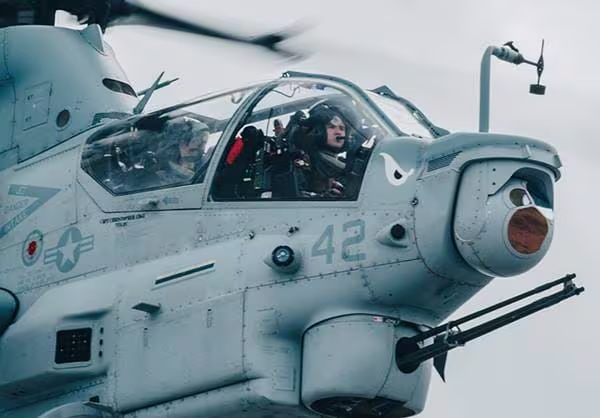
The programme increases the aircraft’s electrical power generation and modernises its internal digital architecture, creating the capacity needed to integrate future mission systems without major structural changes each time new equipment is introduced.
That includes improved defensive systems, Link 16 tactical data links, modern digital communications, and the ability to operate future network-enabled weapons.
Together, the upgrades are intended to improve survivability while allowing Marine Corps helicopters to share information more effectively with aircraft, ships, and ground forces operating in the same battlespace.
Danielle Markham, Bell’s H-1 programme manager, said the latest contract represents an important step in extending the capability of the fleet.
“Beginning SPINE Phase 3.0 emphasises the importance of this essential modernisation effort and enables the USMC H-1 fleet to remain competitive with current and future capabilities. SPINE will enable H-1 operators and maintainers to implement the equipment and technology needed to keep the aircraft as a fully interoperable member of the modern joint force throughout the lifetime of the H-1 fleet,” Markham said.
Modern battlefield operations increasingly depend on aircraft that can exchange information in real time
While previous helicopter upgrades often centred on engines or weapons, SPINE addresses another challenge facing modern military aircraft: electrical power.
Today’s helicopters carry significantly more computing equipment, sensors, radios, and electronic warfare systems than earlier generations. These systems require additional electrical capacity as well as a digital backbone capable of integrating new software and equipment throughout the aircraft’s service life.
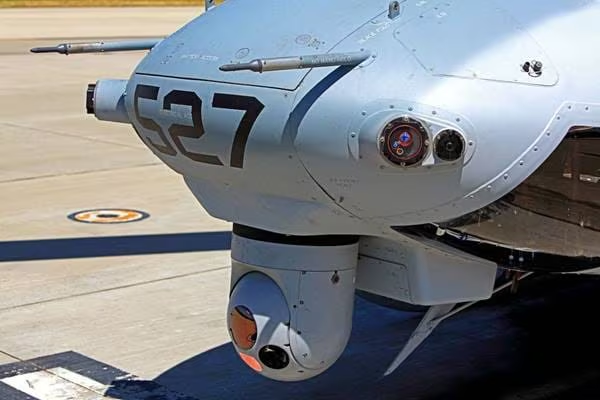
For Marine Corps aviation, this means the upgraded helicopters will be better able to receive targeting information from other aircraft operating outside hostile missile range while continuing to conduct missions at low altitude, where rotary-wing aircraft are most effective.
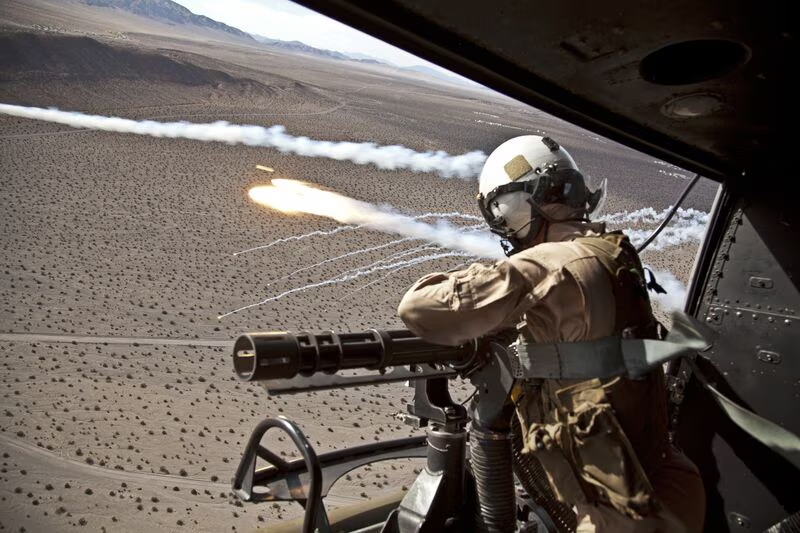
The programme also introduces improvements to the UH-1Y’s mission equipment, including upgrades to fast-rope, rescue hoist, and medical evacuation kits, strengthening its ability to support personnel recovery and special operations missions in demanding environments.
The AH-1Z Viper and UH-1Y Venom were designed to operate as a single integrated helicopter family
The AH-1Z attack helicopter and UH-1Y utility helicopter have formed the backbone of Marine Corps rotary-wing operations for nearly two decades.
Rather than operating as separate fleets, both aircraft were developed as part of the H-1 modernisation programme and share more than 85% of their major components, including engines, rotor systems, avionics, and logistics support. That common design simplifies maintenance, reduces training requirements, and lowers long-term operating costs while allowing the two helicopters to deploy together as a combined force.
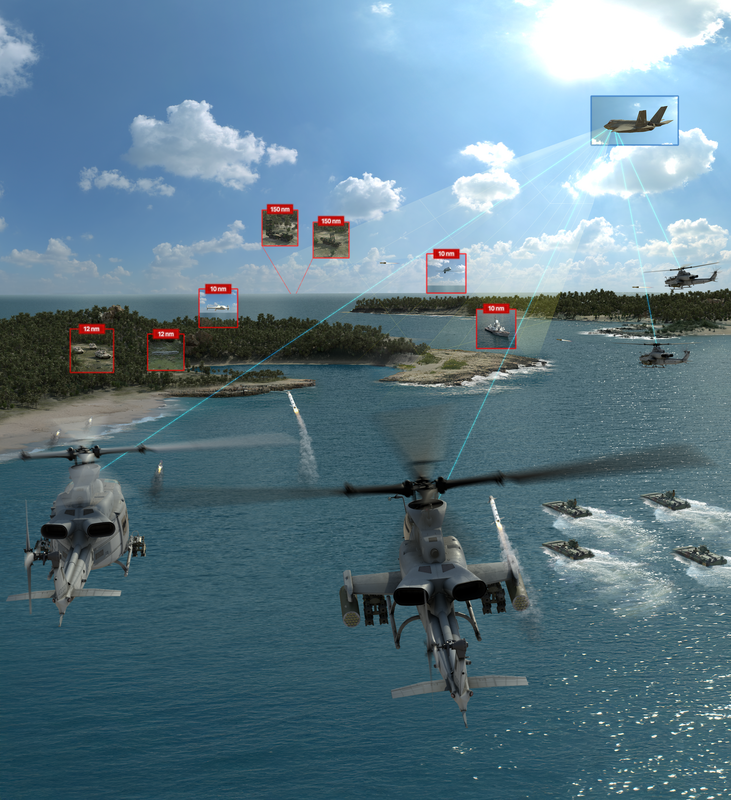
The AH-1Z provides attack, armed reconnaissance and close air support, while the UH-1Y undertakes troop transport, casualty evacuation, command-and-control, search and rescue and special operations support.
Fleet-wide modifications follow successful flight testing of the first upgraded helicopters
Bell completed the first SPINE modifications on one AH-1Z and one UH-1Y in late 2025 before both aircraft were transferred to Naval Air Station Patuxent River for flight testing.
The new contract moves the programme from prototype validation to fleet-wide production, with aircraft entering modification at Bell’s Amarillo facility over the coming years.
Colonel Jason Duke, Programme Manager at Naval Air Systems Command’s PMA-276 H-1 programme office, said maintaining the relevance of the H-1 fleet remains a priority for the Marine Corps.
“H-1s are essential to maintaining attack, strike, and utility capabilities within the Marine Corps and they do this while providing a large volume of fires. We are very pleased to see this modernisation effort take another leap forward. The SPINE program will provide a significant increase to overall H-1 electrical capability to optimise advanced battlefield technology and ensure the H-1 fleet will continue to be relevant into the 2040s.”
The latest award follows a separate $33.6 million Naval Air Systems Command contract announced early this month covering long-lead components, mission kits, and associated hardware needed to support the Phase 3 SPINE modification programme. Under the contract, Bell will provide nine A-kits and two D-kits, which are identified as mission kits in the award announcement. The company will also furnish the associated materials, labor, and spare parts required to support the structural and power improvement effort.
The hardware procurement includes long-lead and time-critical components needed for the modifications. Bell will supply 12 rotorcraft station control units, 12 alternating-current generators, 12 generator control units, 12 tube assemblies, and seven combining gearboxes.
Rather than extending the helicopters’ service life through structural changes alone, the Marine Corps is investing in the digital infrastructure needed to accommodate future sensors, communications systems, and weapons. As operational requirements continue to evolve, that flexibility is expected to play a central role in keeping the H-1 family effective well into the next decade.
Sign up for our newsletter and get our latest content in your inbox.


More from

October 11, 20263 min read