Belgium set to become first military Cessna SkyCourier operator outside the US

5 min read
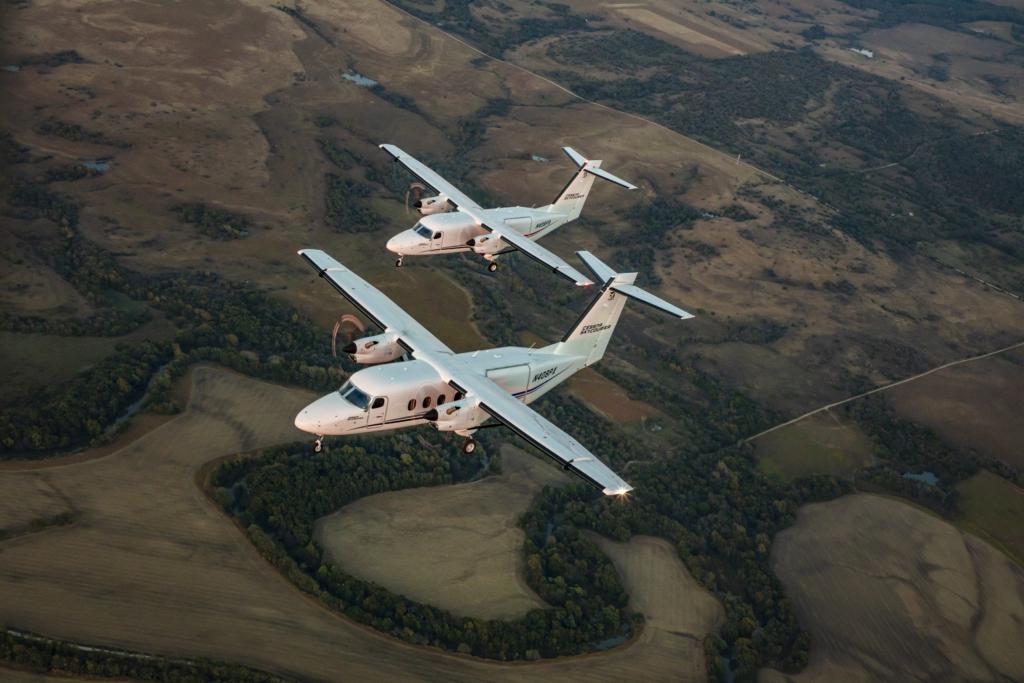
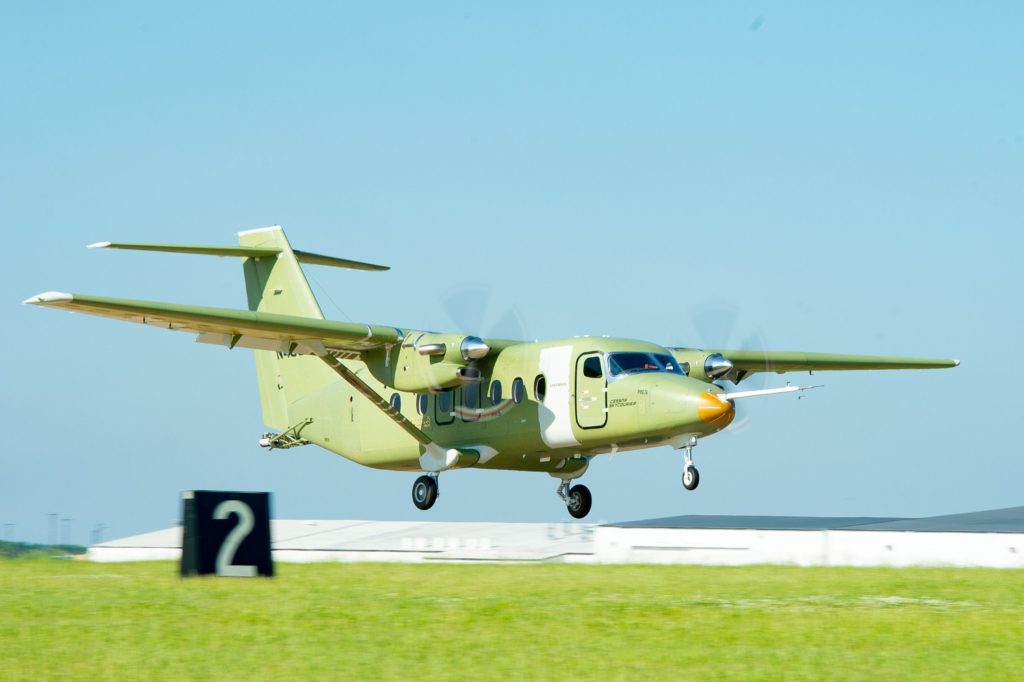
Belgium is planning to acquire a fleet of five short take-off and landing (STOL) capable Cessna 408 SkyCourier aircraft, a move that would see the Belgian Air Force become the first military operator of the US-built twin-turboprop utility platform.
The proposed acquisition was revealed in a new defence strategy paper published by Brussels on 1 February and forms part of the Belgian Ministry of Defence’s (MOD’s) Security, Technology, Ambition, Resilience (STAR) aviation capability initiative.
Approved in April 2023, STAR is a long-term investment programme intended to modernise and rebuild the Belgian Armed Forces, with defence spending set to almost double by 2035.
Belgium’s plan to acquire five SkyCouriers will provide additional fixed-wing airlift capabilities for the Belgian Air Force, with the rugged platform set to operate alongside new rotary-wing assets that have been acquired to fulfil the nation’s tactical airlift requirements.
Inside Belgium’s plan to acquire the Cessna 408 SkyCourier
According to available information, Brussels intends to acquire five commercial-standard SkyCourier airframes in the US. The aircraft will subsequently be flown to Belgium, where they will undergo significant mission-specific modification work with SABCA and Sabena Technics before being delivered to the Belgian Air Force.
These adaptations will enable the rugged, STOL-capable utility aircraft to perform its planned mission sets, which include tactical airlift, medical evacuation (MEDEVAC), fire support, observation and signals intelligence (SIGINT) operations.
Once delivered, Belgium’s future SkyCourier fleet will eventually be operated by a dedicated Special Operations Squadron based at Beauvechain Air Base in Wallonia.
The Belgian MOD aims to achieve Initial Operational Capability (IOC) with the platform by 2028-2029. The ministry anticipates that two SkyCouriers will be available at any given time, along with support from trained aircrews.
While details surrounding the cost and delivery schedule of this acquisition have yet to be released, the cost of a single SkyCourier (without modifications) is estimated to be around $6.5m.
STAR: Investing in Belgium’s tactical airlift capabilities
Once delivered, Belgium’s planned SkyCourier fleet will be based alongside the nation’s new H145M fleet.
Since May 2024, Belgium has ordered 22 H145Ms from Airbus Helicopters – comprising 18 aircraft for the Belgian Armed Forces and four examples for the Federal Police – to support tactical airlift, MEDEVAC, special operations support, police search/pursuit and aerial firefighting missions.
The first of these rotorcraft is expected to arrive at Beauvechain in April 2026.

Under its STAR initiative, Belgium is actively considering purchasing a fleet of either Boeing CH-47F Block II Chinooks or Sikorsky CH-53K King Stallions to fulfil its heavy-lift tactical transport helicopter requirements.
Belgium has set aside $1.3bn for this acquisition and has outlined that its selected helicopter type will be used to perform tactical airlift, special operations support, MEDEVAC and aerial firefighting missions.
This planned acquisition comes after the Belgian MOD decided to retire its NHIndustries NH90 Tactical Transport Helicopter (TTH) fleet after a little over ten years of operation.
With the first NH90 TTH being retired from use in September 2025, the Belgian MOD cited high operational costs, limited availability and a restricted deployment history as being the core reasons behind the type’s early retirement.
While a formal decision regarding the NH90 TTH’s replacement has yet to be declared, the CH-47F Block II is widely considered to be the frontrunner over the CH-53K.
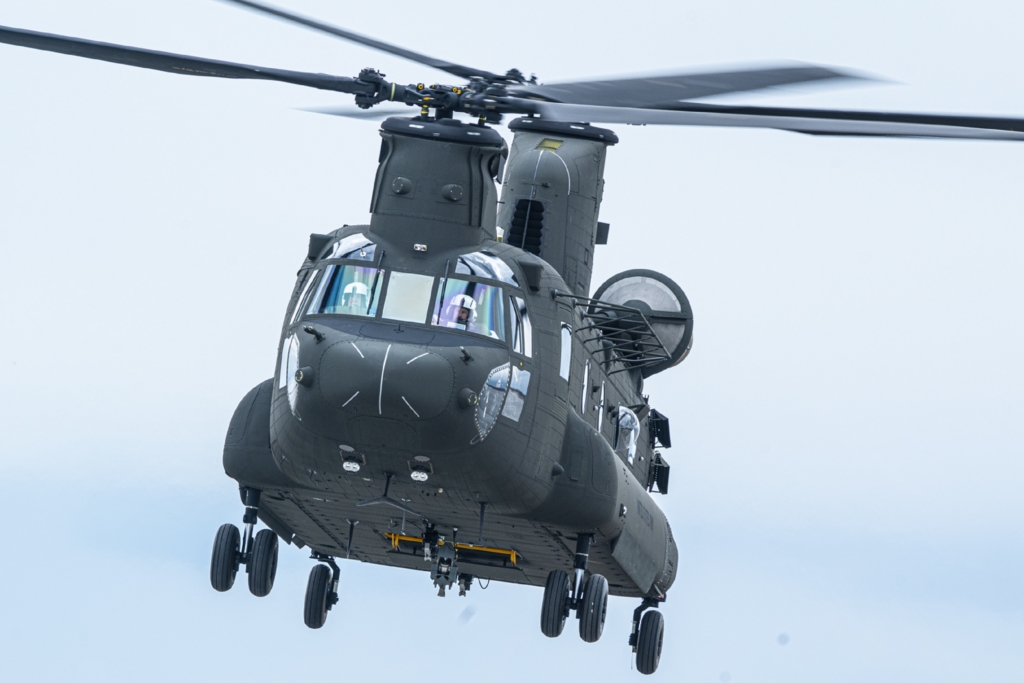
The type is operated by two of Belgium’s closest allies – the Netherlands and the UK – and will soon enter service with the Luftwaffe (German Air Force), enabling for greater force interoperability between the three NATO allies.
To prepare for these new air mobility assets, the Belgian government allocated €96m to prepare the Wallonia base for the arrival of the new H145Ms and SkyCouriers in June 2025.
Early reports indicate that Belgium’s future CH-47F or CH-53K fleet is also expected to be headquartered at Beauvechain, though this has yet to be formally confirmed.
Why has Belgium opted for the Cessna SkyCourier?
For decades, the Belgian Air Force has relied on larger platforms – such as the now-retired Lockheed C-130H Hercules and current fleet of Airbus A400M Atlas transports – to support both strategic and tactical air mobility operations.
However, with the retirement of the legacy C-130H fleet in December 2021 and the arrival of the larger A400M, Belgium’s ability to conduct special operations support missions – particularly from short or minimally prepared runways in austere environments – has been somewhat constrained.
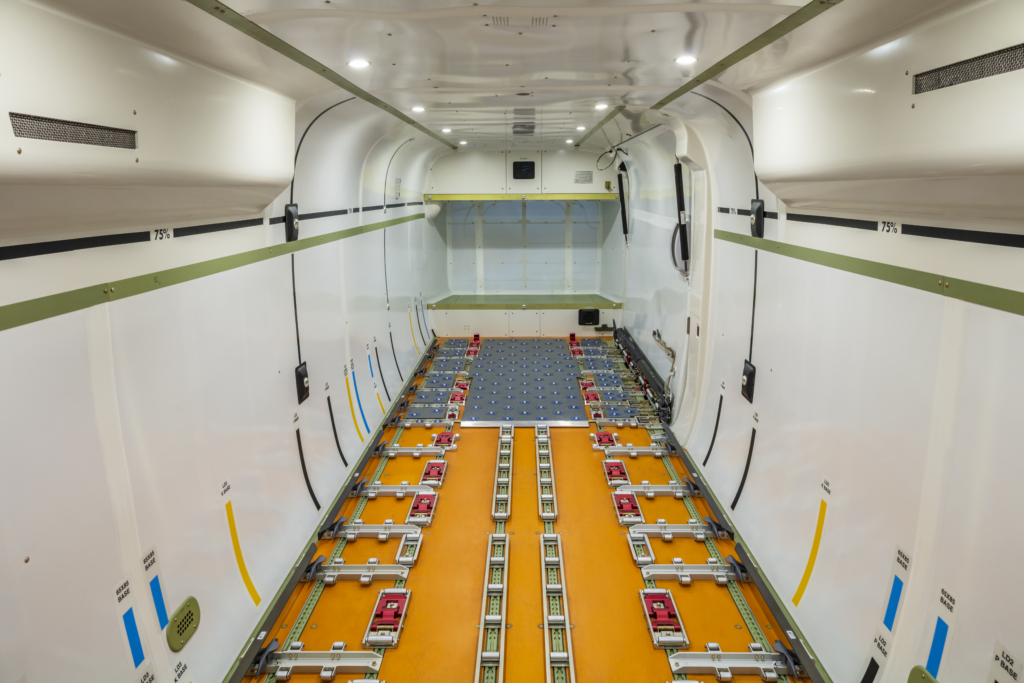
While the A400M boasts exceptional strategic lift capabilities, its longer runway requirements and larger operational footprint limit the platform’s flexibility when deployed to remote or contested environments.
In response to this, Belgian defence planners identified a capability gap between the air arm’s helicopter force and the A400M to facilitate a greater capability for fixed-wing STOL operations in obscure environments.
The answer to this requirement came in the form of Cessna’s new twin-turboprop SkyCourier. Powered by two Pratt & Whitney PT6A-65SC turboprop engines, the SkyCourier is a high-wing utility aircraft that blends high payload with operational simplicity and STOL performance.
Manufactured by Textron Aviation in Wichita, Kansas, the platform completed its first flight on 17 May 2020 and gained Federal Aviation Administration (FAA) approval in March 2022.
For its class, the SkyCourier boasts a high payload capacity of 6,000lb (2,722kg) and can carry up-to 19 passengers.
The platform has a cruising speed of 210kts (240mph or 390km/h) and a ferry range of 920nmi (1,060 miles or 1,700km). With a full complement of passengers and/or cargo, the aircraft’s effective range falls to 386nmi (444 miles or 715km).
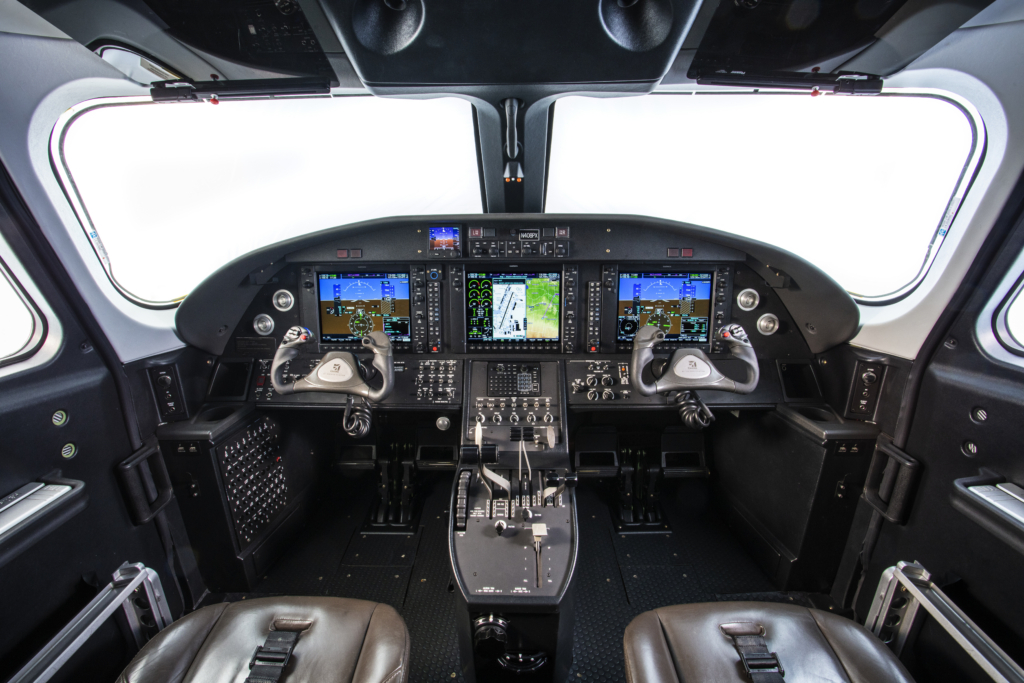
The Cessna also boasts a modern ‘glass cockpit’ flight deck thanks to the incorporation of the Garmin G1000 NXi integrated avionics suite, which will prove especially useful when operating in obscure environments or challenging conditions.
Add a button.
Featured image: Textron Aviation