Belarus grows Su-30SM2 Flanker-H fighter fleet to eight jets

5 min read
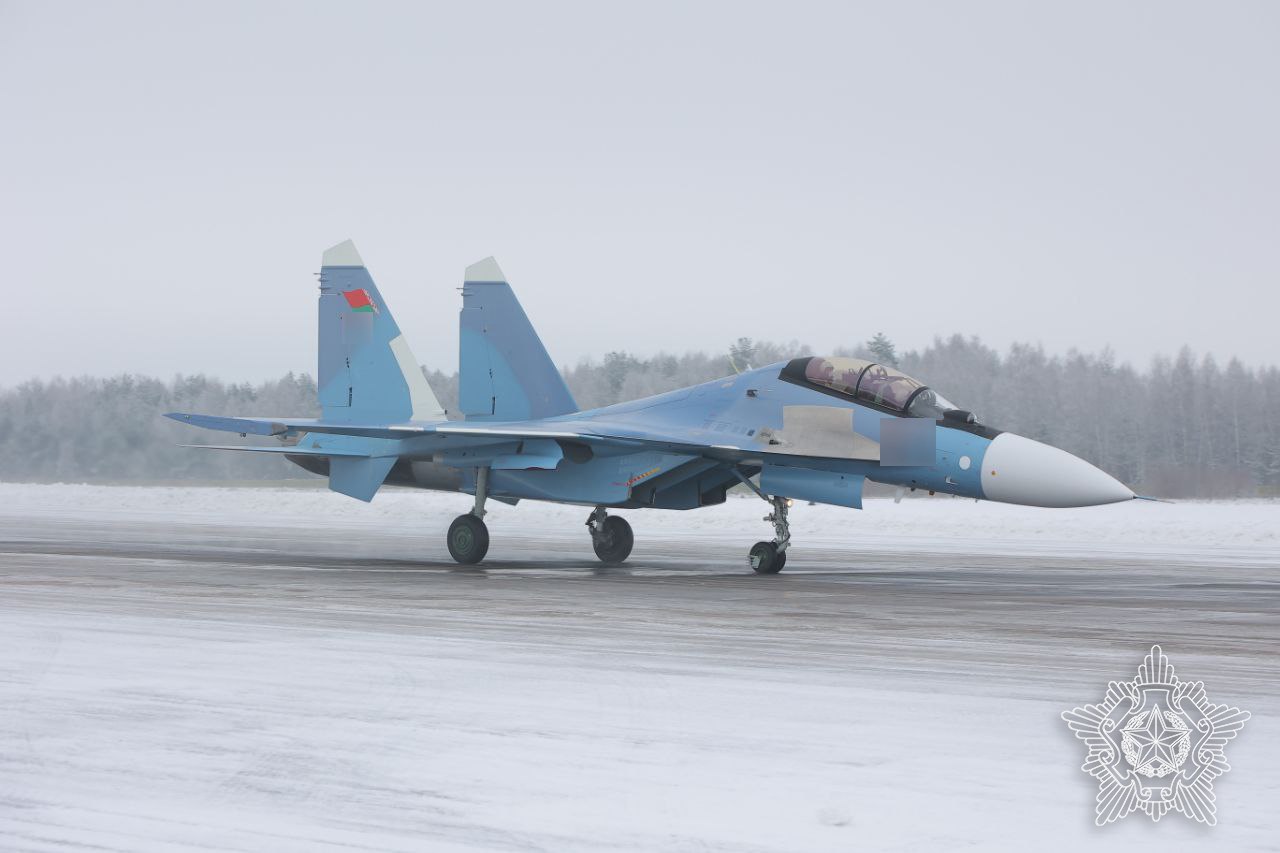
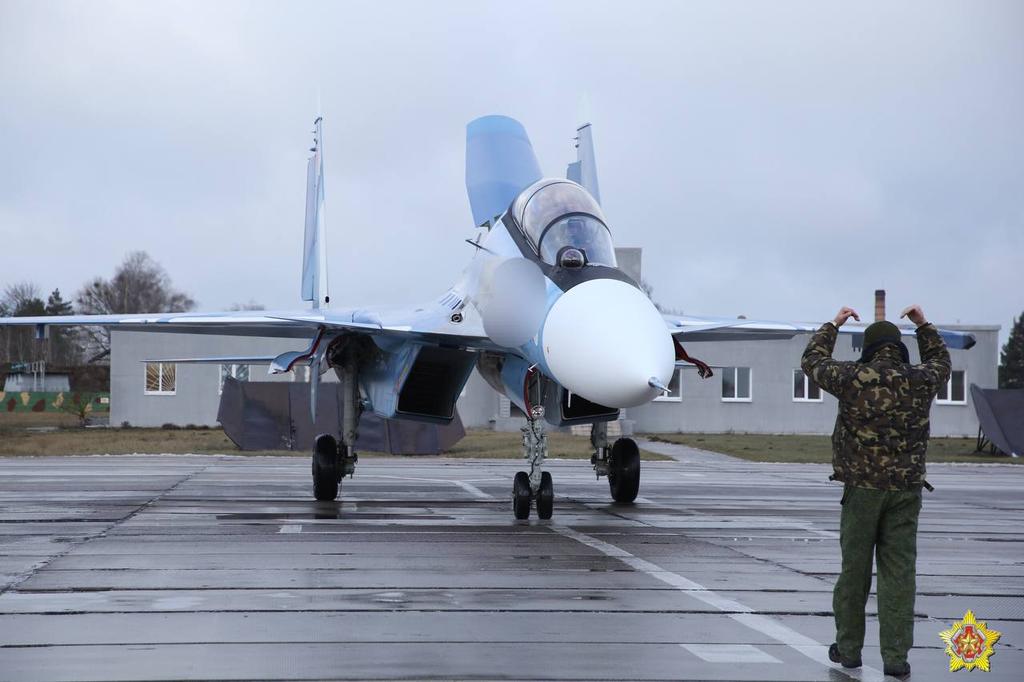
Belarus has received another batch of new-build Sukhoi Su-30SM2 Flanker-H multi-role fighters from Russia, marking the type’s first delivery of the new year and the continuation of a long-running rearmament effort that has been steadily boosting Minsk’s air defence capabilities.
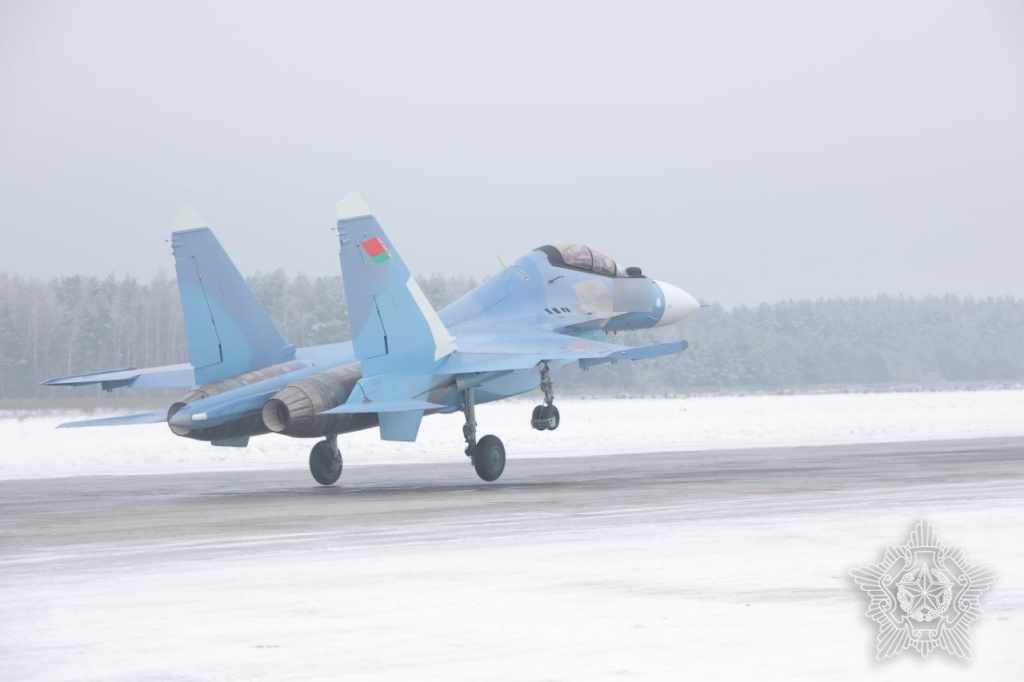
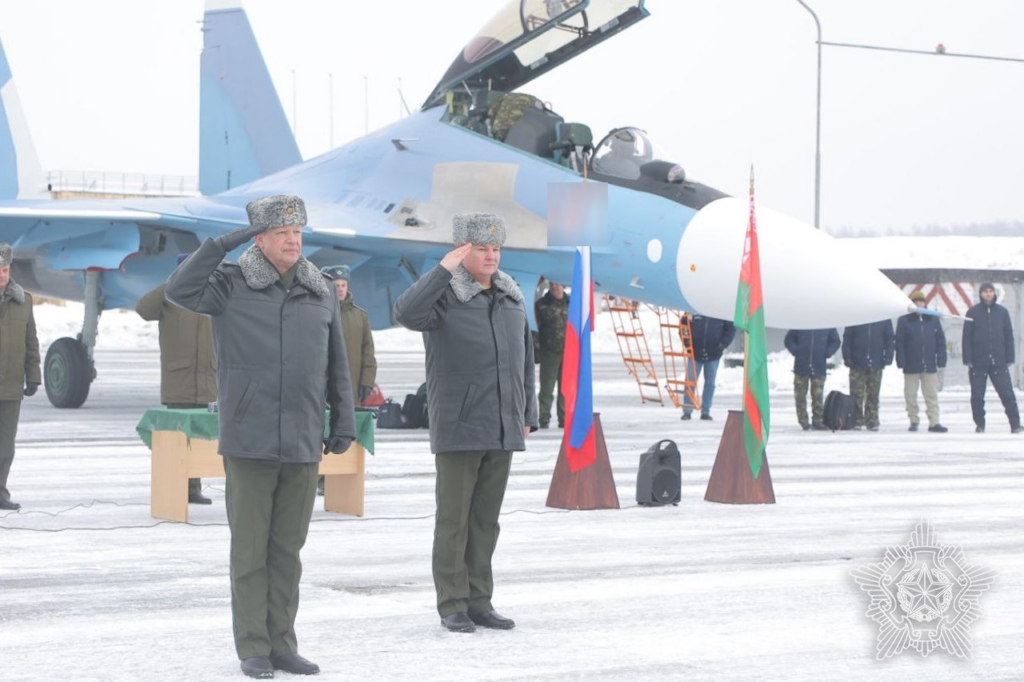
Taking to Telegram, the Belarusian Ministry of Defence (MOD) confirmed it had accepted delivery of two additional Su-30SM2 fighters on 29 January.
These new-build Flanker-Hs – which were produced by Russia’s state-owned United Aircraft Corporation (UAC) – were delivered to the Belarusian Air Force and Air Defence Forces’ 61 Znishtshal’naya Aviyabaza (61 ZAB; 61st Fighter Air Base) at Baranovichi Air Base in the nation’s Brest Oblast.
This latest delivery means that the Belarusian Air Force and Air Defence Forces’ growing Flanker-H fleet now stands at eight aircraft, which is the equivalent of a full-strength squadron under the air arm’s standard organisational structure.
These jets will now join the 61 ZAB’s 1 Eskadryllya (1st Squadron) at Baranovichi, which flies two different Flanker-H variants – namely the earlier-configuration Su-30SM and the upgraded Su-30SM2.
A brief history of the Su-30SM2 and Belarus
Belarus’ association with the Russian-made Su-30SM began in February 2016, when Minsk and Moscow concluded a preliminary agreement regarding the export of an undisclosed number of Flanker-Hs for the Belarusian air arm. On 20 June 2017, Belarus inked a $600m deal with Russia to acquire 12 earlier-configuration Su-30SMs during the Paris Air Show.
🇧🇾 JUST IN: Belarus has taken delivery of an additional batch of Russian made Su-30SM2 multirole fighter jets, further expanding its combat aviation fleet. pic.twitter.com/wWHXZHIKb7
— Defence Index (@Defence_Index) February 1, 2026
While initial deliveries were slated to take place in 2018, the first four jets did not arrive at Baranovichi until November 2019. These delays were a result of Western embargoes on the acquisition of components for the multi-role fighter.
The second batch of four jets was equally affected, with delivery initially expected to take place in 2020 but ultimately being pushed back to 2021.
In total, Belarus received eight Su-30SMs before the contract was amended to instead deliver the more capable Su-30SM2 variant. This move means that Belarus’ Su-30SM2 fleet mirrors the same configuration as those operated by the Russian Aerospace Forces (RuAF).
Russia has now progressively delivered eight Su-30SM2s to Belarus since the beginning of 2025. Belarus welcomed its first upgraded Flanker-Hs to Baranovichi on 27 May, followed by the second batch of two aircraft on 14 August, and a third pair of Su-30SM2s on 26 December.
While official images published by the Belarusian MOD have pixelated the aircraft’s serial numbers, aviation enthusiasts and spotters in the region have confirmed that the Su-30SM2s delivered to date are: ’09 Red’, ’10 Red’, ’11 Red’, ’12 Red’, ’13 Red’, ’14 Red’, ’15 Red’ and ’17 Red’.
Belarus’ Flanker-H fleet – comprising both the Su-30SM and Su-30SM2 – is expected to grow to between 19-20 by early 2026. The Belarusian Air Force and Air Defence Forces’ already operate 16 examples of the type (eight of each variant), with deliveries of the Su-30SM2 set to continue.
It remains unclear as to whether or not the earlier-configuration Su-30SMs will be upgraded to Su-30SM2-standard in the future. However, the air arm plans to form two full Su-30SM/SM2 squadrons in total.
Belarus’ quest to revitalise its Cold War-era combat fleet
Minsk’s Su-30SM/SM2 acquisition comes as part of the nation’s long-running effort to modernise its combat airpower capabilities. The decision to procure the Flanker-H came after Belarus initially procured 12 Yakovlev Yak-130 Mitten lead-in fighter trainer/light combat aircraft.
These jets, which were delivered between 2015 and 2019, are currently operated by the 116 Shturmavaya Aviytshyjnaya Baza (116 ShAB; 116th Assault Aviation Base) at Lida Air Base in Belarus’ Grodno Oblast.
While 12 Yak-130s were delivered to the Belarusian Air Force & Air Defence Force, just 11 remain operational after one jet crashed in Baranovichi, killing both pilots.
The Yak-130s are currently used to train next-generation Belarusian combat pilots and supplement the air arm’s ageing fleet of Cold War-era Sukhoi Su-25 Frogfoot aircraft in the ground attack role.
Before Minsk received its first Su-30SM deliveries in 2019, the Belarusian Air Force and Air Defence’s combat fleet mainly comprised Soviet-era Mikoyan-Gurevich MiG-29BM/UB Fulcrum fighters.
The air arm also operated a number of Sukhoi Su-27UBM1 Flankers, but this fleet was retired from use in December 2012 due to high operational costs.
The Su-30SM2 is a true Russian thoroughbred
The Su-30SM2 is one of the most potent fighters to have been developed by Russia in recent years, at least in terms of capability. It is powered by two AL-41F-1S afterburning turbofan engines, providing the jet with higher thrust, better fuel efficiency and improved acceleration and energy retention when compared with the older Su-30SM.
The platform is extremely manoeuvrable thanks to its 3D thrust vectoring capabilities, which enable the jet to conduct extreme high-alpha manoeuvres at low speeds.
✈️Sukhoi Su-30SM2 fighter jet, b/n 93 Blue, RF- 81271.
— Massimo Frantarelli (@MrFrantarelli) March 21, 2025
🚀 R-37M long-range AAM.
🚀Kh-31PM ARM.
🚀x4 R-77-1 medium range AAM.
📹: TG-ch. "Fighterbomber". pic.twitter.com/MbIIdpRRGD
It is also equipped with the Russian-made Irbis-E multi-mode passive electronically scanned array (PESA) radar system, which was developed for Sukhoi’s Su-35S Flanker-E air superiority fighter and provides the jet with enhanced detection and tracking capabilities. The Flanker-H is also fitted with an advanced electronic warfare (EW) system and improved radar warning receivers.
In terms of armament, the Su-30SM2 is capable of carrying up to 23,148lb (10,500kg) of munitions across 12 hardpoints. It can carry a plethora of different weapons, including R-27, R-37M, R-73 and R-77 missiles for air-to-air engagements.
Meanwhile, in the air-to-ground role, the aircraft can carry Kh-31PM, Kh-38MT and Kh-29/59 missiles, as well as KAB-500/1500 laser-guided bombs (LGBs), among other munitions.
Featured image: Belarusian MOD
Sign up for our newsletter and get our latest content in your inbox.


More from


October 13, 202612 min read