Russian jets flew within six metres of RAF RC-135W Rivet Joint over Black Sea

4 min read
An RAF RC-135W Rivet Joint surveillance aircraft had onboard emergency systems triggered after Russian fighter jets flew within six metres of the British aircraft during a dangerous confrontation over the Black Sea last month.
The UK Ministry of Defence said the unarmed Royal Air Force reconnaissance aircraft was “repeatedly and dangerously intercepted” by two Russian jets while operating in international airspace as part of NATO eastern flank intelligence missions.
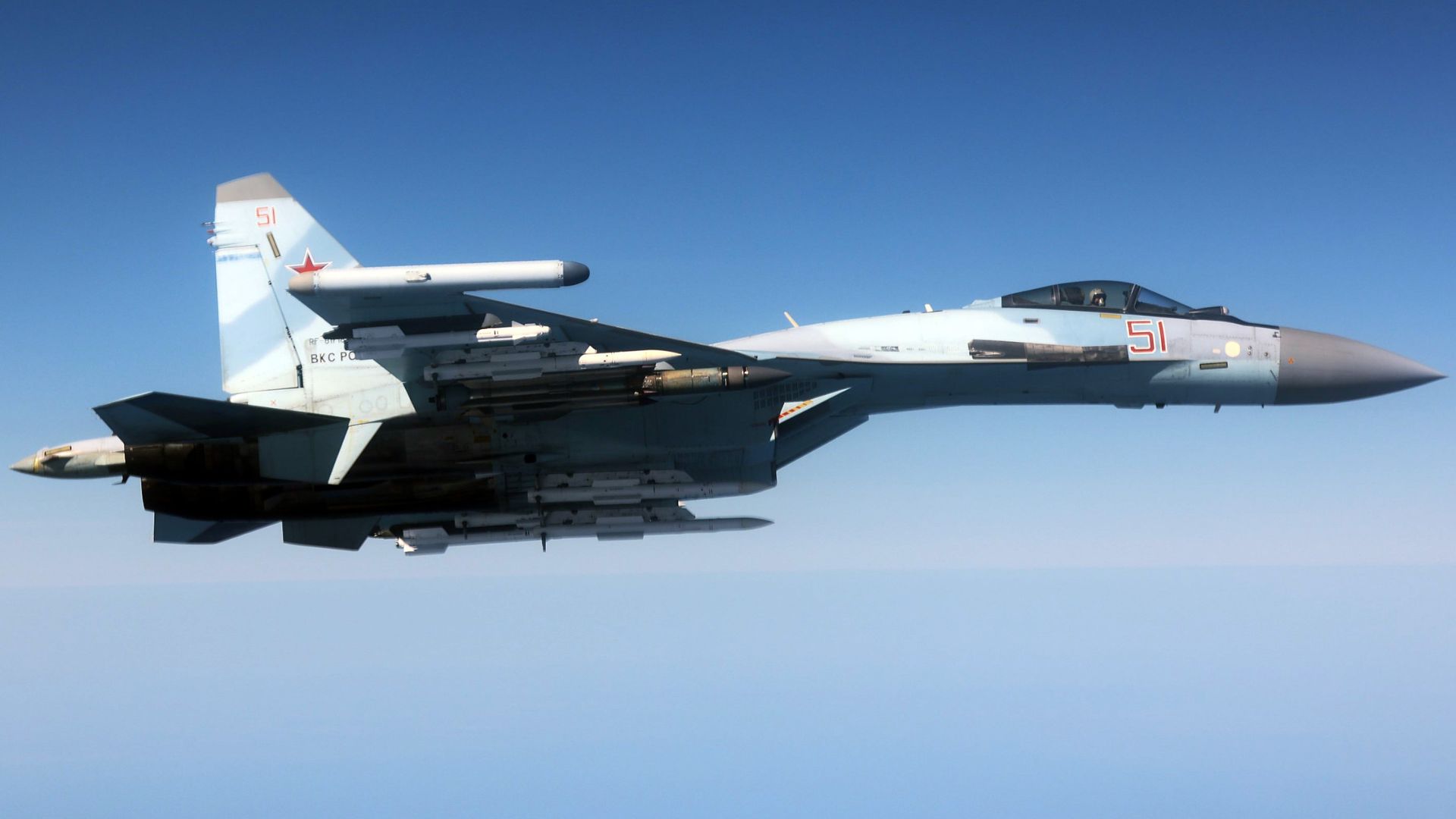
During the encounter, a Russian Su-35 flew close enough to trigger systems that disengaged the Rivet Joint’s autopilot, while an Su-27 conducted six aggressive passes directly in front of the aircraft.
The incident marks one of the most serious Anglo-Russian aerial confrontations since a Russian pilot fired missiles at another RAF Rivet Joint over the Black Sea in 2022.
Russian Su-35 triggered emergency systems aboard RAF aircraft
The aircraft involved was one of the RAF’s three RC-135W Rivet Joint surveillance aircraft operated by No. 51 Squadron. The type is designed to intercept, analyse and geolocate signals and communications across the electromagnetic spectrum, providing strategic and tactical intelligence to the UK and NATO allies.
A @RoyalAirForce Rivet Joint aircraft operating in international airspace over the Black Sea was dangerously intercepted by Russian military jets – flying as close as six metres and triggering onboard emergency systems.
— Ministry of Defence 🇬🇧 (@DefenceHQ) May 20, 2026
Despite these reckless manoeuvres, RAF crew completed their… pic.twitter.com/QyUP7dE4OJ
Since Russia’s full-scale invasion of Ukraine in 2022, RAF Rivet Joint aircraft have routinely operated in international airspace over the Black Sea as part of NATO eastern flank intelligence missions. While the UK does not publicly discuss operational details, Western surveillance flights in the region are widely understood to monitor Russian military activity and communications.
According to the Ministry of Defence, the incident involved both a Russian Su-35 and an older Su-27 fighter. The Su-35 reportedly flew close enough to trigger emergency systems aboard the RAF aircraft, while the Su-27 carried out six close passes directly in front of the Rivet Joint.
The MoD said the RAF crew “remained calm and professional” throughout the encounter and safely completed their mission.
RAF Eastern Flank intelligence-gathering missions
Since the start of the 2022 full-scale Russian invasion of Ukraine, British RC-135s have flown routine flights in international airspace over the Black Sea as part of NATO’s eastern flank missions.

These aircraft gather important intelligence on Russian military activity, and it is widely understood that the UK passes information to Ukraine.
The British Defence Secretary John Healey MP said: “Let me be very clear: This incident will not deter the UK’s commitment to defend NATO, our allies and our interests from Russian aggression.”
The RAF operates a fleet of three Rivet Joint reconnaissance aircraft based on the Boeing C-135 aircraft family. The United States also operates this type.

The RAF formerly operated a fleet of E-3 Sentry radar aircraft, but these were retired and sold to Chile. The replacement E-7 Wedgetail radar aircraft are currently working up ahead of planned operational capacity in 2026.
Recent history of Anglo-Russian confrontation
The confrontation was perhaps the most dangerous since September 2022, when a rogue Russian pilot fired a missile at a British RC-135 Rivet Joint.
According to BBC reporting in 2023, there was confusion among two Russian Su-27 pilots, with one believing he had permission to fire at the British RC-135.

One missile failed to lock on and missed, while the other failed at launch, either due to a malfunction or due to an aborted launch. The other pilot was heard cursing, telling the rogue pilot to hold fire.
Following the incident, RAF Typhoon fighter jets escorted RAF RC-135s on their Black Sea missions. However, the new British statement makes no mention of a fighter jet escort last month.
Later, another Russian fighter jet dumped fuel on an American RQ-9 Reaper and hit the drone’s propeller. The Reaper later crashed.

Confrontations between British and Russian forces in the Black Sea predate 2022. In June 2021, the Royal Navy’s Type 45 destroyer, HMS Defender, made headlines when it sailed near Russian-occupied Crimea, sparking a major diplomatic and military dispute between the UK and Russia.
Russia claimed the British warship passed three kilometres into its territorial waters and that its coast guard fired warning shots and a Su-24M bomber dropped bombs in the ship’s path to force it to change course.
The UK said no warning shots were fired and that it was conducting “innocent passage” through Ukrainian territorial waters. The ship was shadowed by over 20 Russian aircraft.
Another flash point of British and Russian confrontation is the High North, with RAF Typhoons sometimes scrambled to intercept Russian warplanes and the Royal Navy warning and shadowing suspicious Russian vessels around the UK.
Featured Image: UK MoD
Sign up for our newsletter and get our latest content in your inbox.


More from


October 17, 20265 min read


October 17, 20264 min read