


More US flights, bigger terminals: Inside Athens Airport’s growth plans

4 min read
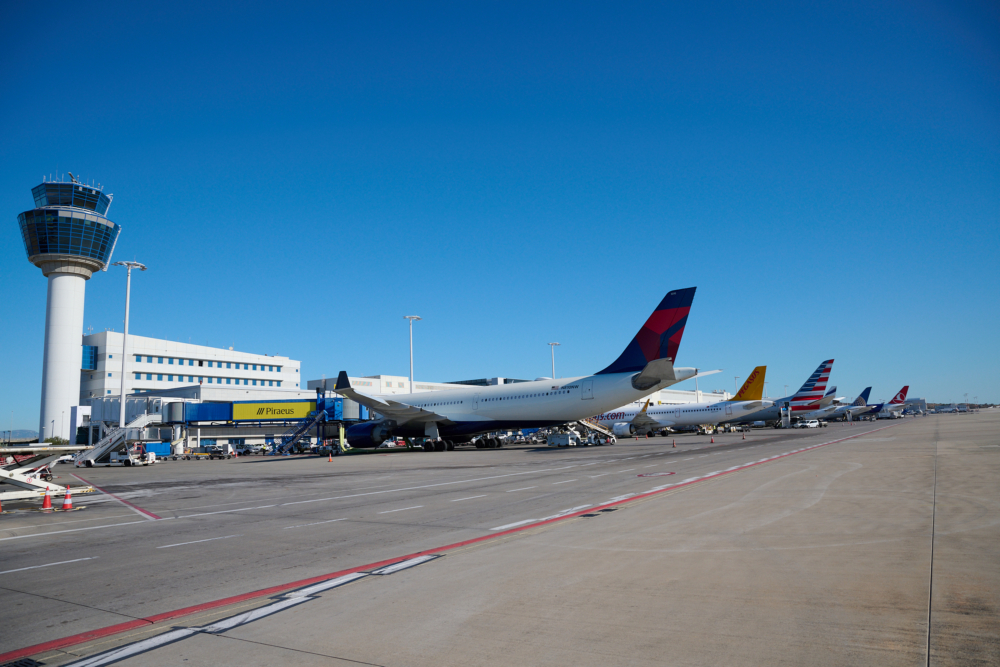
Athens International Airport (AIA) is putting growth in US and other long-haul services at the forefront of its plans to strengthen the Greek capital’s position as a key European hub, with the airport expecting 2026 to be its busiest year on record.
Passenger numbers rose 4.4% in the first nine months of the year after a record 34 million in 2025, said Ioanna Papadopoulou, the airport’s director of communications and marketing.
Speaking to Aerospace Global News at the Routes World 2026 event in Frankfurt, she said AIA was “focusing on long haul in general, but in the US in specific”, citing an increase in weekly US frequencies from 46 in 2019 to 103 in the summer of 2026.
The airport expects Alaska Airlines to add Seattle and Delta to add Detroit in 2027, with further growth to follow.

Terminal expansion to address capacity pressures
The expansion of the terminal is another key strand to the airport’s plans to accommodate further growth, with a phased development programme scheduled to begin in 2027 and run until 2030-31.
The first stage will concentrate on the southern, non-Schengen section of the terminal, before work moves to the northern, Schengen area.
The investment is intended to increase capacity and improve passenger flows, particularly during the busiest periods of the day.
Papadopoulou said the airport did not currently anticipate the need for additional runway infrastructure, with its two parallel runways capable of handling traffic equivalent to more than 50 million annual passengers.
“The terminals need to grow,” she said, noting that additional aircraft gates, security screening facilities and passport-control booths were priorities.
Managing the impact of the EES system
The introduction of the European Union’s Entry/Exit System (EES), which requires biometric registration of non-EU nationals entering and leaving the Schengen area, has added to the pressure on border-control facilities.
Papadopoulou said airports across Europe had experienced bottlenecks during the summer of 2026 as the EES system was introduced, and that Athens was looking at ways to minimise any further disruption from the new checks.
“There is technology which has been introduced because of the EES, but this needs to roll out much more efficiently,” she said. “We will try as much as we can to alleviate the impact on the passenger flows.”
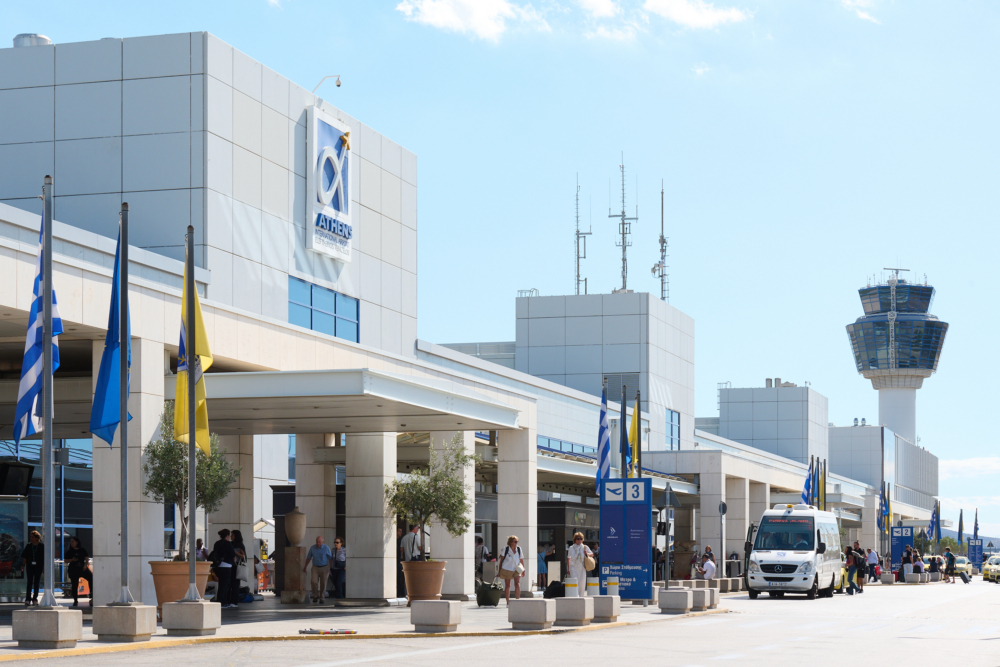
Several associated infrastructure projects are also under way, ahead of the main terminal expansion.
These include a multi-storey car park, scheduled for completion by early 2028, and the Northwest Apron project, which will provide additional aircraft parking positions. A new 600m² VIP terminal, intended for heads of state and other senior officials, is also due to be completed within two years.
Using technology to improve the passenger experience
Alongside physical infrastructure, Athens is looking to make greater use of technology to improve the passenger experience and understand how travellers interact with the airport.
One recent initiative involved a pilot project using artificial intelligence to assess passengers’ emotional engagement at different stages of their journey.
The trial was conducted in partnership with Canadian technology company PathosAI and was intended to provide insight into passenger perceptions.
Papadopoulou said AIA conducts surveys involving more than 40,000 passengers annually, helping the airport make informed decisions about which areas needed focusing on first.
Net-zero target achieved ahead of schedule
Sustainability is another area of focus, with the airport claiming to have achieved its Scope 1 and Scope 2 net-zero emissions target ahead of schedule through its Route 2025 programme.
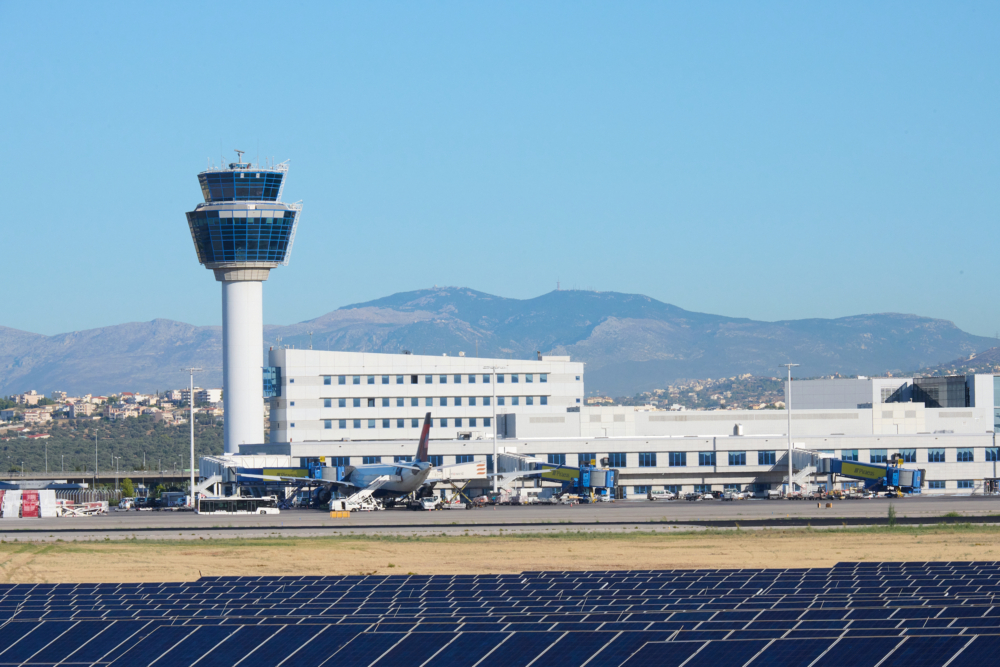
The initiative included the development of photovoltaic parks within the airport, enabling AIA to produce and consume renewable electricity for its own operational requirements.
Papadopoulou said the achievement had been delivered despite the disruption caused by the pandemic, and put the airport significantly ahead of the aviation industry’s broader 2050 net-zero ambitions.
“We are now self-producers and self-consumers of clean energy for all the airport needs, by 100% through solar parks,” she said.
The airport is also seeking to influence emissions beyond its direct operations, particularly those generated by airlines using its facilities.
Scope 3 emissions, which include aircraft operations and other activities outside the airport operator’s direct control, are a challenge for any airport.
However, AIA has introduced a sustainability incentive scheme that offers airlines greater discounts when they use newer-generation aircraft.
The financial benefits increase according to the age of the aircraft, with the intention of encouraging carriers to introduce more efficient fleets on services to Athens, she said.
Financial incentives to support route development
Financial incentives and direct support for airline marketing are also key to AIA’s strategy of attracting new airline, including those serving long-haul extra-European markets.
Papadopoulou said AIA’s incentive programme covered a range of operators, including new long-haul carriers, driving additional frequencies with existing airlines, and encouraging low-cost flights.
The airport also provides marketing support to carriers, particularly those launching new operations in Athens or seeking to build their presence in the Greek market.
She said AIA works with airlines to develop and implement locally focused promotional campaigns, with the marketing budgets funded by the airport.


