Airlink cancels third stadium flypast as SACAA reviews Cape Town flight data

6 min read
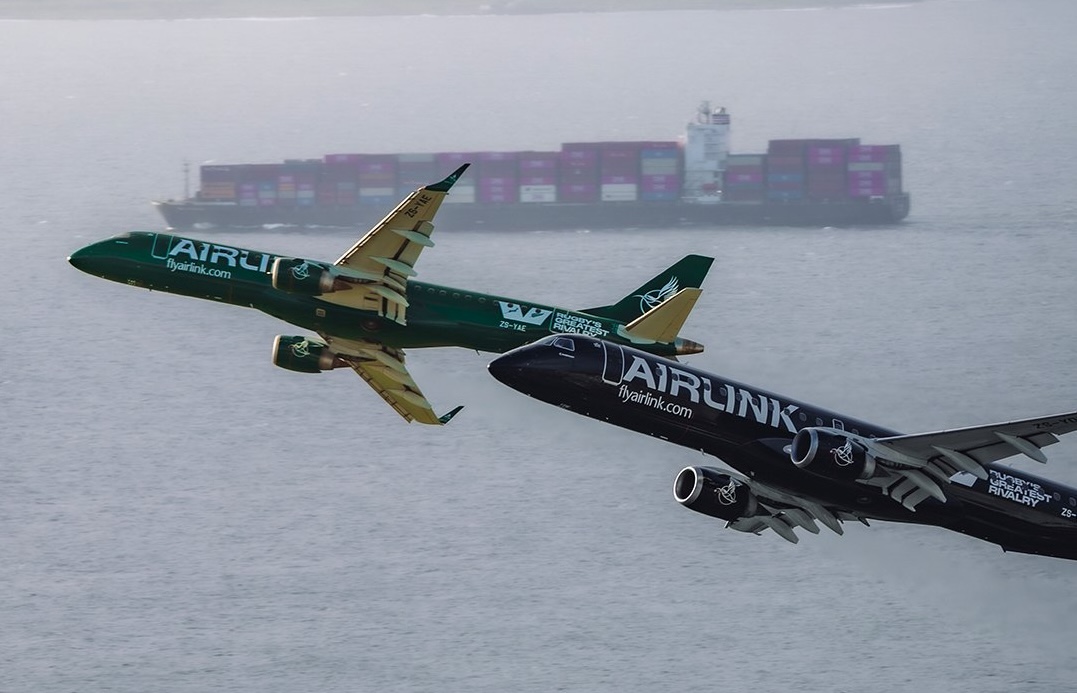
Airlink has cancelled plans for another formation flypast over a packed rugby stadium as South Africa’s aviation regulator reviews flight data from the airline’s dramatic low-level performance in Cape Town.
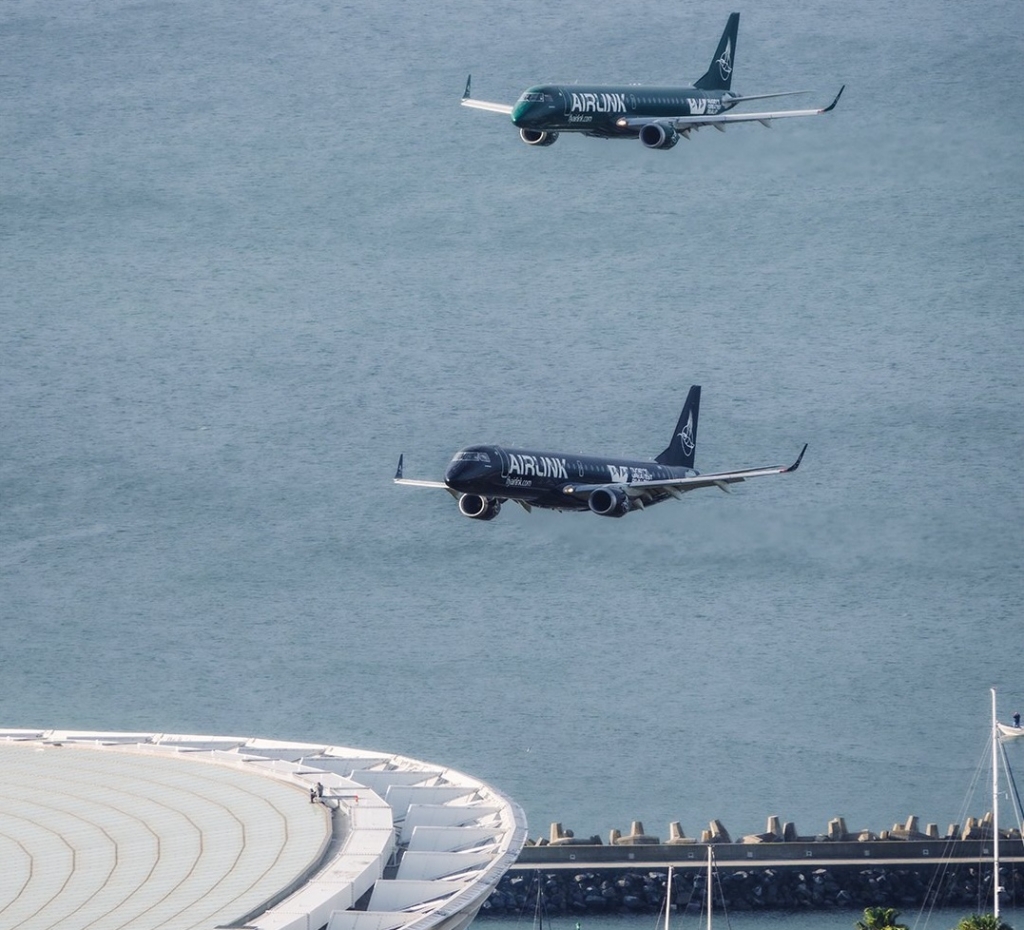
The South African Civil Aviation Authority (SACAA) confirmed on 2 September that it has begun compliance checks following the 29 August flypast over DHL Stadium, where two Airlink Embraer regional jets passed just above the stadium roof ahead of the Springboks-All Blacks Test.
Airlink had applied for approval for three rugby-related flypasts. The first took place over Ellis Park in Johannesburg on 22 August and the second was the much-discussed Cape Town display.
Get ready Ellis Park ✈️
— Airlink (@Fly_Airlink) August 22, 2026
We’ve got something unprecedented planned to commemorate today’s historic Test Match between the Springboks and All Blacks. Keep your eye on the sky 👀
Airlink is a proud Official Partner of Rugby’s Greatest Rivalry, presented by Castle Double Malt.… pic.twitter.com/ebZjlRiyza
A third display was planned for the Springboks-All Blacks fixture at FNB Stadium in Johannesburg on 5 September, but Airlink has now withdrawn its application.
The airline said the decision was driven by the weather forecast rather than the regulatory review. According to the Associated Press, Airlink said forecast conditions were unfavourable for a safe formation flyby.
SACAA reviews Airlink Cape Town flypast
In its 2 September statement on the Airlink flypast, SACAA provided new details about how the Cape Town operation was authorised and what the regulator is examining after the event.
SACAA said all three applications were submitted under South African regulations governing non-passenger or cargo-carrying flights, specifically Part 91.06.32.
For the Cape Town flight, Airlink supplied the required supporting documentation. SACAA also confirmed that preparations included a simulator practice flight and a safety briefing before the operation.
“The necessary processes including the practice flight in a simulator in preparation for the Saturday flight and a safety briefing was conducted ahead of the operation as required by the regulations,” SACAA said.
The operation was subsequently approved “in line with the requirements for Special Air Events”.
However, the international debate generated by images and video of the exceptionally low flight prompted the regulator to look more closely at what actually happened.
Plane attempts extremely low flyover on live TV 😳 https://t.co/VY9duuLEju pic.twitter.com/VWfUIls4gW
— Matt Wallace (@MattWallace888) August 29, 2026
SACAA said it has engaged with Airlink, obtained downloads from the aircraft’s flight data recorders and requested further information.
“The Regulator has begun its analysis process and has requested additional information from the operator to reach an informed position,” SACAA said.
A full report containing recommendations will be provided to Airlink once the assessment is complete.
How low did the Airlink jets fly?
The Cape Town display involved two Airlink Embraer E195 jets flying in formation over DHL Stadium. As Aerospace Global News previously examined in a detailed analysis of the safety margins behind the Airlink flypast, publicly available tracking data suggested the aircraft passed extremely close to the stadium.
Flightradar24 calculated that the lead aircraft passed approximately 41–46ft (12.5–14m) above the highest part of the DHL Stadium structure.
Earlier today, Airlink performed a pre-match flyover at DHL Stadium in Cape Town.
— Flightradar24 (@flightradar24) August 29, 2026
Our lowest recorded ADS-B altitude was 50 ft at standard pressure, or approximately 205–210 ft AMSL when corrected for the local QNH of 1019 hPa. With DHL Stadium standing about 164 ft tall near sea… pic.twitter.com/vxyxFaNl0w
The flight-tracking company recorded a lowest ADS-B barometric altitude of 50ft at standard pressure. Correcting that for the local QNH of 1019 hPa produced an estimated altitude of 205–210ft above mean sea level. With the stadium around 164ft high and close to sea level, Flightradar24 calculated a clearance of 41–46ft.
That figure is not an official measurement, and Flightradar24 acknowledges a margin of error in the calculation.
Airlink has said the considerably more precise data recorded aboard the aircraft shows that both flights remained within the altitude and speed limits authorised by SACAA.
Planning. Precision. Performance. ✈️✈️
— Airlink (@Fly_Airlink) August 29, 2026
Spectacular scenes of Airlink’s double Embraer flyover at the DHL Stadium.
Airlink is Proud Official Sponsor of Rugby’s Greatest Rivalry, presented by Castle Double Malt 🏉#Airlink #FlyAirlink #FlyTheLink #Skybucks #RugbysGreatestRivalry pic.twitter.com/3tPNepftLS
According to Airlink, the flight required “careful planning and rehearsal” because it involved low-altitude navigation at around 150 knots.
The airline said SACAA and Air Traffic Navigation Services provided “guidance, approval and support to ensure a safe flyby”.
Each aircraft carried three senior captains, serving as commander, co-pilot, and safety/technical officer. Airlink said the six pilots had more than 75,000 combined flying hours.
Airlink voluntarily provided the flight-recorder data to SACAA for independent review on Monday.
Regulatory approval does not end the safety review
SACAA’s latest statement establishes an important distinction in the controversy surrounding the display: the Cape Town flypast itself was not an unauthorised operation.
The regulator approved it following Airlink’s application, simulator preparation and safety briefing.
The question now is whether the aircraft operated within the parameters authorised by SACAA and whether the experience identifies any wider safety issues that should influence future approvals.
“It is therefore critical that we interrogate this past weekend’s events and continue to conduct compliance checks to determine if there were any safety concerns which warrant a review,” SACAA said in its 2 September statement.
The regulator pointed to South Africa’s record of more than four decades without a fatal accident in commercial airline operations, and its ranking as the “seventh globally and first in Africa” for aviation safety standards, as confirmed by the International Civil Aviation Organization (ICAO).
SACAA affirmed that aviation safety and security compliance remain paramount.
Why did Airlink cancel the third flypast?
SACAA said Airlink notified the regulator on 1 September that it was withdrawing its application for the third flypast.
Airlink attributed the decision to weather conditions expected around Johannesburg for Saturday’s match rather than SACAA’s ongoing assessment of the Cape Town display, according to the Associated Press.
The airline has also acknowledged the attention – and controversy – generated by its Cape Town performance.
“We never intended to become the news or upstage Rugby’s Greatest Rivalry,” Airlink CEO de Villiers Engelbrecht said, according to AP.
Airlink is the official domestic airline for the Rugby’s Greatest Rivalry tour, transporting the Springboks, All Blacks and their support teams between South African fixtures.
The official Airlink tour schedule lists both the Springbok Women-Black Ferns match and the Springboks-All Blacks Test at FNB Stadium on 5 September.
For spectators at those matches, however, there will be no repeat of the Cape Town spectacle.
SACAA’s review could prove more consequential for future displays. The regulator is now analysing the aircraft data and other information to determine whether the Cape Town operation complied with its authorisation and whether any safety concerns warrant further action.
Sign up for our newsletter and get our latest content in your inbox.


More from


October 17, 20264 min read