10 aircraft cabin innovations transforming the future of air travel

8 min read
Aircraft cabin innovation is moving far beyond bigger screens and business class doors.
Airlines and manufacturers are introducing new technologies designed to improve comfort, accessibility, wellbeing and in-flight entertainment, while making better use of every centimetre of cabin space.
Seats can now heat and cool individual passengers. OLED displays are replacing conventional monitors. Cabin surfaces can become controls, while furniture can physically change shape when needed.
Some of these innovations are already carrying passengers. Others offer a glimpse of what flying could feel like in the next decade.
Here are 10 of the most interesting aircraft cabin innovations shaping the future of air travel.
1. Embraer’s 42-inch OLED ‘window’
Status: Flying now
One of the most striking new cabin technologies is already in service.
Embraer’s new Praetor 600E business jet features an optional 42-inch curved 4K OLED Smart Window. Rather than simply showing entertainment, the display can provide real-time views from three cameras mounted outside the aircraft.
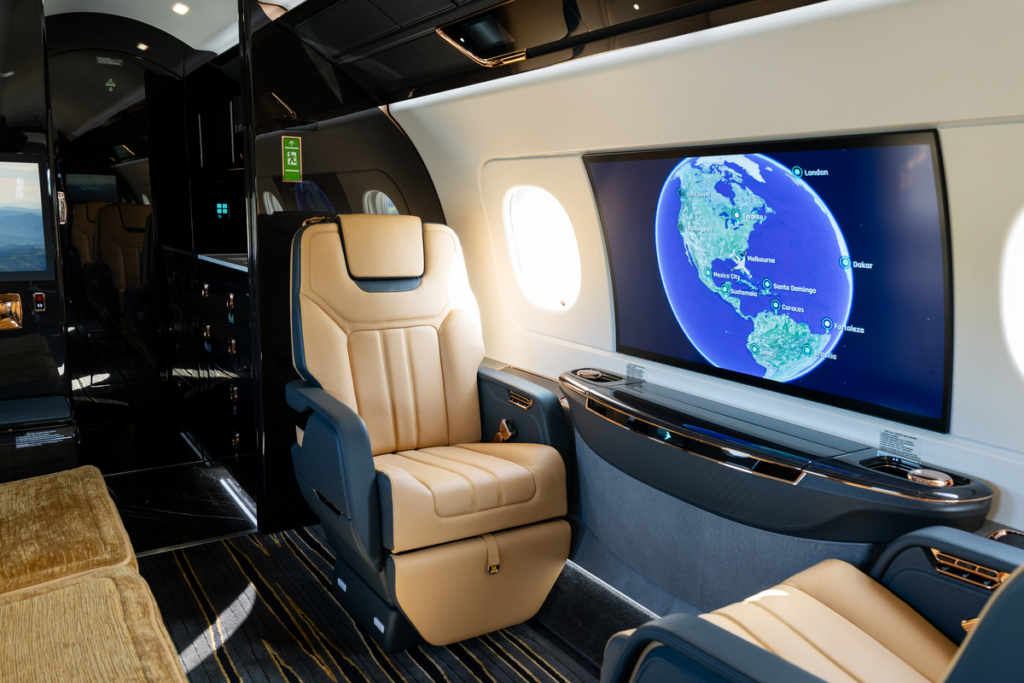
Passengers can also use it for video conferences or turn the cabin into a private cinema.
The technology moved beyond the concept stage in September 2026 when Embraer delivered the first Praetor 600E equipped with Smart Window to Flexjet.
Like other cabin innovations, this was first introduced on private jets, but could ultimately be adapted for passenger aircraft.
2. Lufthansa seats with their own climate
Status: Flying now
Finding the Goldilocks temperature for passengers in an aircraft cabin—neither too hot nor too cold—is becoming easier. Lufthansa‘s Allegris First and Business Class seats let passengers regulate the temperature of their own seat by creating a personalised microclimate.
The system, developed with Swiss company Caynova, uses heating elements and small fans built into the upholstery. Lufthansa describes it as the world’s first heating and cooling system for passenger aircraft seats.
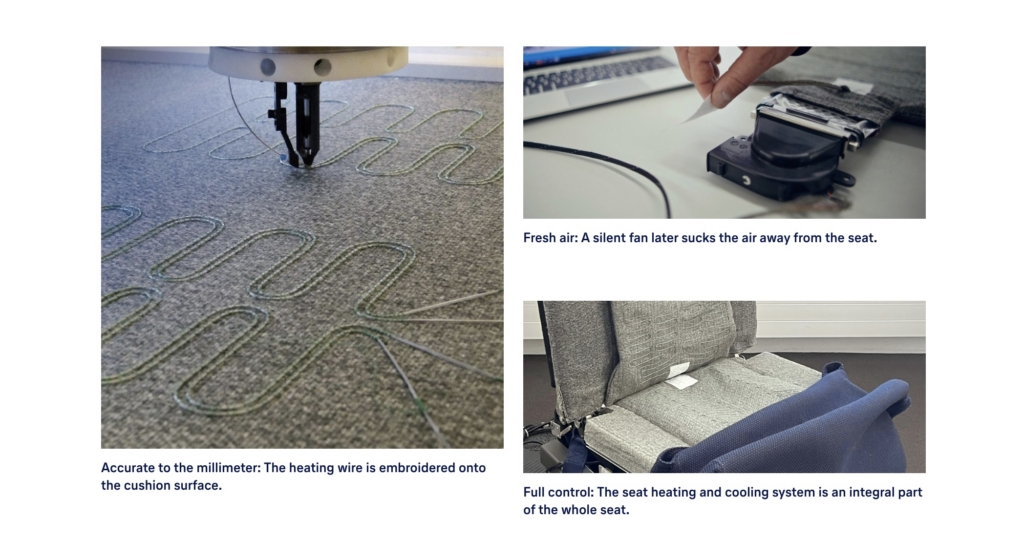
The technology is already available on Allegris-equipped aircraft. Lufthansa’s First Class Suite Plus also combines personal climate control with a 43-inch 4K monitor, wireless charging and a tablet to control the seat, lighting and entertainment.
It’s an invisible improvement, but very cool (or warm or however you like it).
3. Panasonic brings OLED to the seatback
Status: Flying now
OLED technology is changing in-flight entertainment.
Panasonic Avionics‘ Astrova uses 4K OLED HDR10+ displays, Bluetooth connectivity and USB-C power. Its modular architecture allows airlines to replace components as consumer technology evolves rather than replace the entire entertainment system.
Astrova entered commercial service with Air Canada in April 2026 on an Airbus A321.
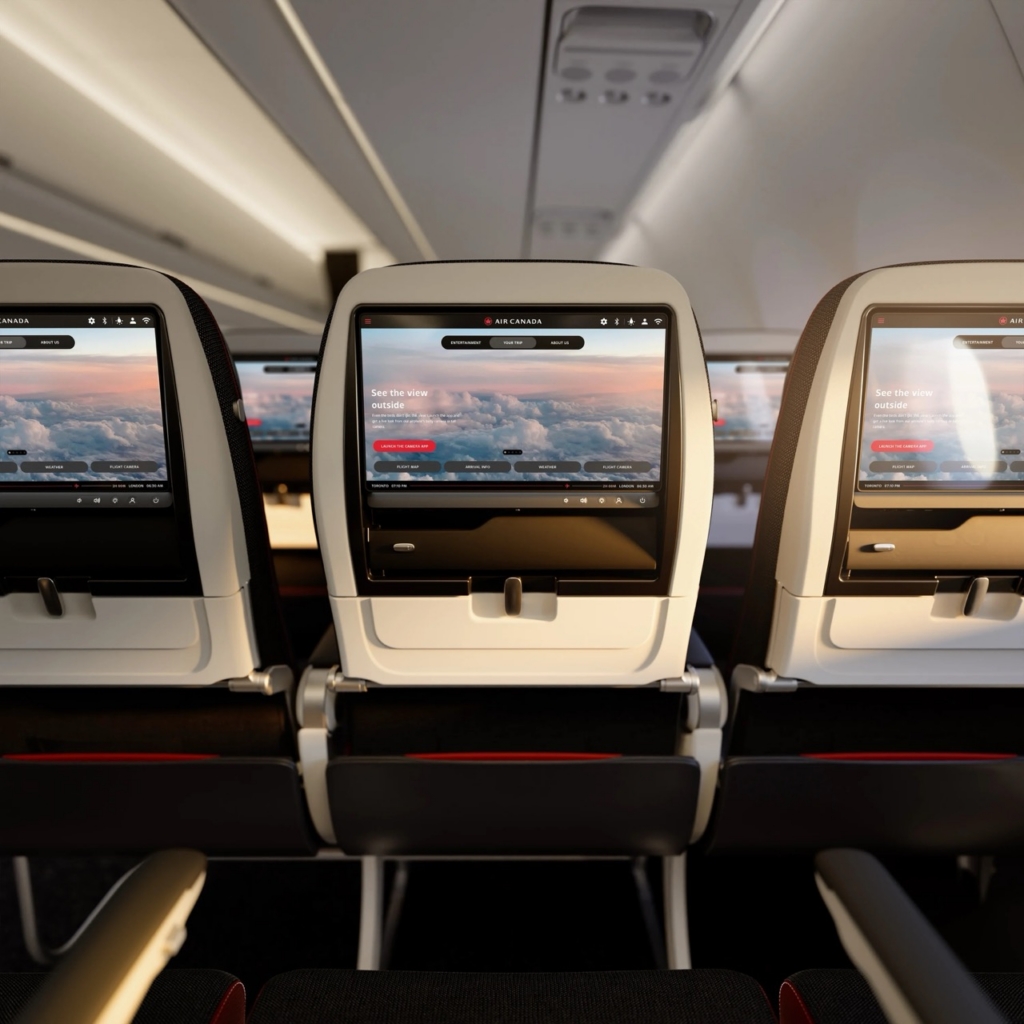
In June, Saudia became the first airline to operate Astrova aboard an Airbus A321XLR.
The technology has since achieved another first. In August, the full range of Astrova displays became the first inflight entertainment system to meet Eyesafe Display Requirements 3.0 for blue-light management and display performance, helping passengers rest more comfortably while keeping entertained.
4. Delta is turning the seatback screen into a smart TV
Status: Flying now
The next step for inflight entertainment may be how well the aircraft recognises individual passengers.
Delta Air Lines won the 2026 Crystal Cabin Award for IFEC and Digital Services for its Connected Onboard Platform. The system brings operational, connectivity and customer-experience data together across the airline’s different entertainment and connectivity providers.
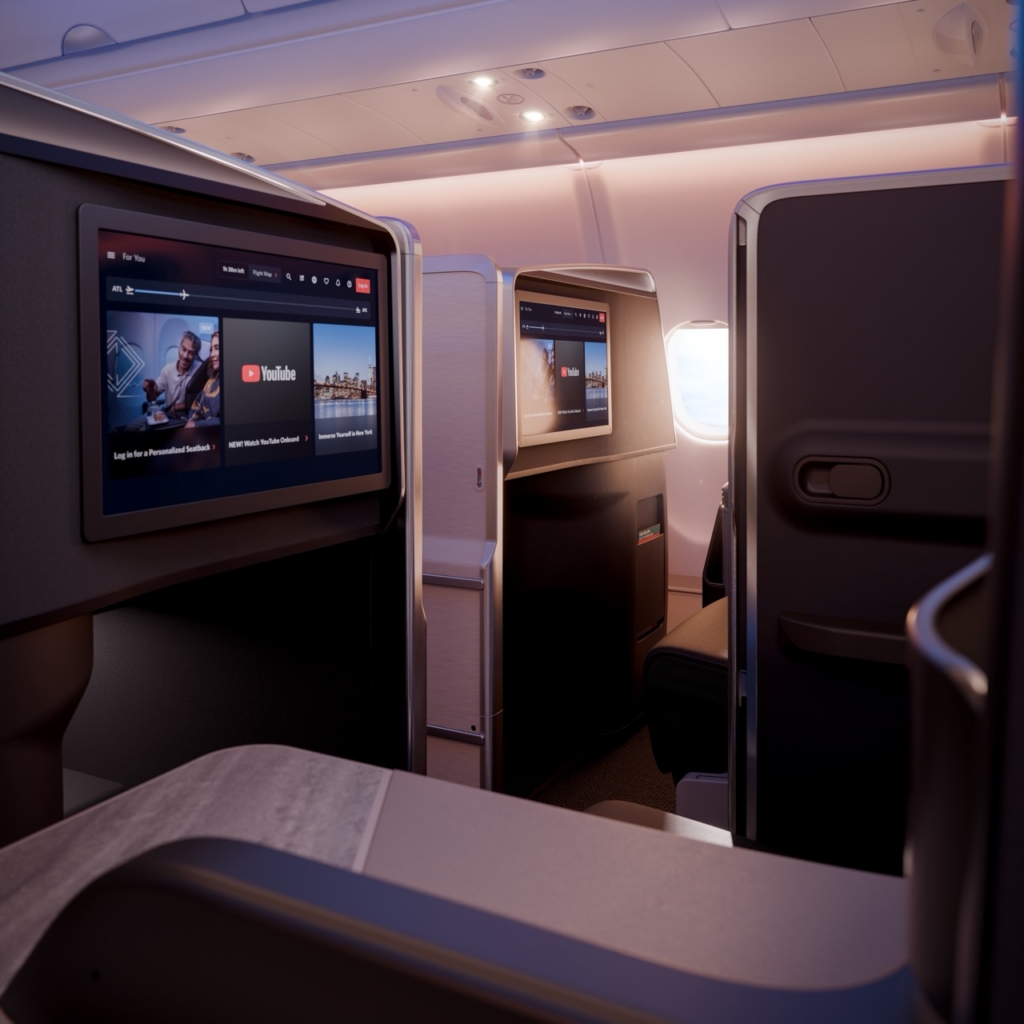
Passengers see the result through Delta Sync. When logged in, the seatback can remember where a passenger stopped watching a film, provide personalised recommendations and show real-time information about connecting flights. Delta says its personalised seatback experience is already installed on hundreds of aircraft.
The aircraft seat could be a seamless extension of the passenger’s digital life instead of an anonymous entertainment terminal that resets after every flight.
5. ANA finds more space without making the aircraft bigger
Status: Entering service
Passenger aircraft are very expensive real estate. How the limited space available is used can make all the difference to passenger experience and airline profitability. The best cabin innovations sometimes come down to geometry rather than electronics.
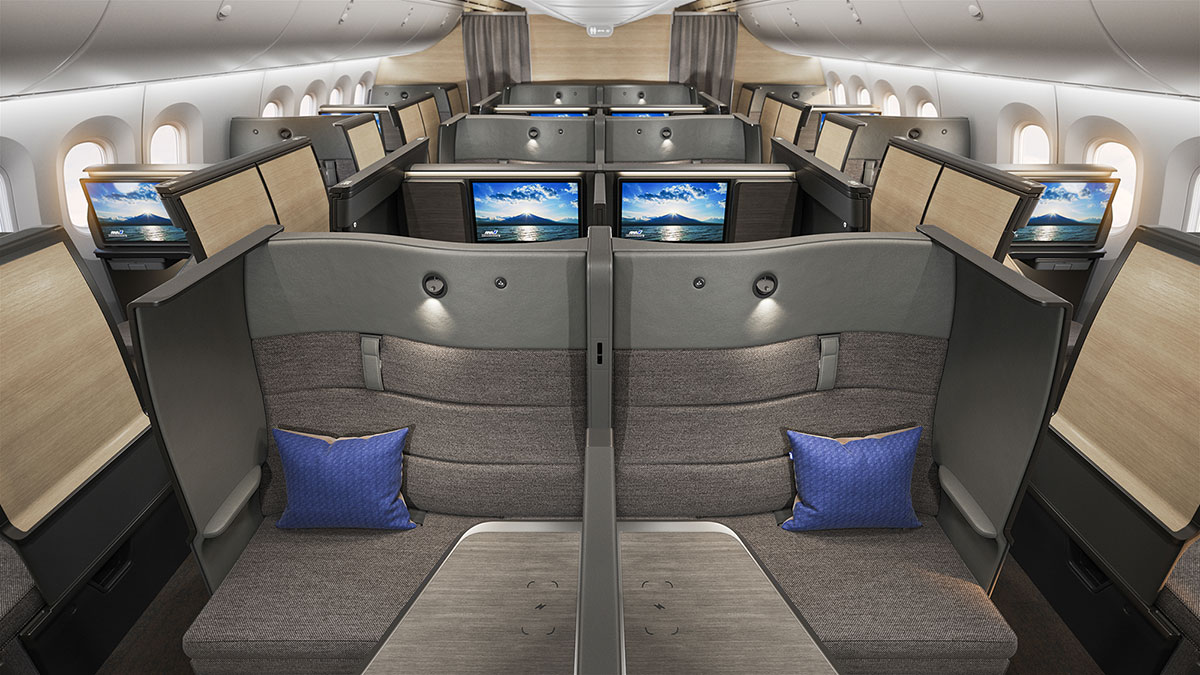
ANA’s THE Room FX business class for the Boeing 787-9 uses alternating forward- and rear-facing seats and thinner doors, partitions and backrests to create more usable passenger space.
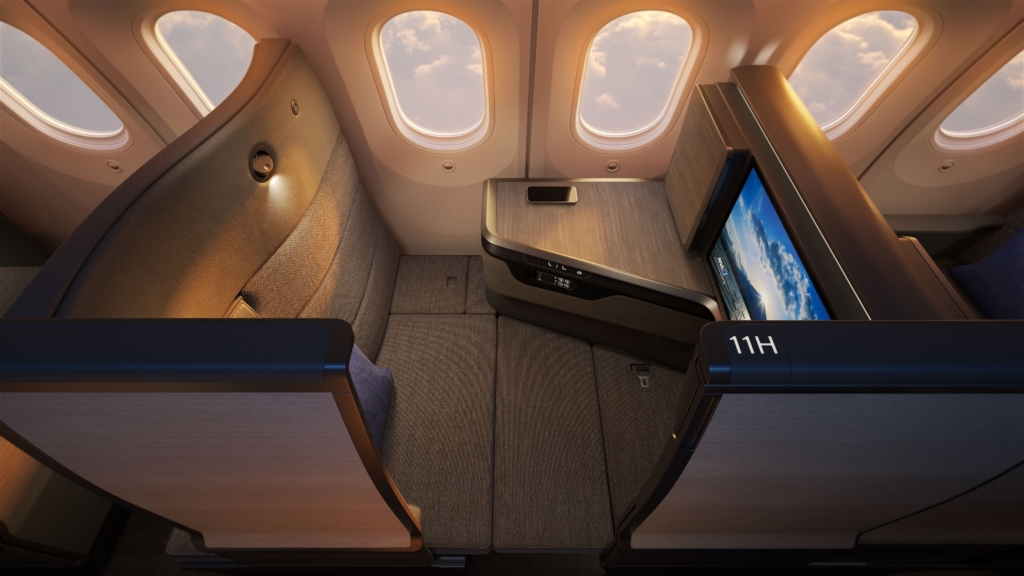
The seat can be used in several positions, similar to a sofa, before converting into a bed. Each suite has a privacy door, 24-inch 4K monitor, Bluetooth audio, USB-A and USB-C power and wireless charging.
ANA plans a progressive rollout on long-haul 787-9 routes from 2026.
The design won the Cabin Concepts category at the 2026 Crystal Cabin Awards. Judges highlighted the way two seats are incorporated into one compact structure, reducing both weight and space requirements.
6. Collins turns unused cabin space into a passenger retreat
Status: Concept
Aircraft designers spend their time trying to squeeze maximum value from every centimetre of the cabin. Collins Aerospace’s SkyNook starts with space that is already there but difficult to use.
The concept creates a semi-private area between the aircraft sidewall and reduced-density economy seating.

Passengers can use that space to relax away from their seats. It can also provide comfort for families and passengers with particular needs.
SkyNook won the Passenger Comfort category at the 2026 Crystal Cabin Awards.
It’s a different approach to cabin design, finding a good application for gaps previously considered unusable.
7. Airbus wants wheelchair users to fly in their own chairs
Status: Development — target 2032
One of the most consequential future cabin innovations could change how wheelchair users travel.
Airbus’s Airspace U Suite would let passengers with reduced mobility remain in their own wheelchair aboard an aircraft.
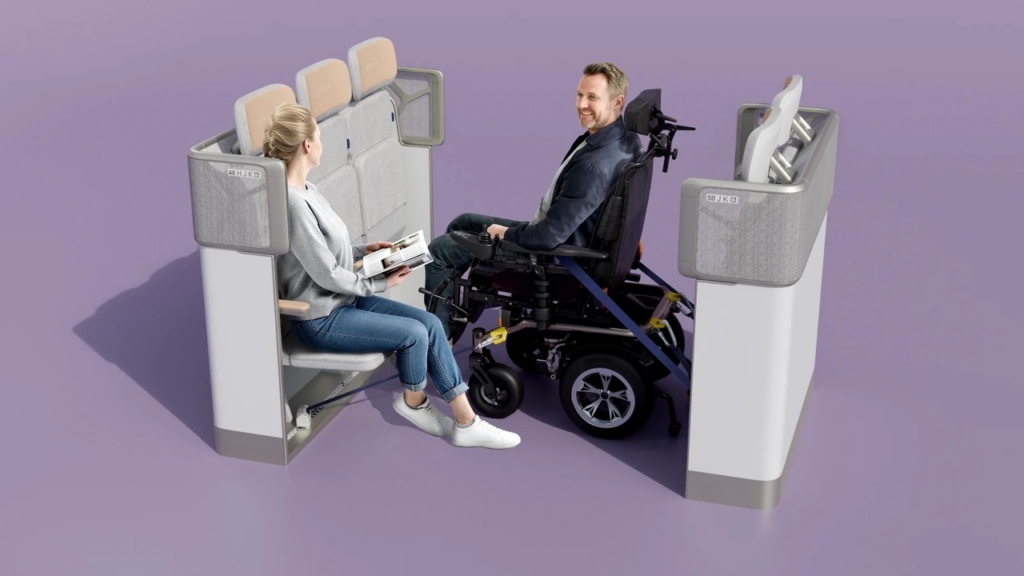
The programme passed an important milestone in March 2026 when Airbus conducted a flight test with a passenger secured in their personal wheelchair during cruise.
The test focused on the wheelchair and restraint system. Further work is required on the complete compartment and certification. Airbus currently projects first delivery in 2032.
If successfully certified, the system could address one of the most persistent accessibility problems in commercial aviation, freeing passengers from having to surrender their specialised wheelchairs before boarding and transfer into an aircraft seat.
8. Aircraft furniture that changes shape
Status: Future technology
Future cabins may also contain furniture that appears only when passengers need it.
Austrian cabin specialist F/LIST has developed a Morphing Sideledge Table using shape-changing technology. In its normal state, the surface provides a continuous aircraft side ledge.
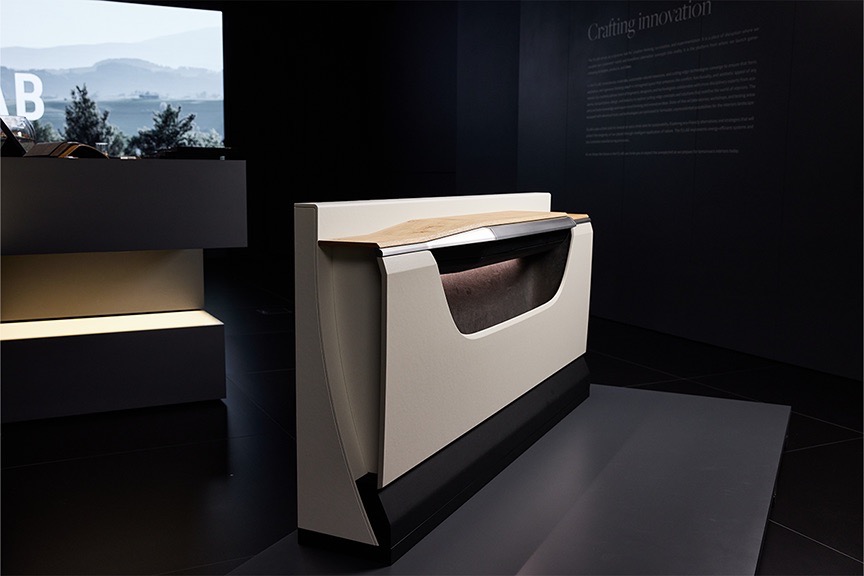
When activated, a table automatically extends from it, creating a dining or working surface and revealing additional storage.
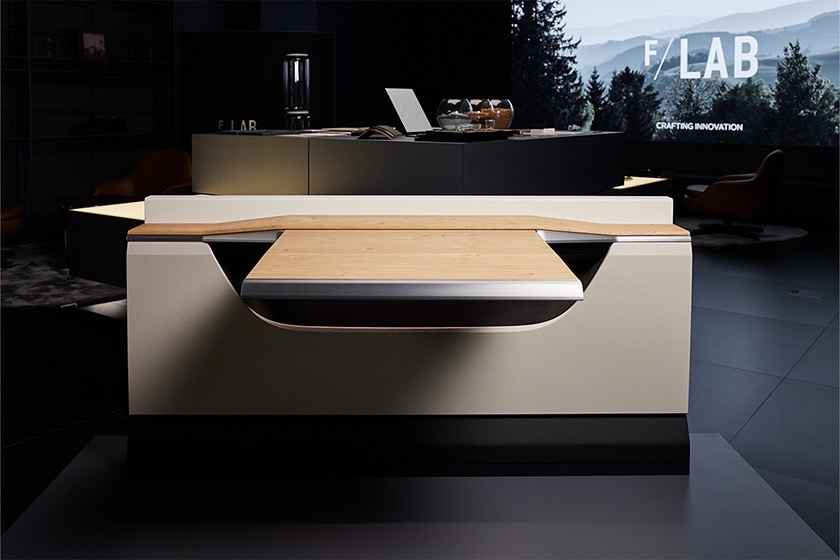
The company says the table can stop in several positions. It can also be integrated with existing cabin management systems.
F/LIST has continued developing the idea. Its newer Morphing Armrest also changes shape at the touch of a control to adapt to passenger needs.
Future premium cabins could replace fixed furniture with adaptable surfaces, freeing space when features are not needed.
9. Cabin surfaces become invisible controls
Status: Future concept
Lufthansa Technik and BMW Designworks are taking the idea of hidden cabin features further with disappearing technology.
Their BOW VIP cabin concept incorporates Lufthansa Technik’s Hidden Touch system. Controls can be integrated directly into tables and other cabin surfaces, disappearing when they are not being used.
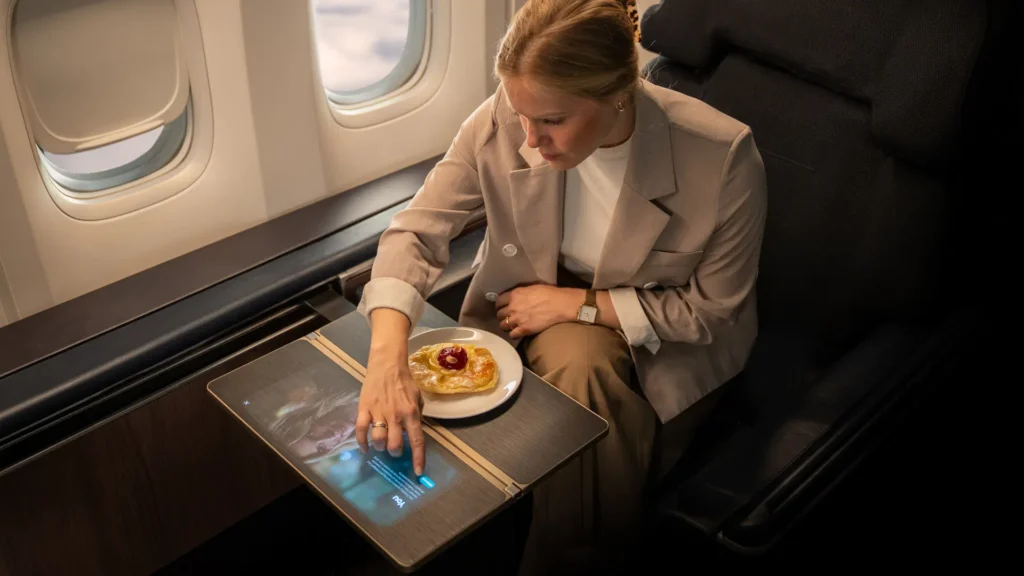
The concept combines the technology with curved OLED screens, wireless charging, lighting effects and Lufthansa Technik’s network-integrated cabin equipment system.
Instead of filling a cabin with switches, displays and control panels, the technology turns the furniture into the interface.
It offers a glimpse of a cabin where much of the technology passengers use remains invisible until it can be useful.
10. Qantas creates a space for passengers to move
Status: Coming in 2027
Qantas is taking a different approach to cabin innovation for its longest flights: deliberately leaving valuable floor space without seats.
The airline’s Airbus A350-1000ULRs for Project Sunrise will feature a dedicated Wellbeing Zone between premium economy and economy.
The space lets passengers leave their seats and move during flights that could remain airborne for around 20 hours. It includes sculpted wall handles for stretching, an on-screen programme of guided exercises and a self-service refreshment station.
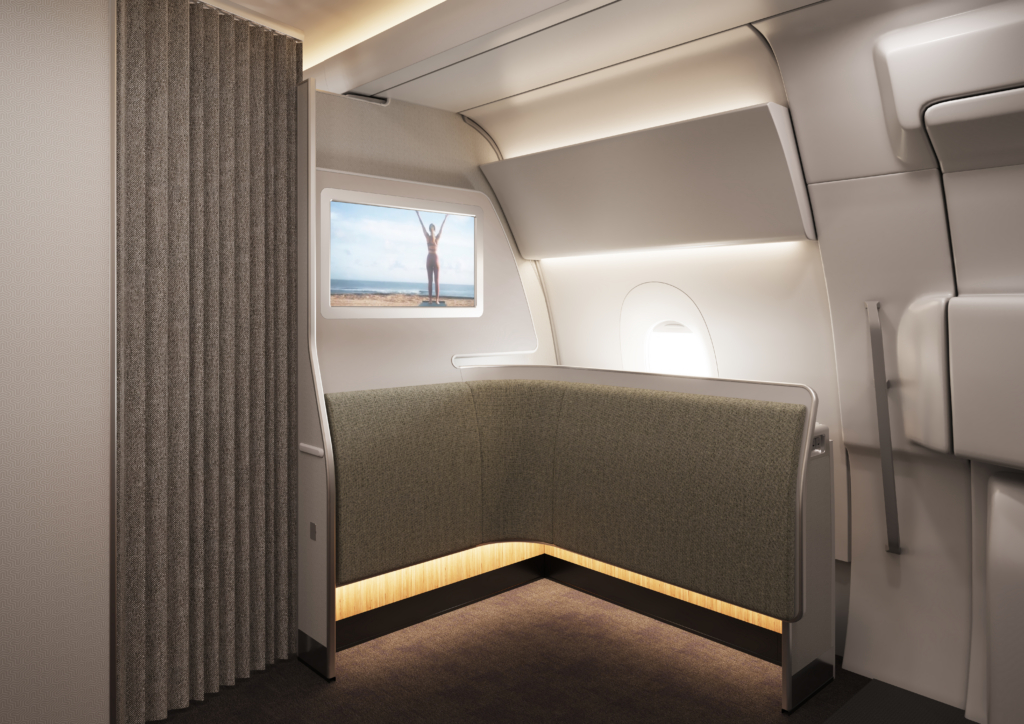
Qantas developed the zone with input from scientists at the University of Sydney’s Charles Perkins Centre as part of research into reducing the effects of ultra-long-haul travel.
The A350s will operate Qantas’s planned nonstop Project Sunrise services connecting Sydney with London and New York. The airline is targeting the first Sydney-London service for October 2027.
The Wellbeing Zone challenges one of the most fundamental principles of airline cabin economics: that available floor space should generate revenue.
Qantas is sacrificing space that could fit seats to tackle the physical demands of spending almost an entire day aboard an aircraft.
Ultra-long-haul flying has created a new category of cabin innovation, where passenger movement, sleep, lighting, food and wellbeing become as important to cabin design as the seat itself.
What will the aircraft cabin of the future look like?
Some of the biggest changes coming to the skies may be difficult to see.
For decades, airline cabin competition centred on physical products: wider seats, larger screens and more elaborate premium cabins.
Those improvements will continue, but cabin technology offers new opportunities to improve the passenger experience.
Displays can be integrated into walls, becoming panoramic virtual windows. Furniture can change shape to fit the needs of the moment. Seats can create individual microclimates that adapt to personal comfort. Entertainment systems remember passenger preferences for a seamless digital experience.
Architecture still matters, but unused cabin spaces are being reconsidered. Spaces are being created intentionally for passenger well-being, not only focused on revenue.
There are also innovations designed around problems that technology has historically failed to solve, particularly accessibility.
The aircraft cabin of the future may be less like a collection of seats and screens—and more like an adaptable, connected environment built around the individual passenger experience.