


Why Airbus is deliberately shaking its new A350F freighter ahead of first flight

3 min read
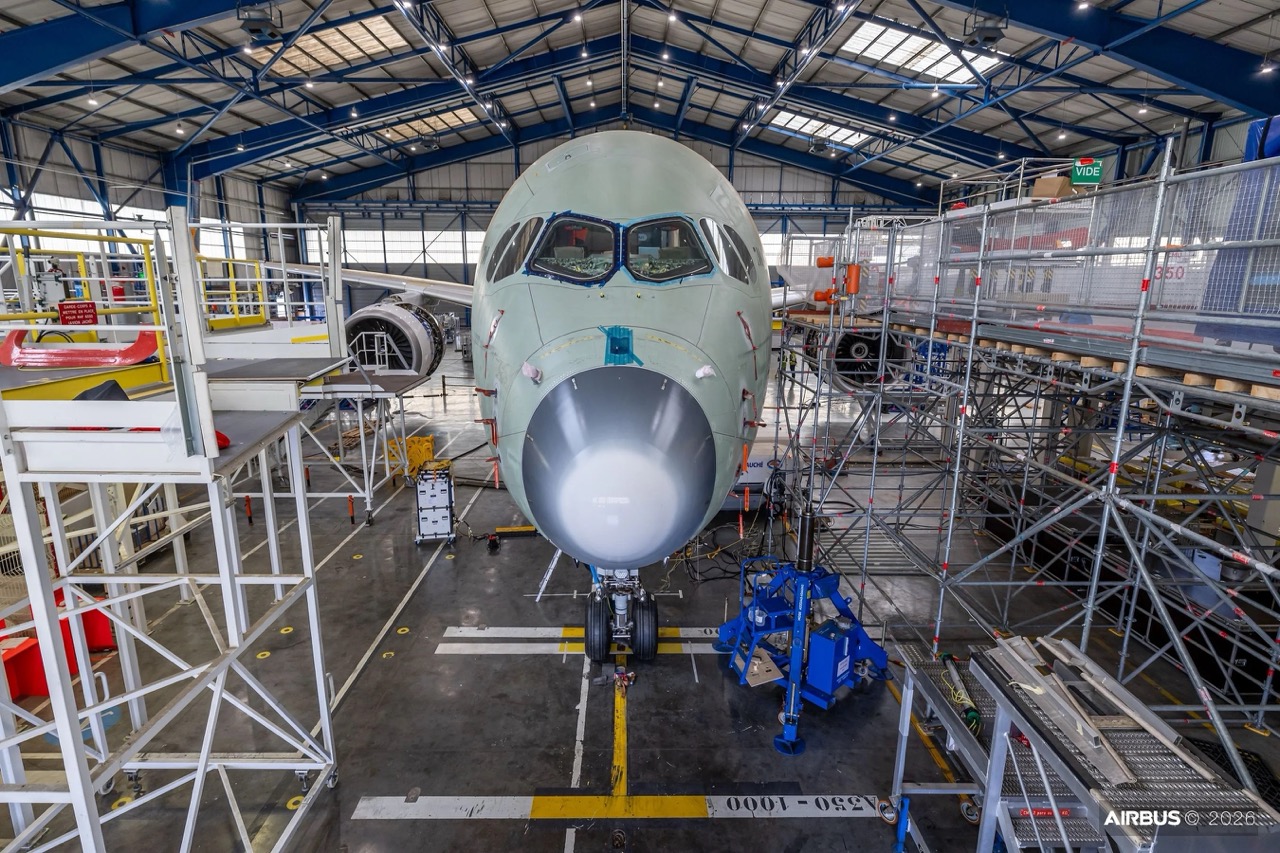
The Airbus A350F has completed one of the critical milestones on the road to its first flight, with engineers deliberately shaking the aircraft to understand exactly how it will behave in the air.
Ground Vibration Testing (GVT) is a mandatory certification trial used to validate the aircraft’s structural dynamics before flight testing.
Airbus recently completed testing on the A350F test aircraft MSN700 in Toulouse, confirming that the freighter’s aeroelastic behaviour matches the digital models used during its design.
Why engineers make aircraft vibrate on purpose
Ground vibration testing measures how an aircraft responds to movement and identifies its vibration modes – the specific frequencies at which different parts of the airframe flex and oscillate.
For the test, Airbus engineers fitted the A350F with hundreds of accelerometers across the fuselage, wings, and tail. Hydraulic shakers created controlled vibrations, and sensitive instruments measured the aircraft’s response.
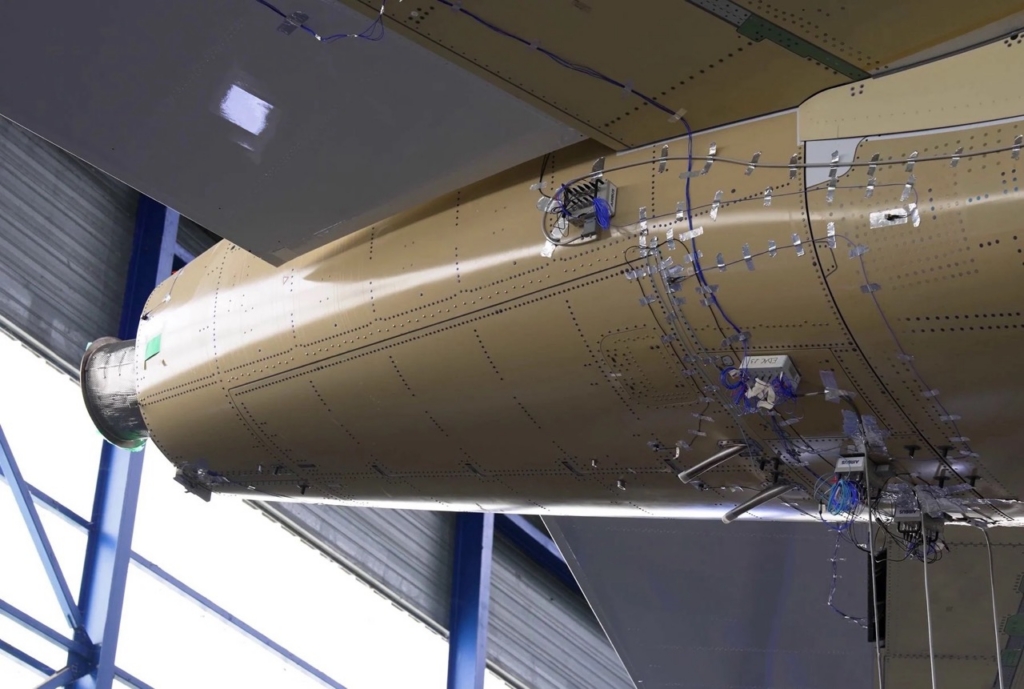
Airbus’ aeroelastic testing expert Fabien Ayme explains:
“When the test was underway, the aircraft was ‘excited’ by its own control surfaces through sine sweeps performed on different frequency bandwidths. In addition, some shakers were connected to the airframe at the wingtips, on the rear fuselage cone (‘section 19.1’) and on the engines to complement the varieties of excitations.”
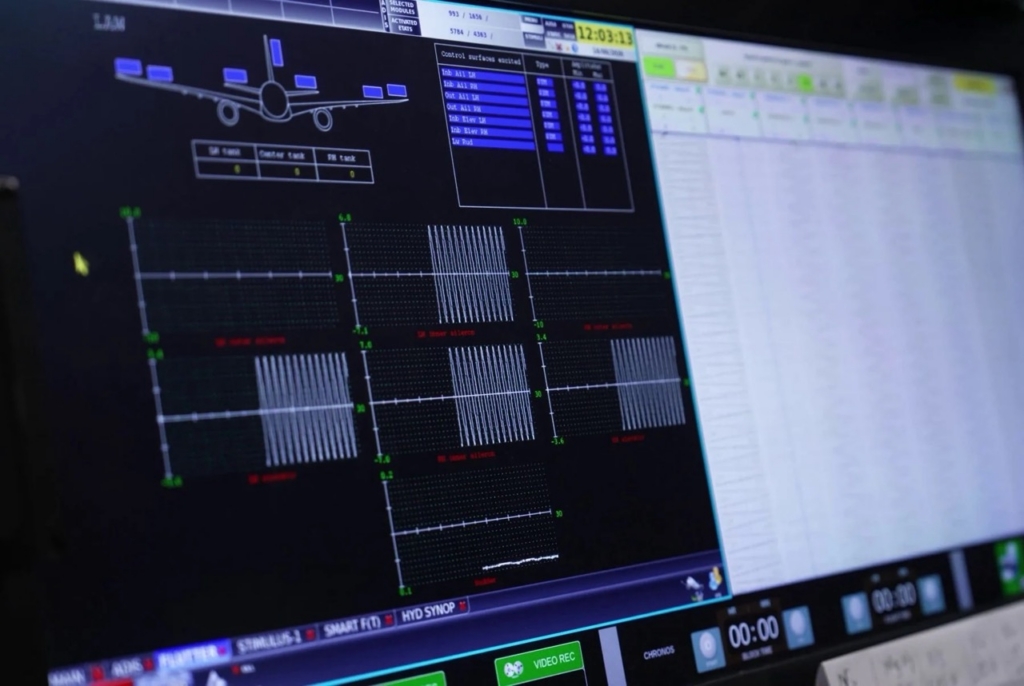
The data collected through the vibration trial allows engineers to validate the aircraft’s mathematical aeroelastic models, ensuring there are no unexpected structural behaviours that could lead to dangerous phenomena such as flutter when the aircraft enters the flight envelope.
A critical step before Airbus A350F first flight
Unlike many of the functional tests already completed on the A350F, ground vibration testing focuses on how the complete aircraft behaves as a single structure.
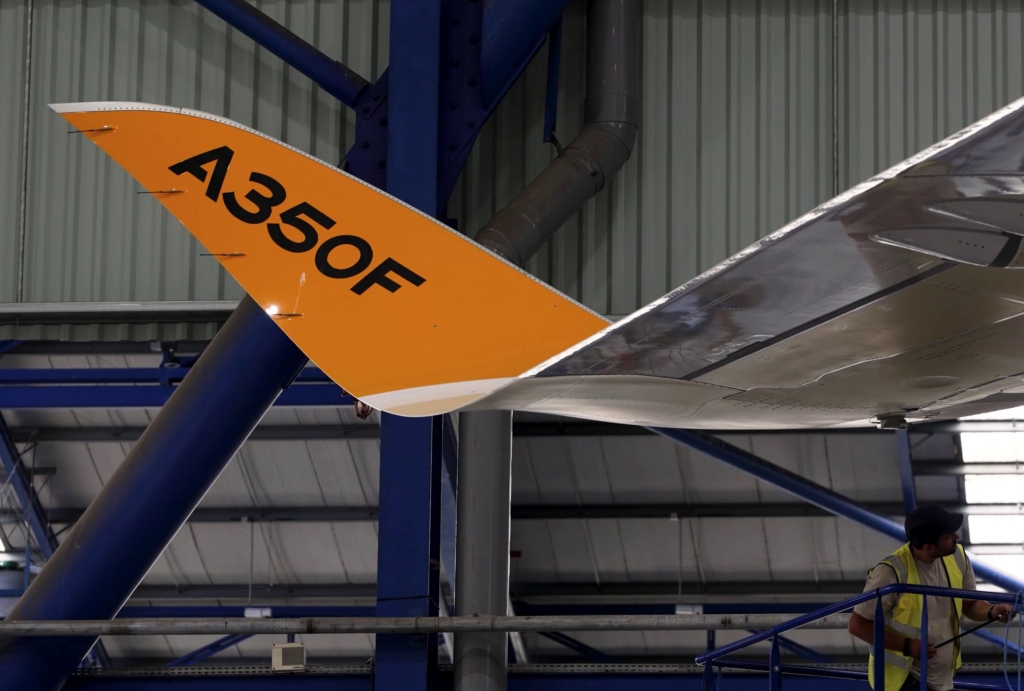
The programme follows months of extensive systems testing on the first two flight-test aircraft, MSN700 and MSN701, including:
- Cargo loading system validation
- Main deck cargo door testing
- Water drainage and environmental systems
- Pressurisation trials
- Maximum payload testing with a 111-tonne load
- Anti-tail-tipping protection system verification
Ground vibration testing bridges the gap between these ground-based evaluations and the start of flight testing by confirming that the aircraft’s structural behaviour matches Airbus’ predictions.
How ground vibration testing supports A350F certification
The results from the latest testing campaign will be used to refine the flight-control laws and establish the safety margins required before the aircraft is cleared to fly.
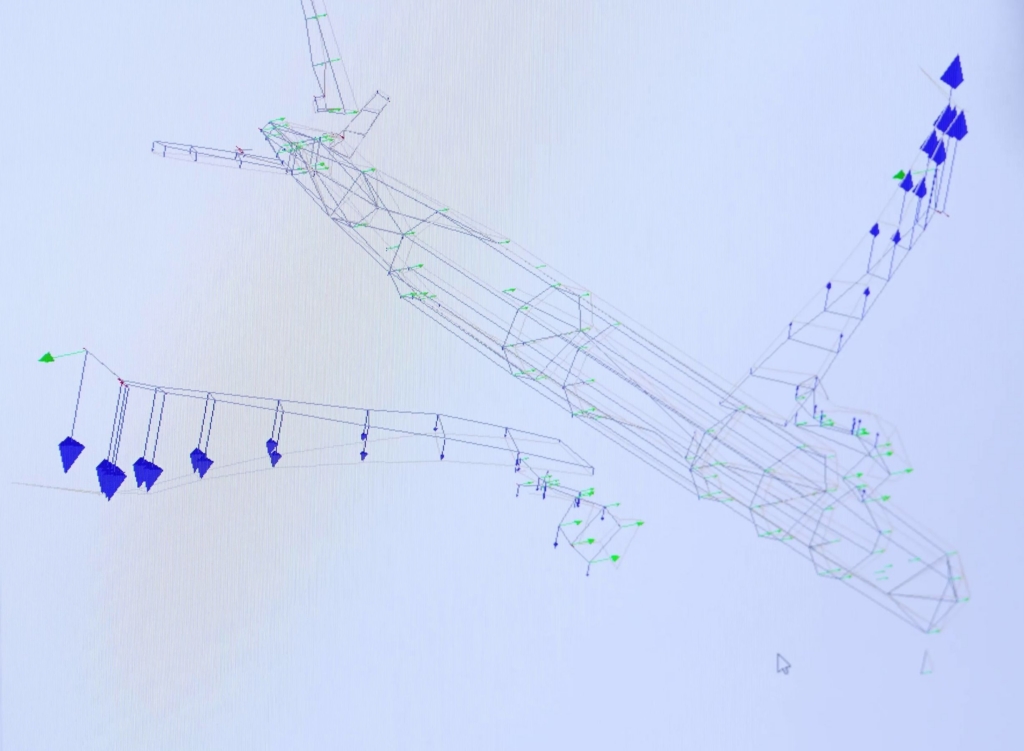
“By validating the aircraft’s structural dynamics on the ground, the GVT team has ensured that when the A350F finally takes to the skies, it does so with the confidence of a design – particularly its aeroelastic model – that has been rigorously tested, measured and quantified,” Ayme said.
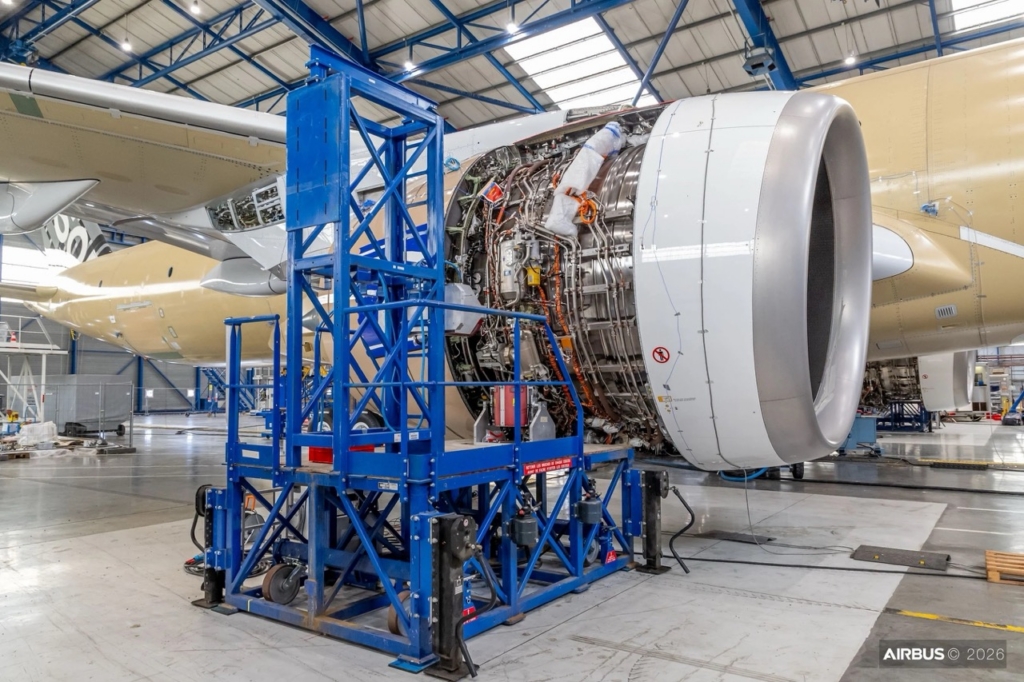
During flight testing, engineers will compare real-world flight data against the GVT results and confirm the aircraft behaves as expected throughout the flight envelope. This step is key to certification by the European Union Aviation Safety Agency (EASA) and other regulators.
Airbus A350F: The next-generation freighter
The A350F is Airbus’ first all-new widebody freighter in decades and is based on the A350-1000 platform.
It is designed to carry a payload of up to 111 tonnes over approximately 4,700 nautical miles, using more than 70% advanced composite materials by weight, thereby improving fuel efficiency compared with older-generation cargo aircraft. Airbus says the aircraft also meets the ICAO CO₂ emissions standards due to take effect in 2027.
The programme is progressing towards first flight ahead of a planned entry into service in 2027, where it will compete directly with Boeing’s forthcoming 777-8 Freighter.


