

NASA takes ownership of X-59 as quiet supersonic flight moves closer to reality

6 min read
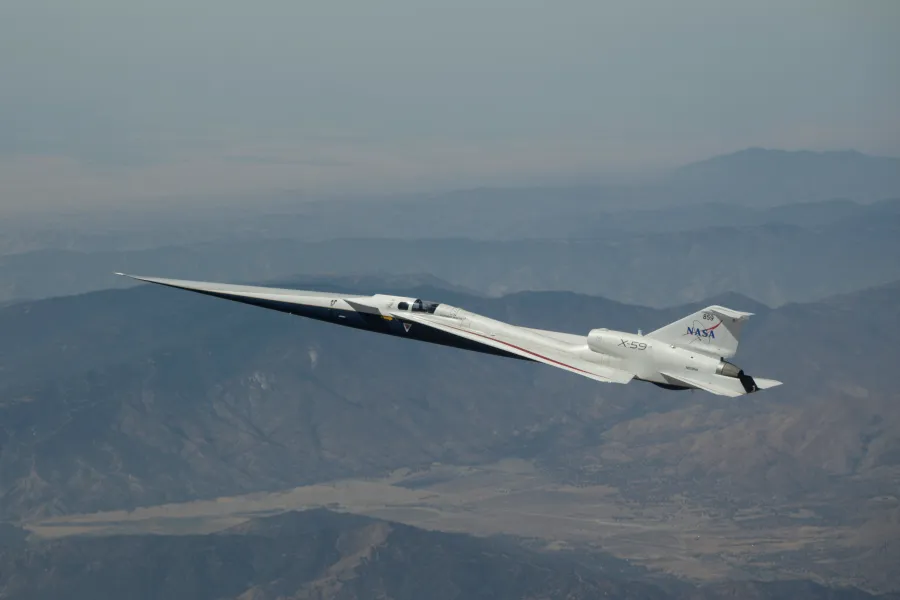

NASA has officially taken ownership of the X-59 quiet supersonic research aircraft from Lockheed Martin Skunk Works, marking another step in a programme that could eventually allow commercial passenger aircraft to fly faster than the speed of sound over land.
The transfer took place on 18 November and was announced by NASA on Monday, 23 November, following an aircraft acceptance review. Lockheed Martin will continue to provide technical support when required.
The aircraft has spent much of the past year demonstrating its flying qualities at different speeds and altitudes. NASA is now preparing for a more important part of the programme that of establishing whether the X-59 can consistently fly at supersonic speeds without producing the loud sonic booms that have restricted commercial operations over land for decades.
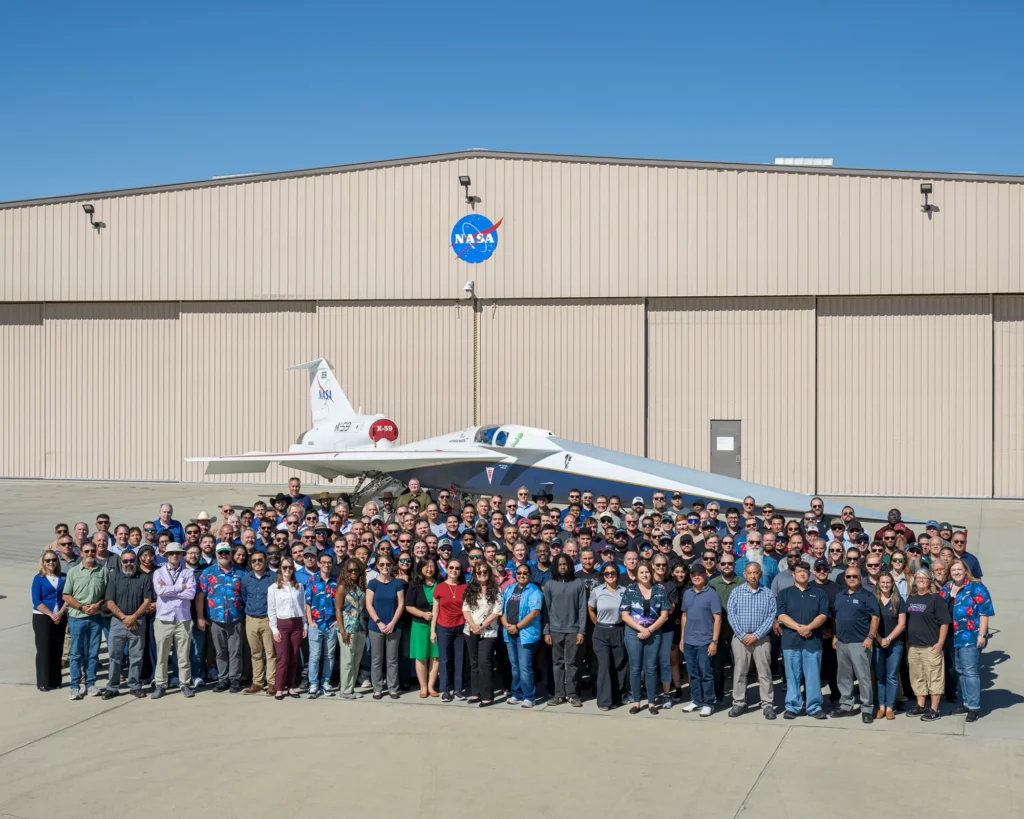
“To someone outside the flight test, this might seem like a subtle change,” said Cathy Bahm, NASA’s Low Boom Flight Demonstrator project manager.
“But for NASA, this is another big moment for the X-59, showing how far we have come, how much our hard work has paid off, and how much closer we are to providing the data to hopefully make commercial supersonic flight over land a reality,” Bahm said.
From 230mph to Mach 1.53 in a year
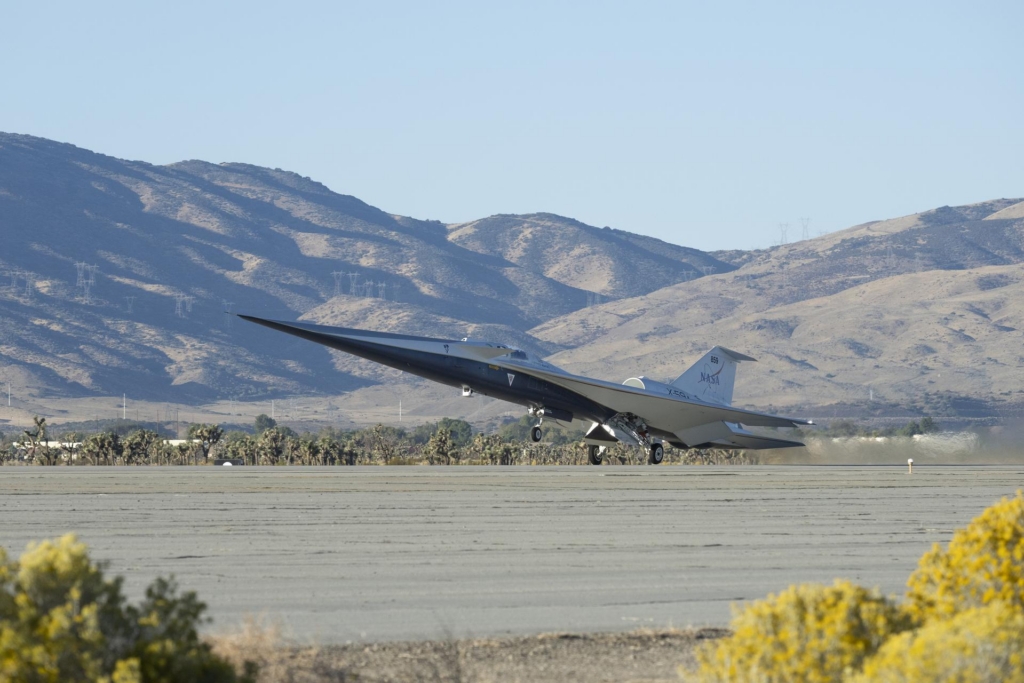
The X-59 made its maiden flight on 28 October 2025, taking off from Lockheed Martin’s Skunk Works facility in Palmdale, California, and landing at NASA’s Armstrong Flight Research Center in Edwards, which has since served as its operational base.
During that 67-minute flight, the aircraft reached 12,000ft and a speed of 230mph. The priority was to establish that its basic systems worked correctly and that the aircraft could be flown safely.
Following a scheduled maintenance period, the X-59 returned to the skies in March 2026. Engineers began gradually increasing its speed and altitude, studying how the aircraft behaved under different aerodynamic conditions.
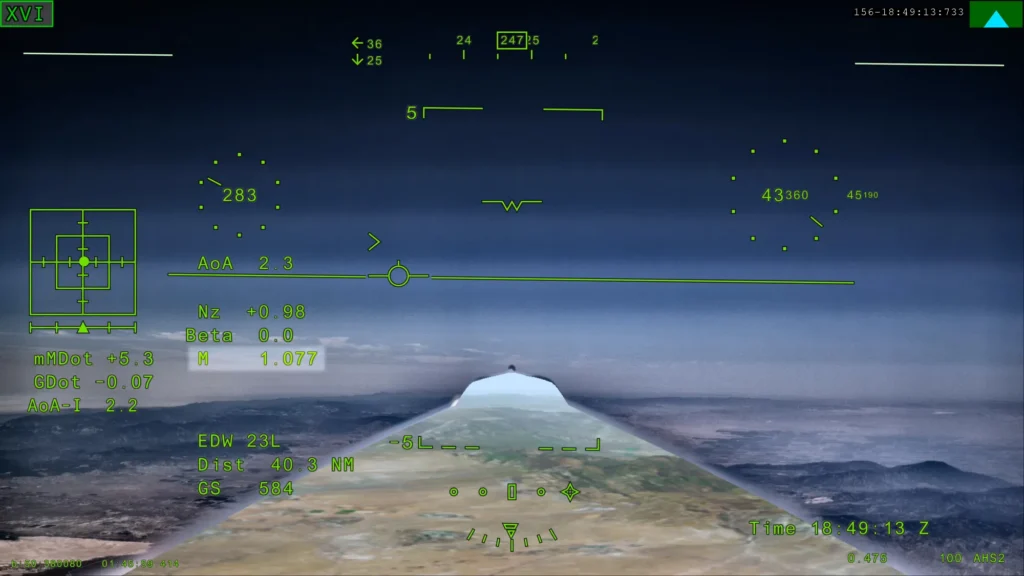
Less recalled that there was little to indicate from inside the cockpit that the aircraft had broken the sound barrier.
“You know you are supersonic when gauges say you are supersonic. I didn’t feel anything,” he said.
An even more significant milestone followed on 12 June, when the X-59 reached Mach 1.4 at 55,000ft. These are the conditions under which NASA intends to conduct its future flights over populated areas.
The distinction is important. The aircraft had now demonstrated that it could operate at the speed and altitude around which its low-boom technology was designed.
By August, engineers had completed 25 flights. NASA reported that measurements of aircraft stability, handling characteristics and structural loads were consistent with predictions made during computer simulations and wind tunnel testing.
No unexpected aerodynamic instability or excessive vibration had been encountered at that stage.
The pace of testing also increased. In September, the aircraft completed six flights in three days.
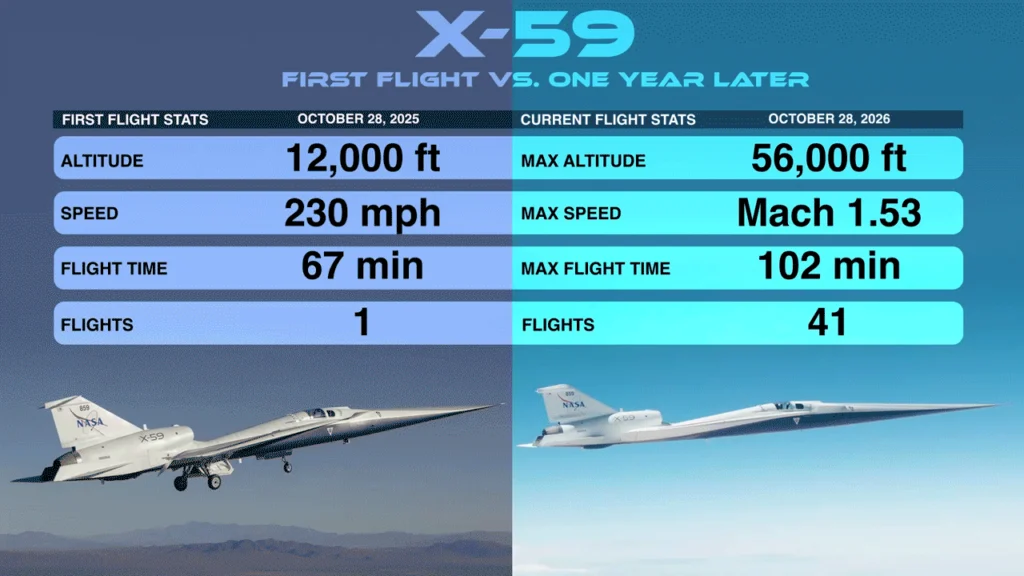
By the first anniversary of its maiden flight, the X-59 had completed 41 sorties, exceeded 56,000ft and reached a maximum speed of Mach 1.53. Its longest flight had lasted 102 minutes.
Why the X-59 looks so different
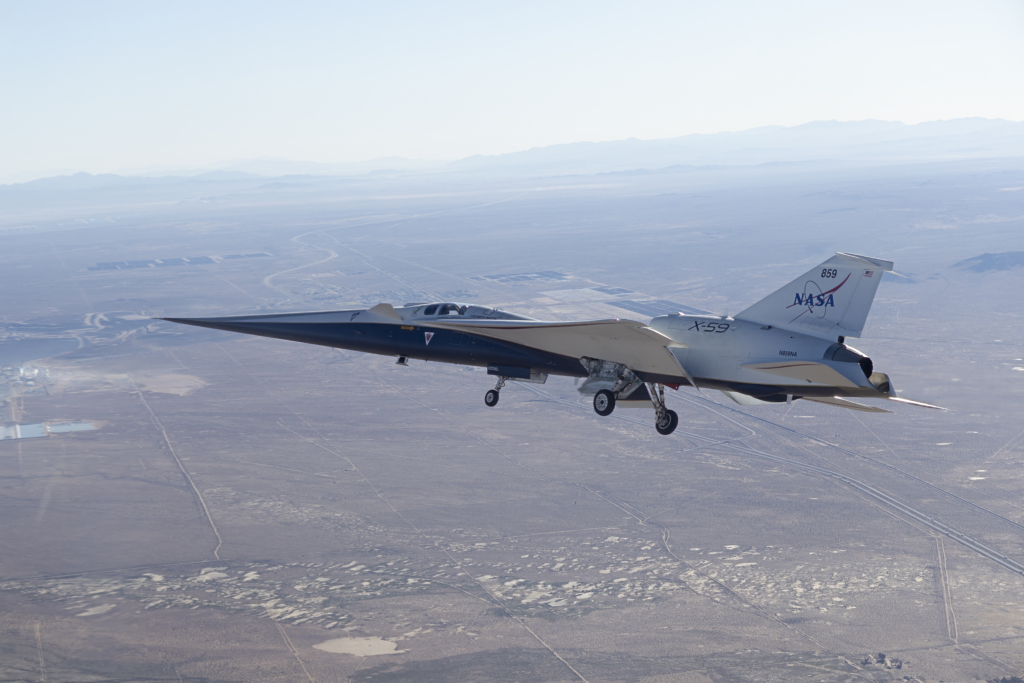
The unusual appearance of the X-59 is central to what NASA is trying to achieve.
When an aircraft travels faster than sound, pressure disturbances created as it moves through the air form shock waves. These can merge as they travel towards the ground, producing the familiar loud sonic boom.
The boom is not simply a noise generated at the moment an aircraft breaks the sound barrier. It continues along its supersonic flight path, potentially affecting communities hundreds of kilometres apart.
The X-59’s elongated nose, slender fuselage and carefully positioned wings are designed to prevent these shock waves from combining into a powerful boom.
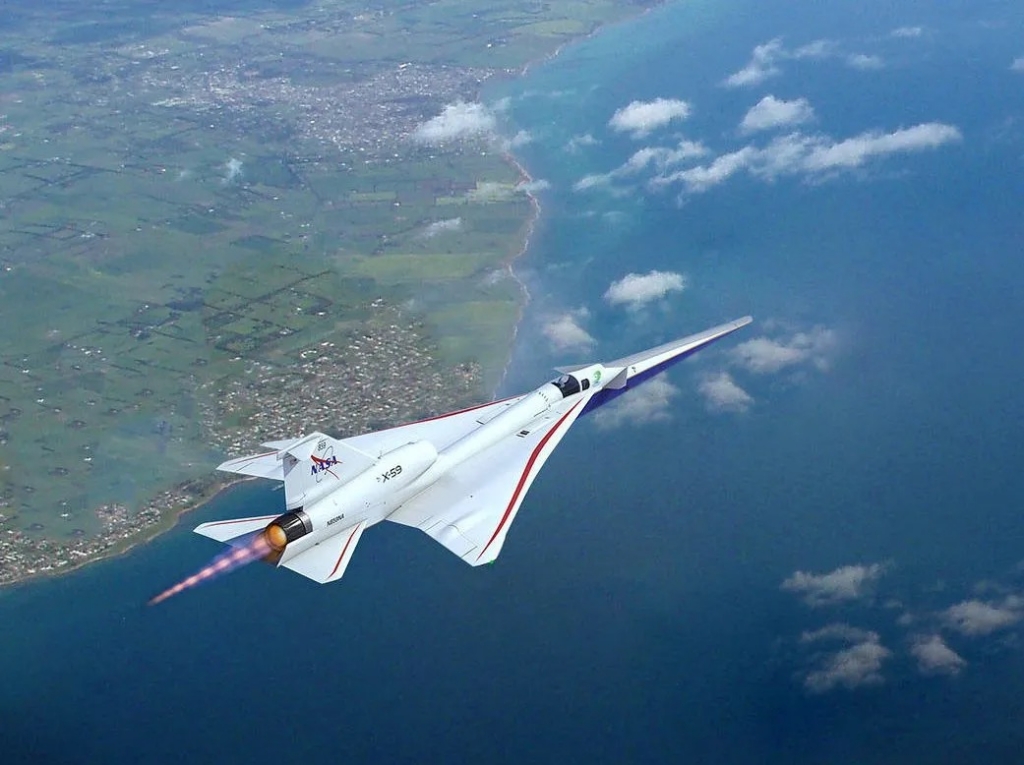
Its engine is mounted above the fuselage, helping to reduce the shock waves directed towards the ground.
The design has also presented some unusual engineering challenges. The aircraft’s long nose leaves the pilot without a conventional forward-facing windscreen. Instead, cameras and a high-resolution cockpit display provide a view of the airspace ahead through what NASA calls the eXternal Vision System.
At its intended cruising speed and altitude, NASA expects the sound reaching the ground to resemble a car door being closed about six metres away.
Whether the aircraft can consistently achieve that level of noise under real atmospheric conditions is what the forthcoming tests will establish.
Has the X-59 demonstrated quiet supersonic flight yet?
Not conclusively.
Although the X-59 has flown beyond the speed of sound on numerous occasions, its early supersonic flights were primarily concerned with aircraft performance and safety.
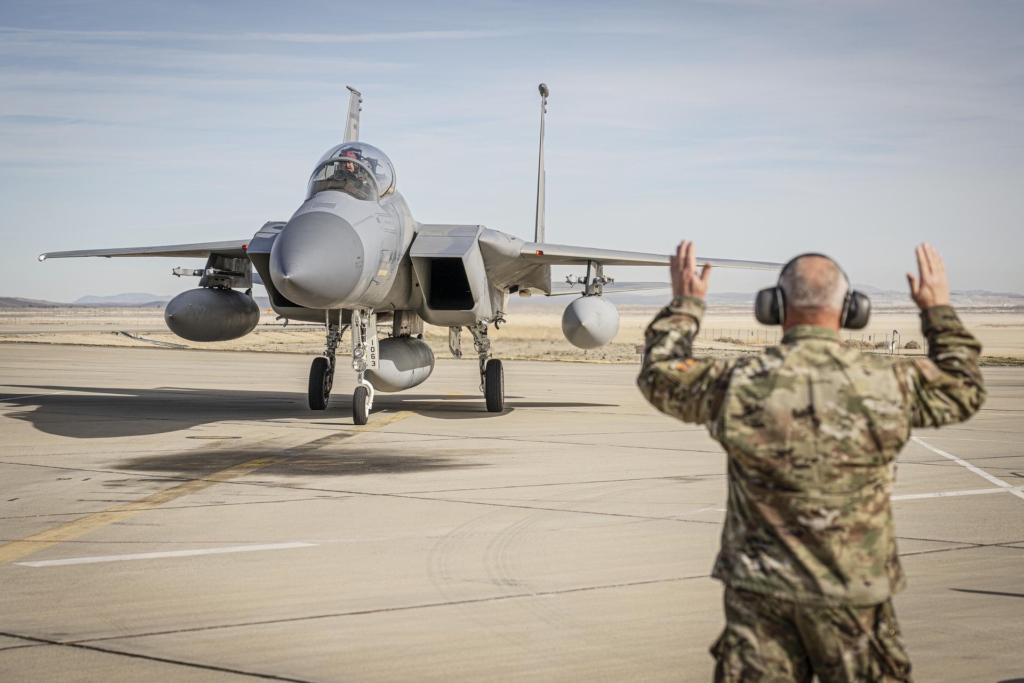
A conventional NASA F-15 research aircraft accompanied those flights, allowing engineers to monitor the X-59 in the air. However, the F-15’s own sonic booms masked whatever sound the experimental aircraft produced.
NASA will now increasingly focus on acoustic validation, conducting dedicated flights within the supersonic test range around Edwards Air Force Base in California.
Researchers will measure the pressure waves generated by the aircraft and the sound they produce on reaching the ground.
Atmospheric conditions, including temperature and wind, can influence how those waves travel. Engineers therefore need measurements from a range of flight conditions before taking the aircraft over populated areas.
The public will have a say
Perhaps the most unusual part of NASA’s Quesst mission is that its eventual success will depend partly on people who have nothing to do with aviation.
Once acoustic testing is sufficiently advanced, NASA plans to fly the X-59 over selected US communities and ask residents about the noise they experience.
A sound that appears acceptable to engineers examining instrument readings may be perceived differently by people going about their daily lives.
NASA will collect those responses and provide the findings to US and international aviation regulators. The intention is to give authorities enough scientific evidence to consider noise-based restrictions rather than blanket prohibitions on supersonic flight over land.
The programme is currently scheduled to run through 2029.
What it means for supersonic passenger travel
Noise restrictions were among the factors that limited Concorde’s commercial operations, confining most of its supersonic services to routes over the ocean.
Since Concorde’s retirement in 2003, no commercial supersonic passenger aircraft has entered service.
Removing or substantially reducing the restrictions associated with sonic booms could open domestic and other overland routes to future supersonic airliners, potentially making them commercially attractive on a much wider network.
The X-59 itself is a single-seat research aircraft and will never carry paying passengers.
NASA intends to make the research, engineering tools and validated design methods developed through Quesst available to help manufacturers design quieter supersonic aircraft of their own.
Sign up for our newsletter and get our latest content in your inbox.