

Four in 10 travellers skipped a trip over stress, SITA finds

5 min read

More than four in 10 travellers surveyed by aviation technology supplier SITA said they had decided against a trip because they expected the journey to be too stressful. The share rose to 61% among frequent flyers and 56% among travellers under 30.
SITA’s 2026 Passenger IT Insights report, released on 17 November, draws on responses from nearly 8,000 travellers in 24 countries. Overall, 63% reported feeling anxious at some point in the journey, and 80% thought technology could make flying less stressful.
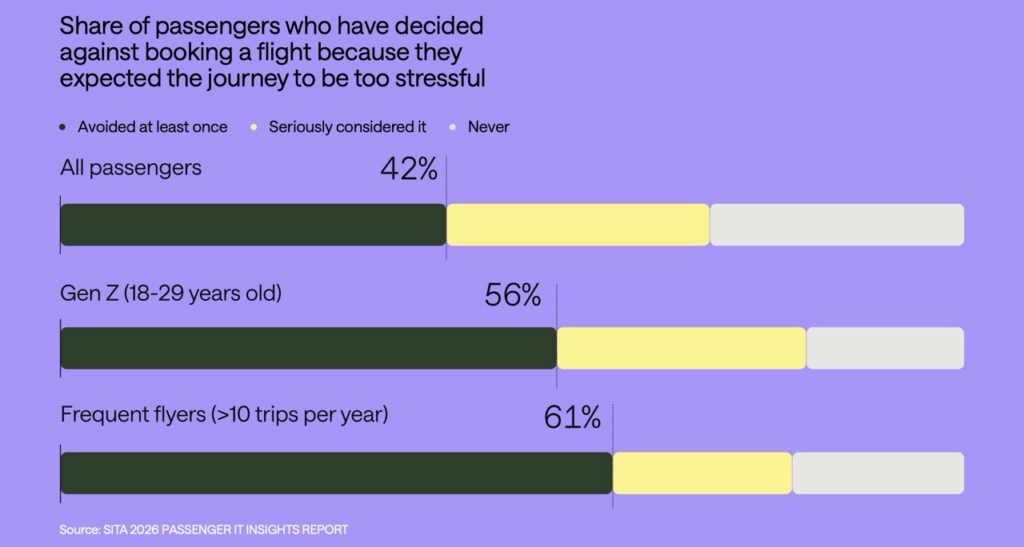
Stress is significantly affecting the next generation of travellers, with 73% of Gen Z passengers under 30 feeling anxious at some point during their journey.
Last year’s SITA survey, covered by Aerospace Global News, found a gap between passengers’ appetite for digital tools and what they could use throughout the journey. This year’s findings point to where travellers most want help when a trip is underway.
Delays and queues top the list
Nearly half of respondents named flight delays and cancellations among their biggest frustrations. Long waits came next, cited by 37%, followed by cramped seating (32%). Travellers also ranked worries about turbulence, lost luggage and missed connections among their top 10 concerns.
“Comfort matters too, but it comes second. Comfort-related concerns such as carry-on hassles, food quality and cleanliness mostly fill the lower half of the list,” SITA reports, with cramped seating as an exception, ranked third by a third of passengers. “The takeaway is that passengers notice discomfort, but they forgive it more readily than a delayed or cancelled flight.”
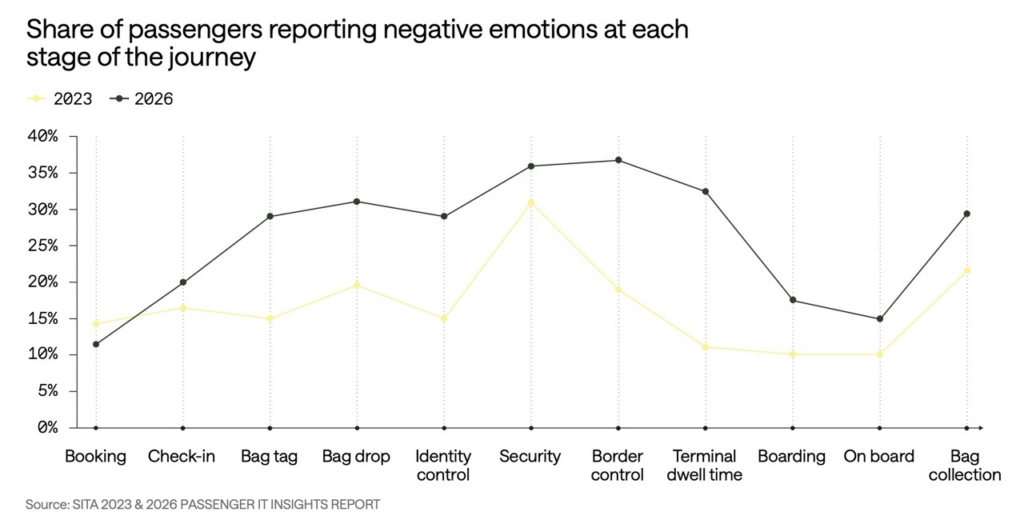
Border control drew the highest share of negative responses among the journey stages SITA assessed. Some 37% reported negative emotions there, and 59% used technology at that stage. By comparison, 91% used technology to book their trip and 12% reported negative emotions while booking.
SITA notes that crowding and waiting times can also affect how passengers feel.
The survey also asked passengers which stages of the journey could be improved with technology, with long waiting times and baggage handling concerns at the top of the list, each identified by 65% of those surveyed.
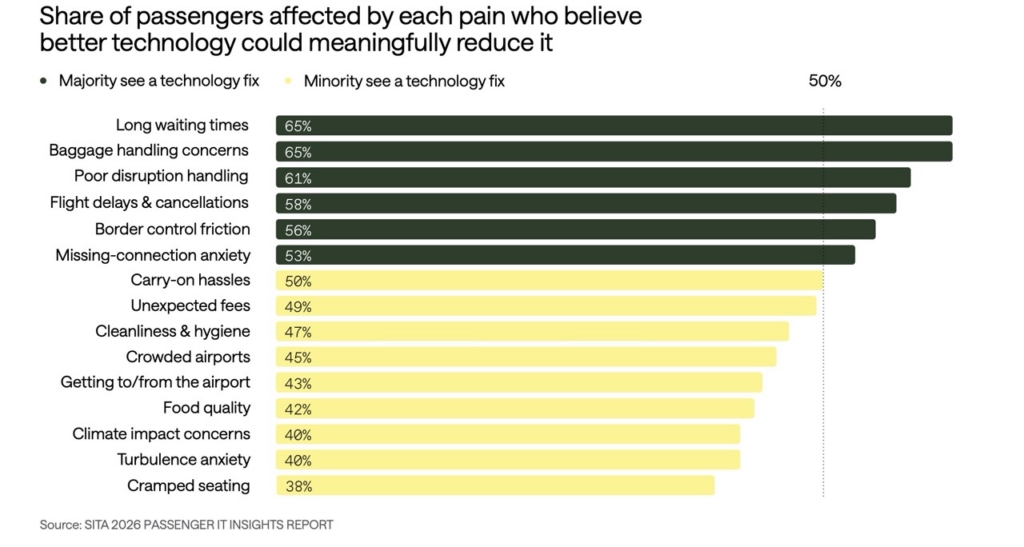
Poor disruption handling ranked third with 61%, and flight delays and cancellations ranked fourth with 58%.
Airports can encourage retail by reducing stress
The survey also points to a commercial opportunity for airports by reducing stress after security. Around a third of passengers reported anxiety between security and boarding, three times the share in 2023. That period is when passengers have time to visit shops, restaurants and lounges, provided they know when they need to be at the gate.
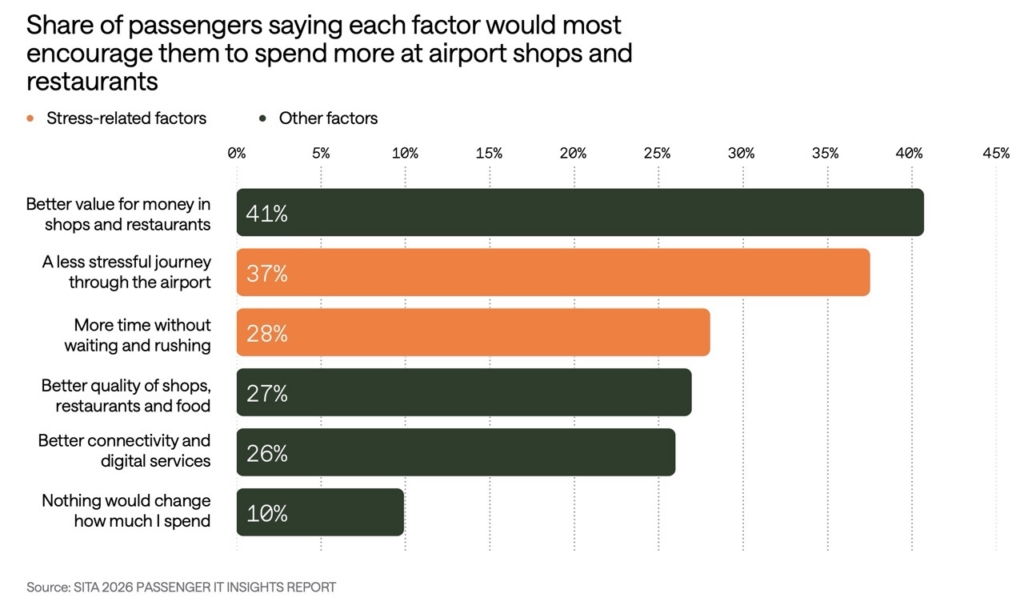
Some 37% of respondents said a less stressful airport journey would encourage them to spend more in shops and restaurants. Among frequent flyers, the share was 45%.
What passengers would pay to improve throughout the journey
SITA’s findings also point to industry priorities, based on what passengers say they would actually pay to fix.
The top fixes that passengers said they would pay for included:
- Cramped seating (over 60%)
- Long waiting times (around 55%)
- Flight delays and cancellations (around 55%)
- Baggage handling concerns (nearly half)
- Missing-connection anxiety (over 45%)
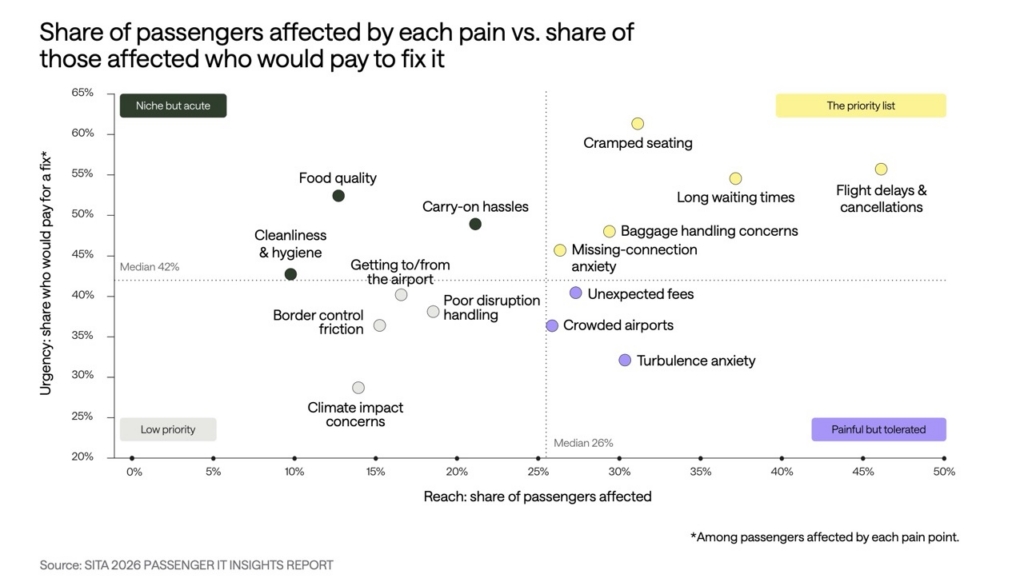
The findings suggest that airlines extending premium cabins and extra-legroom seats have a willing market, and may benefit from up-selling directly to passengers through their apps before the journey begins.
The most stressful world regions to fly in vs technology adoption
SITA also reported on passenger stress by region and the average percentage of technology use. North America stands out as the most stressful region to fly with 32% of US travellers and 31% of Canadian travellers finding the journey more stressful. Average technology use for the journey in the US was 62%, and in Canada it was 65%.
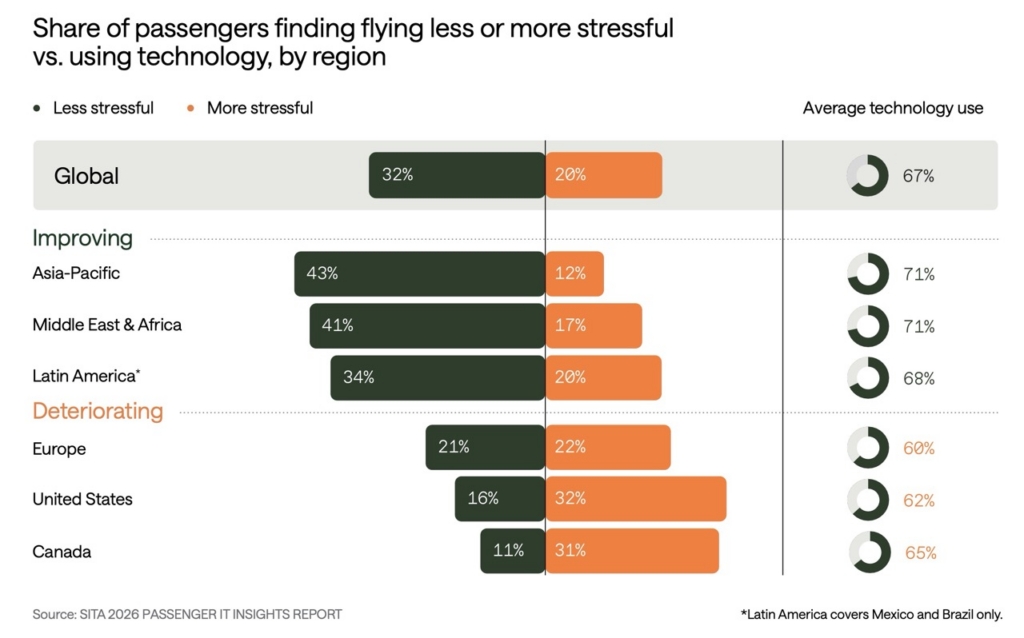
The least stressful region to fly in is Asia-Pacific, with only 12% of those surveyed reporting higher stress. Average technology use in Asia-Pacific and the Middle East & Africa (71%) is the highest worldwide. The Middle East & Africa also show low passenger stress levels at 17%.
SITA found additional correlations between technology and passenger stress reduction when measured by stages of the journey.
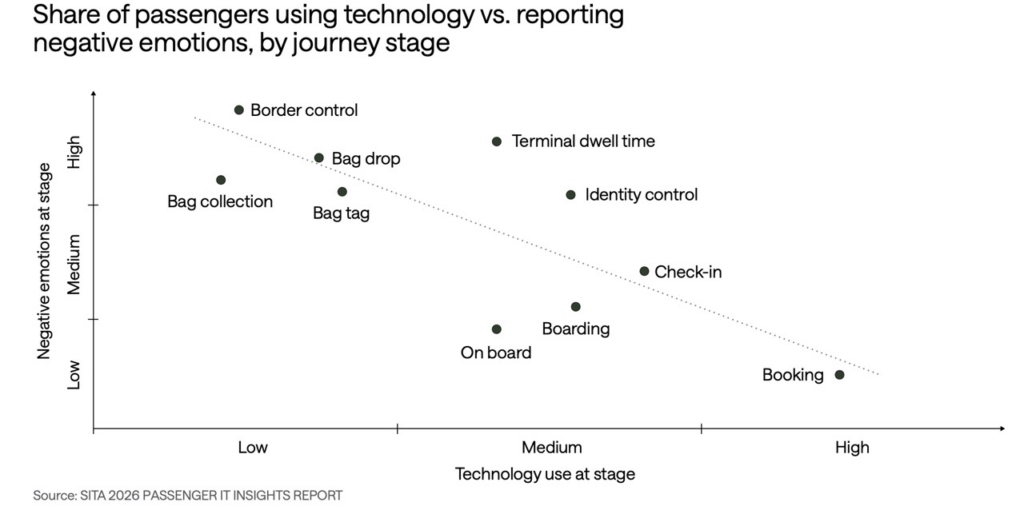
Border control stands out for low passenger technology adoption and high stress levels. The booking phase, which has a high technology adoption, is the least stressful. Other phases of the journey where technology appears to be diminishing passenger stress include boarding and once passengers are on board the plane, where they may relax with high-speed WiFi and in-flight entertainment.
What passengers want to know when plans change
SITA chief executive David Lavorel called for airlines, airports, ground handlers and border agencies to share information earlier.
“Every trip we win back is a seat filled, a parking space sold and a coffee bought,” said Lavorel. “Travellers are telling us where the stress comes from: delays, queues and worrying about their bags. Most of it comes down to not knowing what happens next. When airlines, airports, ground handlers and border agencies share what they know, passengers can see what is coming before they have to ask.”
He also encouraged the wider use of technology to ease passenger anxiety about the journey.
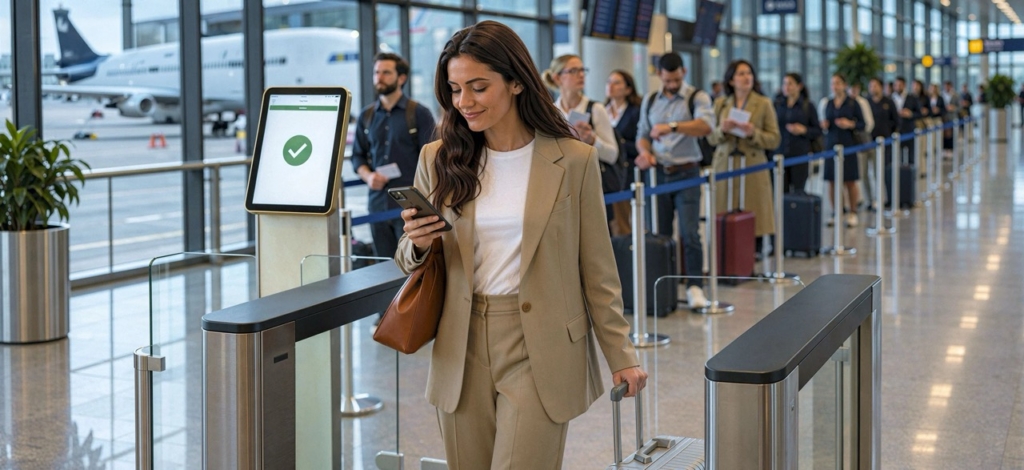
“In the airport, passengers are calmest at check-in and boarding, where the journey is already on their phone,” Lavorel said. “The rest of the journey should feel the same, especially when plans change. If a flight is rescheduled, passengers should know straight away: the new departure time, how to reach their new gate and where their bag is. That is what puts minds at ease.”
“Calm is a commercial measure,” Lavorel concluded. “Airlines see it in bookings, and airports in how passengers use their time once they are through security. Improve today’s experience, and we’ll unlock tomorrow’s demand.”
Sign up for our newsletter and get our latest content in your inbox.