


Air Canada banks on fare increases, transborder US traffic and Airbus A321XLRs to overcome rising fuel costs

3 min read
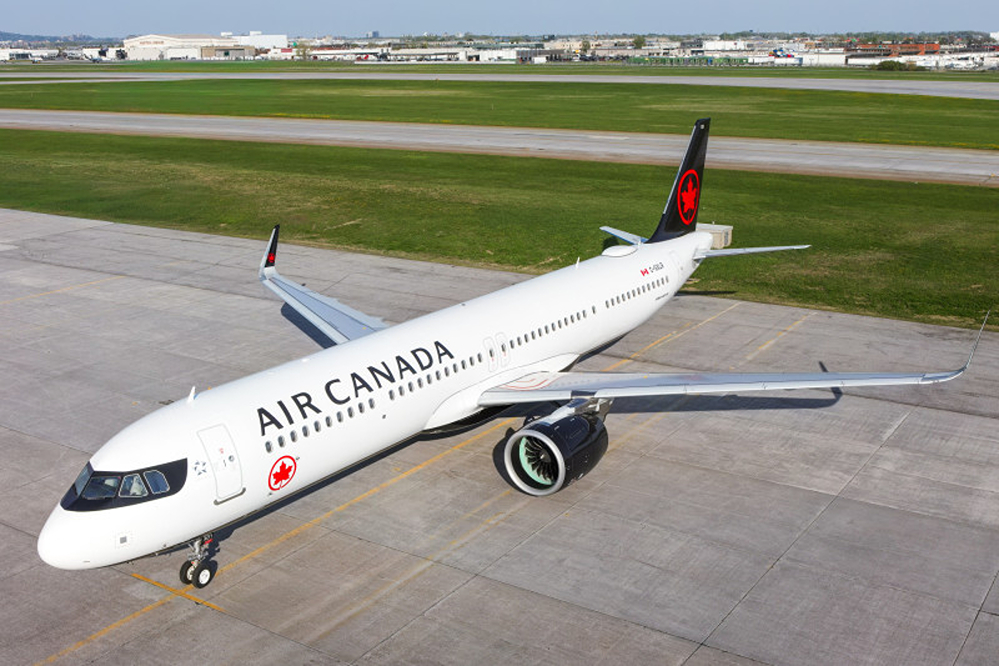
Air Canada published its third-quarter results on Thursday, demonstrating strong revenue growth across all business segments, as well as inflated costs driven by rising fuel prices.
In its subsequent earning call, the airline revealed it had taken several measures to mitigate some of the impact, banking on its new A321XLR fleet to bring about fuel efficiency savings, overall fare increases across the board and stronger performance on transborder flights to the United States.
The company registered a 21% increase in revenue, offset by a 22% increase in its operating expenses. Overall operating profit declined 8%. It saw fuel expenses rise 75%, representing nearly a third of all operating costs.
Fare hikes soften the blow of rising fuel costs, but only partially
Air Canada’s yields improved 11% over the quarter as fare increases sought to cover the impact of rising fuel prices. In its earnings call, Air Canada’s Chief Financial Officer (CFO) John Di Bert described fare increases as its “primary tool to offset a higher fuel environment.”
Its price rises followed earlier estimates for where the cost of fuel might be. However, its estimates fell short of reality.
“In all, we recovered 46% of incremental fuel expense, below our original expectation of 60%, primarily due to the significant increase in fuel prices experienced in September.,” Di Bert explained.

“We expect our recovery rate to improve to 70% in Q4. Fuel recovery remains a question of timing, not demand. When fuel spiked in September, approximately 50% of our fourth quarter bookings had already been sold, creating a natural lag before our pricing actions could be fully reflected in fares.”
Fuel cost recovery supported by growth in transborder revenue to the United States
Thanks to a closer booking revenue on its North America markets, the carrier was able to reflect part of the fuel price hikes into its fares, Chief Commercial Officer (CCO) Mark Galardo said. He described transborder results as “excellent” and complemented improvements in revenue, yields and sixth-freedom traffic growth.
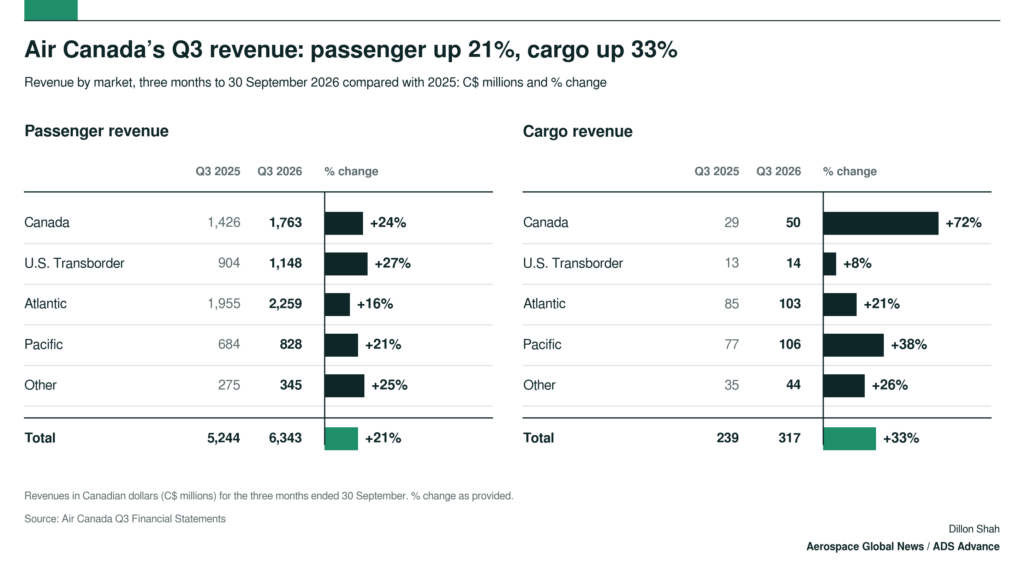
Revenue on flights to the United States rose 27%, growing faster than any of its other markets. Cargo revenue to the US did not grow as much.
The CCO attributed its healthy US performance to the strength of the American dollar, a favourable supply-demand balance and higher margins relative to its domestic operations.
“As I look forward, I see much of the same for Q4 and for Q1. I’ve got no reason right now to be concerned about the state of the transborder market,” he concluded.
The Airbus A321XLR helps ease the pain through fuel efficiency advantage
Air Canada introduced its Airbus A321XLR into commercial service on 9 June with a flight linking its Toronto and Montréal hubs. Long-haul operations commenced a few days later, on its route to Toulouse, France. During the July quarter, it also introduced the type on flights to Nantes (France) and Berlin (Germany), as well as Lyon (France) and Porto (Portugal) in September according to data from aviation analytics firm Cirium.
Galardo said that the airline was “pleased” with the initial results of the type, praising its lower fuel burn per ASM compared to its widebodies, which is a “real advantage in this current fuel environment.”

“Supporting a better supply-demand balance in these markets, the XLR is delivering a more favourable margin profile than other aircraft types on comparable routes,” he continued.
The CFO also complemented the A321XLR’s fuel performance: “This is meaningful in any environment, but it matters even more in this current fuel environment.”
Elsewhere, the company admitted it was reevaluating some of its ultra-long-haul flights given the fuel environment. It already confirmed plans to cut service on some of its longer routes, including Vancouver-Singapore, Vancouver-Dubai, Calgary-London-Delhi and Toronto-London-Mumbai. Montréal-Algiers will also not be returning.
Sign up for our newsletter and get our latest content in your inbox.


More from

October 30, 20264 min read


