US Navy controls MQ-25 Stingray drone from aircraft carrier 2,100 miles away

5 min read

The US Navy has remotely controlled a Boeing MQ-25A Stingray aerial refuelling drone from an aircraft carrier sailing in the Pacific Ocean, more than 2,100 miles from the aircraft in Illinois, marking a first for the service’s unmanned carrier aviation programme.
During a preliminary sea trial aboard the Nimitz-class USS Ronald Reagan (CVN 76), personnel at the ship’s Unmanned Air Warfare Center (UAWC) established a satellite connection with the Stingray at Boeing’s facility in Mascoutah, Illinois.
The connection used the carrier’s MD-5C Ground Control Station and a network of low Earth orbit satellites, allowing personnel aboard the moving warship to communicate with and control the unmanned aircraft beyond normal line-of-sight range.
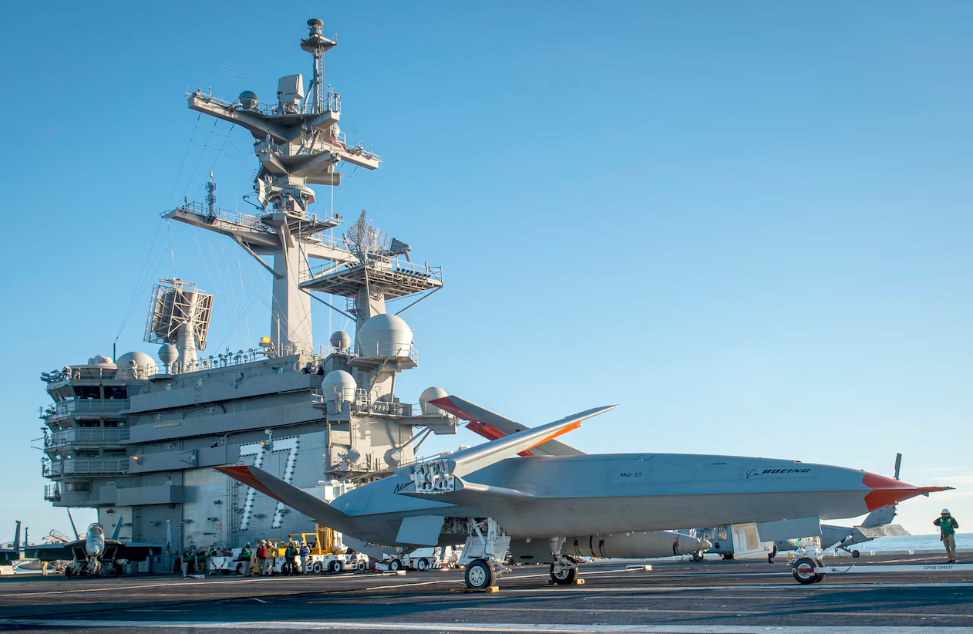
The demonstration forms part of preparations to introduce the MQ-25A as the Navy’s first operational carrier-based unmanned aircraft, with aerial refuelling as its primary mission.
“The MQ-25A Stingray’s carrier-based refueling capabilities enable F/A-18 Super Hornets to fly farther and longer,” said Acting Secretary of the Navy Hung Cao.
“The integration of this unmanned aerial refueler demonstrates the transformational change our manned and unmanned asset integration provides the Fleet.”
Testing control from a moving carrier
The trial was conducted as part of a series of exercises to verify the communications networks, operating procedures and interfaces required to control unmanned aircraft from carriers.
The Navy’s Unmanned Carrier Aviation Mission Control System team had previously conducted tests alongside the pier and at sea with the MQ-25 Integrated Test Team, which includes personnel from the Navy, Boeing and Lockheed Martin.
The latest demonstration involved establishing a beyond-line-of-sight connection using a proliferated low Earth orbit satellite network. This allowed the carrier’s control station to communicate with the aircraft despite the considerable distance between them.
The MD-5C Ground Control Station combines the Navy’s command, control, communications, computers and intelligence network with Lockheed Martin’s MDCX hardware and software, alongside government-developed equipment.
The system is intended not only for the Stingray but also for future unmanned aircraft operating from US Navy carriers.
“We have redefined naval power projection,” said Capt. Daniel Fucito, programme manager of the Navy’s Unmanned Carrier Aviation Program Office, known as PMA-268.
“This first-ever underway connection between a carrier-based UAWC and an MQ-25A aircraft proves that the Carrier Air Wing of tomorrow is a reality today.”
The trial did not involve an aerial refuelling demonstration. Its purpose was to establish and test the ship-to-aircraft command and control connection.
Why the Navy needs the Stingray
The MQ-25A is being developed to take over part of the aerial refuelling work currently performed by the Navy’s F/A-18E/F Super Hornet fighters.
Under existing carrier operations, some Super Hornets carry external fuel tanks and refuelling equipment to supply fuel to other aircraft. Known as buddy refuelling, this reduces the number of fighters available for their primary missions.
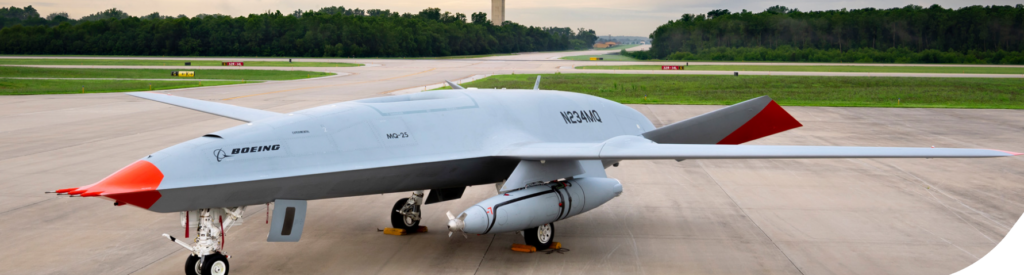
The Stingray is designed to perform that tanker role without an onboard pilot, allowing more Super Hornets to undertake strike operations.
It is also intended to extend the range and endurance of the carrier air wing by providing additional fuel to aircraft operating away from the carrier.
Boeing describes the MQ-25A as a clean-sheet design developed specifically for carrier operations, combining autonomous flight capabilities with the requirements of operating from an aircraft carrier.
The aircraft is powered by a single Rolls-Royce AE 3007N engine. It measures 51 feet (15.5 metres) in length and has a wingspan of 75 feet (22.9 metres), which reduces to 31.3 feet (9.5 metres) when its wings are folded for storage aboard a carrier.
The folded-wing configuration is particularly important aboard aircraft carriers, where hangar and flight deck space is limited.
From test aircraft to operational tanker
Boeing’s development programme began with its company-owned MQ-25 T1 test aircraft, which first flew in 2019.
The T1 accumulated approximately 125 flight hours and helped engineers assess the aircraft’s flying characteristics and refine its design and software.
It also demonstrated the Stingray’s aerial refuelling capabilities with three different carrier-based aircraft: the F/A-18 Super Hornet, F-35C Lightning II and E-2D Advanced Hawkeye.
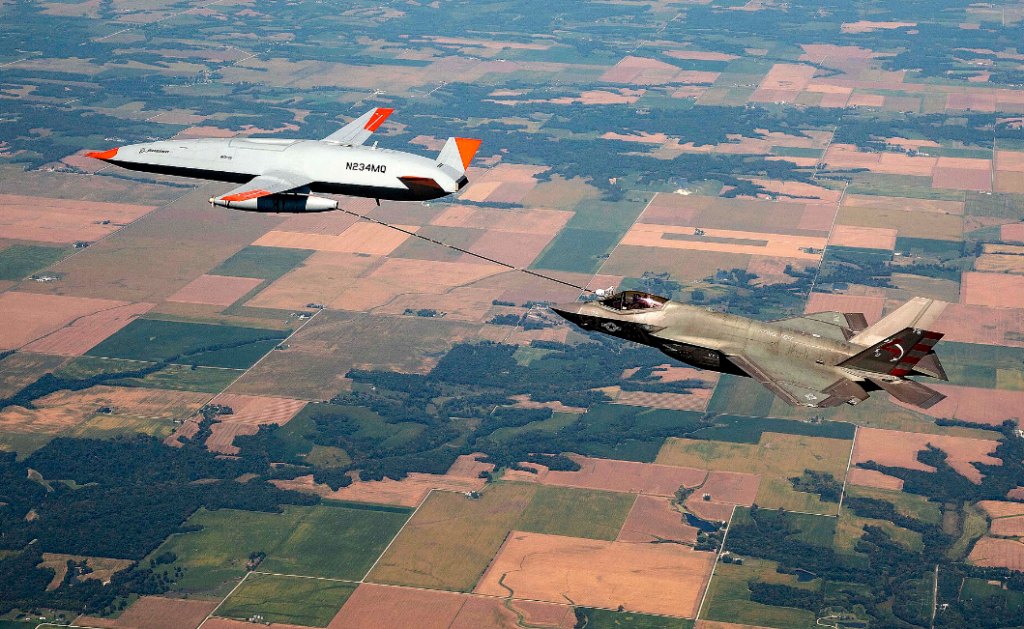
These demonstrations established that an unmanned aircraft could transfer fuel to different types of naval aircraft in flight.
The lessons from T1 have been incorporated into the Navy’s engineering development model aircraft.
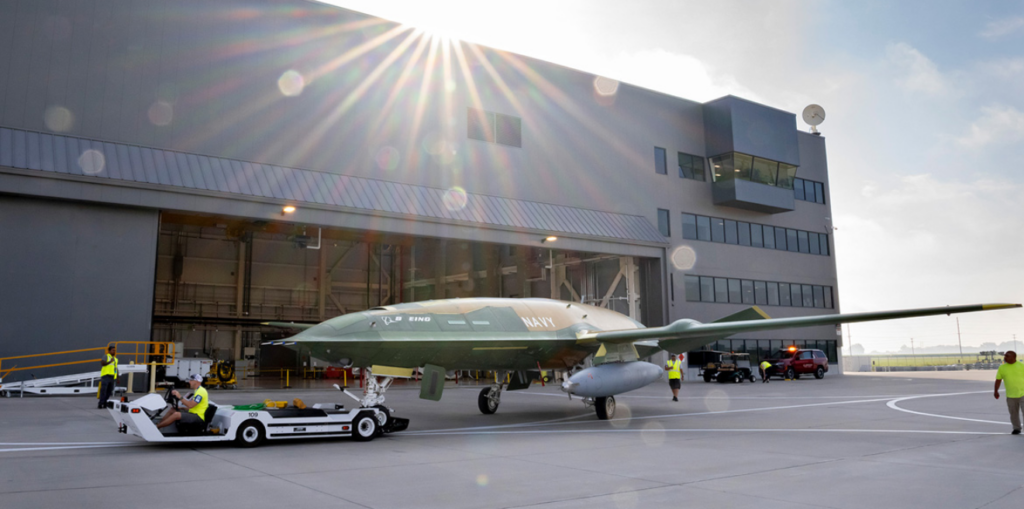
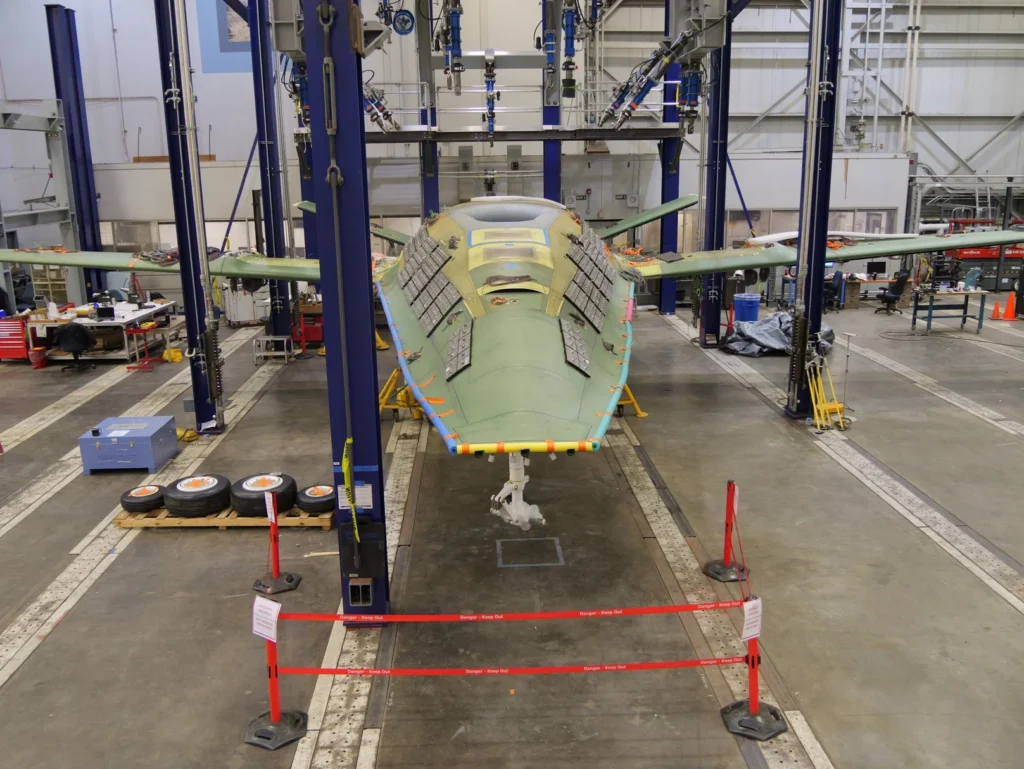
On 29 January 2026, Boeing announced that the first Navy MQ-25A had completed its initial taxi test at the company’s new production facility in Mascoutah.
During that test, personnel used the Unmanned Carrier Aviation Mission Control System to command the aircraft to taxi autonomously from the production facility towards the taxiway at MidAmerica St. Louis Airport. It then performed a series of ground manoeuvres to check the system’s operation.
The aircraft subsequently progressed to flight testing, while the Navy and Boeing continued work on integrating the Stingray with carrier-based control systems.
The first operational test flight was conducted in April 2026, followed by the second successful test flight in July. The successful test moves the aircraft one step closer to carrier operations.
In September 2026, the Navy awarded Boeing a $562 million contract for three additional MQ-25A aircraft under the programme’s first low-rate initial production lot, bringing the number of aircraft under contract to 14.
The latest USS Ronald Reagan demonstration adds shipboard command and control to the programme’s growing series of tests.
For the Navy, the next task is to bring together the aircraft, its refuelling equipment and the carrier-based systems needed to operate it routinely at sea.
The MQ-25A is also intended to help establish the procedures and infrastructure for future unmanned carrier aircraft, extending its role beyond aerial refuelling.
Sign up for our newsletter and get our latest content in your inbox.


More from


October 17, 20264 min read