


A British company wants to challenge Starlink with giant airships at 65,000 feet

10 min read
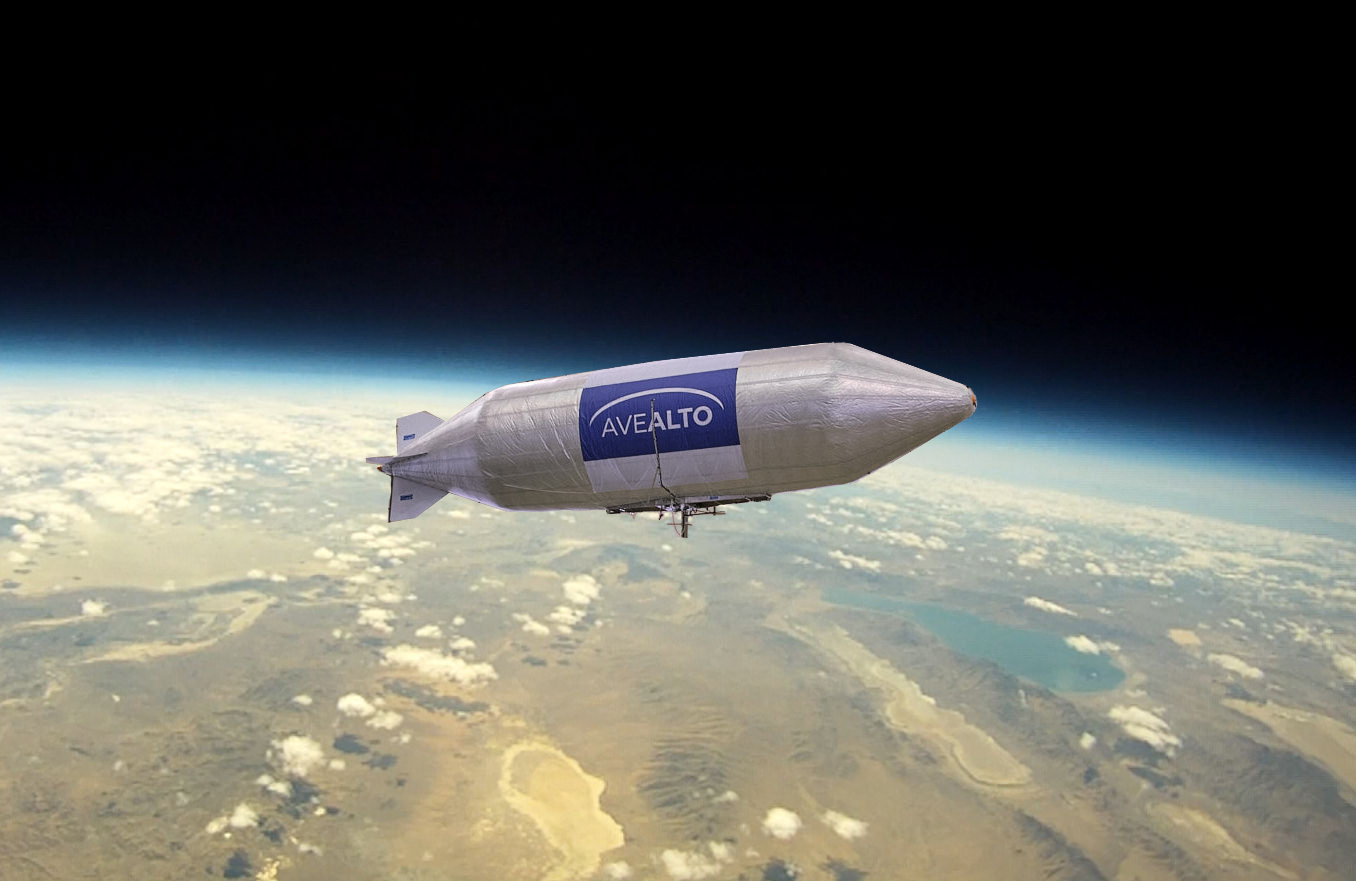
Elon Musk’s Starlink is transforming global communications with thousands of satellites orbiting hundreds of kilometres above Earth. British company Avealto believes it can offer a cheaper alternative using enormous helium-filled airships that never reach space.
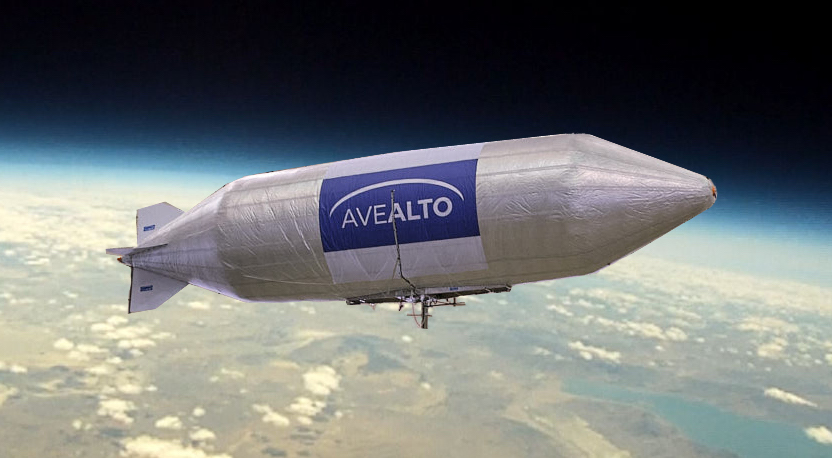
The proposed aircraft will be approximately 100 metres (330 feet) long, operate at around 65,000 feet and remain almost stationary above the same location for three to four months at a time.
From the stratosphere, each airship would provide communications coverage across an area 150 miles (240 km) in diameter, linking mobile phone towers, schools, hospitals and businesses to the wider telecommunications network.
And according to founder Walt Anderson, the technology could deliver connectivity at a much lower cost than Starlink.
“We’re going to be 80 percent – not up to 80 percent, actually 80 percent – lower cost than Starlink,” Anderson told journalists, including Aerospace Global News, at a briefing in London.
It’s an ambitious proposition from an entrepreneur who has spent more than a decade developing the technology. Having tested several smaller prototype airships, Avealto is now seeking $55 million to establish a manufacturing facility in Kent and launch its first commercial service in Malaysia.
How could an airship compete with Starlink?
The fundamental advantage of Avealto’s Wireless Infrastructure Platform (WIP), Anderson argues, is altitude.
Starlink’s low Earth orbit satellites typically operate hundreds of kilometres above Earth. Avealto’s airships would sit just 20 km above the surface, dramatically reducing the distance radio signals must travel.
“We’ve developed an airship similar to a Goodyear blimp,” Anderson explained. “It’s a high-altitude airship blimp that’s designed to be at 20,000 meters, 12 miles, and stay in a stationary position. It’s like bringing a geosynchronous satellite at 36,000 kilometres down to 20 kilometres, and that changes everything.”
Radio signals weaken as they travel, meaning that reducing the distance between the transmitter and receiver can substantially reduce the power required to establish a reliable connection. An airship positioned almost directly above its customers would also avoid the need for ground terminals to continuously track moving satellites.
Anderson claims Avealto’s ground equipment could consume eight times less electricity than tracking satellite terminals, a significant advantage in remote villages where even a reliable power supply can be difficult to obtain. The aircraft themselves would use solar panels to generate electricity during daylight, powering their telecommunications equipment and electric propulsion systems while charging batteries for overnight operation.
But Avealto isn’t proposing to replace every satellite.
“Our service area is only 240 kilometres, 150-mile diameter. So we need multiple vehicles in different areas,” Anderson said. “What that does is give us a strategic advantage because we don’t have to spend $27 billion to cover the whole world like Starlink.”
Rather than establishing a global network before customers arrive, Avealto intends to deploy aircraft only where it has already identified sufficient demand.
“We can select the areas we want to serve, ask telecom operators in those areas if they want to be our customers, and if they say yes, and we have a profitable business, we launch the vehicle in that area.”
An internet connection without changing your phone
Avealto’s approach differs significantly from satellite direct-to-device services, which connect ordinary mobile phones directly to spacecraft. Instead, the airships would provide backhaul, the communications link connecting conventional mobile phone towers to an operator’s wider network.
In remote communities, mobile operators may be willing to install a 4G or 5G tower but find that connecting it to the rest of their network is prohibitively expensive.
Installing hundreds of kilometres of fibre-optic cable across mountains, forests or isolated islands may be financially impractical. Satellite connectivity is an alternative, but Anderson argues that its cost can make serving smaller populations unprofitable. Avealto proposes to solve that problem from above.
“We’ll never sell to the consumer. We don’t compete with the telecom operators,” he said. “We give them an additional tool because they’ve already got a license in all these countries. They pay to serve the whole country, but they can’t serve thousands of islands.”
An airship could potentially connect 20 to 40 mobile towers, while also providing links to fixed broadband terminals, schools, hospitals and emergency responders.
Customers would continue using their normal phones and mobile subscriptions. They wouldn’t need to purchase dedicated satellite equipment or change their network provider.
Anderson believes that distinction makes Avealto’s technology particularly attractive in Southeast Asia, where millions of people live on islands that are difficult to connect using conventional infrastructure.
“Imagine being somewhere where somebody got hurt, and you couldn’t call an ambulance,” he said. “It’s a scary thing.”
Why a helium airship instead of a solar-powered aeroplane?
Avealto is not the only company pursuing persistent communications platforms in the stratosphere.
Airbus subsidiary AALTO is developing the solar-powered Zephyr, a lightweight, fixed-wing aircraft that has already demonstrated extended flights in the stratosphere. The aircraft has achieved a flight lasting 67 days, demonstrating the potential for solar-electric aircraft to remain airborne for months.
But Anderson argues that buoyant airships offer two important advantages over conventional fixed-wing high-altitude platforms: payload capacity and station-keeping.
A lightweight aeroplane must continually generate aerodynamic lift, requiring enough energy to remain in flight. Its structure, propulsion system and payload must consequently be kept exceptionally light.
A helium-filled airship generates lift through buoyancy, allowing Avealto to accommodate heavier telecommunications equipment.
Anderson questions whether the relatively small payload allowances of aircraft such as Zephyr can support the telecommunications infrastructure he envisages.
“There’s nothing you could do commercially with a 12-kilo payload,” he argued, referring to his assessment of the Zephyr’s payload capacity. “The antenna weighs more than 12 kilos.”
Avealto’s own communications payload is designed to weigh approximately 55 kg, with the aircraft also accommodating batteries, avionics, propulsion equipment and additional systems.
The second advantage is remaining above a fixed location.
Unlike a drifting balloon, Avealto’s aircraft would use four electrically driven propellers to counter prevailing winds and maintain its position relative to the ground.
That would allow ground antennas to remain fixed, rather than following an aircraft as it circles or moves across the sky.
“The winds are moving 20 miles an hour. We’re moving 20 miles an hour and staying in the same place,” Anderson explained.
The company intends to select operating altitudes between approximately 18,000 and 22,000 metres, where wind conditions are generally more favourable than those encountered in the jet stream.
Although the stratosphere is not free from wind or seasonal variation, operating above most conventional weather systems could offer relatively stable conditions. Anderson acknowledges that an airship’s most demanding operating environment may actually be close to the ground.
“An airship, the time we’re at risk is when they’re near the ground, because that’s where they get pushed around and pushed into power lines and stuff.”
The company has consequently devoted substantial development work to its flight-control systems, including the propellers and internal air chambers, known as ballonets, used to regulate pressure and control the vehicle’s attitude.
Three to four months in the stratosphere, then back to Earth
Unlike orbiting satellites, Avealto’s aircraft would be routinely recovered for servicing.
Anderson envisages flights lasting approximately three to four months before each airship descends for maintenance.
“After three or four months, the helium slowly leaks out of our balloon section. We need to top it up,” he explained.
The proposed Malaysian operation would initially have three aircraft, with two providing continuous service and a third available to replace whichever needed maintenance.
“We bring the spare up, take over the radio fairly instantaneously. Users might not even notice, and then bring the other vehicle down to top up the helium.”
Once on the ground, technicians could replenish the helium, replace worn components and upgrade the communications payload.
Batteries are particularly important because they would undergo a substantial charge-discharge cycle every day.
Anderson expects batteries to require replacement after approximately nine months, although that figure remains an operating assumption for the proposed commercial fleet.
This ability to maintain and upgrade aircraft is central to Avealto’s economic argument. Conventional satellites cannot generally be brought back to Earth for repairs, while the operating lifespan and eventual replacement of large satellite constellations create continuing capital expenditure.
Anderson is comfortable admitting that the first operational Avealto airships will not contain the most sophisticated communications technology available.
“What we’ve built design right now is a truck. We want a race car,” he said.
The plan is to introduce more advanced systems as the fleet expands, without needing to replace the entire aircraft.
Avealto plans a 100-metre airship factory in Kent
The technology is the result of a research programme that began when Avealto was established in 2013.
Anderson says the company has spent approximately $11.6 million developing its aircraft, including multiple prototype vehicles, structural testing, propulsion studies and flight-control work.
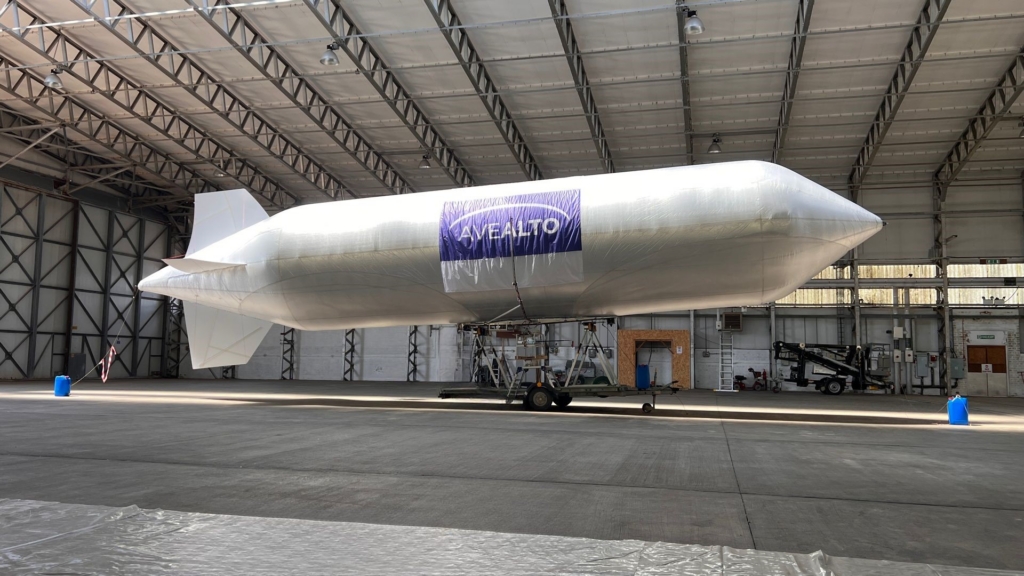
Previous prototypes have included airships measuring eight, 11, 16 and 28 metres. The company’s latest subscale aircraft is approximately 17 metres long.
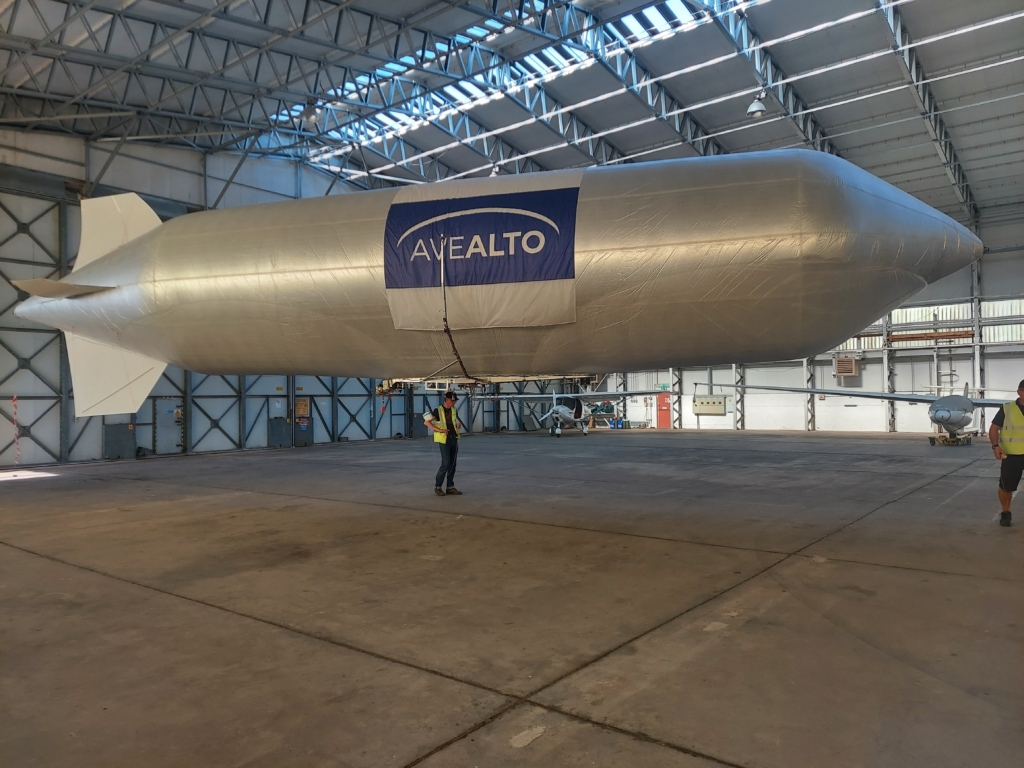
But none approaches the size of the planned commercial vehicle, and Avealto has not yet demonstrated an operational 100-metre aircraft remaining in the stratosphere for months.
The next step is a low-altitude demonstration for Malaysian telecommunications regulators, using the 17-metre test aircraft to relay a radio connection between ground stations.
Anderson said that demonstration is being prepared in Wales, although deteriorating winter weather could force the company to find another location to complete it before the end of 2026.
Meanwhile, the company is seeking investment to establish its production facility at Lydd Airport in Kent.
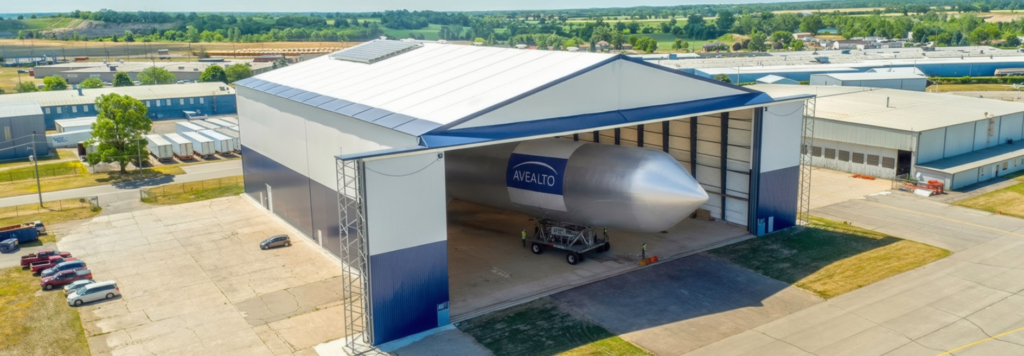
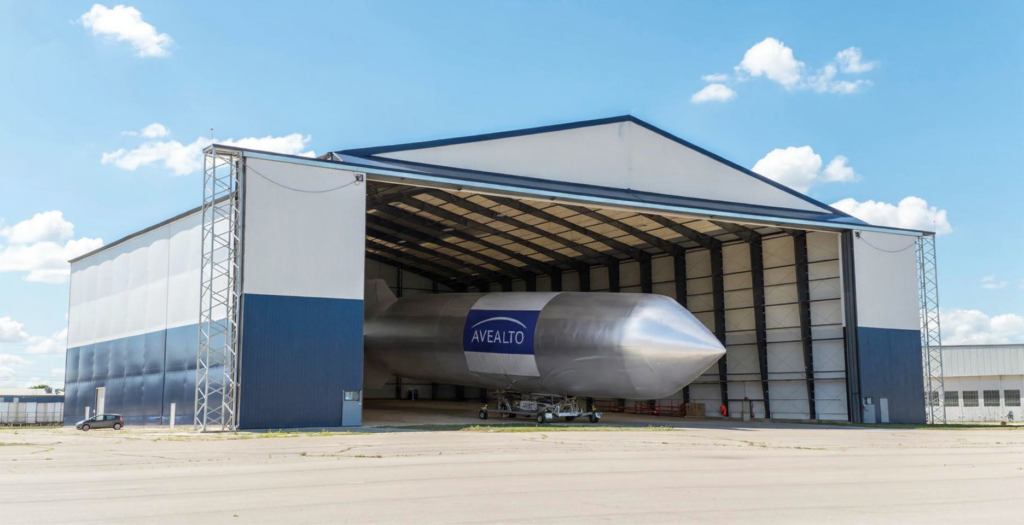
“We need to build a building large enough to hold a 100-meter, 331-foot-long vehicle, and float that vehicle inside the building as our final test before we pack it up and ship it off,” Anderson explained.
Rather than constructing a conventional industrial building, Avealto intends to use a steel-framed, fabric-covered hangar capable of accommodating the enormous aircraft. Anderson believes the structure could be erected in approximately six months, although planning approval, equipment installation and other preparations would also be required.
The decision to establish manufacturing in the UK is deliberate.
“We found tremendous civil aviation expertise here,” he said, arguing that a comparable programme in the United States could have cost far more.
Avealto’s engineering team includes chief designer Andrew Cox, whose background includes work on high-altitude projects such as Zephyr and Facebook’s Aquila. British aerospace company Auriga Aerospace, based in Yeovil, has undertaken propulsion studies, while UK manufacturer NEMA is identified as a supplier of specialised electric motors.
ETL Systems has developed the telecommunications payload, which has progressed through critical design review. The company has also drawn on British expertise in composite structures and aerospace engineering.
Some components will initially come from overseas, including high-energy batteries from California-based Amprius and specialist materials for the airship’s envelope.
Anderson says the preference remains to source as much as possible within the UK and Europe.
“The more we can keep supply chain here, the better,” he said.
A challenge to Starlink’s dominance
Anderson’s ambition extends beyond offering cheaper internet services. He believes the growing concentration of telecommunications infrastructure in the hands of a few satellite operators poses risks for countries that depend on those networks.
“Starlink has a de facto monopoly now in some ways, and countries may not like Elon Musk or respect him, but they have no choice if they want to communicate,” he argued.
Anderson is particularly concerned about foreign companies controlling infrastructure used by banks, emergency services and other strategically important organisations. Avealto’s proposed model would operate within the countries it serves, working with licensed local telecommunications companies rather than selling directly to consumers.
The company does not intend to provide services to military customers, although Anderson sees opportunities for non-military applications including disaster response, maritime monitoring, wildfire detection and environmental surveillance.
For now, the more immediate challenge is financial and technical rather than geopolitical.
Avealto has completed years of smaller-scale research, but turning that work into a commercially viable fleet of enormous stratospheric airships will require investment, regulatory approval and the successful demonstration of capabilities that remain theoretical at full scale.
Anderson is candid about what comes next.
“My total focus is that we’ve done all the R&D. We’ve done all that. My job is to raise money now to get going.”
If that funding arrives, the skies above remote communities in Southeast Asia could eventually become home to some of the largest unmanned aircraft ever built.
And the company responsible intends to build them in Kent.






