


Countdown to Artemis III: The major milestones still ahead before NASA returns astronauts to the Moon

6 min read
This year’s World Space Week is putting the spotlight back on humanity’s ambitions beyond Earth. And it comes just as NASA enters a crucial stretch in preparations for Artemis III, the 2027 mission that will rehearse some of the most difficult manoeuvres needed to return astronauts to the Moon.
Running from October 4-10, World Space Week is the world’s largest annual space gathering, with more than 50,000 events planned across more than 100 countries. This year’s theme, “Rocket Revolution”, looks at the rapid changes in access to space, including reusable launch vehicles and the growing role of commercial companies.

Few missions illustrate that change better than Artemis III.
NASA reshaped the mission into a crewed demonstration in low Earth orbit, where Orion will practise rendezvous and docking with the commercial landers. The first crewed landing at the lunar South Pole is now planned for Artemis IV in 2028. With Artemis III scheduled for 2027, several major pieces still have to come together.
Four astronauts, three rockets and two dockings
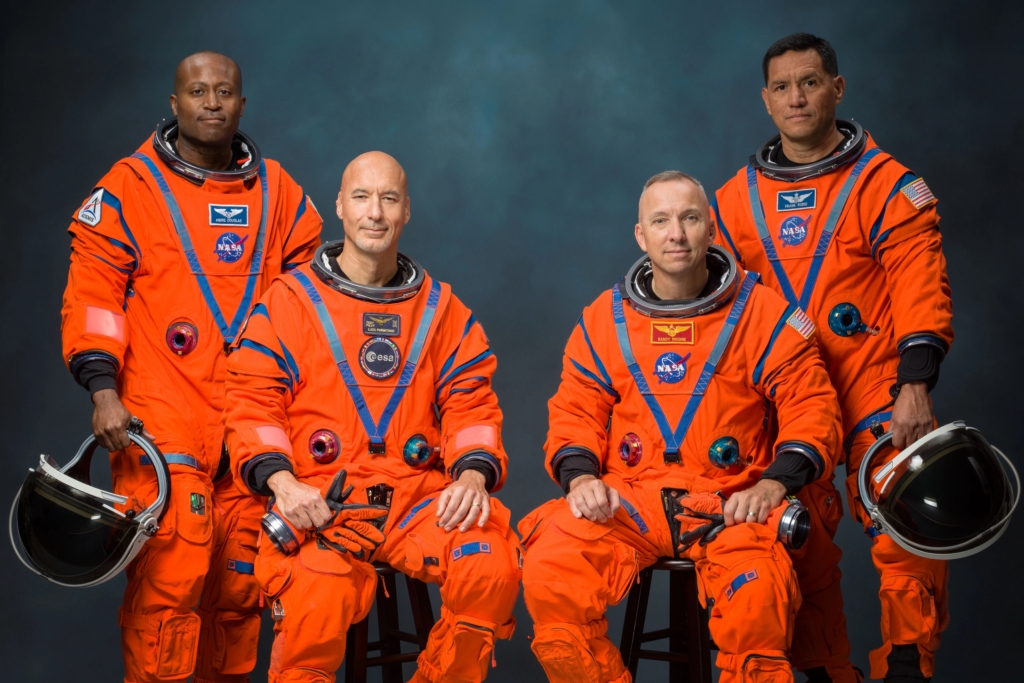
NASA named the Artemis III crew in June: commander Randy Bresnik, European Space Agency astronaut Luca Parmitano as pilot, and NASA astronauts Andre Douglas and Frank Rubio as mission specialists. Bob Hines is the backup. Parmitano will become the first ESA astronaut assigned to an Artemis mission.
The mission itself will be unusually complicated.
Blue Origin’s lander test article is expected to launch first and wait in orbit. SLS will then launch Orion and its four astronauts from Kennedy Space Center. Orion will rendezvous with Blue Moon and remain docked for about two days while the crew carries out tests and technology demonstrations.
Orion will then separate and await SpaceX’s Starship test vehicle. Starship will rendezvous with Orion for a second docking lasting about a day before the spacecraft separate and Orion returns its crew to Earth. The complete mission is expected to last about two weeks.
NASA describes the operation as a chance to practise the launch pattern required for future Moon missions, when a lander will be sent ahead of Orion and wait for astronauts in space.
“Artemis III will be a highly choreographed dance with a demanding launch sequence across multiple launch pads and equally demanding mission operations for our ground and flight crews,” Artemis programme manager Jeremy Parsons said.
NASA reaffirmed Artemis III schedule at Farnborough
The 2027 target received a high-profile vote of confidence at the Farnborough International Airshow in July.
NASA Administrator Jared Isaacman told Reuters at FIA2026 that the agency remained committed to the Artemis III schedule despite a setback involving Blue Origin in May. He said the elements directly controlled by NASA, including SLS and Orion, were progressing well.
That Farnborough update was significant because the commercial landers are among the biggest remaining variables in the programme.
SpaceX plans to use Starship Version 3 as the basis for its Artemis III test article, adding a docking system to the nose of the 52-metre spacecraft. The Artemis III astronauts will not enter Starship during the test.

Blue Origin’s test vehicle will be based on the architecture of its Blue Moon Mark 2 crew lander. It will carry major avionics, flight software and control systems intended to feed directly into development of the lunar version. Up to two Artemis III astronauts are expected to enter the Blue Origin test lander while the vehicles are docked.
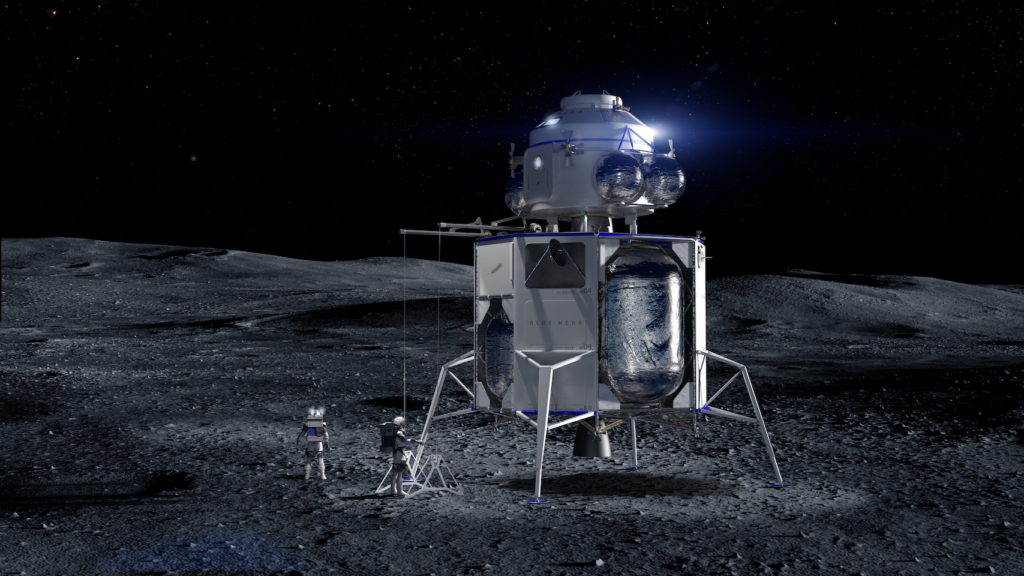
The two dockings will also work differently. Orion will dock to the side of Blue Moon near its crew cabin, while the Starship test will involve a nose-to-nose docking. NASA wants to test not only the physical interfaces but also software, communications and how the combined spacecraft behave while connected.
SLS hardware is coming together
The Artemis III rocket has meanwhile moved from manufacturing into integration.
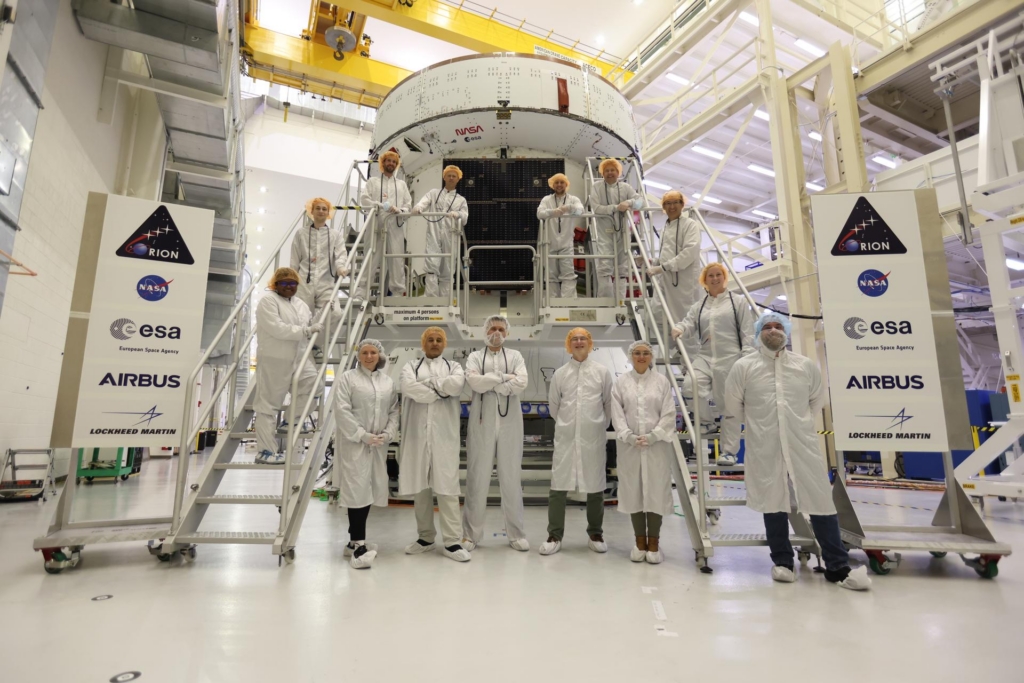
NASA joined Orion’s crew and European Service Module at Kennedy Space Center on July 30. The combined spacecraft is undergoing integrated testing and further hardware installation.
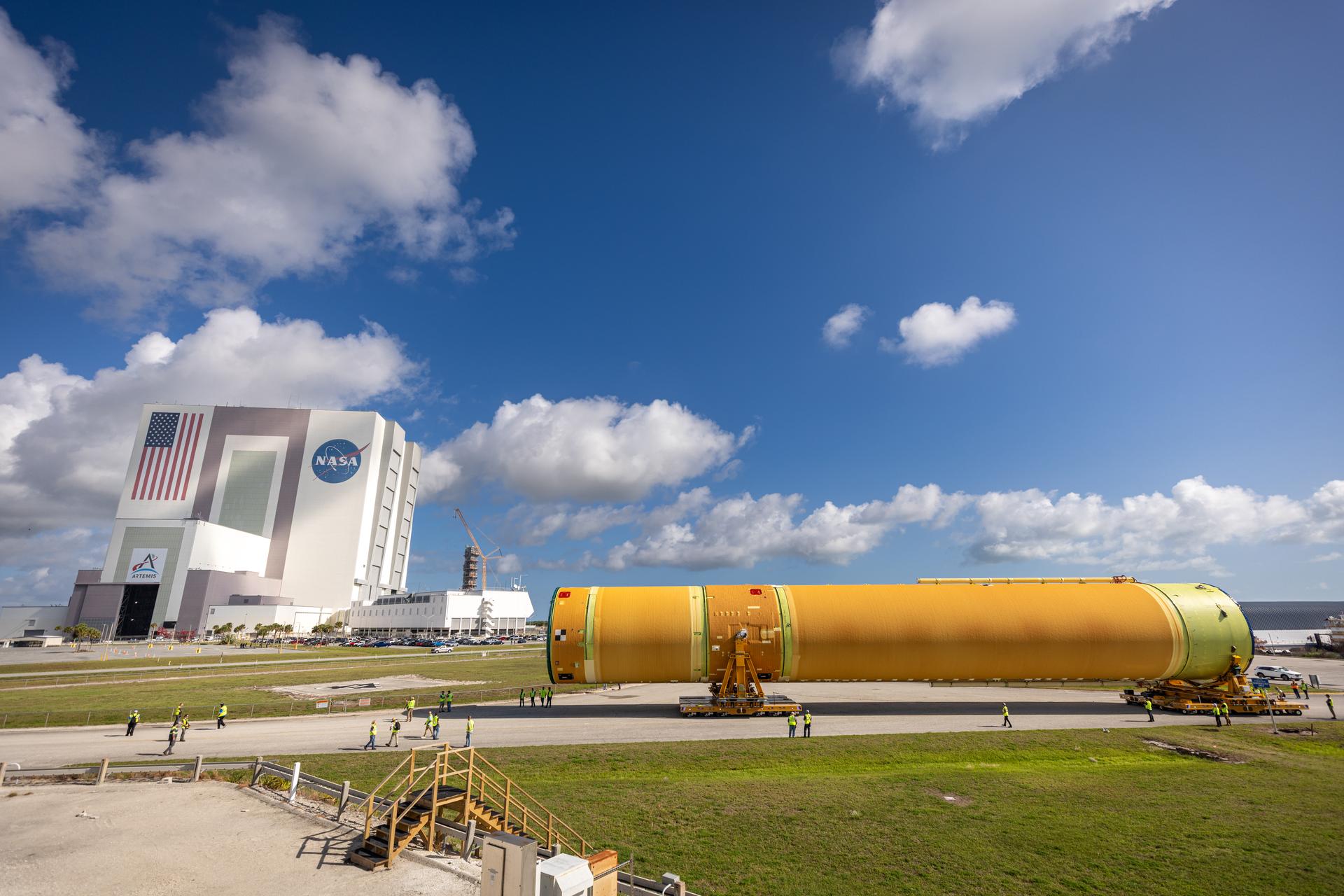
Work on SLS has also advanced. The solid rocket booster segments reached Kennedy earlier this year and stacking began during the summer. In August, technicians started installing the four RS-25 engines on the core stage.
The engines themselves carry an unusual link to NASA’s earlier human spaceflight programme. All four have flown before on Space Shuttle missions. One, engine 2048, helped launch Artemis III commander Bresnik aboard Atlantis on STS-129 in 2009. It also flew on Discovery during STS-95, which carried John Glenn back to space in 1998.
NASA is also building a non-propulsive spacer to replace the Interim Cryogenic Propulsion Stage on Artemis III. Because the mission remains in low Earth orbit rather than travelling to the Moon, the upper stage is not required. The remaining ICPS has instead been assigned to Artemis IV.
Orion must prove it can dock
One of the most important Artemis III milestones will happen after launch.
Artemis II, completed in April, proved Orion could carry astronauts around the Moon and return them safely to Earth. Artemis III must demonstrate another capability that future lunar landings depend upon: docking Orion with a separate spacecraft.
NASA says SpaceX qualified its lander docking capability on the ground in 2023, while Blue Origin conducted development testing of its pressurised docking system earlier this year. Artemis III will take that work into orbit.
The crew will also spend longer aboard Orion than the Artemis II astronauts, providing more data on the spacecraft’s life-support systems.
NASA has selected SpaceX to install two Starlink mini laser terminals on Orion for another demonstration. The terminals are intended to relay 4K imagery and video through the Starlink network to Mission Control, extending work with optical communications demonstrated during Artemis II.
Crew training is already underway
Following the crew announcement in June, commander Randy Bresnik, pilot Luca Parmitano and mission specialists Andre Douglas and Frank Rubio began training on Orion spacecraft systems and mission operations.
NASA says the crew will also help prepare for the rendezvous and docking demonstrations planned for Artemis III while working with the teams developing the Blue Origin and SpaceX landers
The landers remain the milestones to watch
Much of NASA’s own Artemis III hardware is now taking physical shape. The larger uncertainty lies with the two commercial vehicles that must join Orion in orbit.
Both SpaceX and Blue Origin must prepare flightworthy test articles, launch them independently and demonstrate that they can rendezvous safely with a crewed NASA spacecraft.
The Artemis III flight will not replace the separate uncrewed lunar demonstrations required before astronauts attempt a landing. Instead, NASA says the orbital tests and later uncrewed flights around the Moon will together provide the data needed to clear the way for Artemis IV.

That makes 2027 less a return to the Moon than the final dress rehearsal for NASA’s first crewed lunar landing of the Artemis era.
For NASA, the milestones between now and launch are therefore clear: finish Orion, complete and stack SLS, prepare the Blue Moon and Starship test vehicles, train the crew and prove that three different launch systems can be brought together for two rendezvous and docking operations in a single mission.
If Artemis III succeeds, the next Artemis crew will have a very different destination. Artemis IV is intended to take astronauts back to the lunar surface in 2028, the first crewed Moon landing since Apollo 17 in 1972.


