


BETA launches North Carolina electric flight programme focused on rural healthcare

5 min read

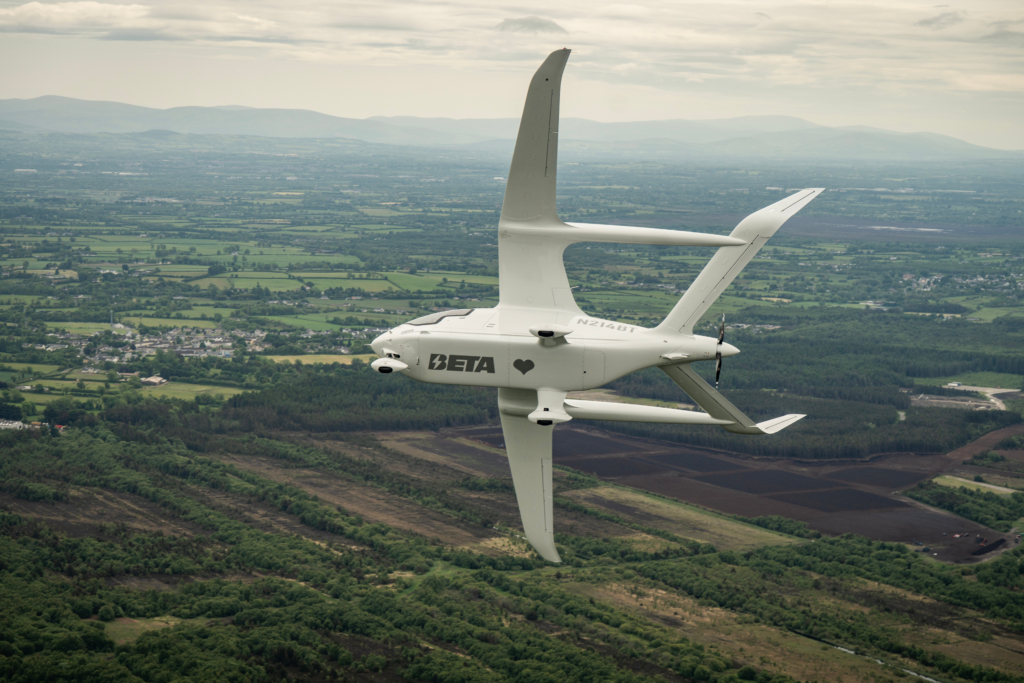
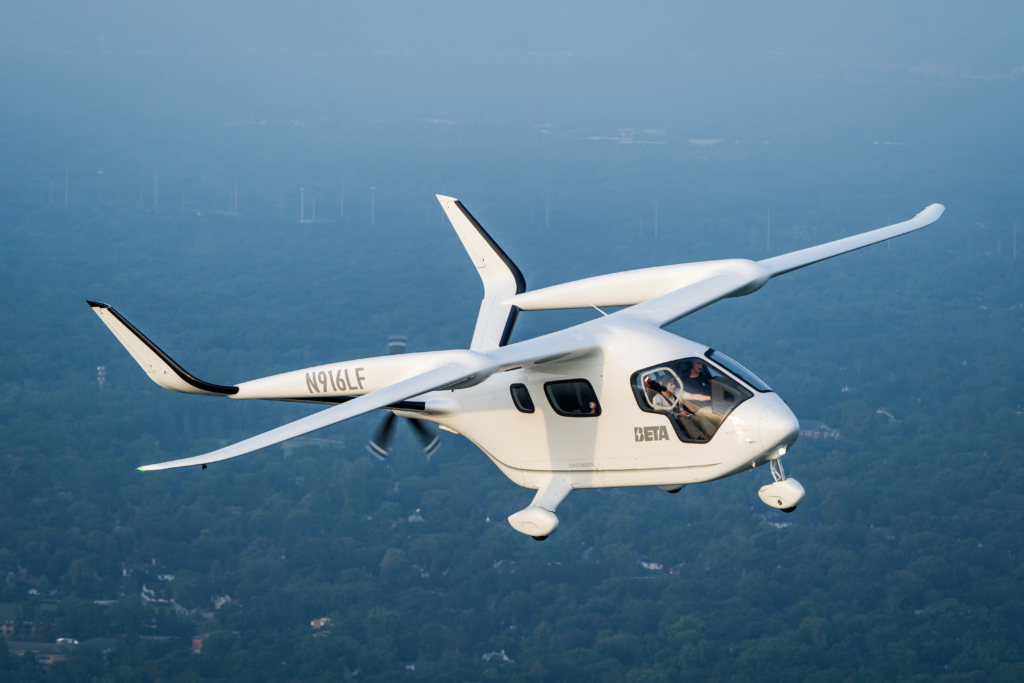
BETA Technologies has launched a new series of electric aircraft operations in North Carolina, using its ALIA CTOL conventional take-off and landing (CTOL) aircraft to test how electric aviation could connect rural communities with major healthcare centres.
The flights form part of eLIFT-NC, North Carolina’s participation in the US Department of Transportation and Federal Aviation Administration’s eVTOL Integration Pilot Program (eIPP).
BETA says the programme is intended to move beyond technology demonstrations and examine how electric aircraft could become part of a practical healthcare network.
Testing electric aviation in a healthcare role
Operations under the eIPP programme began on 17 September, with BETA conducting flights including a flyover of the Wright Brothers National Memorial and simulated deliveries of healthcare equipment to rural medical access points.
The campaign has covered more than 1,300 nautical miles and involves North Carolina’s Department of Transportation (NCDOT), Metro Aviation and healthcare organisations including ECU Health and WakeMed.
Rather than focusing solely on passenger air taxis, the North Carolina programme is looking at some of the more immediate potential applications for electric aircraft: moving medical supplies, specialist personnel and other critical resources between hospitals and communities.

Planned routes include connections between Raleigh Executive Jetport (TTA) and Pitt-Greenville Airport (PGV), with the wider programme extending towards communities served by Dare County Regional Airport (MEO).
The objective is to determine whether electric aircraft can shorten the time needed to move supplies and healthcare teams without the operating costs associated with conventional aircraft.
BETA and its partners also intend to examine whether the aircraft can help regional healthcare systems maintain links with communities that are some distance from major medical centres.
The potential application is particularly relevant in eastern North Carolina. The state’s coastal areas can be vulnerable to flooding, storm surge and hurricanes, all of which can disrupt roads and other surface transport.
The programme therefore also has a disaster-response component. Future operations are expected to investigate whether electric aircraft could maintain medical supply chains and transport healthcare personnel when conventional transport routes are unavailable.
Charging infrastructure is central to the programme
The aircraft are being supported by BETA’s existing charging infrastructure at Raleigh Executive Jetport. The company’s Charge Cube was installed at the airport in 2024, while more than 15 additional charging sites are currently in development across North Carolina.
That infrastructure is important because BETA’s strategy extends beyond developing an aircraft. The company has been building its own network of charging stations alongside its aircraft development programme.
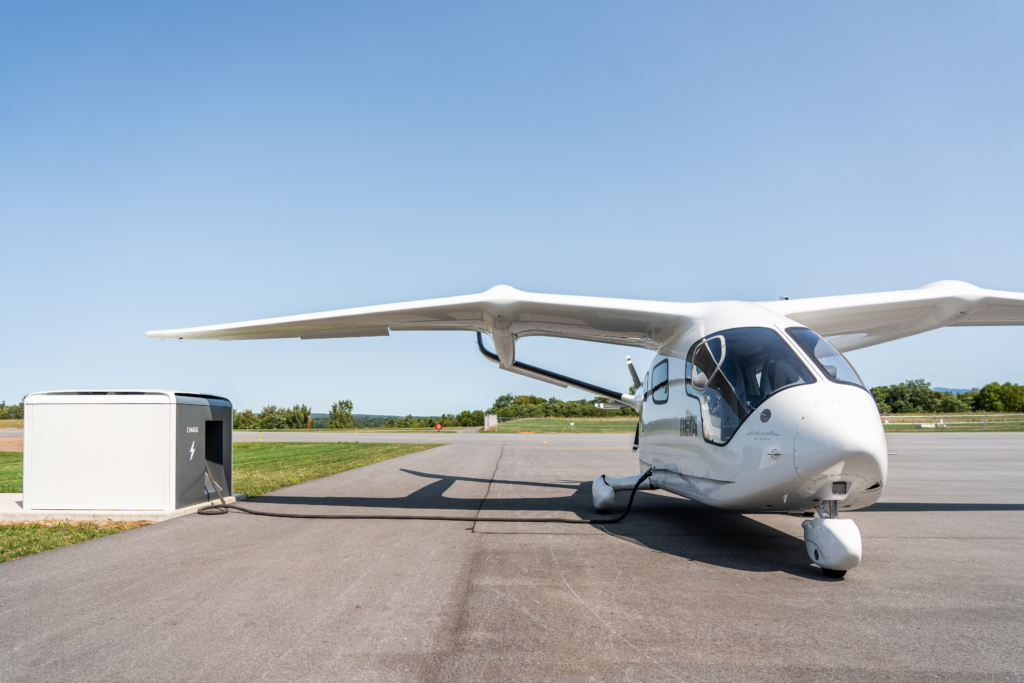
As of its second-quarter 2026 results, BETA reported 138 charging sites and said it was planning to deploy as many as 250 additional sites through the America’s Consortium for Electric Skyways, a collaboration involving BETA, Archer Aviation and Macquarie Capital.
The North Carolina project therefore provides an opportunity to test not just the aircraft, but the wider operating ecosystem needed for electric aviation.
BETA’s growing operational experience
The North Carolina flights are the latest in a rapidly expanding programme of real-world operations for BETA. The company says its ALIA aircraft family, comprising the conventional fixed-wing ALIA CTOL and vertical take-off and landing ALIA VTOL, has now flown more than 200,000 nautical miles.
BETA has also been participating in seven of the eight eIPP programmes selected nationally, with previous operational activity in Virginia, Maryland, Louisiana and Texas.

One of the company’s most significant recent milestones came earlier in 2026, when BETA began eIPP operations transporting manufactured organs for United Therapeutics using its conventional take-off and landing aircraft.
That operation used BETA’s existing airport charging network and provided an early example of the aircraft being used for a healthcare mission in a real operational environment.
The emphasis on the CTOL aircraft is significant. Unlike a VTOL aircraft, which can take off and land vertically, the CTOL uses conventional runways.
BETA has argued that this approach can enable earlier and broader commercial applications while the regulatory and infrastructure environment for electric vertical take-off aircraft develops.
Building towards certification and commercial operations
The North Carolina programme comes as BETA continues to progress its aircraft certification work. In August, the company said it had completed the requirements-definition phase for its CX300 electric aircraft, with the FAA accepting the aircraft’s complete set of compliance requirements.
BETA also reported progress towards certification of its H500A electric propulsion system, with formal FAA testing under way. Commercial activity is developing alongside that certification effort. Following cargo demonstrations in Scotland, regional airline Loganair signed a term sheet for five CX300 aircraft, with options for five more.
The company is consequently attempting to build operational experience and customer demand while progressing towards certification and eventual scaled production.
North Carolina as a testbed for rural connectivity
North Carolina is also becoming an important location for BETA’s wider engineering activities. The company’s Morrisville facility, which opened in 2023, develops and tests flight-control computers for its electric aircraft. BETA says the site has created nearly 70 jobs and forms part of its investment in the state’s aerospace workforce.
For the eLIFT-NC programme, however, the emphasis is on determining where electric aircraft can add value to an existing healthcare network.
Metro Aviation, which operates air medical services, is participating in the programme to assess where electric aircraft could complement existing aviation operations.
The longer-term concept includes transporting supplies and clinicians and potentially, subject to future development and regulatory approval, supporting patient transport.
North Carolina’s Department of Transportation says the state’s first eLIFT-NC flights are intended to establish routes, expand the number of airport connections, develop safety cases and gather operational data.
The programme is also designed to inform future operations rather than immediately establish a fully-fledged commercial air-taxi network.

For BETA, that distinction is important. The immediate goal is not simply to demonstrate that an electric aircraft can fly between two points, but to understand how it can be integrated into existing infrastructure and services.
If the North Carolina trials demonstrate that electric aircraft can reliably move medical supplies and personnel between regional hospitals and rural communities, the model could potentially be adapted elsewhere.
The company’s latest operations therefore represent another step in its broader effort to turn electric aviation from a flight-test programme into a practical transportation system, with healthcare providing one of the most tangible early applications.
Sign up for our newsletter and get our latest content in your inbox.


More from


September 24, 20264 min read

September 24, 20265 min read


