How does radar detect a stealth aircraft?

5 min read
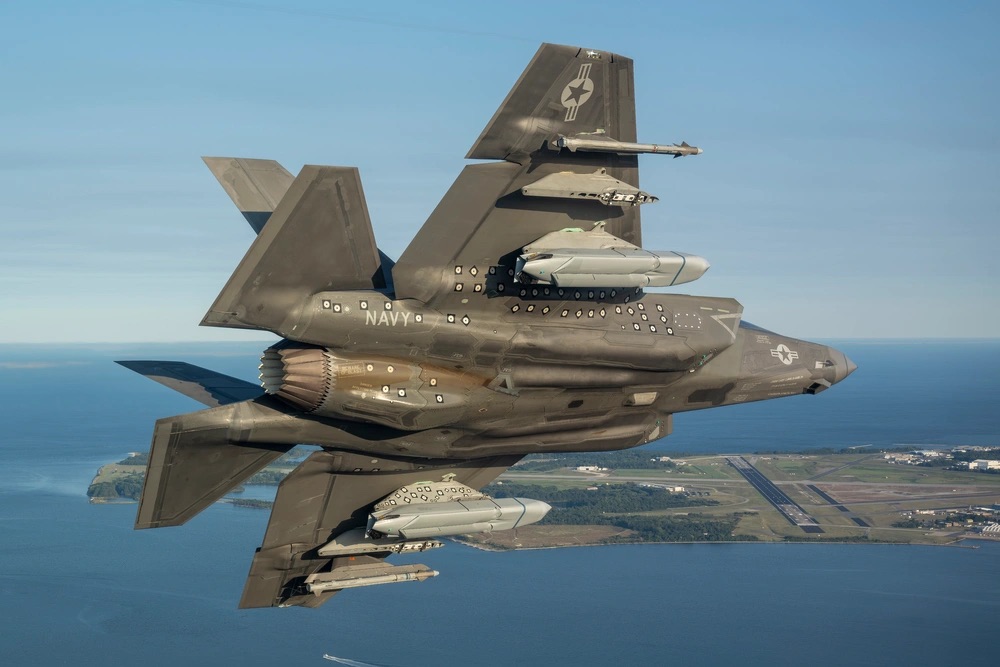
For decades, stealth aircraft have been among military aviation’s most prized assets. Aircraft like the F-35 and B-2 are designed to reduce their radar signature, making them far harder to detect than conventional aircraft.
But harder to detect does not mean invisible. Here’s how modern radar systems and other sensors can locate stealth aircraft and why the contest between detection and evasion continues to evolve.
The basic principle of radar detecting aircraft
Active radar is just one of the many ways to detect aircraft. The basic principle is somewhat similar to how bats use echolocation to detect their prey with sonar. The radar transmits electromagnetic energy typically in a particular direction with a particular frequency.
If the signal encounters an object, like an aircraft, some of that energy is scattered back towards the radar. This is related to the aircraft’s Radar cross-section (RCS).
The returning signal is extraordinarily weak compared with the signal that was transmitted. The radar needs to be able to pick this up and distinguish it from the background noise and other electromagnetic reflections.
Stealth aircraft are built to absorb as much energy as possible and to deflect it at angles away from the radar.
Once a radar has detected an aircraft, it can begin tracking its position, direction and speed.
The importance of passive radars
Importantly for warfare, this is a two-way street. The beam of energy that the radar emits is like a beacon to a fighter jet, revealing the location of the radar.
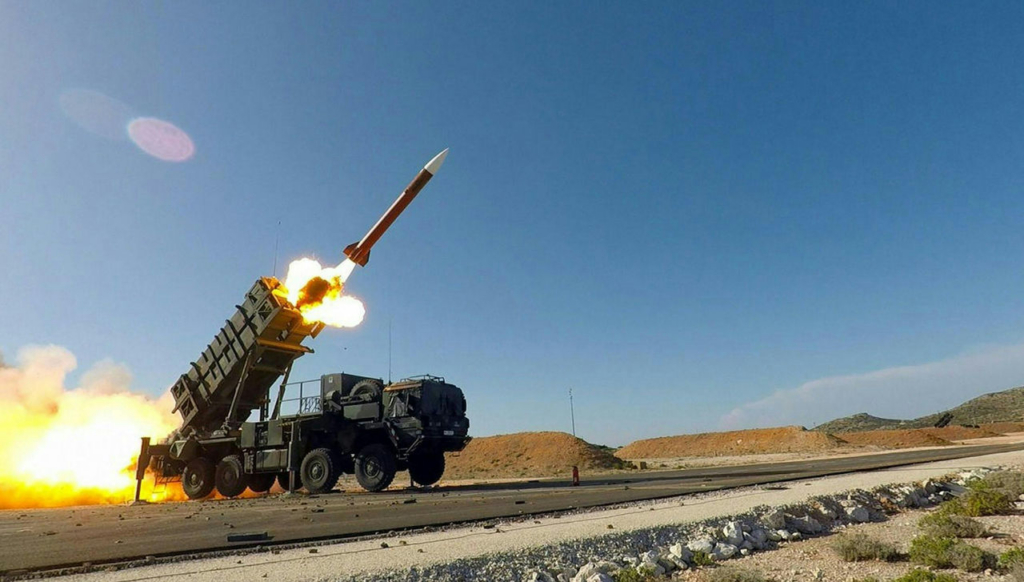
Missiles like the AGM-88 HARM (High-speed Anti-Radiation Missile) are designed to follow the signal to the radar and destroy it. Many air-defence systems use emission control, keeping radars silent or transmitting intermittently to reduce their vulnerability to anti-radiation weapons.
| Method | What is being detected? | Active/passive | Typical role |
| Primary radar | Reflected radio energy | Active | Detecting aircraft independently of cooperation |
| Fire-control radar | Precise radar return | Active | High-quality tracking/weapons engagement |
| AESA radar | Radar reflections | Active | Airborne search and tracking |
| ESM/ELINT | RF emissions | Passive | Detecting/locating emitters |
| IRST | Heat/infrared radiation | Passive | Detecting and tracking aircraft thermally |
| EO camera | Visible light | Passive | Identification/tracking |
| Acoustic sensors | Aircraft noise | Passive | Shorter-range/specialised detection |
| ADS-B | Aircraft’s own broadcast | Passive receiver | Civil surveillance |
| IFF | Cooperative identification response | Active interrogation + response | Determining friendly/authorised identity |
A radar can measure the distance to the aircraft using the basic formula of distance = speed of light x elapsed time ÷ 2. It is important to note that most modern radars don’t work as simple pulsed systems.
Some modern radars use continuous waves and pulse Doppler, and other architectures, although the basic underlying principle remains the same.
Passive radars don’t necessarily transmit their own radar illumination. Instead, they can exploit existing radio-frequency transmissions and then analyse disturbances and reflections.
Passive radar should not be confused with AESA radar. An AESA radar is still an active sensor that transmits radio waves, whereas passive radar uses existing radio-frequency transmissions from other sources and analyses their reflections.
The issue of knowing if it’s an aircraft
In the 2001 movie, Pearl Harbor, there is a scene showing a character saying dismissively of the new and untested first-generation technology being installed, “I’ve seen these new radar screens, General. It can’t tell if it’s [airplanes] ours, theirs, or a flock of damn birds.”
In principle, this remains true. Radars can’t inherently know if an object is an aircraft or some other object. They are classified by their signatures and filtered by set parameters. This has been one of the challenges facing air-defence operators trying to detect small drones approaching military bases.
The basic principle is also one of the ways aircraft can deceive radars. They can tow or deploy decoys that, to a radar, appear to mimic the profile of a fighter jet while appearing to be nothing of the sort to a pair of human eyes.
Infrared & electronic emissions
Infrared search-and-track (IRST) is one of the principal passive methods of detecting stealth aircraft, particularly because it does not rely on radar reflections. An IRST looks for thermal radiation from the aircraft rather than its radar reflections.
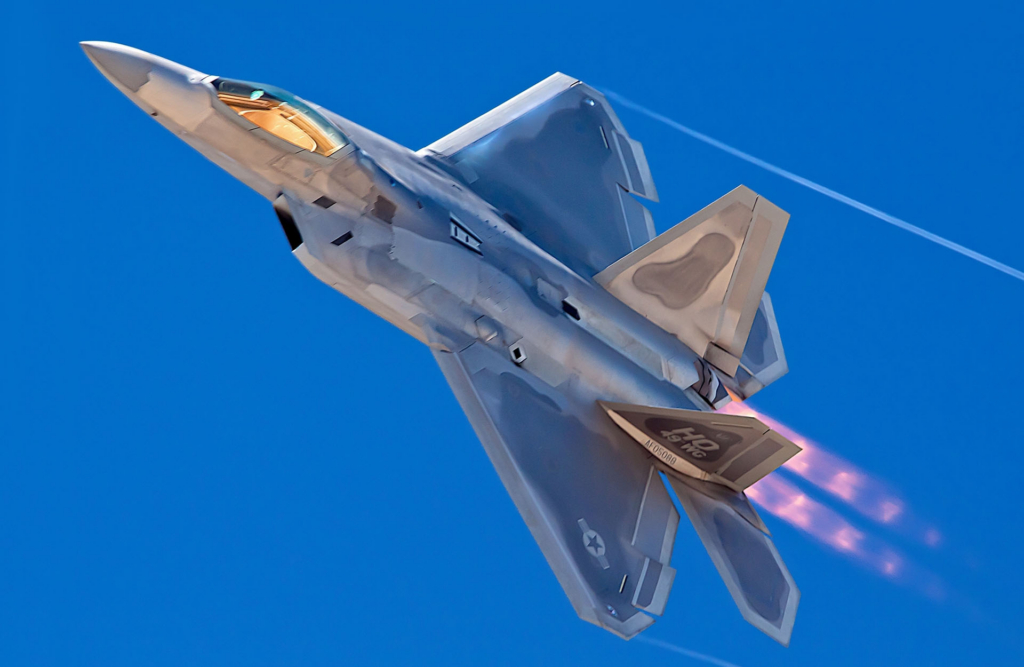
Modern stealth fighters also invest heavily in reducing infrared signatures by managing engine exhaust and shielding hot components. Sustained supersonic flight increases aerodynamic heating, which is one reason aircraft such as the F-35 are not designed for prolonged high-speed flight.

IRST systems have their own limitations, including being impacted by atmospheric conditions, background temperature, aircraft altitude, viewing angle, and more.
One of the most important ways to detect stealth aircraft is to look for emissions – any emissions, with its infrared signature being just one.
Communications, datalinks, onboard radar, and laser designators all emit energy that may be detectable by specialised sensors.
Other ways to detect stealth aircraft
Contrary to how some comment sections online may seem to suggest, stealth aircraft are not invisible. They can be detected by many of the same systems used to detect conventional aircraft; they are just more difficult to detect, track, and engage.
A very important part of ‘stealth’ is not just being passive and hidden; it is actively fighting back with jamming, decoys, and flooding the picture with noise.
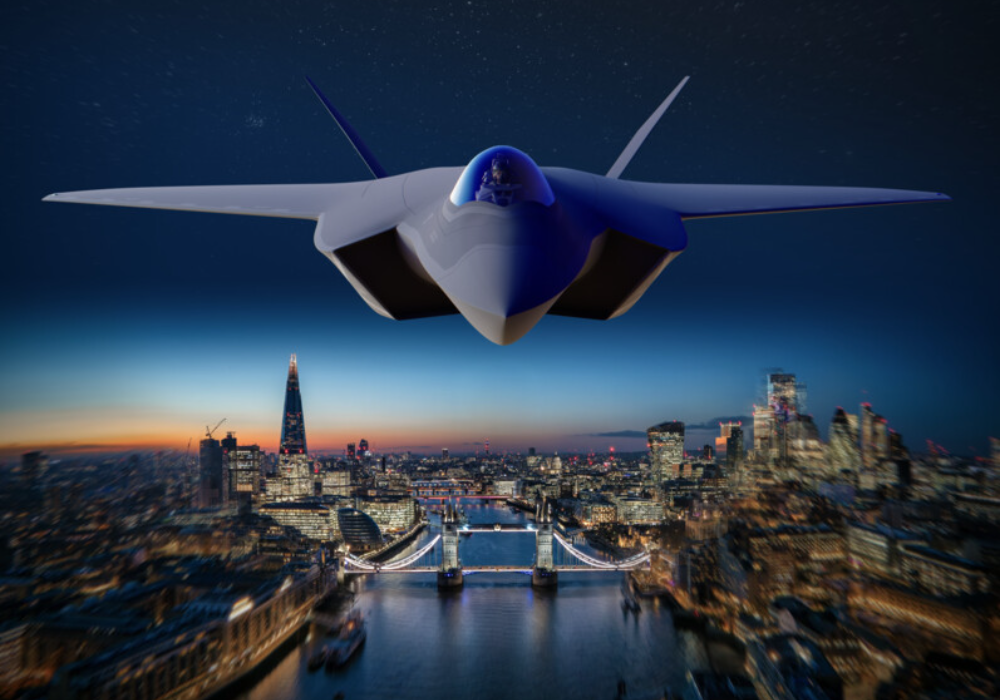
One of the surest ways to see an aircraft is to see it. Aircraft can be simply seen, and electro-optical systems use visible-light cameras, sometimes combined with infrared sensors.
Stealth fighter jets can also be heard, as can the disturbances they make in their environment (e.g., pressure waves).
While stealth aircraft can be detected, finding them is only the first step. Modern air-defence systems must also track, identify and target them, often before they can complete their mission.
Sign up for our newsletter and get our latest content in your inbox.


More from


October 17, 20264 min read