


Ryanair swoops into Baltic amid airBaltic bankruptcy

4 min read
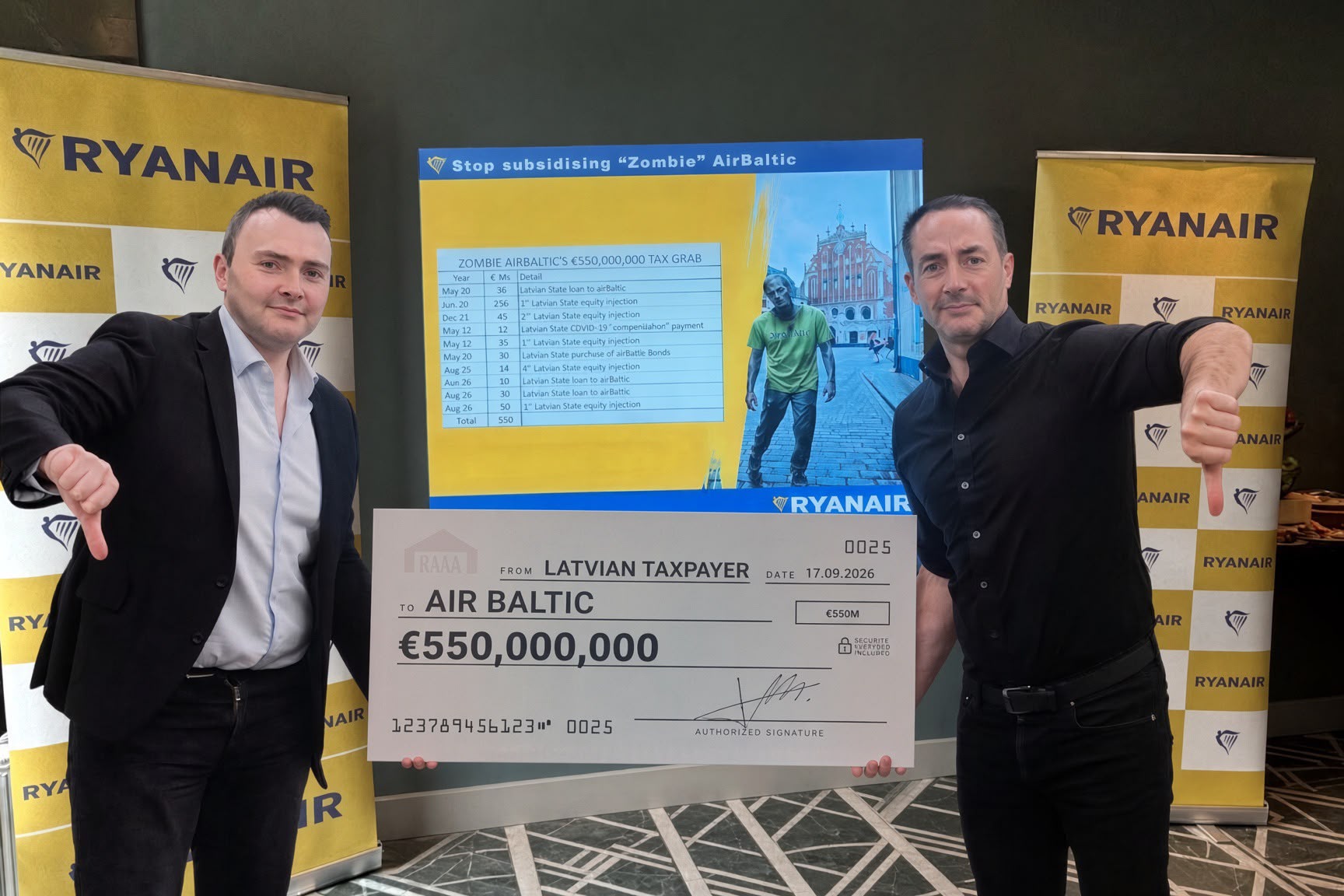
Ryanair announced plans to double its Baltic traffic and invest $1.6 billion in the region, as airBaltic enters bankruptcy protection and scales back its fleet.
The Irish low-cost carrier has said it wants to increase capacity across Latvia, Lithuania and Estonia to 11 million annual seats by 2031 and more than double its aircraft from seven to 16.
The proposal comes just days after Latvia’s flag carrier filed for Chapter 11 bankruptcy protection in the US, allowing Ryanair to expand as airBaltic enters Chapter 11 protection and scales back its expansion plans.
“This Ryanair growth proposal is even more important following airBaltic’s announcement that it will shrink its fleet by one-third,” Ryanair Chief Commercial Officer Jason McGuinness said in the airline’s announcement.
However, Ryanair’s expansion will not be evenly spread across the Baltics. Latvia is gaining capacity immediately, but the airline is cutting seats in Lithuania and Estonia as it pressures airports and governments there to reduce charges.
Ryanair adds capacity at Riga
Ryanair confirmed that it will base two aircraft at Riga for winter 2026 and operate 16 routes. Capacity will rise 6%, adding around 40,000 seats. The airline did not announce any new destinations, but will increase frequencies on 10 existing routes, including Alicante, Barcelona and Milan Bergamo.
The announcement marks a clear turnaround for Ryanair in Riga. In March, Ryanair announced a 20% reduction in its summer 2026 Riga capacity, dropping six routes including Barcelona, Gdańsk and Vienna, which it blamed on Latvian aviation taxes and higher air traffic control charges.
“The contrast across the Baltics could not be clearer. Latvia reduces airport charges and Ryanair traffic grows +6%. Estonia and Lithuania increase access costs – Ryanair capacity falls 25%. Tallinn Airport increased charges by a staggering +70% in 2025, while Vilnius Airport charges have risen by almost +30% since 2023. These excessive costs are driving aircraft, routes, passengers and jobs away from the Baltics to more competitive European markets,” McGuinness said when announcing the $1.6 billion Baltic investment proposal.
Latvia will be the only Baltic state to receive Ryanair growth this winter.
Lithuania and Estonia lose Ryanair capacity
Ryanair’s winter capacity in Estonia and Lithuania will fall by 25%, equivalent to around 550,000 seats. The airline had already signalled its dissatisfaction earlier this year. Its summer 2026 Tallinn schedule remained at six routes with no year-on-year growth.
In Lithuania, Ryanair announced zero summer growth and said Vilnius would lose one route.

For winter, capacity removed from Estonia and Lithuania will instead be shifted to markets including Slovakia, Poland, Italy and Sweden.
Ryanair is presenting its $1.6 billion Baltic plan as an offer, not as an unconditional investment commitment. It says any further deployment of aircraft, routes and capacity will depend on governments and airports reducing operating costs in the region.
airBaltic’s retreat creates an opening
airBaltic is moving in the opposite direction. The airline filed for Chapter 11 bankruptcy protection while securing commitments for €350 million ($405 million) in debtor-in-possession financing.
Chapter 11 does not mean the airline has ceased operations. The restructuring allows the airline to continue flying while it negotiates with creditors, aircraft lessors and other stakeholders. airBaltic says scheduled flights are continuing and tickets remain valid.
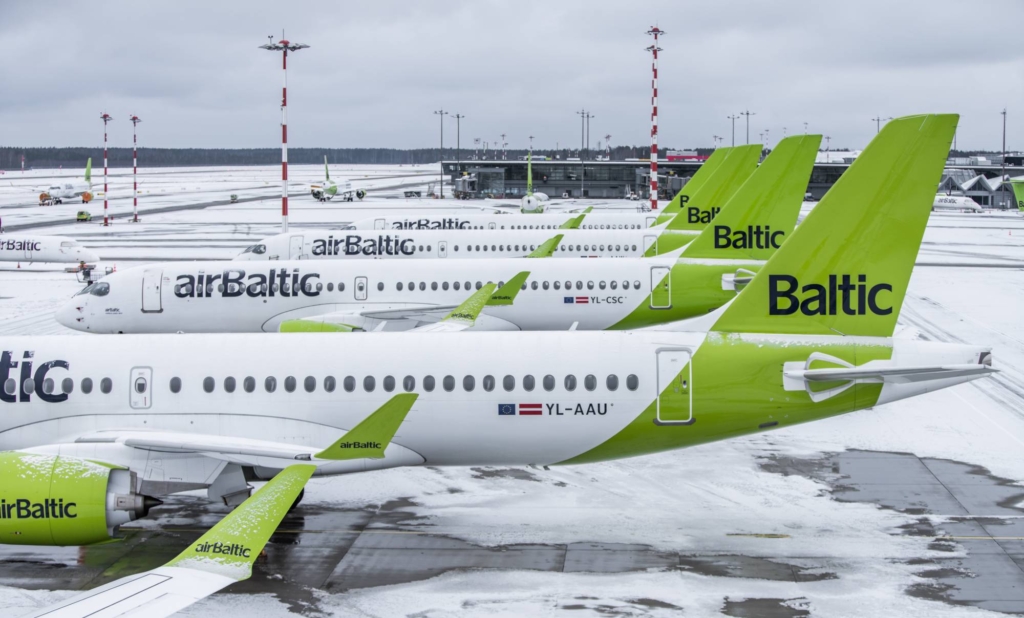
The restructuring reverses airBaltic’s previous growth strategy. The airline had planned to build an all-Airbus A220-300 fleet of 100 aircraft. It expanded to 54 aircraft this year but has since adopted a scaled-back business plan under which the fleet is expected to fall to just 36 aircraft by the end of 2026. Its longer-term target has reportedly been reduced to around 40 aircraft by 2031. That would leave capacity for competitors to fill.
airBaltic pushed back against Ryanair’s announcement, telling Reuters: “Competition is good for airlines and ultimately good for passengers. At airBaltic, however, we believe connectivity is measured by what you deliver, not by what you promise.“
Why airBaltic ended up in Chapter 11
airBaltic faced financial pressure before the latest surge in fuel prices linked to the Iran conflict. The carrier received a €30 million loan from the Latvian government in April. Fitch estimated it still required another €156 million in short-term funding. The airline was also carrying substantial aircraft leasing costs and expensive bond debt.
Fitch forecast approximately €130 million of EBITDAR for 2026, against roughly €160 million in aircraft lease payments. The airline also faced a €57 million bond coupon payment.
Its financial problems coincided with difficulties affecting its A220 fleet and Pratt & Whitney geared turbofan engines, further complicating an expansion strategy that required significant financing and leasing commitments.
The Chapter 11 process allows airBaltic to renegotiate those obligations while maintaining operations.
Bigger airlines circle smaller rivals amid Iran conflict fuel spike
Reuters reports that airline executives and investors expect the cost pressures from the Iran conflict to put smaller national carriers under increasing strain, allowing larger, better-capitalised airlines to take over routes and capacity. Ryanair’s move in the Baltics reflects that trend.
The Irish low-cost airline carried 208 million passengers in the year ending March 2026. It aims to reach 300 million annually by 2034, supported by deliveries of 300 Boeing 737 MAX 10 aircraft beginning in 2027. The Baltics could be one of the markets where those aircraft are deployed.
For now, Riga will benefit from Ryanair’s proposal first. Whether Lithuania and Estonia share in Ryanair’s proposed $1.6 billion expansion will depend on whether the airline persuades governments and airports there to cut the charges it says are holding back growth.
Sign up for our newsletter and get our latest content in your inbox.


More from

September 17, 20263 min read


September 17, 20265 min read
September 17, 20263 min read


