


India clears new Dhruv buy as prospective order points to 138 helicopters

3 min read
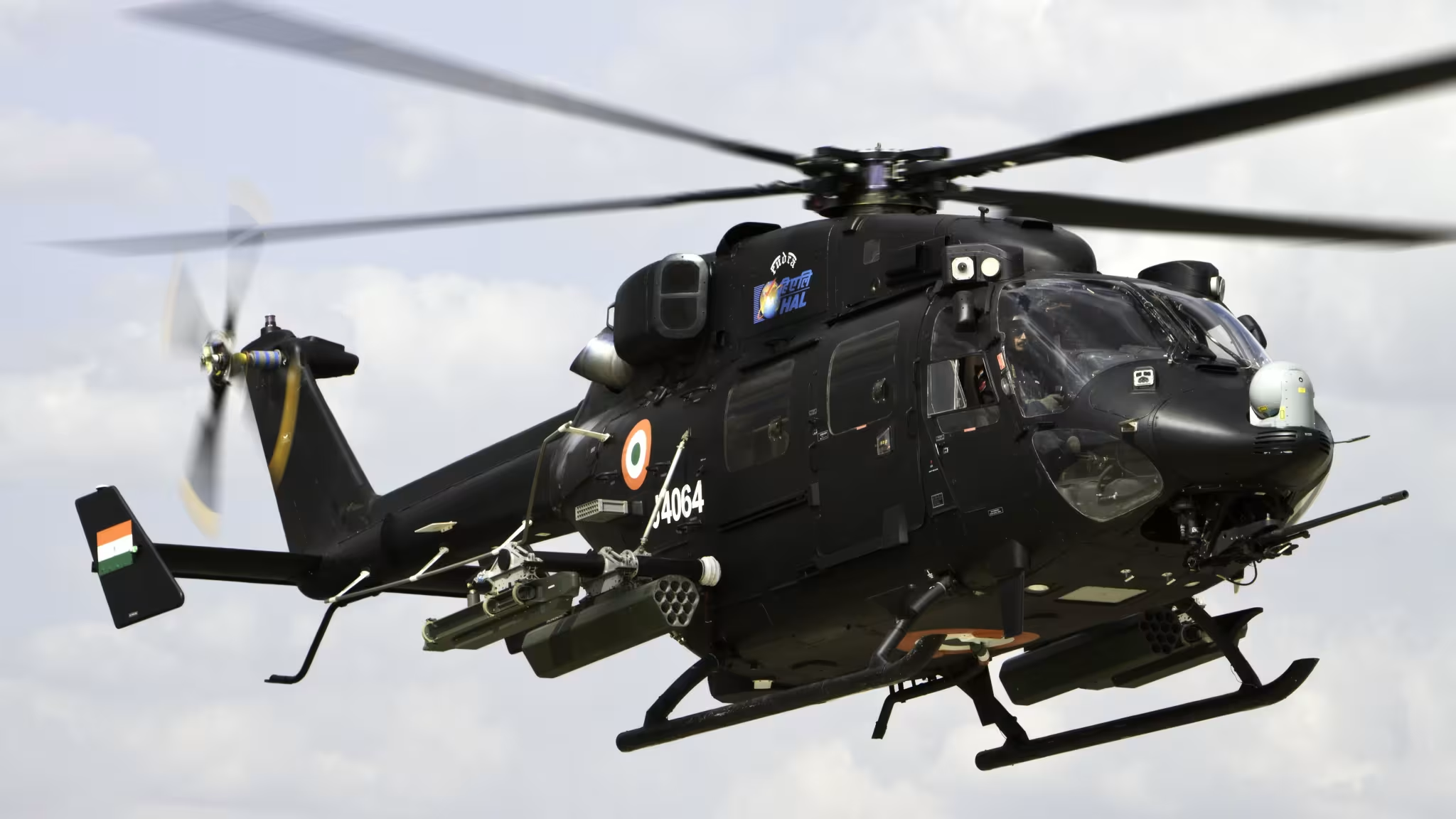
India has cleared the purchase of additional Advanced Light Helicopters (ALH) for the Army and Air Force, with the prospective order expected to cover 138 HAL Dhruvs and potentially become one of the largest recent contracts for the indigenous helicopter programme.
The Defence Acquisition Council, chaired by Defence Minister Rajnath Singh, granted Acceptance of Necessity (AoN) for the helicopters on September 7 as part of a wider package of military acquisition proposals estimated at INR1.10 trillion ($12.4 billion). The Ministry of Defence did not disclose the number of helicopters or the value of the ALH procurement.
Brokerage CLSA has put the prospective order at 138 helicopters at an estimated cost of $3.5 billion. It also estimates the procurement could add around 13% to Hindustan Aeronautics Limited’s existing $27 billion order backlog and bring the company about $600 million in customer advances.
The AoN is an in-principle administrative approval and does not constitute a contract. The programme will have to pass through further stages of India’s defence procurement process before an order is placed.
The MoD said the additional ALHs would enable the Army and Air Force to “execute complex missions across all terrains and operational situations.”
Dhruv has served with India’s armed forces for more than two decades
Designed and manufactured by state-run Hindustan Aeronautics Limited (HAL) in Bengaluru, the Dhruv was India’s first indigenously developed Advanced Light Helicopter. Its first prototype flew in August 1992 and the helicopter entered operational service in 2002.
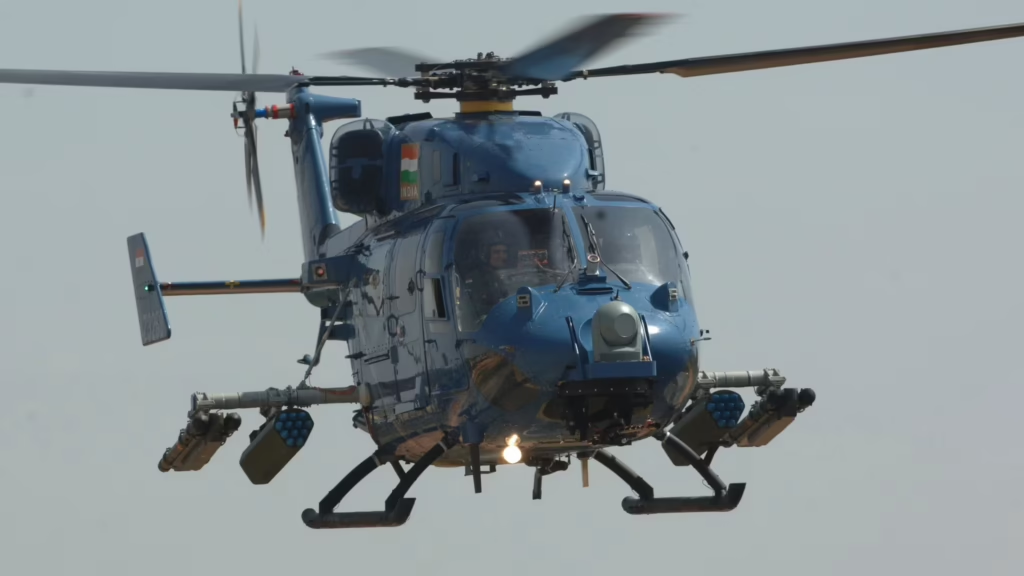
The twin-engine aircraft was designed as a multi-role platform and has since been adapted for the requirements of the Army, Air Force, Navy and Coast Guard. Its missions include troop and utility transport, reconnaissance, casualty evacuation and search and rescue. The helicopter has also been extensively operated in high-altitude areas, including the Siachen sector.
The Dhruv family has evolved considerably since the early aircraft entered service. Later Mk III helicopters use the Shakti engine and incorporate equipment for high-altitude operations, while specialised maritime versions carry sensors including search radar and electro-optical systems. The armed Rudra was also developed from the Dhruv airframe.
The roughly 5.5-tonne helicopter has a four-blade composite main rotor and twin-engine configuration. Published figures for the platform give a maximum speed of around 280 km/h and a range of about 630 km, although performance varies by version and mission fit.
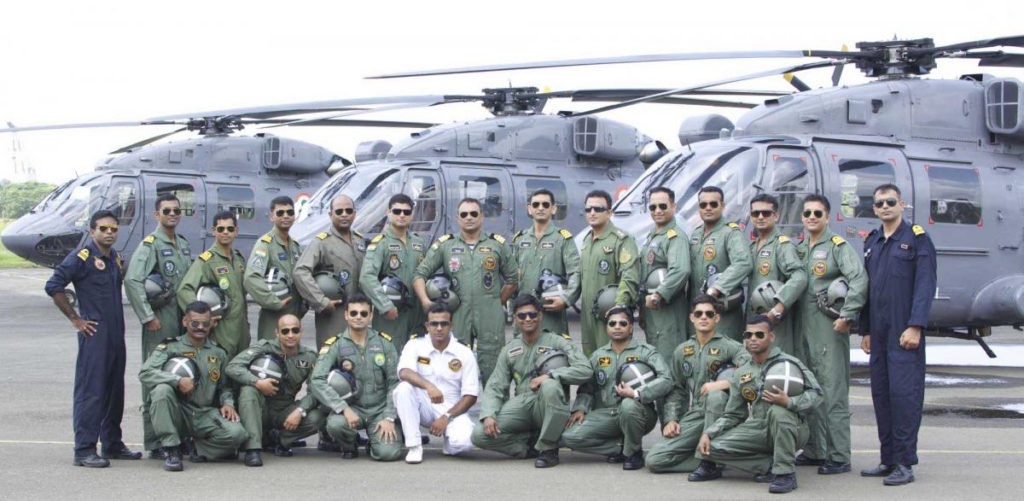
The Indian Navy was among the early users, inducting the ALH in March 2002. Intensive flying trials subsequently led to operational flights at Kochi and Goa, followed by the commissioning of the Navy’s first ALH squadron at INS Garuda in Kochi in November 2013. Naval aircraft have been employed for search and rescue, special heliborne operations, armed patrol and other missions.
New procurement would add to recent Dhruv orders
The latest approval follows further investment in the platform over the past two years.
In March 2024, the MoD signed an INR80.73 billion ($845 million) contract with HAL for 34 Dhruv Mk III helicopters. The order covered 25 aircraft for the Army and nine for the Coast Guard.
Another contract followed in March 2026 for six ALH Mk III Maritime Role helicopters for the Coast Guard. HAL said in its latest annual results that the six-aircraft order was worth INR 27.04 billion ($285 million). The company had an order book of about INR2.54 trillion ($26.5 billion) at the end of March 2026.
If the 138-aircraft figure translates into a firm contract, it would substantially increase the Dhruv production backlog.
CLSA estimates HAL’s broader potential order pipeline over the coming decade at around $48 billion. For the Dhruv programme itself, however, the immediate milestone will be the conversion of the DAC approval into a negotiated contract and a firm delivery schedule.
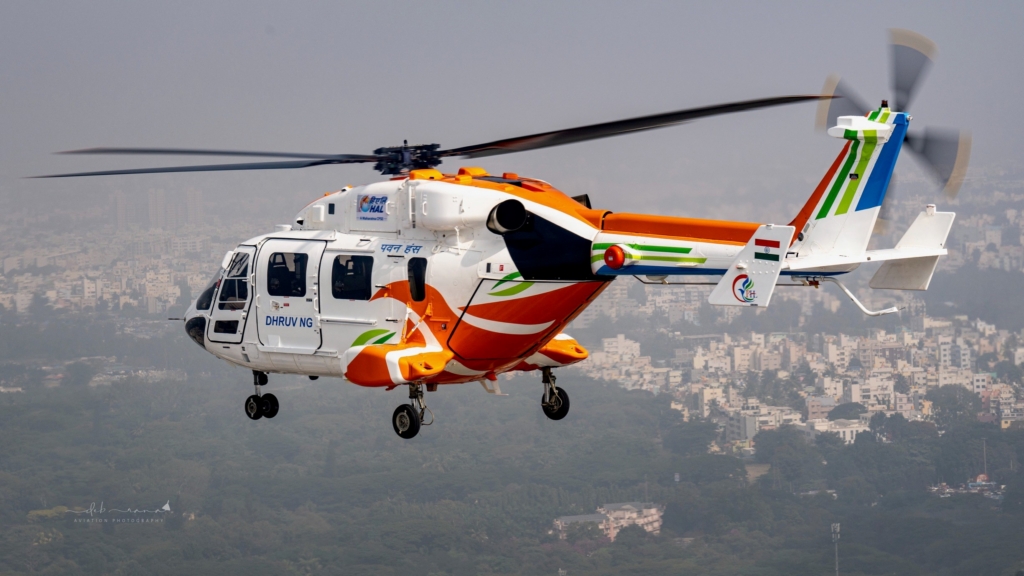
The military procurement comes as HAL is also expanding the Dhruv family into the civil market. The 5.5-tonne Dhruv NG made its maiden flight in Bengaluru in December 2025. Powered by twin Shakti 1H1C engines, the civil version has a glass cockpit and is being developed for passenger transport, air ambulance, search and rescue, law-enforcement and disaster-relief missions.
Sign up for our newsletter and get our latest content in your inbox.


More from


September 12, 20264 min read


