Why do some aircraft leave contrails while others don’t – and why are airlines trying to prevent them?

8 min read
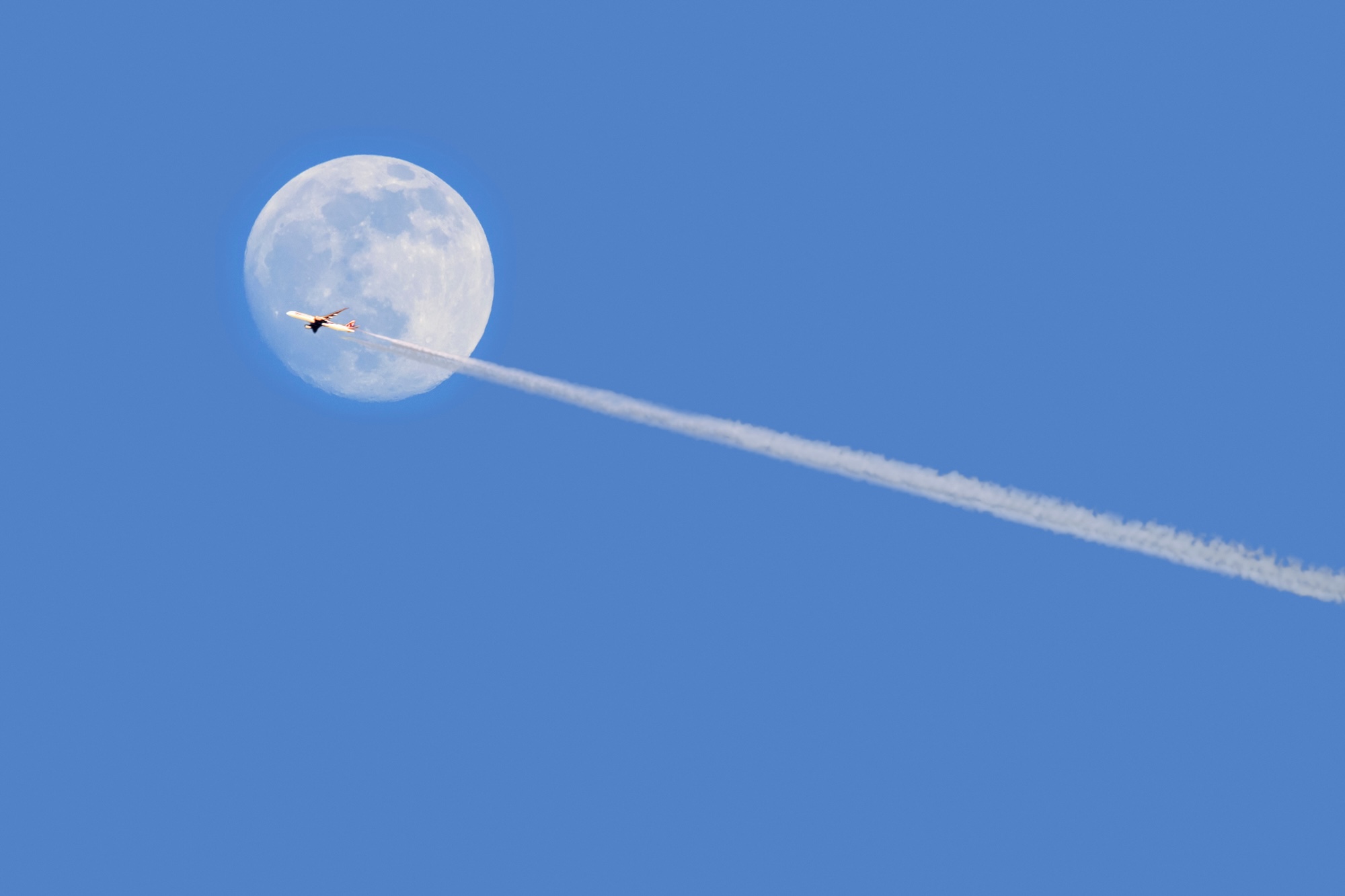
Although the sight of white contrails set against a bright blue sky creates a romantic image of aviation, the existence of these white trails also represents the darker side of flying, according to scientists.
What were once viewed as harmless white streaks across the sky are now seen as visible evidence of aviation’s broader climate impacts.
With the recent launch of Operation Blue Skies, a trial exploring whether small changes to flight paths can reduce the formation of climate-warming contrails, the issue has come under renewed scrutiny.
But what exactly are contrails, how do they form, and why do some aircraft create them while others don’t? Moreover, why is there such an outcry about contrails, and why are airlines trying to prevent their production?
What are contrails and why do they form?
Look up at the sky on a busy day, and you may see aircraft leaving long white trails behind them. Some trails stretch across the sky for hours, while other planes seem to leave nothing behind.
These streaks are called contrails, short for condensation trails. They are a normal consequence of aircraft flying at high altitude, but they have become an important issue in the fight against climate change.
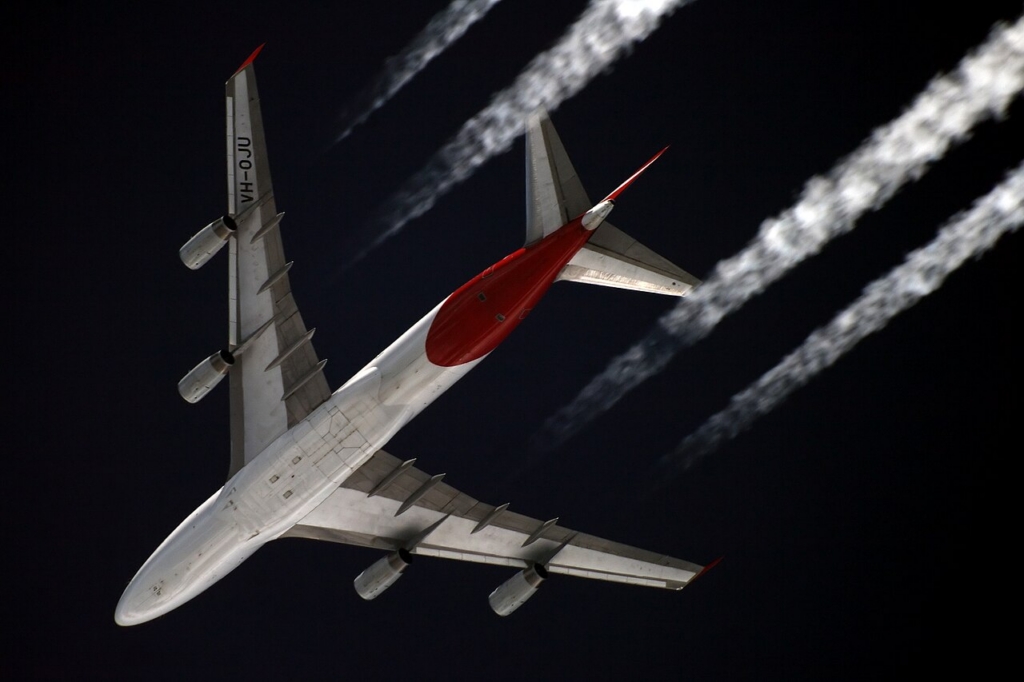
The reason some planes produce contrails while others do not comes down mainly to the atmosphere. The type of aircraft, its engines and the route it flies also matter, but temperature and humidity at cruising altitude are particularly important.
Scientists are now paying close attention to contrails because, under the right conditions, they can have a warming effect on the climate. This is why airlines and researchers are investigating ways to prevent them.
How exactly do contrails form?
A contrail forms when a jet turbine engine burns fuel. Like any combustion process, this produces exhaust gases, including carbon dioxide and water vapour.
At cruising altitude, often around 30,000 to 40,000 feet, the surrounding air can be extremely cold, sometimes below -40°C. When the hot, moist exhaust from an engine mixes with this freezing air, the water vapour can condense and freeze into tiny ice crystals.
These ice crystals form the familiar white line behind the aircraft. In many cases, however, the trail does not last long. If the surrounding air is relatively dry, the ice crystals quickly evaporate or sublimate back into water vapour. The contrail may disappear within seconds or minutes.
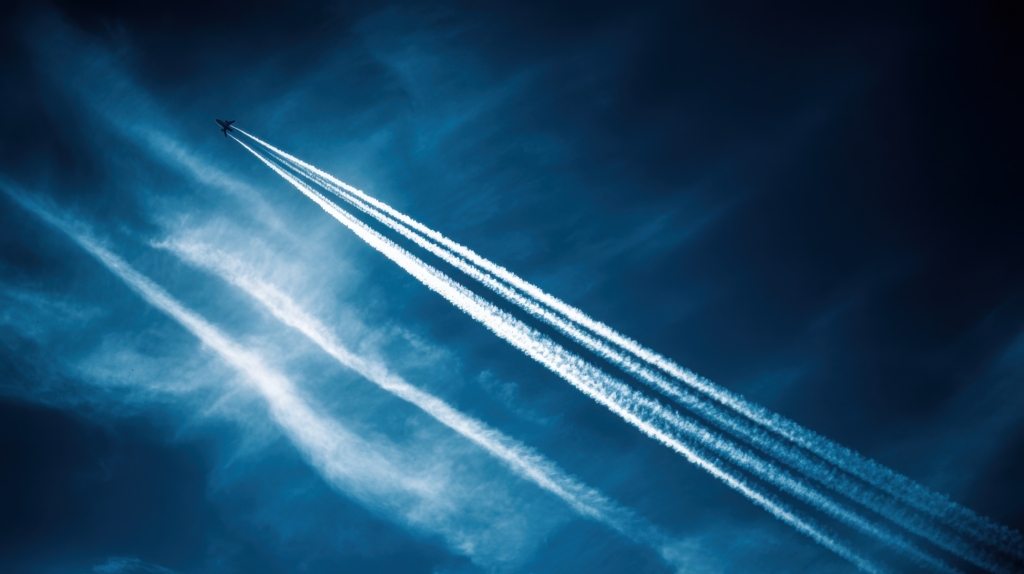
Conditions are different when the aircraft passes through a region of very humid air. If the air is cold and sufficiently humid with respect to ice, the ice crystals can survive and grow.
Instead of disappearing, the contrail can spread into a thin cloud known as a contrail cirrus. Winds at high altitude can stretch the trail across a large area, making it look like a natural cloud.
This explains why two aircraft flying at similar altitudes can behave very differently. One may pass through dry air and leave almost no visible trail, while another enters a cold, ice-supersaturated region and produces a persistent contrail.
Even the same aircraft can leave a contrail on one flight but not another because atmospheric conditions constantly change.
Aircraft design and engine technology also play a role. Modern jet engines are generally more efficient than older engines, meaning they can produce fewer emissions for a given amount of useful work.
However, the amount of water produced by burning aviation fuel remains significant. The temperature and composition of engine exhaust, as well as the size and number of particles emitted by the engine, can influence how easily ice crystals form.
Why are airlines interested in stopping contrails?
The main reason is their potential effect on climate. Aviation contributes to global warming through its carbon dioxide emissions, but carbon dioxide is not the only concern. Aircraft also produce effects in the atmosphere that occur because of their non-CO₂ emissions. Persistent contrails are one of the most important of these effects.
A persistent contrail can spread and become a thin layer of ice clouds. These clouds can affect the amount of energy entering and leaving the Earth system.
During the day, clouds can reflect some incoming sunlight back into space, producing a cooling effect. But contrail cirrus can also trap some of the infrared radiation that the Earth emits towards space, producing a warming effect.
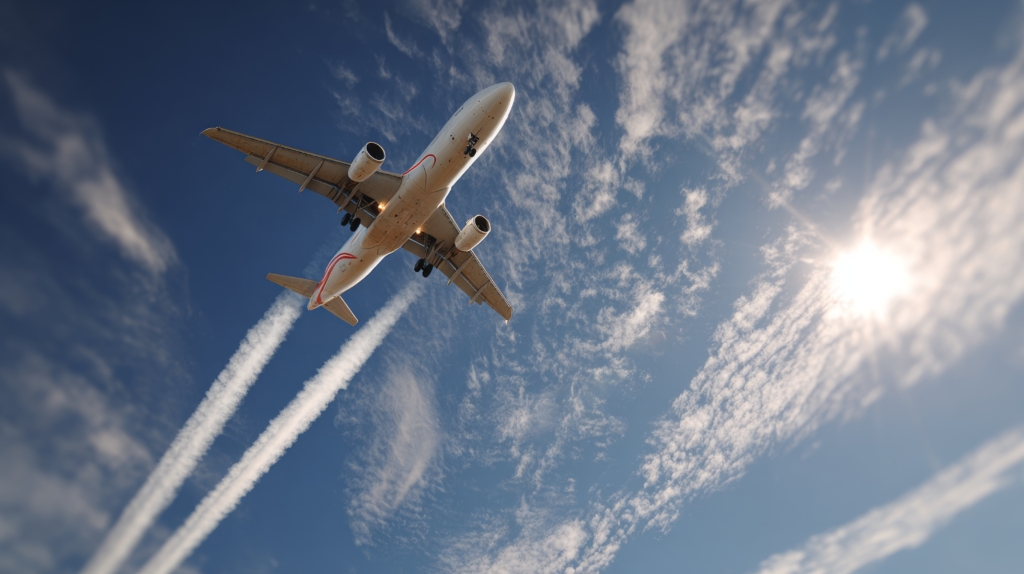
The overall effect depends on several factors, including the time of day, location, season, altitude and characteristics of the cloud. Although the exact magnitude remains uncertain, at a global level, the warming effect of persistent aviation contrails is considered significant.
This creates an unusual situation. An aircraft can complete its flight while producing relatively little additional carbon dioxide compared with another similar flight, yet its particular route could create persistent contrails that add to warming.
Avoiding those contrails, therefore, offers a potential way to reduce aviation’s climate impact without waiting for entirely new aircraft or fuels.
Proposed solutions include changing flight paths or altitudes
Airlines already plan flights around weather, air traffic, and fuel efficiency. If meteorological forecasts can identify areas where persistent contrails are likely to form, an aircraft might be instructed to fly a little higher (or lower) or take a slightly different route. The aim would be to avoid the small regions of the atmosphere where contrails are likely to persist.
This approach is sometimes called contrail avoidance. It does not mean preventing every white trail in the sky. Most contrails disappear quickly and have little lasting effect. Instead, the focus is on avoiding the relatively small number of flights and atmospheric conditions responsible for persistent contrails.
The challenge is that aviation is an enormous and highly coordinated system. A change in altitude or route can affect fuel consumption, flight times, air traffic control and other aircraft.
If an aircraft burns substantially more fuel to avoid a contrail, the additional carbon dioxide emissions could reduce or even outweigh the climate benefit.
For this reason, researchers are trying to determine when a small change in a flight would genuinely reduce overall warming. Advances in weather forecasting, atmospheric modelling, and satellite observations are making this increasingly possible.
Airlines are also beginning to test the idea in real-world operations. Some trials have used weather forecasts to identify potential contrail-forming regions and then compared flights that avoided those areas with flights that followed normal routes.
Researchers can subsequently examine satellite images to see whether the expected contrails actually formed.
These experiments are important because computer models alone cannot answer every question. Scientists need to understand how often persistent contrails form, how long they last, how widely they spread, and exactly how much they influence climate. They also need reliable methods for predicting them before an aircraft takes off.
Reducing contrails in the pursuit of sustainability
There is another reason airlines are interested – contrail avoidance could potentially deliver climate benefits using existing aircraft. Replacing the global commercial fleet is a huge and expensive undertaking.
Developing sustainable aviation fuels, hydrogen aircraft or electric aircraft may take decades, particularly for long-distance travel. Changing where aircraft fly could therefore be a relatively immediate tool.
However, contrail avoidance is not a complete solution to aviation’s climate problem. Aircraft will continue to produce carbon dioxide when they burn fossil fuels, and reducing those emissions remains essential.
Contrails are best understood as one part of aviation’s broader environmental footprint.
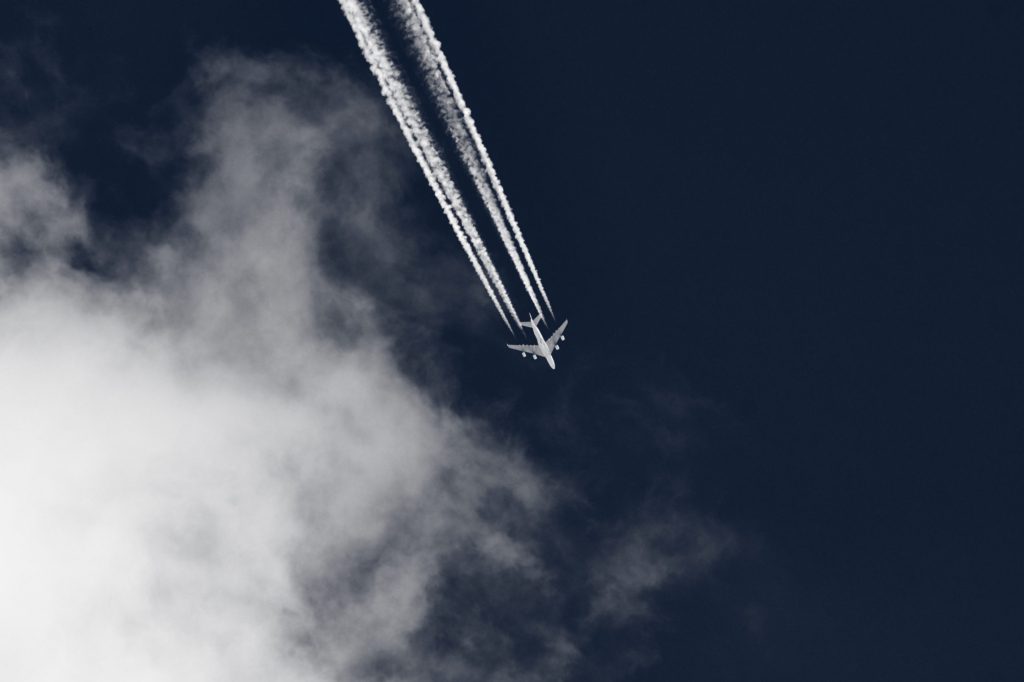
There are also important uncertainties. Not every persistent contrail produces the same warming effect, and atmospheric conditions can change rapidly. Forecasting exactly where a contrail will form is difficult.
There are also questions about how much airlines should be willing to alter routes, how the climate benefit should be measured and who should pay for any additional operating costs.
Nevertheless, the basic science is clear – contrails form when aircraft exhaust meets sufficiently cold and humid air, and whether they persist depends largely on atmospheric conditions.
That is why one aircraft can leave a bright white trail while another flying nearby leaves almost nothing.
A broader change in attitudes towards aviation
The growing interest in contrail avoidance reflects a broader change in aviation. Cutting emissions is no longer simply about making engines more fuel-efficient.
Researchers are looking at everything an aircraft does in the atmosphere, including effects that are temporary, indirect or difficult to see.
These white lines behind aircraft may look harmless, and most are short-lived. But under particular atmospheric conditions, they can turn into clouds that influence the Earth’s climate.
If airlines can predict those conditions accurately enough, making a small change to a flight path could prevent some of that warming.

In the future, therefore, the skies might look slightly different – not because aircraft have stopped flying, but because pilots and flight planners have become better at knowing where not to fly.
Contrail avoidance is unlikely to solve aviation’s climate problem on its own, but it could become one useful tool alongside cleaner fuels, more efficient aircraft and long-term efforts to reduce carbon dioxide emissions.
Sign up for our newsletter and get our latest content in your inbox.


More from

October 11, 20263 min read