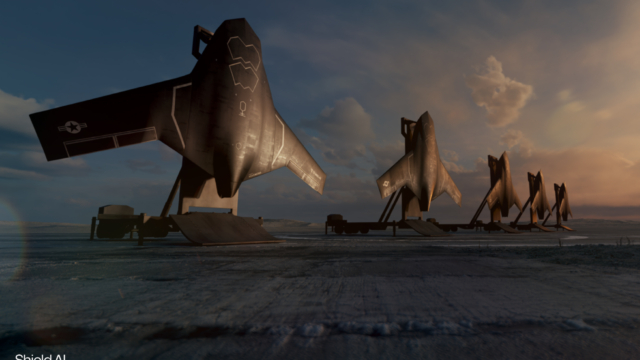
The US military is testing a drone that flies like a plane and operates like a boat

4 min read
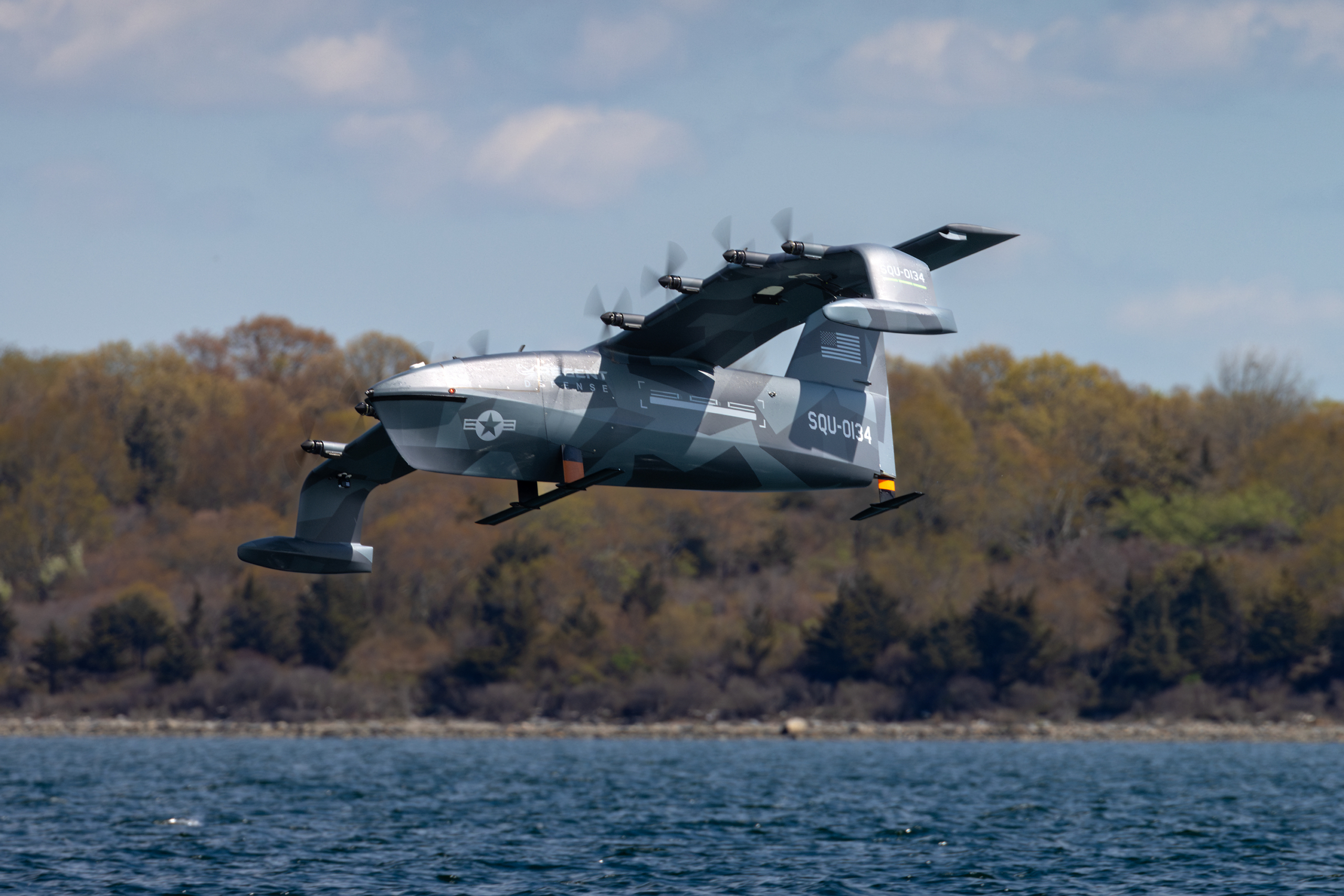
REGENT’s autonomous Squire seaglider has completed operations with the US military, as the company looks to expand beyond commercial transport and into defence.
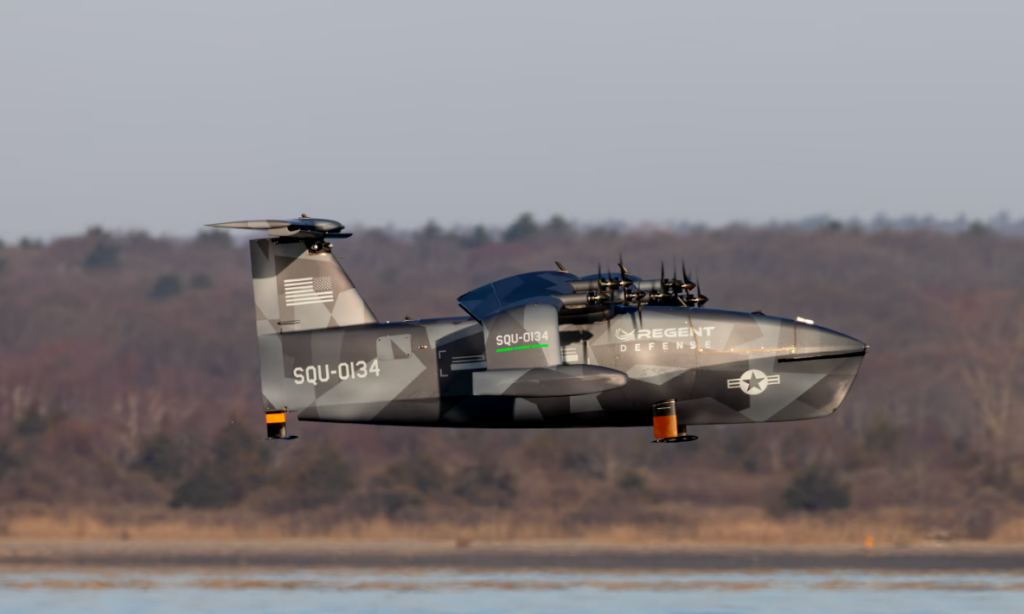
Neither a conventional drone nor a traditional boat, Squire uses wing-in-ground technology to skim just above the water’s surface at speeds of up to 70 knots while maintaining a low radar signature. REGENT believes those characteristics could make it valuable for missions ranging from intelligence gathering and electronic warfare to logistics and search-and-rescue operations.
The vehicle recently took part in Silent Swarm, a US military exercise held in Michigan that brought together experimental uncrewed systems operating across land, air and maritime domains.
For REGENT, best known for its larger passenger-carrying Viceroy Seaglider, the exercise marks another step in a growing defence push with a product that sits somewhere between an aircraft, a drone and a fast surface vessel.
REGENT’s Squire seaglider takes part in Silent Swarm exercise
During the exercise, the autonomous Squire Seaglider carried payloads designed for electronic attack, electronic protection and electronic warfare support.
Its role was intended to demonstrate both the platform’s versatility and its ability to operate alongside other military assets in realistic combat scenarios.
Over the course of the two-week Silent Swarm exercise, Squire joined a range of uncrewed systems operating across land, air and maritime domains. Participants were exposed to a variety of electromagnetic threats and countermeasures, including radar, communications, navigation, infrared and directed-energy systems, to assess how they would perform in contested environments.
“Silent Swarm gave us the chance to show key defence stakeholders exactly what our autonomous Seaglider drone, Squire, can do in an operationally relevant setting,” said Billy Thalheimer, co-founder and CEO of REGENT. “Our team has worked relentlessly to get us here, and this demonstration proves Squire is ready to deliver the capability our warfighters urgently need.”
Capabilities of the REGENT Squire autonomous drone
REGENT is positioning Squire, which remains under development, as a long-range, low-signature platform capable of operating at speeds of up to 70 knots (130km/h) in contested maritime environments.
The company launched a dedicated defence division in July 2025 to market the vehicle to military and civil defence operators. REGENT says the Squire USA-V (Unmanned Surface and Aerial Vehicle) can carry payloads of up to 23kg (50lb) and support missions including intelligence, surveillance and reconnaissance (ISR), frontline logistics, search and rescue, and anti-submarine warfare.
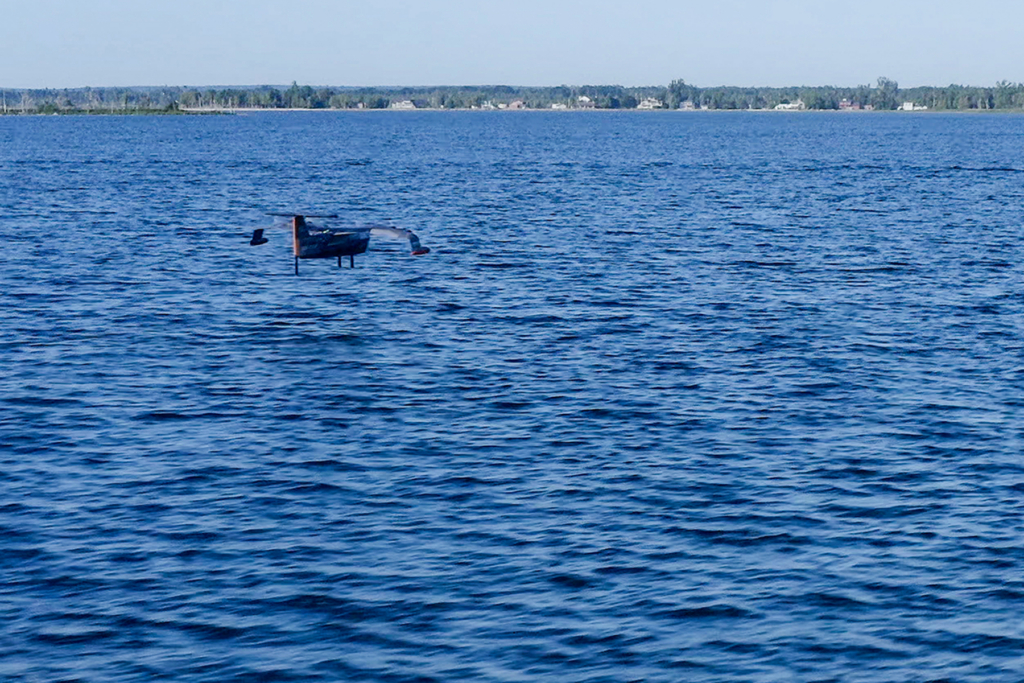
Squire is a wing-in-ground vehicle, also known as a ground-effect vehicle, which exploits an aerodynamic phenomenon that improves efficiency when flying at extremely low altitude over water. Operating within roughly a wingspan of the surface and below the radar horizon, the platform is designed to combine high speed with a relatively low radar signature.
Those characteristics are a key part of its military appeal. REGENT believes the combination of low observability and maritime mobility could make Squire a useful platform for ISR missions, logistics support and other operations in contested environments.
REGENT is also using its proprietary flight-control software to develop fully autonomous capabilities for the platform. The Squire demonstrator is approximately one-quarter the size of the larger Viceroy Seaglider and is designed to operate over distances of up to 100 nautical miles (185km).
However, Squire is only part of the company’s wider defence ambition.
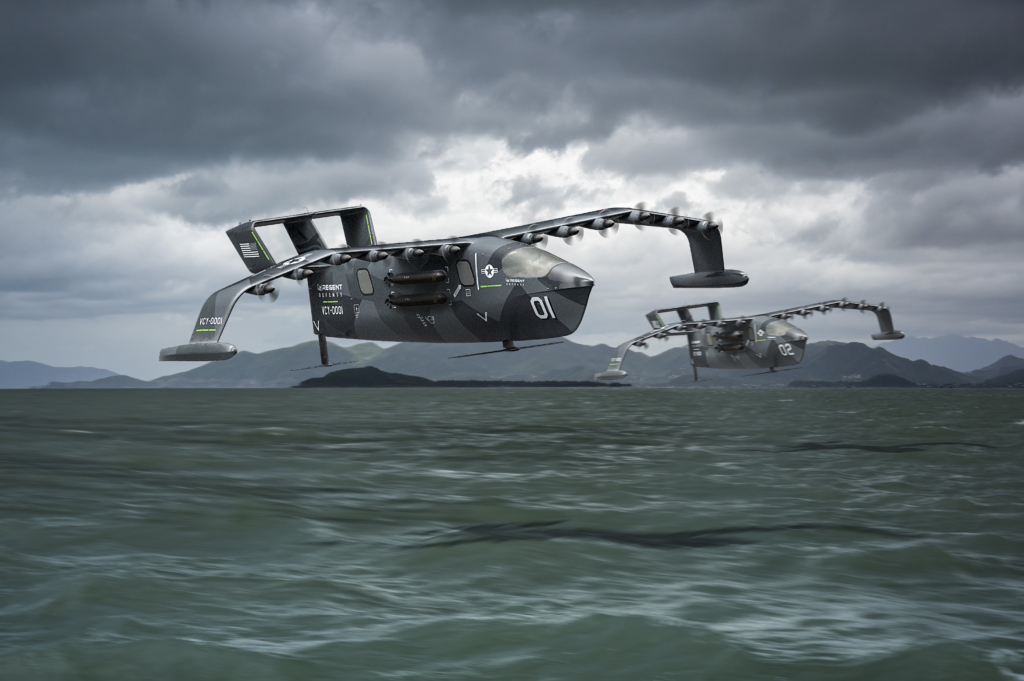
REGENT is also developing a militarised version of the Viceroy, replacing the all-electric propulsion system with a hybrid configuration that extends range to around 1,400 nautical miles (2,592km). The company believes that additional range, combined with low-signature operations and autonomous capability, could make the platform suitable for a variety of military and security missions.
As REGENT sees it, Squire is intended to demonstrate more than just a new vehicle concept.
“Squire addresses a critical national security gap in the maritime domain, delivering a high-speed, long-range, low-signal platform that is highly versatile across mission types and interoperable with existing and emerging defence technologies,” the company said.
REGENT continues to develop its military division
Squire’s participation in Silent Swarm builds on a period of rapid momentum for REGENT Defence. In April 2026, REGENT’s Squire became the first purpose-built military wing-in-ground vehicle to fly in the United States.
It has subsequently participated in other live rescue and logistics demonstrations with the US Marine Corps Warfighting Lab, including a dockside litter boarding, a beach extraction, and an open-water life raft rescue, validating Seaglider vessels for MEDEVAC and CASEVAC missions.
REGENT already holds a $15 million contract with the US Marine Corps for Seaglider development and maintains formalised development relationships with US Special Operations Command (USSOCOM) as well as the US Coast Guard Research and Development Centre.
Additionally, the company has also forged defence agreements with allies across four continents, which the company says, “reflects the growing global demand for a maritime platform that combines speed, range, and low-signal operation at a cost no existing solution can match.”
A booming orderbook for Seaglider variants
To date, REGENT has secured global commercial orders for its Seagliders valued at more than $10 billion from leading airline and ferry operators around the world, as well as the $15 million worth of contracts with the US Marine Corps.
REGENT has raised more than $100 million from investors, including 8090 Industries, Founders Fund, Japan Airlines, and Lockheed Martin.