World first: Heart Aerospace successfully flies the largest battery-electric aircraft

3 min read
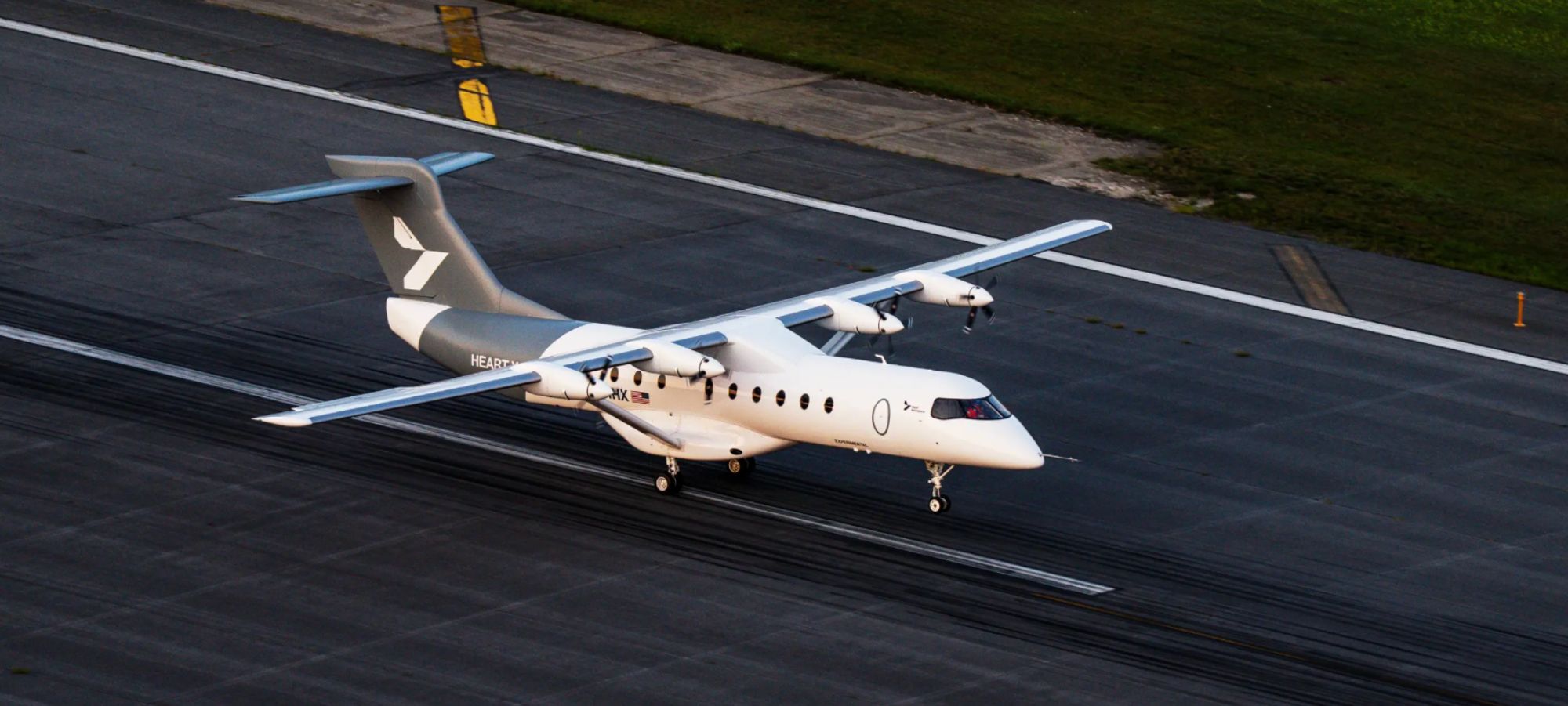

Heart Aerospace’s X1 demonstrator aircraft successfully took off and landed at Plattsburgh International Airport on 13 August, marking a milestone for the aircraft manufacturer as it advances electric flight into the airliner category.
The piloted flight of Heart Aerospace’s X1 demonstrator aircraft lasted 27 minutes. The all-electric aircraft reached an altitude of 1,100 feet with its propulsion system delivering more than one megawatt of power.
The X1 demonstrator was first authorised for flight testing by the Federal Aviation Administration (FAA) in July.
Heart Aerospace X1 demonstrator certified in FAA’s special experimental category
Anders Forslund, Founder and CEO at Heart Aerospace, explained, “The mission was designed to demonstrate all-electric flight at scale relevant to commercial airline operations.” It also comes at a time when global jet fuel prices are soaring, underlining the growing importance of battery-electric propulsion to the future of flight. With fuel prices currently averaging US$ 3.50 per gallon, up 63% year-on-year, the case for electric propulsion has rarely looked more pressing.

Conducted under an FAA Special Airworthiness Certificate Experimental Category (SAC-EC), the test mission included taxi, take-off, climb, manoeuvring, and landing.
While SAC-EC certification is a critical milestone, Heart Aerospace’s conventional fixed-wing 30-seater ES-30 regional aircraft will require full Part 25 certification to carry passengers commercially. Similarly, while the X1 was fully electric, the ES-30 is a hybrid design.

The X1 demonstrator, which measures 76 ft in length and 24 ft in height, features a 106 ft wingspan and a take-off weight of 25,000+ lbs. The test flight was launched within a controlled envelope focused on low-altitude, all-electric operations, with a maximum speed of 140 kts and a maximum altitude of 2,000 AGL.
Heart targets 2031 entry into service for ES-30
Heart is developing the first pre-production ES-30 at its plant in Los Angeles, with flight testing scheduled to begin in 2028 and entry into service targeted for 2031.

“Electric commercial aircraft have the potential to fundamentally reshape airline economics and ultimately, lower the cost of air travel for passengers,” added Forslund.
Heart Aerospace’s vision, he continued, is to enable more affordable, frequent and cleaner air service to and from regional airports through the electrification of flight.
Air Canada and United Airlines committed to Heart’s ES-30
United Airlines is among the first customers to commit to Heart Aerospace’s hybrid-electric regional aircraft, having originally placed an intent to order 100 of its earlier 19-seat ES-19 models in 2021, before more recently converting that commitment to the hybrid-electric ES-30 model.
“Electric commercial aircraft have real potential to deliver a better travel experience for passengers while strengthening our business, and we look forward to Heart’s continued development of the ES-30 and its potential future role in United’s network,” said Michael Leskinen, CFO of United Airlines.

Similarly, John Di Bert, Executive Vice President and CFO of Air Canada, said the Canadian carrier’s investment in Heart Aerospace and the ES-30 reflects the carrier’s “commitment to supporting innovative technologies that have the potential to transform aviation. X1’s first flight is an important milestone in that journey, and we look forward to continuing to work with Heart Aerospace as the ES-30 program progresses and plays its part in the future of regional aviation.”
Collectively, customer commitments from commercial carriers, including United Airlines and Air Canada, currently amount to $9.4 billion.
How hybrid-electric flight will keep costs down
Heart expects the ES-30 to reduce operating costs by more than 40% compared with legacy regional aircraft. Lower energy costs, reduced maintenance requirements from simplified electric propulsion and flight systems and greater aircraft uptime will achieve this.

“Through the X1 programme, Heart has built the capability to design, build, test, operate and continuously improve a clean-sheet electric commercial aircraft,” said Ben Stabler, Heart’s Chief Technology Officer. “We are carrying that full-stack capability directly into the ES-30, our first production aircraft, and the foundation of a broader technology platform for electric airliners.”
Sign up for our newsletter and get our latest content in your inbox.



More from


October 17, 20264 min read