Trump orders return of steam catapults for future Ford-class carriers

4 min read
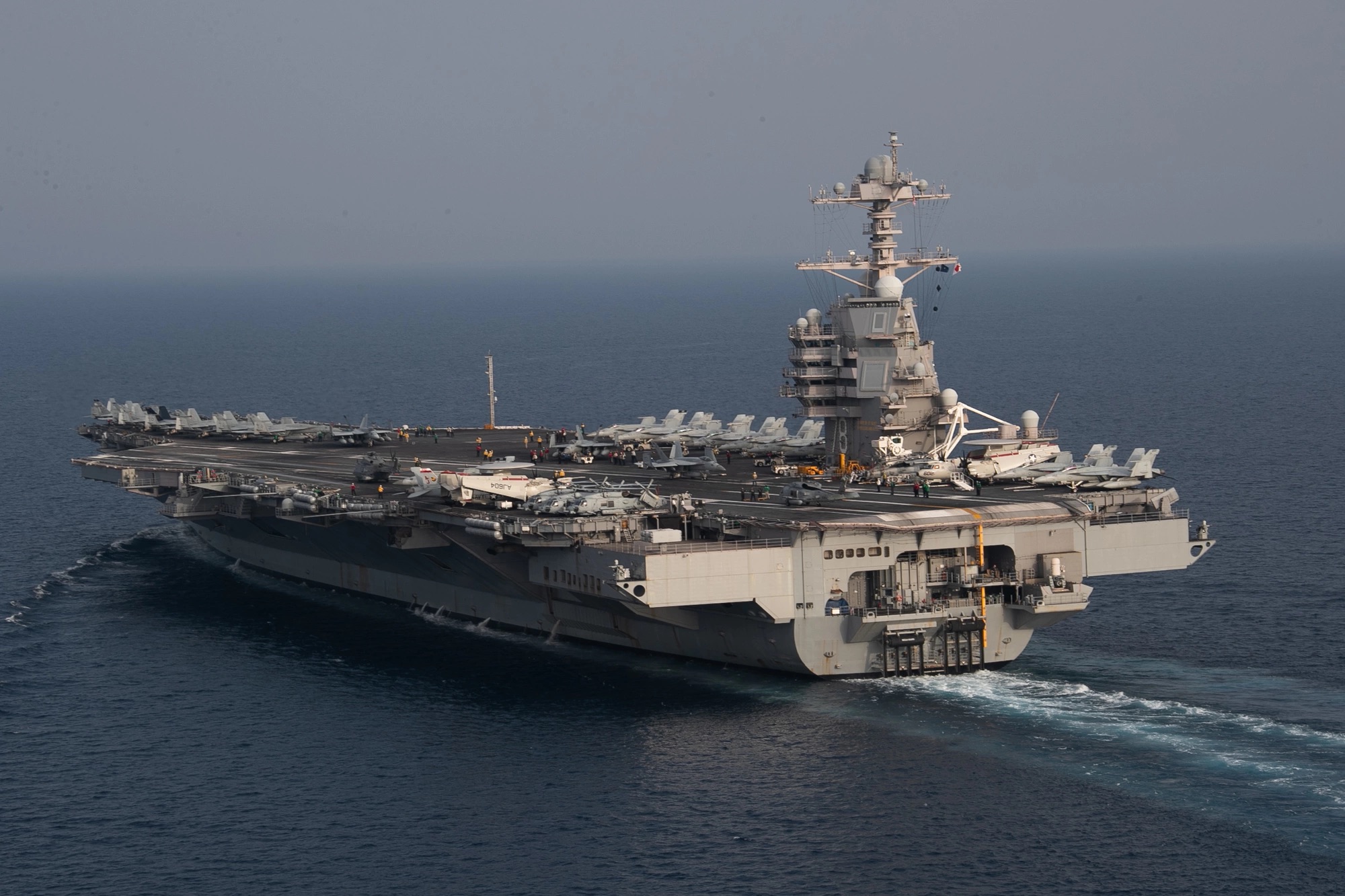
President Trump has ordered the US navy to return to steam catapults for its next Ford-class aircraft carriers, overturning a technology shift that has defined US carrier development for more than a decade.
The move, which follows years of criticism from Trump of the Electromagnetic Aircraft Launch Systems (EMALS) comes as China continues to embrace electromagnetic launch technology on its latest carriers.
Under the directive, the USS Doris Miller – currently being built at Huntington Ingalls’ Newport News Shipbuilding – is to use traditional steam-powered catapult systems. Steam catapults are used by the previous Nimitz-class.
Trump orders return of steam catapults for Ford-class carriers
According to reporting by Breaking Defense, the first three hulls of the class – USS Gerald R. Ford (CVN-78), USS John F. Kennedy (CVN-79), and USS Enterprise (CVN-80) – will keep EMALS. Of these, the USS Ford is in service, the USS Kennedy is approaching sea trials, and the USS Enterprise is in an advanced stage of production.
The development is the latest episode of Trump’s apparent dislike of the Electromagnetic Aircraft Launch System, known as EMALS. EMALS is one of the defining advances of the new Ford-class aircraft carrier.
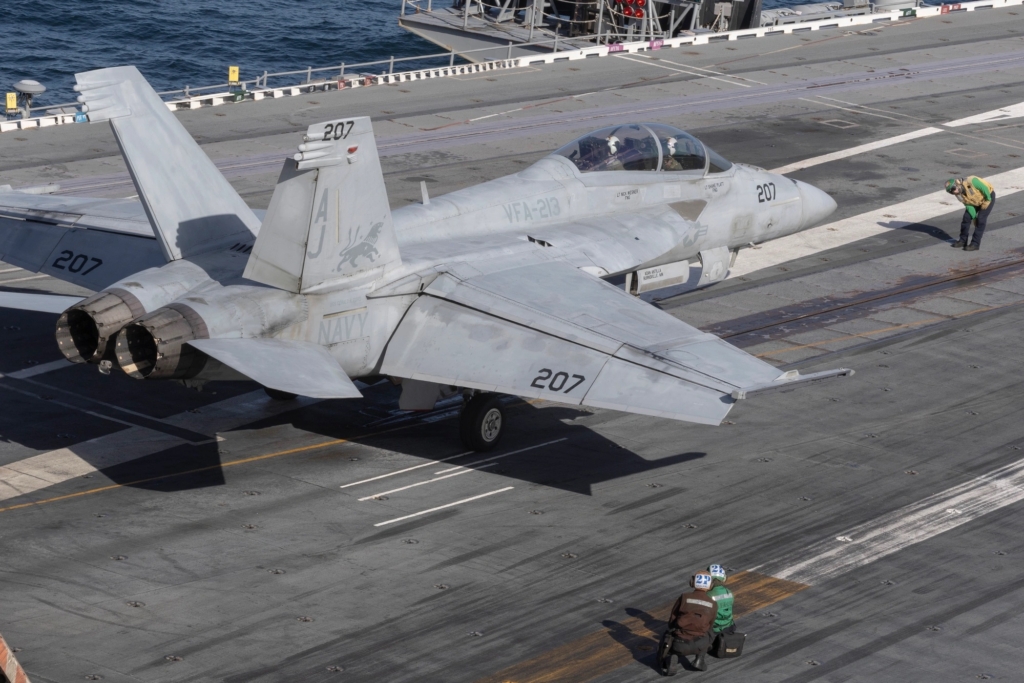
However, the system has faced teething problems and has previously delayed the introduction of the ships into service. Trump has railed against EMALS since his first term.
In October, he said, “Seriously, I’m putting out an order. I’m going to sign an executive order. When we build aircraft carriers, it’s steam for the catapults, and it’s hydraulic for the elevators. We’ll never have a problem.”
Additionally, Trump has ordered the establishment of a new, fifth public shipyard to help with submarine repair.
General Atomics warns against abandoning EMALS
The contractor responsible for building EMALS is General Atomics. The contractor said the retrograde move to steam catapults “warrants careful reconsideration.”
General Atomics was quoted by Reuters as saying, “With nearly 50% of production complete, changing course now would introduce significant cost, schedule, and integration risks.”
BREAKING: Future USS John F. Kennedy (CVN 79) Gerald R. Ford-class aircraft carrier leaving Newport News, Virginia for initial sea trials – January 28, 2026 SRC: X-@AirAssets pic.twitter.com/K9uXXm8biv
— WarshipCam (@WarshipCam) January 28, 2026
The keel for the Doris Miller is expected to be laid by the end of 2026, with delivery anticipated by the Navy in early 2034.
On its website, General Atomics says, “The Electromagnetic Aircraft Launch System (EMALS) and Advanced Arresting Gear (AAG) launch and recover aircraft with unmatched speed, safety, and efficiency. They are best‑in‑class technologies enabling air superiority on America’s most advanced carriers.”
Bryan Clark, director of the Hudson Institute think tank’s Center for Defense Concepts and Technology, points out that the US Navy has not purchased a steam catapult in more than 20 years and that the supply chain has likely withered.
Today, our nation’s newest aircraft carrier, John F. Kennedy (#CVN79), departed our #NewportNewsShipbuilding division to begin acceptance sea trials. These trials will test and evaluate important ship systems and components at sea. (1/2) pic.twitter.com/6dD0i1y7h2
— HII (@WeAreHII) August 12, 2026
Clark also points out that converting a Ford-class carrier to use steam catapults will require an extensive redesign of the ship.
EMALS vs steam catapults: Which system is better?
EMALS promises more precise control of the launch force, is better for lighter aircraft (including drones), provides high launch energy for very heavy aircraft, reduces stress on the aircraft, potentially increase the sortie generation rate, and more.

China’s Fujian carrier and the future of electromagnetic launch systems
Ironically, China’s latest carrier, the Type 003 aircraft carrier (the Fujian), is equipped with EMALS, and the Type 004 nuclear-powered aircraft carrier currently under construction is assumed to have it.
Some analysts argue that if the US returns to steam catapults while China continues with electromagnetic launch systems, future Chinese carriers could field a more modern launch architectures. This said, it should be noted that China is not transparent and does not disclose information about its delays, integration issues, and operational readiness.
It is an open question how effectively or not China has been in developing and fielding EMALS.
Again an update on the 004 carrier at Dalian via HailingTX20/SDF:
— @Rupprecht_A (@RupprechtDeino) August 12, 2026
"Latest images. More modules have arrived." pic.twitter.com/4XAsPEdhqe
Still, General Atomics warns that there will be adverse implications from the Trump decision to cancel EMALS for carrier readiness, national security, and US technological superiority and “potentially creating opportunities for adversaries to close the capability gap.”