


How helicopters fight wildfires: The aircraft on the front line of aerial firefighting

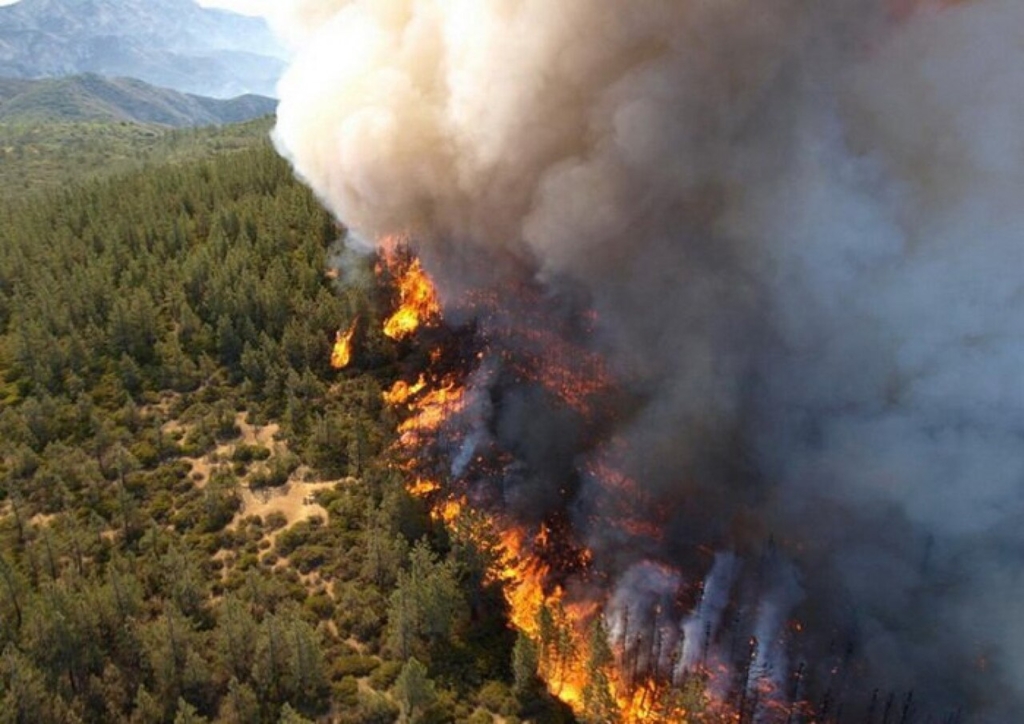
Wildfires can spread through dry grass, forest or scrub terrifyingly quickly – sometimes at 15mph or more. And as wildfires place growing pressure on emergency services worldwide, helicopters have become a versatile tool for aerial firefighting.
Often among the first aircraft dispatched to a new wildfire, they can work close to the fire, make repeated drops, carry firefighters and supplies, and operate from temporary bases.
So how do these aircraft actually fight fires, and what determines where and when they can be used? Here’s how helicopters are used to help tackle, and help contain, wildfires.
Wildfire helicopter water buckets vs belly tanks: What’s the difference?
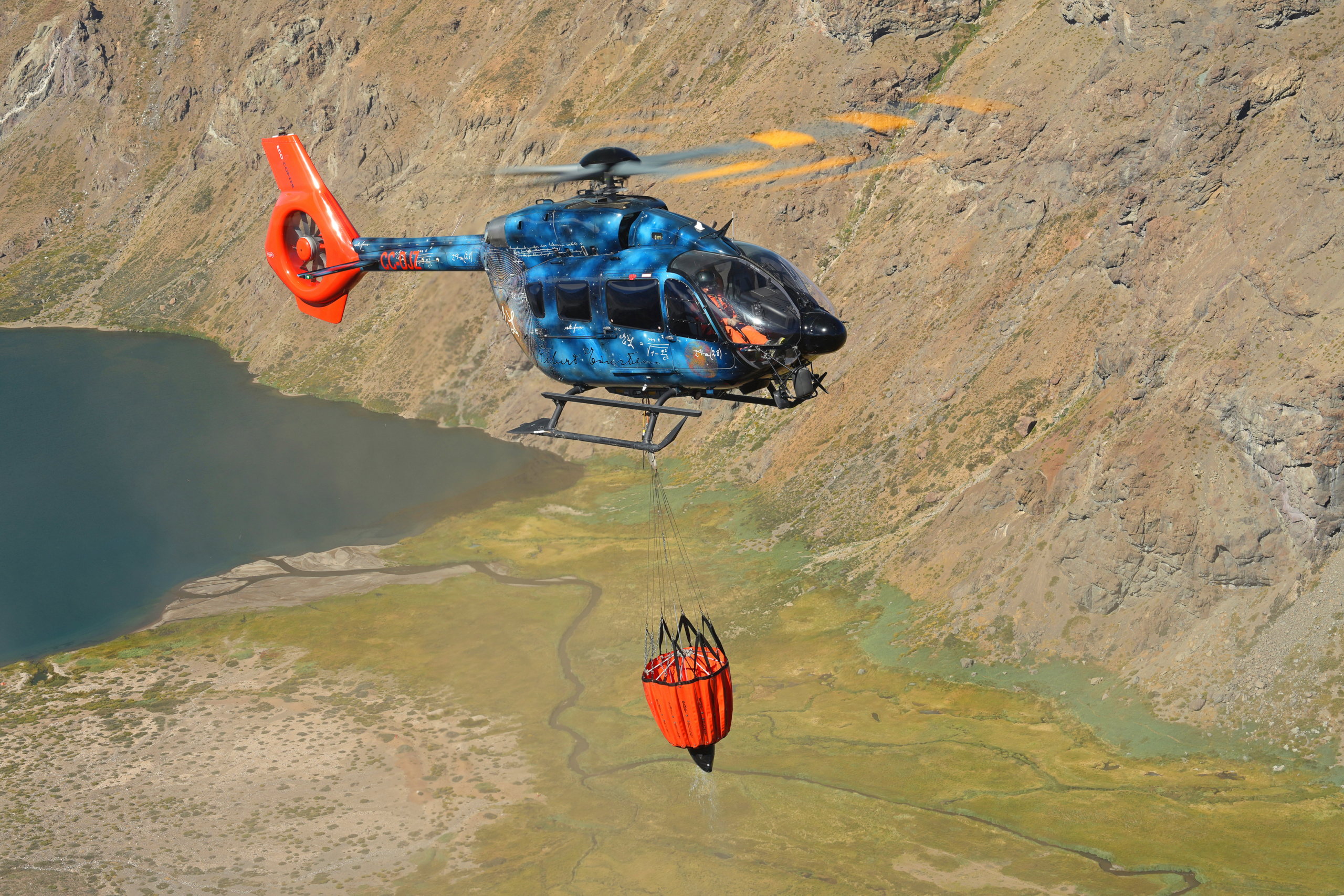
A helicopter carrying a big bucket underneath is the most familiar image that springs to mind. The bucket is filled by hovering over a lake, reservoir or other suitable water source, then carried to the fire and released.
Some buckets can carry hundreds or even thousands of gallons, depending on the helicopter and equipment.
Buckets are useful because the helicopter can collect water from places that are not set up as formal filling points. They can also be changed between aircraft or missions relatively easily.
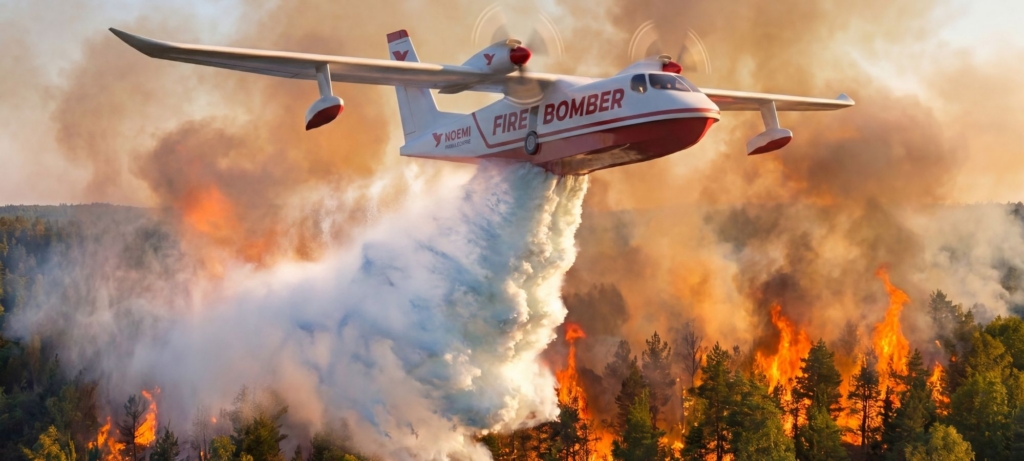
However, a belly tank is different. It is fitted to, or incorporated into, the helicopter and can be filled through a snorkel or at a suitable water source. The water is then released through doors in the tank.
A fixed tank keeps the load close to the aircraft, which can make handling more predictable than carrying a suspended bucket.
Large air tankers including converted Boeing 737s, C-130 Hercules aircraft, RJ85s, BAe 146s and DC-10s are increasingly deployed wherever severe wildfire seasons demand additional capacity.
Neither system is automatically better than the other. The choice depends on the helicopter, water source, terrain, fire behaviour and the job the aircraft has been given.
How do helicopters coordinate with firefighters on the ground?
A helicopter can make a very precise water drop, but pilots still need a clear picture of what is happening on the ground. Smoke, trees, changing wind and steep terrain can make that rather challenging.
This is where aerial coordination matters, because aircraft operating over a busy fire need to know where other helicopters, tankers and supervision aircraft are working. Radio calls and an organised airspace plan help prevent aircraft from getting in each other’s way.
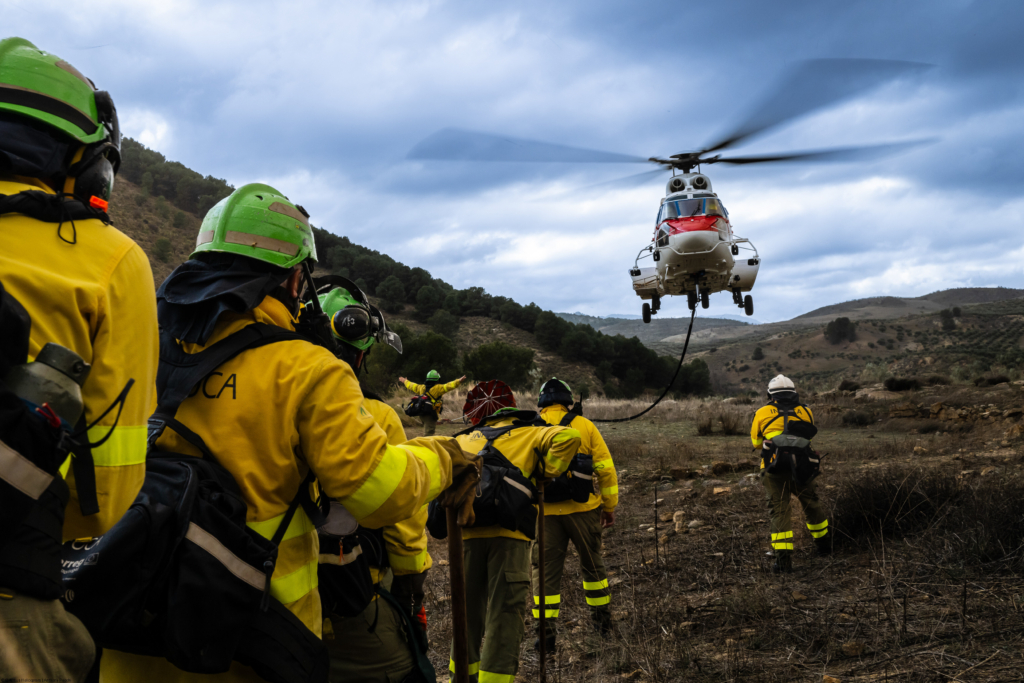
Ground crews also need to know when and where a drop is coming. A large load of water can throw branches, rocks and debris around, so a drop zone is not somewhere firefighters should simply remain because they are expecting help.
Can helicopters fight wildfires at night?
Night operations can extend the useful hours of aviation, but darkness changes the risks. Terrain, smoke, wires and other aircraft become harder to see, and water sources may be difficult to identify safely.
Some wildfire helicopter operations are therefore possible at night only with suitably equipped aircraft (for example CAL FIRE’s Sikorsky S-70i FIREHAWK), trained crews, appropriate procedures and good lighting or navigation support.
The important point is that “the fire is still burning” does not automatically mean an aircraft can safely keep working.
What’s the difference between wildfire helicopters and airtankers?
Helicopters and fixed-wing airtankers do different jobs.
Fixed-wing tankers can travel quickly over long distances and deliver a substantial load of retardant. That makes it particularly useful for slowing the fire’s spread and buying ground crews time to build containment lines.
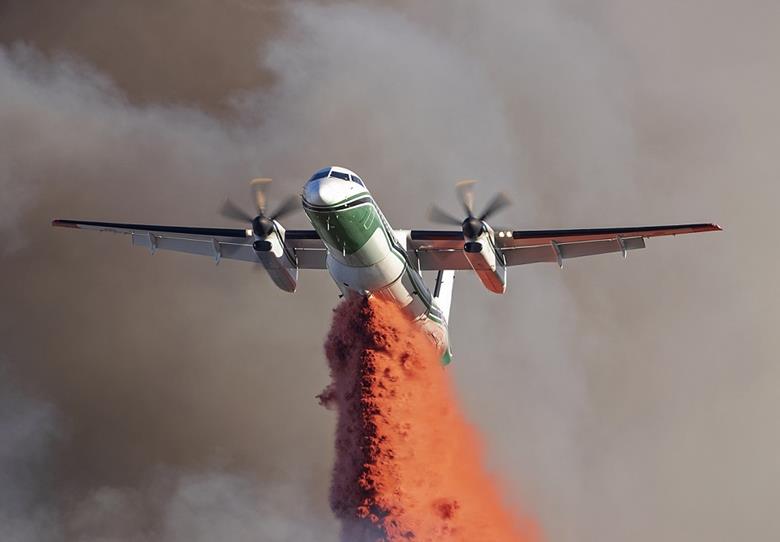
Helicopters are slower, but they can hover, turn tightly and repeatedly attack specific points. They can also move crews, equipment and supplies, which means the two types of aircraft are usually more useful together than in competition.
Why aircraft availability matters during wildfire season
Even the best aircraft is of little use if it is already committed to another fire, undergoing maintenance or waiting for a crew.
Wildfire agencies use a mix of aircraft, from helicopters of different sizes to fixed-wing tankers, with some kept on dedicated contracts and others brought in when needed.
When several fires are burning at once, those aircraft can quickly be in high demand. That makes planning something of a challenge and it’s not as simple as just throwing water around. What really matters is having the right aircraft, crews, equipment and supplies in the right place, and keeping them ready for the next fire.


