


From fly-by-wire to fly-by-code: Why tomorrow’s aircraft may behave more like smartphones
5 min read
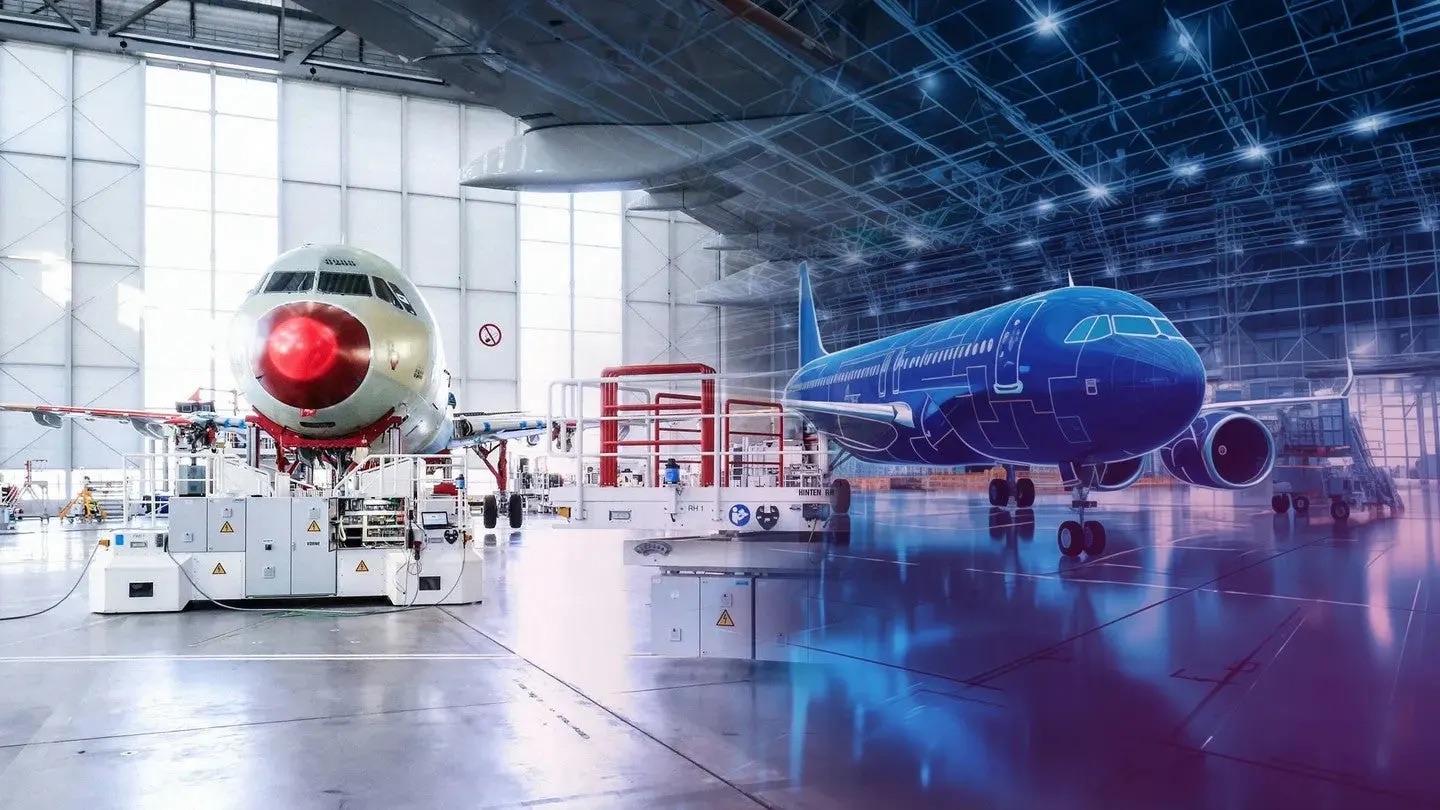
Buying a new airliner today is a little like buying a smartphone that can never receive any further software updates.
Once an aircraft enters service, adding new digital functions is rarely as simple as downloading fresh software.
Engineers often have to take the aircraft out of operation, access equipment bays, replace or modify hardware, install new software and then carry out extensive testing before the aircraft can return to service.
It is a process that has served aviation well for decades, but one that is increasingly difficult to reconcile with a world where digital technology evolves almost daily.
Airbus believes that model is about to change.
The European manufacturer is investing in what it describes as the software-defined aircraft, a new generation of airliners designed from the outset as highly connected digital platforms, where software rather than hardware increasingly determines what the aircraft can do.
If the concept succeeds, future aircraft may gain new capabilities throughout their operational lives in much the same way smartphones, computers and even modern cars receive regular software updates.
It would represent one of civil aviation’s biggest technological shifts since Airbus introduced fly-by-wire flight controls more than four decades ago.
Why Airbus wants aircraft to evolve like digital platforms
Modern airliners are already packed with computers. Flight controls, engines, cockpit displays, cabin systems and maintenance functions all rely on software.
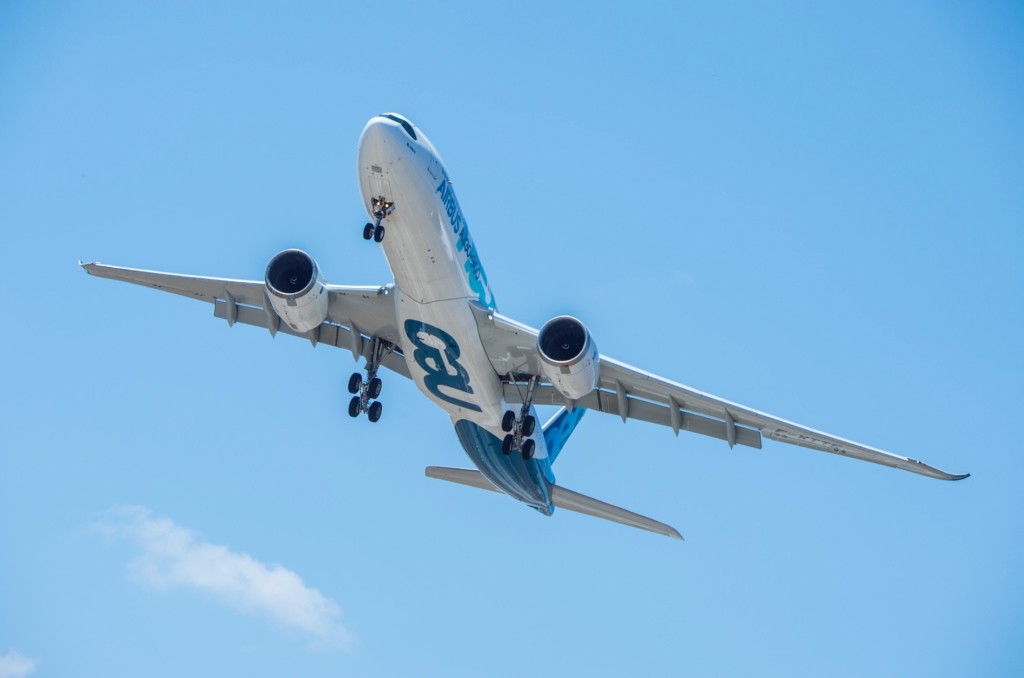
The Airbus A350, for example, already uses modular avionics that allow several applications to share computing resources rather than relying entirely on dedicated hardware.
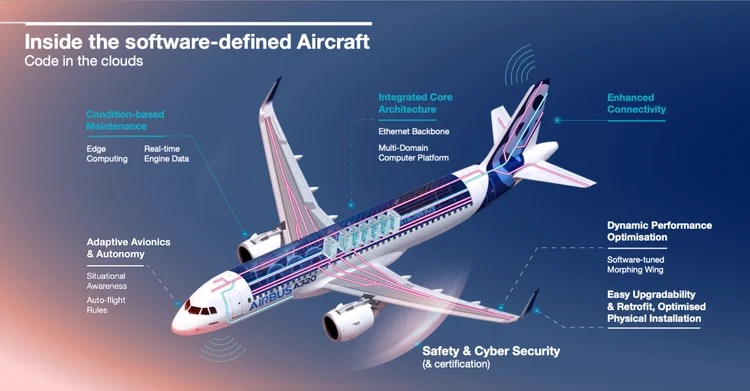
But there is still an important limitation. Most of those digital systems remain closely tied to the hardware installed when the aircraft leaves the factory.
Introducing new functions or upgrading existing ones frequently requires physical access to the aircraft, equipment replacement, and extensive certification work before the aircraft can fly again.
Airbus wants to loosen that connection. Its Next-Generation System Platform (NGSP) aims to replace dozens of individual computing units with a smaller number of high-performance computers capable of managing multiple functions simultaneously.
The idea is not simply to make aircraft more powerful, but to make them easier to adapt throughout their service lives.
Software-defined aircraft could reduce airline downtime
For airlines, every hour an aircraft spends in a maintenance hangar is an hour it is not earning revenue. That is one reason software-defined aircraft are attracting attention.
Instead of grounding an aircraft to update software manually, many future changes could be delivered remotely.

At the same time, continuous data streaming would allow onboard systems to detect worn components long before they fail, helping maintenance teams replace parts before they cause delays or cancellations.
Airbus also sees opportunities to optimise fuel consumption, improve aircraft performance and simplify configuration management without requiring extensive physical modifications.
For passengers, those changes may be largely invisible. For airlines, they could translate into lower maintenance costs, fewer disruptions and higher aircraft availability.
Airbus says AI will support pilots, not replace them
As computing power increases, aircraft will also be able to process far larger amounts of information during flight.
Airbus believes that capability will allow artificial intelligence to take over repetitive, data-intensive tasks while leaving pilots responsible for the decisions that matter most.
Future applications could include automatic runway hazard detection, software that instantly converts air traffic control instructions into text and visual assistance during landing.
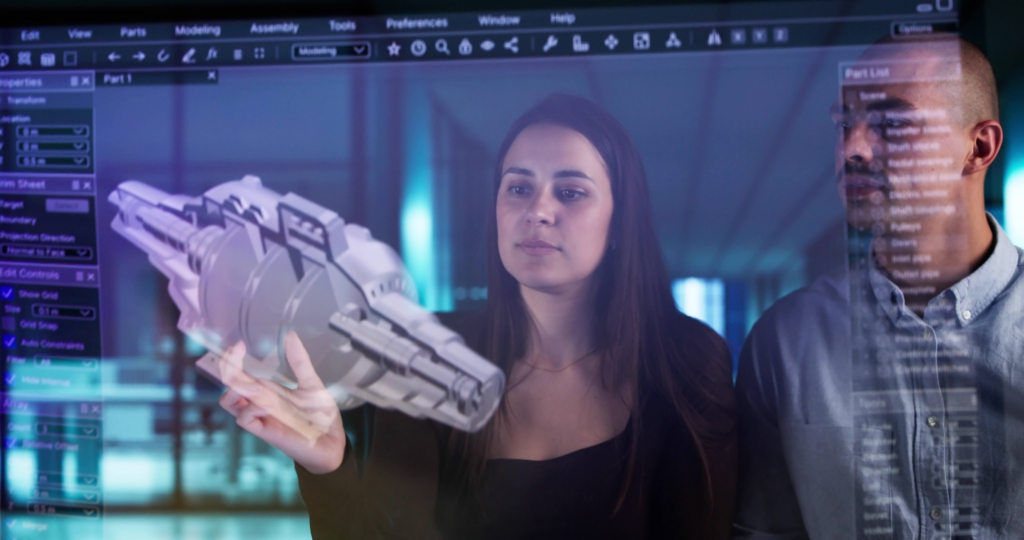
“The goal of our software-defined architecture is to elevate the pilot,” said Maud Delourme, Airbus’ Head of Multi-Systems Engineering and Integration.
“By scaling up computing power, we can automate high-workload tasks. This moves crew responsibility from operational flying to strategic management. They are then fully equipped to make critical safety decisions, when human judgment is irreplaceable.”
The distinction is important. Rather than removing pilots from the cockpit, Airbus argues that software should reduce workload so crews can concentrate on judgment, decision-making and flight safety.
Cybersecurity remains a major hurdle for software-defined aircraft
The idea of aircraft receiving regular software updates also raises an obvious question.
What happens if something goes wrong?
Cybersecurity and software reliability are among the biggest challenges facing software-defined aviation.
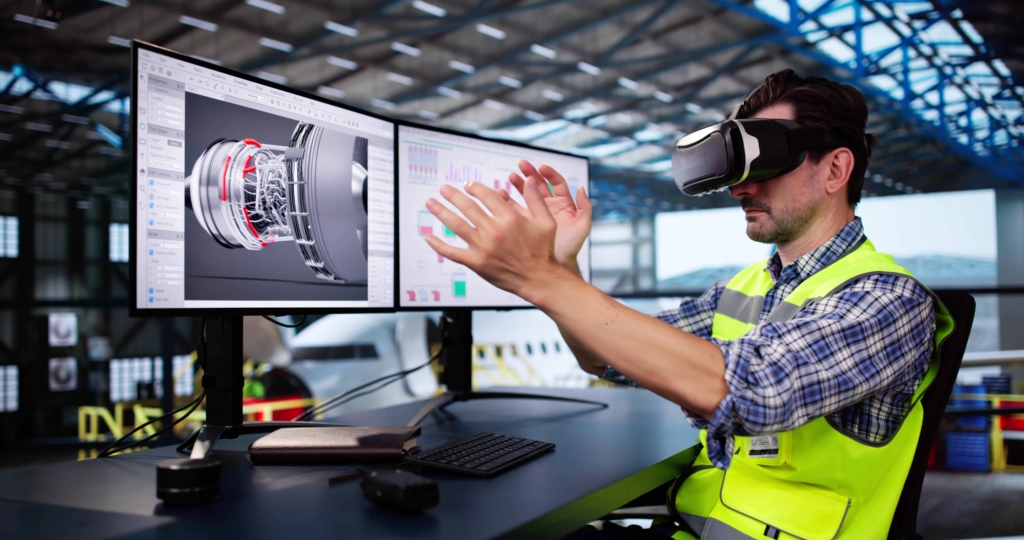
Airbus says its future architecture is being designed with multiple independent computing platforms distributed throughout the aircraft.
If one system experiences a software problem or external disruption, another operating on separate hardware and independent software can immediately assume control.
The company also says critical functions will remain physically segregated to eliminate single points of failure.
How regulators will certify software-defined aircraft
Certification will also remain central to the process.
Regulators such as the US Federal Aviation Administration already maintain dedicated certification frameworks governing airborne software and electronic hardware used in safety-critical aircraft systems.
Those standards have evolved alongside increasingly digital aircraft and are expected to continue adapting as software assumes an even larger role in future designs.
For manufacturers, that means the software-defined aircraft is not simply a computing challenge. It is also a certification challenge, because every new function, update and safety-critical change must be shown to meet aviation’s demanding regulatory standards.
Saab Gripen E shows software-defined aircraft beyond Airbus
The shift towards software-defined aviation is not confined to commercial aircraft. Military manufacturers are exploring many of the same ideas.
Saab has already developed the Gripen E with hardware-independent avionics that allow mission software to be updated without replacing the underlying computer hardware.
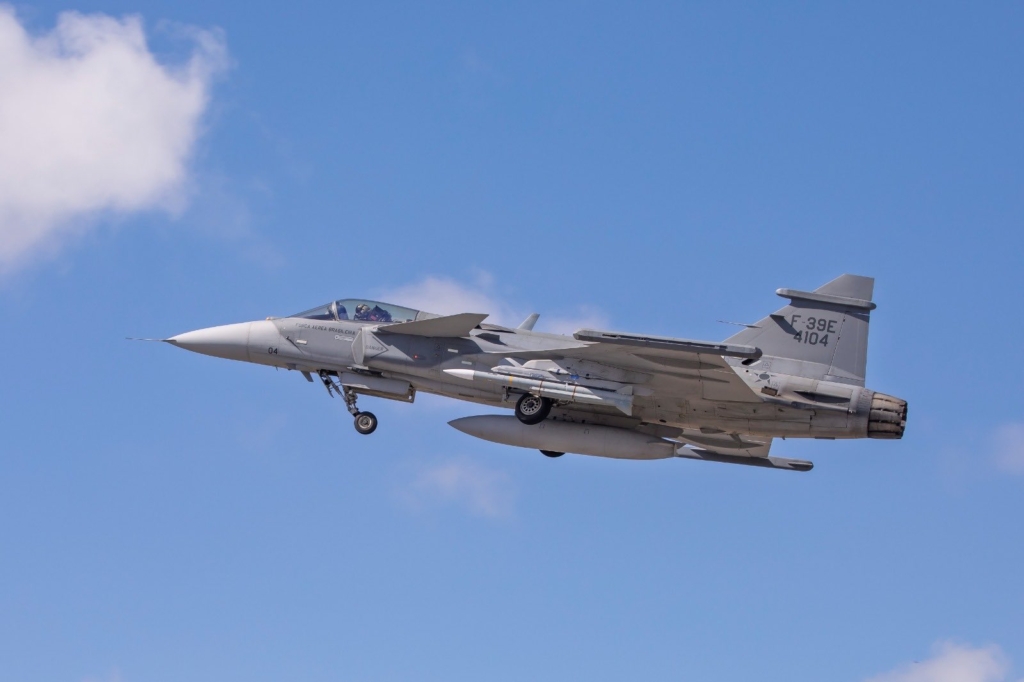
The Swedish company has also unveiled what it describes as the world’s first software-defined aircraft fuselage, produced using digital design tools, artificial intelligence and additive manufacturing instead of traditional tooling.
Although the applications are different, both Airbus and Saab are moving towards aircraft in which software increasingly shapes not only how they operate, but also how they are built and maintained.
Why the software-defined aircraft revolution may be invisible to passengers
Many of aviation’s biggest advances have transformed flying without passengers noticing.
Fly-by-wire replaced mechanical flight controls. Composite materials changed the way aircraft were built. Glass cockpits replaced rows of analogue instruments. And now, software-defined aircraft could become the next chapter in that evolution.
Passengers may never know when their aircraft receives a software update. They may never see the algorithms monitoring systems in real time or predicting maintenance before a fault develops.
But if Airbus’ vision becomes reality, tomorrow’s aircraft will not simply grow older with time.
Like the devices people carry in their pockets every day, they could continue learning, improving and adapting long after they leave the factory.
Featured image: Airbus


