


Airlines lose $6.3 billion a year to mishandled baggage despite improvement: SITA

4 min read
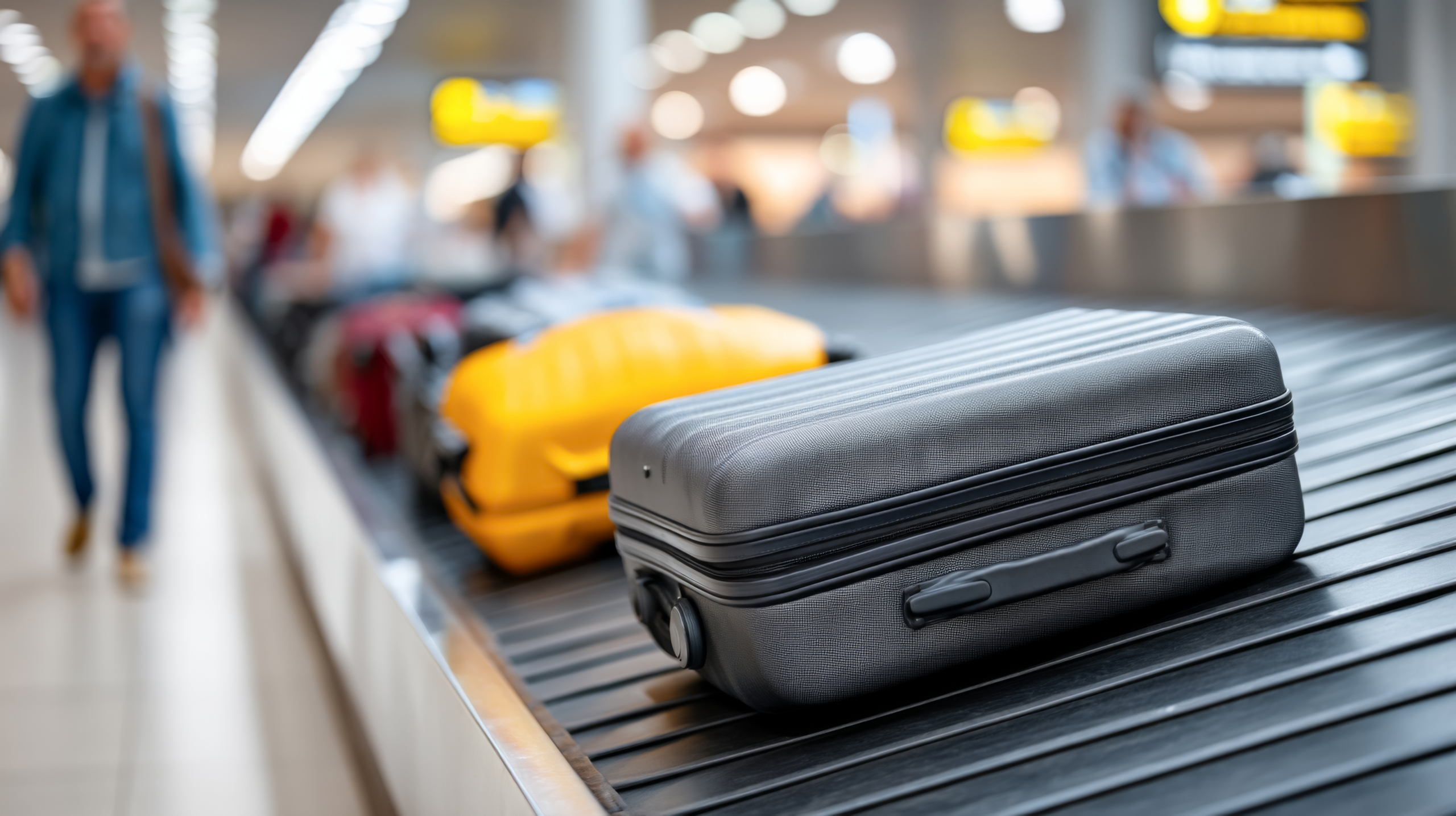
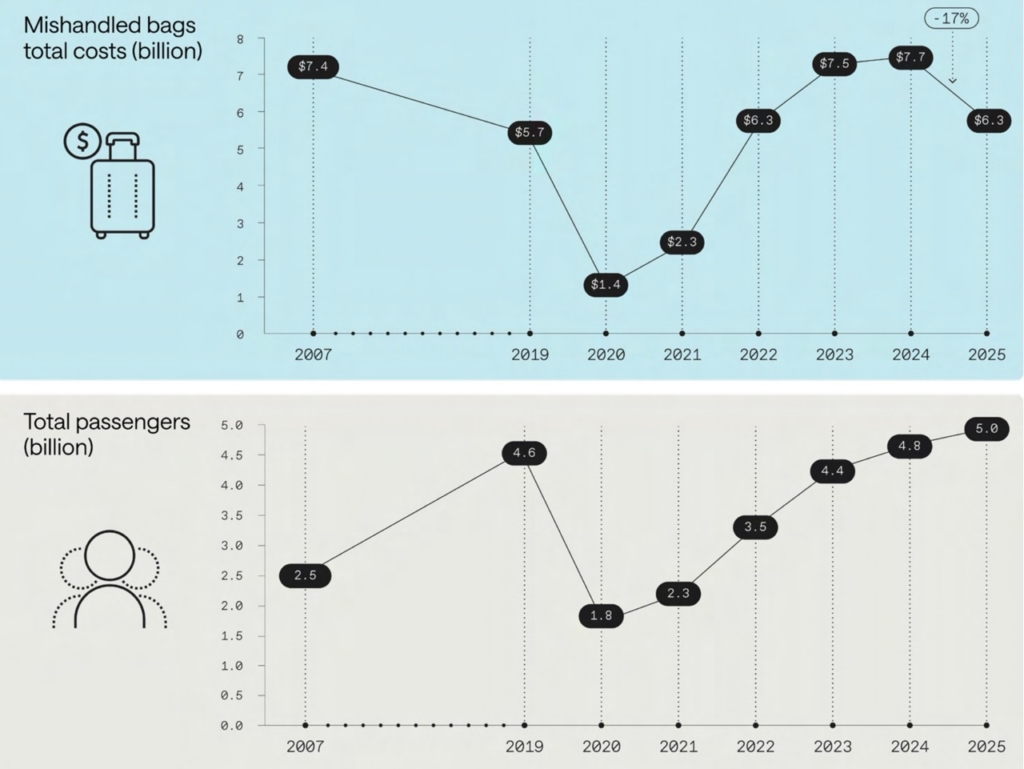
Airlines are losing an estimated $6.3 billion annually to mishandled baggage, even as global baggage-handling performance has reached its highest level in years, according to the latest SITA 2026 Baggage IT Insights report.
The report finds that airlines and airports reduced both mishandling rates and total mishandled bag volumes in 2025, thanks to wider adoption of baggage tracking, automation and artificial intelligence. However, every mishandled bag still costs airlines an average of $260, making baggage disruption one of the industry’s largest operational expenses.
Every mishandled bag wipes out airline profits
SITA’s new benchmark estimates that the average airline spends $260 per mishandled bag, based on a survey of 115 airline and ground-handling professionals across six regions.
According to SITA CEO David Lavorel, the financial impact is significant in an industry where profit margins remain thin.
“When you consider that net profit per passenger averages $8, every mishandled bag can equal the profit from more than 30 seats sold,” Lavorel said in the report. “Just five mishandled bags can erase the profit from an entire flight.”
SITA estimates that baggage mishandling represented around 15% of the airline industry’s $41 billion profit in 2025.
Baggage handling performance reaches post-pandemic high
Despite the financial burden, baggage operations continued to improve last year.
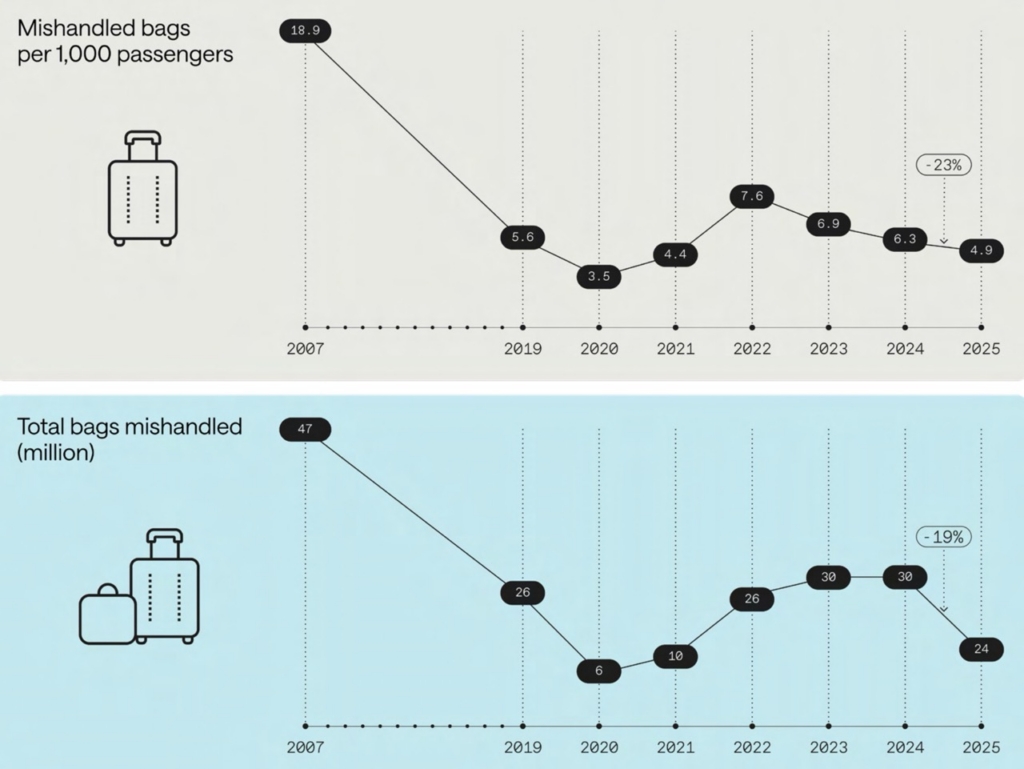
According to the SITA report:
- Mishandling rates fell 23% year over year.
- Total mishandled bag volumes declined 19%.
- Both reached their lowest levels outside the pandemic period.
SITA attributes the improvement to several technology investments, including:
- Baggage tracking under IATA Resolution 753.
- Automated sorting and transfer systems.
- RFID and computer vision technologies.
- AI-powered predictive models.
- Consumer tools such as Apple AirTag integration and real-time baggage updates.
Lost bags are rare—but expensive
While delayed baggage remains the biggest operational challenge, lost baggage continues to generate the highest cost per incident.
SITA estimates:
| Type of mishandling | Average cost |
| Delayed bag | $245 |
| Damaged bag | $255 |
| Lost bag | $635 |
| Overall average | $260 |
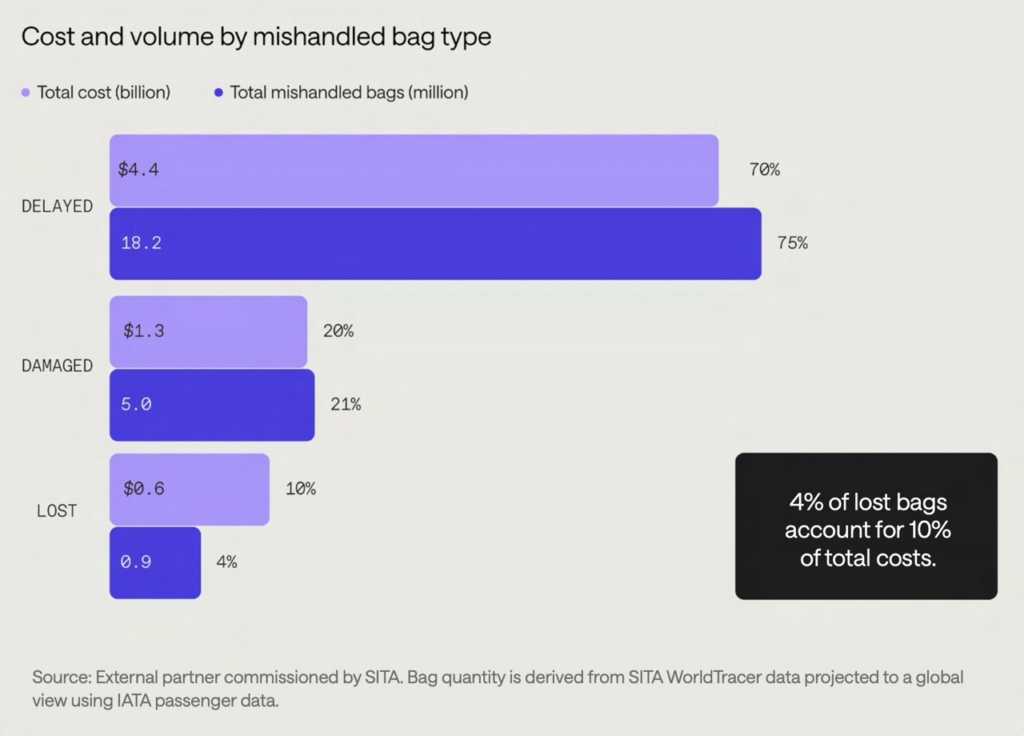
Delayed baggage accounts for roughly 70% of total baggage-related costs, amounting to around $4.4 billion. By comparison, lost bags account for only 4% of cases but 10% of total costs because compensation payments are so much higher.
Transfers remain the biggest source of delays
Transfer connections remain the leading cause of baggage disruptions.
According to SITA, 39% of baggage delays occur when bags fail to make connecting flights, a slight improvement from 41% in 2024. Other causes include failed loading, ticketing errors, loading mistakes and airport or customs restrictions.
The aviation technology company suggests that better real-time data sharing between airlines, airports and ground handlers will help reduce these transfer-related mishandling events.
AI becomes a baggage management tool
Artificial intelligence is moving beyond simple baggage tracking to proactive operational management, according to SITA.
Among the new AI applications noted in the report are:
- Automatically rerouting bags after flight disruptions.
- Optimising baggage conveyor systems.
- Predicting equipment failures before they occur.
- Estimating bag arrival times.
- Alerting staff and passengers to potential disruptions in real time.
Airlines appear ready to invest. According to SITA’s research, 83% now prioritise data-driven decision-making, while 73% plan AI investments over the next two years. Half intend to provide passengers with real-time baggage updates by 2027.
Apple AirTag integration cuts permanently lost luggage
One of the report’s most notable findings confirms gains from the adoption of consumer tracking technology.
SITA says integrating Apple AirTag and Find My Share Item Location with its WorldTracer baggage recovery platform reduced “permanently lost luggage” by 90% during the first year of operation.

The company also reports a 26% reduction in delayed baggage recovery time, with 29 airlines now using Apple’s Find My integration through WorldTracer.
SITA has also integrated Google’s new Find Hub location-sharing capability, allowing passengers using Android devices to securely share their bag’s location directly with airlines during baggage recovery.
Europe remains the costliest region
Europe has the highest average cost per mishandled bag at $295, along with a mishandling rate of 10.5 bags per 1,000 passengers, attributed to the region’s complex transfer networks and capacity constraints.
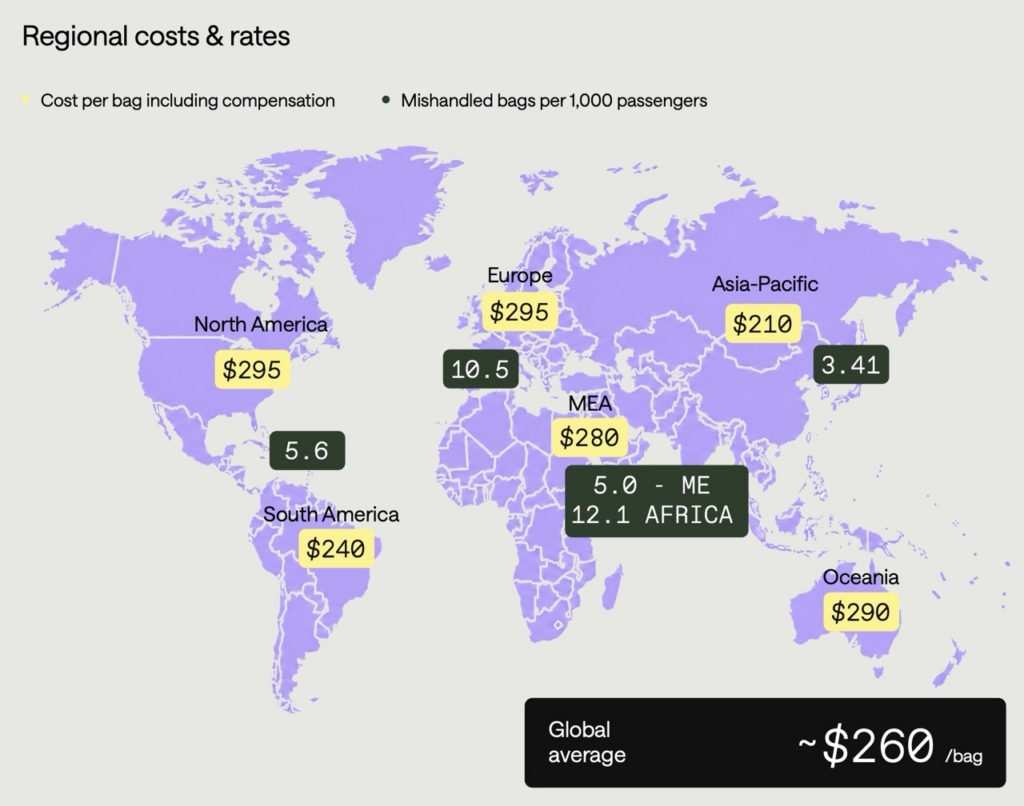
Asia-Pacific has the lowest mishandling rate of 3.41 bags per 1,000 passengers and the lowest average cost per bag at $210, aided by newer airport infrastructure and earlier adoption of baggage technologies.
Globally, baggage mishandling rises from 1.65 bags per 1,000 passengers on domestic flights to 9.12 per 1,000 passengers on international flights due to additional transfers and handoffs between operators.
Data sharing is the next frontier
SITA concludes that while baggage performance has improved substantially, the next phase of progress depends on greater collaboration across the aviation ecosystem.
The company argues that combining real-time data sharing, AI-driven decision making, and passenger-provided location information can further reduce mishandling while improving both airline profitability and passenger confidence.
Featured Image: sabyna75 / stock.adobe.com


