World’s last flying L-1011 prepares to launch NASA Swift rescue mission

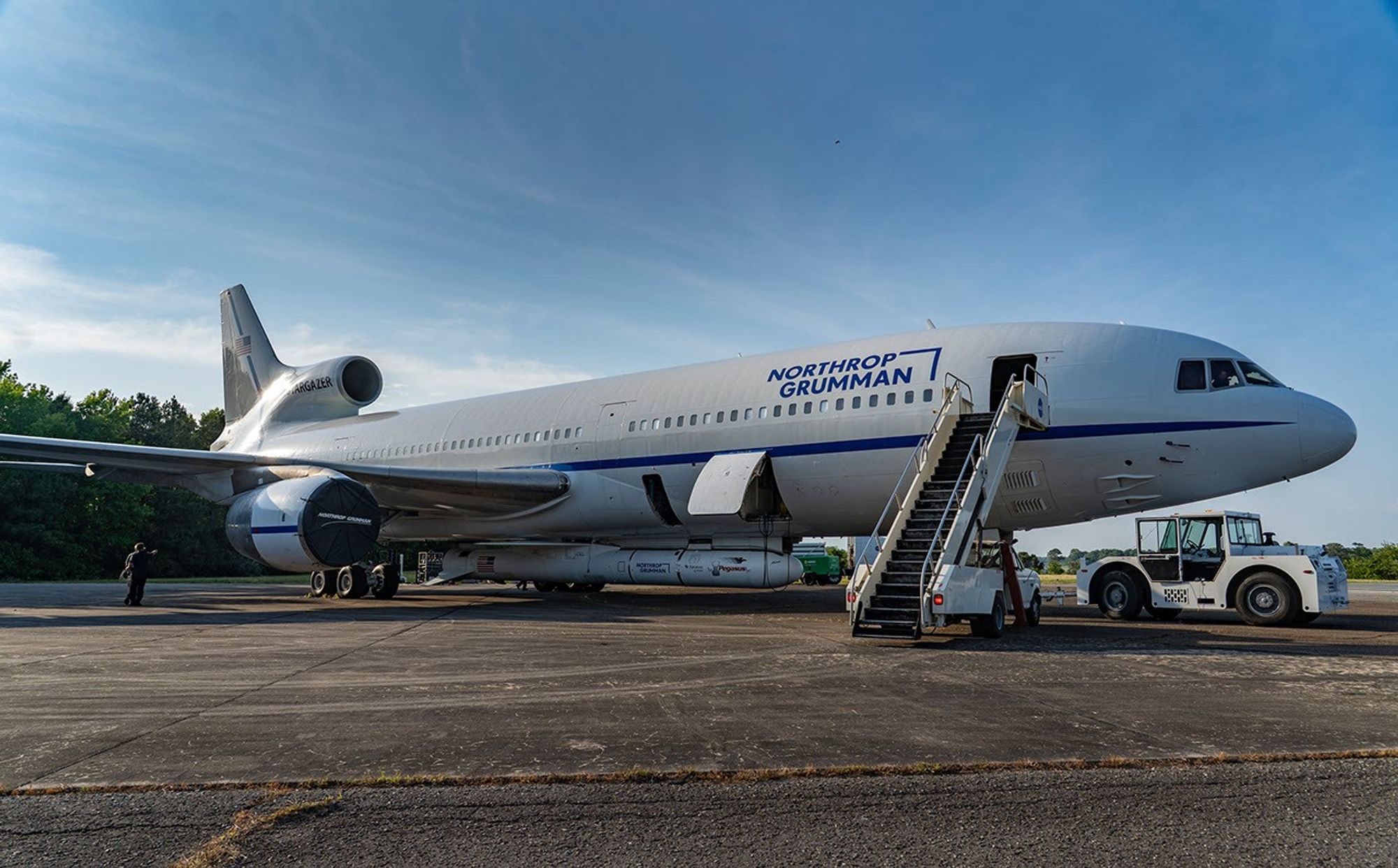
A rocket mounted beneath the world’s last flying Lockheed L-1011 is preparing to launch an unusual mission into orbit: an attempt to rescue a NASA space observatory that is slowly losing altitude and drifting closer to Earth.
The mission will be carried into orbit aboard a Northrop Grumman Pegasus XL rocket mounted beneath Stargazer, the Lockheed L-1011 TriStar and the only aircraft capable of launching an orbital rocket from the air.
Engineers attached the Pegasus XL rocket to Stargazer at NASA’s Wallops Flight Facility in Virginia on June 12.
The rocket will carry Katalyst Space’s LINK servicing spacecraft, which is scheduled to launch later this month from Kwajalein Atoll in the Marshall Islands before attempting to raise Neil Gehrels Swift Observatory’s orbit and extend its operational life.
Why NASA is trying to save the Swift observatory after more than two decades in space
Swift was launched in 2004 to study gamma-ray bursts, among the most powerful explosions in the universe.
Over the past 21 years, it has become one of NASA’s most productive astrophysics missions, helping scientists investigate black holes, neutron stars, supernovae and other high-energy cosmic events.
The spacecraft carries three instruments that observe the universe in visible, ultraviolet, X-ray and gamma-ray wavelengths. Its ability to rapidly detect and report transient events has made it a key component of NASA’s space science fleet, often directing other telescopes towards newly discovered phenomena.
Like all satellites operating in low Earth orbit, however, Swift gradually loses altitude because of atmospheric drag. Although extremely thin at those altitudes, traces of Earth’s atmosphere continuously slow spacecraft over time.
Recent solar activity has accelerated that process. Increased solar heating causes Earth’s upper atmosphere to expand, creating greater drag on satellites and causing their orbits to decay more rapidly.
NASA says Swift’s orbit has been lowering faster than expected, creating an opportunity to test new servicing technologies while preserving a scientifically valuable mission.
How Katalyst Space’s LINK spacecraft will attempt an orbital boost
Rather than allowing Swift to continue losing altitude until the end of its operational life, NASA awarded Katalyst Space a contract in September 2025 to develop a robotic servicing mission in less than a year.
The result is LINK, a spacecraft designed to rendezvous with Swift in orbit and gradually raise its altitude.
If successful, the mission will extend Swift’s lifespan while demonstrating technologies that could eventually be used to service satellites already in space.
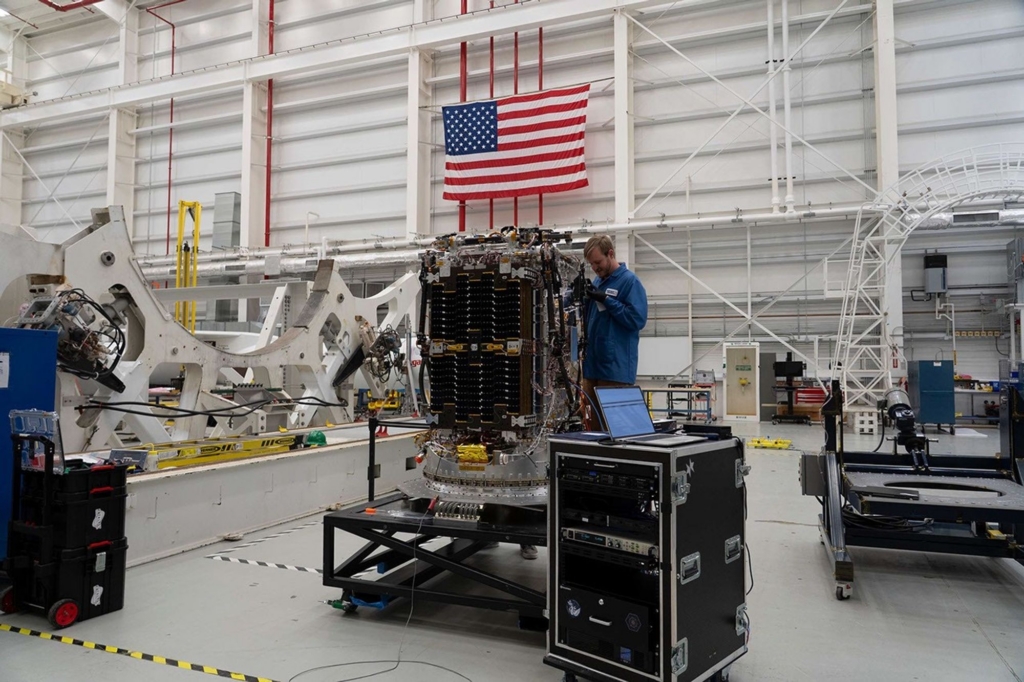
Such capabilities are attracting growing interest from both government agencies and commercial operators seeking ways to extend spacecraft lifetimes, reduce costs and minimise orbital debris.
The compressed development schedule has made the mission particularly notable.
Katalyst moved from contract award to launch preparation in under a year, while teams supporting Swift modified mission operations to prepare for the planned encounter.
Why Pegasus XL was selected for the time-critical Swift mission
Getting LINK into the correct orbit quickly required a launch vehicle capable of meeting specific mission requirements.
Katalyst selected Northrop Grumman’s Pegasus XL, the world’s only operational air-launched orbital rocket.
The three-stage solid-fuel rocket can place payloads weighing up to 992 pounds into low Earth orbit.
Measuring more than 55 feet in length and weighing about 51,000 pounds, Pegasus is carried beneath an aircraft to launch altitude before being released. The Pegasus engines then carry the payload to a deployment height of roughly 400 miles.
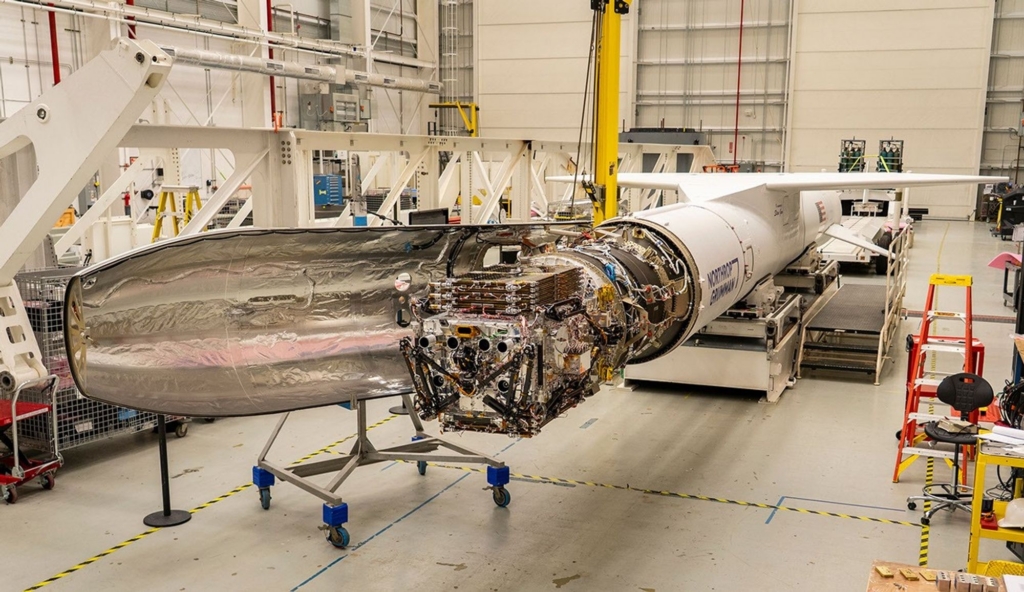
Once dropped, the rocket falls briefly before igniting its first-stage motor and accelerating into space.
The air-launch concept provides flexibility that conventional launch sites cannot always offer.
By releasing the rocket from an aircraft, operators can position themselves for different orbital trajectories while avoiding some of the weather and infrastructure constraints associated with ground launches.
For the Swift mission, Pegasus was selected because it could place LINK into the required orbit within the mission’s tight timeline.
Pegasus XL was believed to be the heaviest gravity-dropped article ever released from an aircraft, weighing in at over 23,000 kg. The previous version, which was carried by a B-52, weighed 19,000 kg.
Meet Stargazer, the last flying L-1011 that became a launch platform for rockets
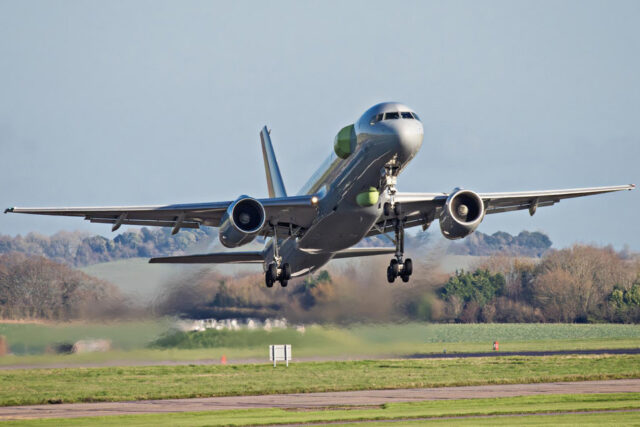
While the spacecraft and rocket are central to the mission, the aircraft carrying Pegasus is a story in its own right.
Stargazer began life as a Lockheed L-1011 TriStar passenger airliner before being converted into a flying launch platform for the Pegasus programme in the early 1990s.
US-based Orbital Sciences Corporation (OSC) – now part of Northrop Grumman Innovation Systems – selected Marshall Aerospace to perform the design and conversion due to its prior track record of major modification programmes on the TriStar platform.
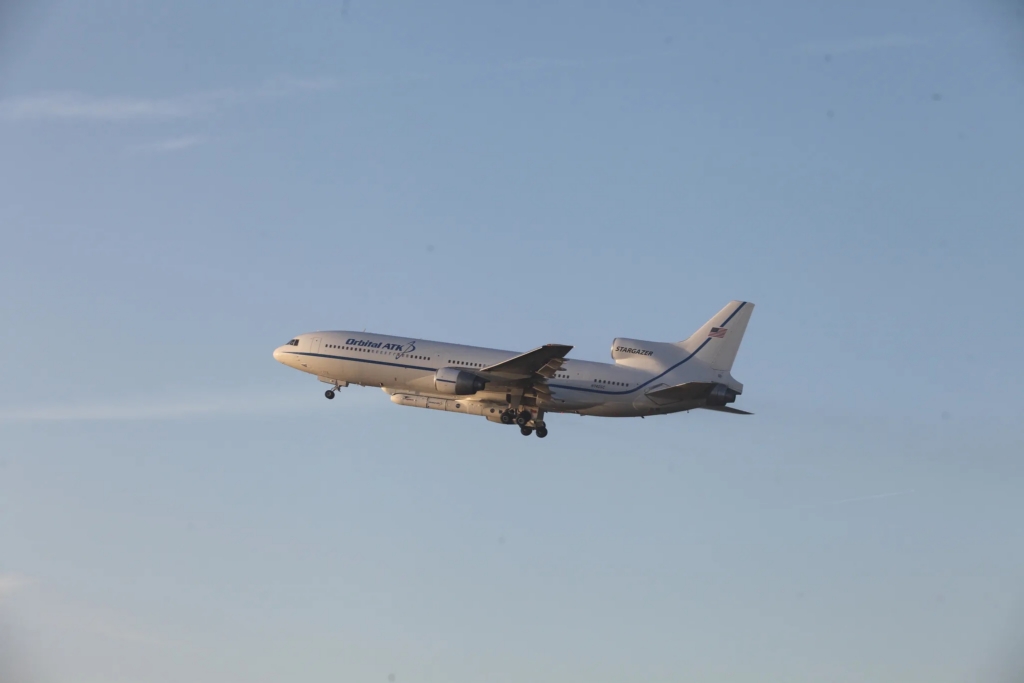
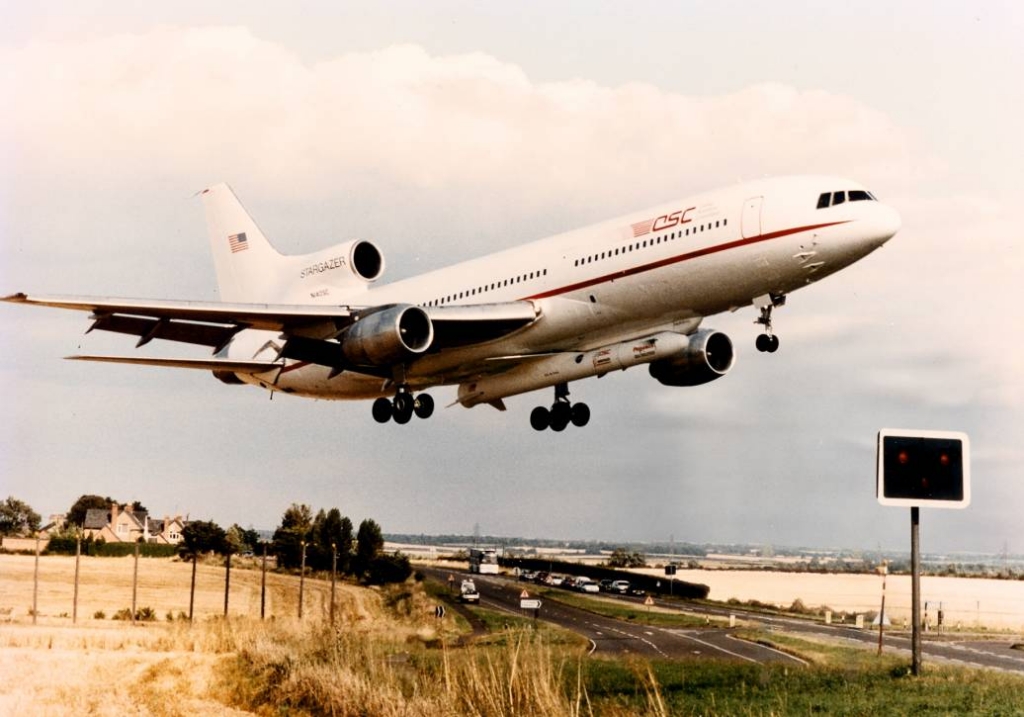
The modification mainly involved removing all unnecessary equipment and systems in the aircraft; strengthening the wing box area; manufacturing and installing the main carriage/release mechanism; and installing the launch panel operator station, plus support systems enabling the launch operator to monitor Pegasus during captive flight and launch.
Extensive modifications allowed the aircraft to carry large rockets beneath its fuselage and deploy them safely at high altitude. Engineers reinforced the structure, installed launch systems and created dedicated workstations to support airborne launch operations.
One of the aircraft’s most distinctive features is the large attachment point beneath the fuselage that enables Pegasus to be carried externally before launch.
Stargazer’s first test post-modification flight, carrying a dummy payload, was conducted from Cambridge Airport on August 10, 1993, and was a success.
Following completion of the test flight programme, Marshall Aerospace prepared the aircraft for final presentation to OSC in Washington in November 1993. OSC then conducted a successful launch in April 1995.
Today, Stargazer occupies a unique place in aviation history. It is the last operational L-1011 anywhere in the world and remains the only aircraft currently used to launch orbital rockets.
Over more than three decades, the aircraft has supported dozens of space missions carrying scientific, commercial and government payloads into orbit.
Its most recent flight was in 2021 from Vandenberg Space Force Base, carrying Odyssey, a technology demonstration satellite.
Why the mission could shape the future of satellite servicing
NASA views the Swift mission as more than an effort to preserve a single spacecraft.
As satellites become more sophisticated and expensive, interest is growing in technologies that can repair, refuel, relocate or extend the lives of spacecraft already in orbit.
Many future space architectures are expected to rely on servicing vehicles capable of performing tasks that currently require replacement satellites or costly new launches.
The LINK mission offers a relatively low-risk opportunity to test those concepts using an observatory that remains scientifically productive while facing a known orbital challenge.
If successful, it could provide an early demonstration of how robotic servicing may become part of routine space operations in the years ahead.
For now, attention is focused on the launch itself.
Later this month, Stargazer will take off carrying Pegasus beneath its fuselage and head towards its release point over the Pacific. Minutes later, LINK will begin its journey into orbit with a clear objective: to give one of NASA’s longest-serving observatories a new lease of life.
Featured image: NASA