Europe risks falling behind as Ukraine’s drone war accelerates AI-enabled combat

6 min read
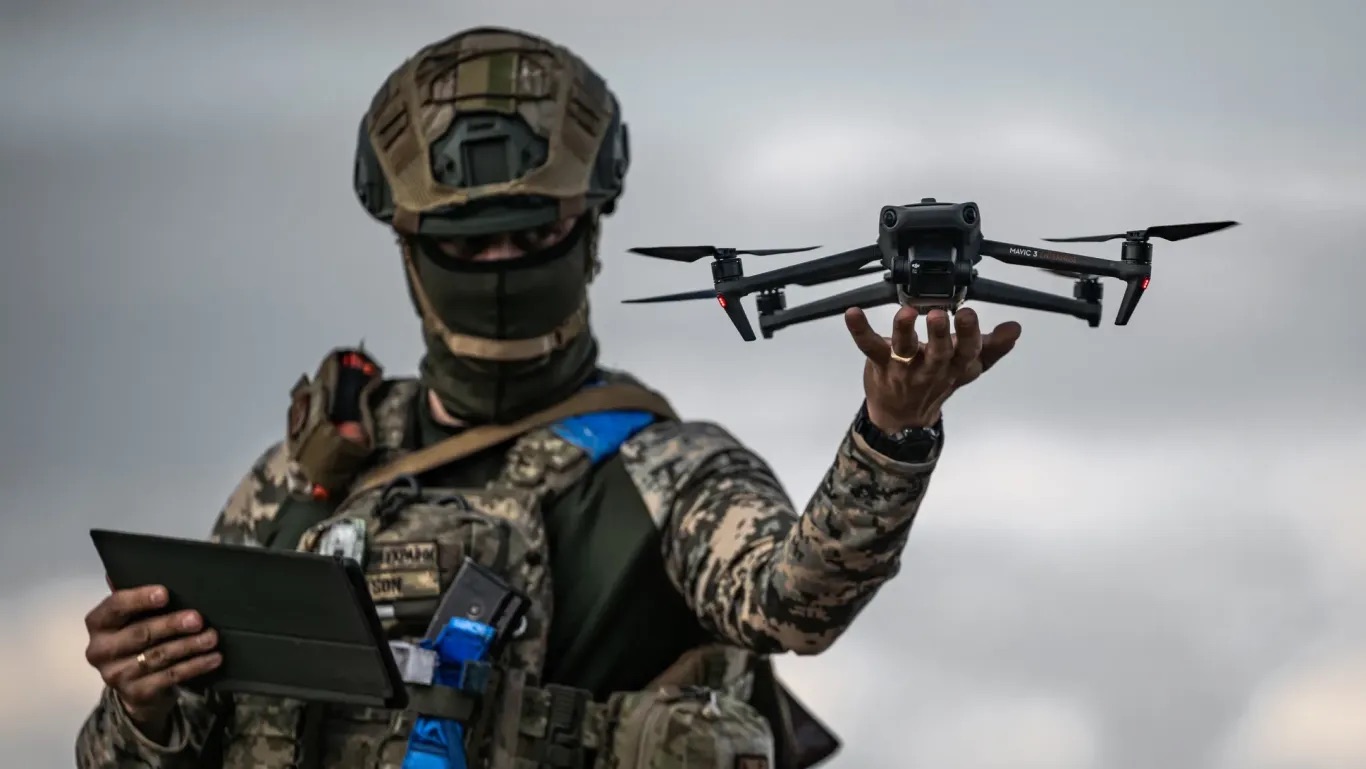
Europe is not ready for the next phase of drone warfare.
That is the warning from a new study by the Center for European Policy Analysis (CEPA), which argues that lessons emerging from Ukraine’s drone war are evolving faster than many Western militaries can absorb.
While Ukraine appears to hold a narrow lead in some AI-assisted drone applications, the study says Russia is adapting quickly and Europe risks falling behind both sides in one of the fastest-moving areas of military innovation.
The report, authored by defence analyst David Axe, comes as artificial intelligence increasingly moves from research laboratories into operational military systems.
The conflict in Ukraine has become the world’s largest testing ground for drone warfare, producing lessons that military planners across Europe, the United States and Asia are closely studying.
The central finding is not that Russia has gained a decisive technological advantage. Rather, it is that both Ukraine and Russia are learning, adapting and fielding new capabilities at a pace that traditional defence procurement systems struggle to match.
Ukraine war turns drones into frontline weapons
When Russia launched its full-scale invasion in February 2022, drones were already widely used for reconnaissance and surveillance. Four years later, they have become one of the defining weapons of the conflict.
Research by the Australian Army Research Centre describes Ukraine as the first large-scale conflict in which drones have been integrated across virtually every level of military operations.
What began as a tool for spotting targets has evolved into a system capable of directing artillery fire, striking armoured vehicles, hunting logistics convoys and conducting long-range attacks deep behind enemy lines.

According to the Australian study, new technologies, tactics and countermeasures can emerge, evolve and become obsolete within a matter of months. In some cases, adaptation cycles are measured in weeks rather than years.
That pace of change is one of the key concerns highlighted by CEPA.
The report argues that many Western militaries continue to operate through acquisition systems designed for long development timelines, while Ukraine’s battlefield has demonstrated the need for continuous adaptation.
AI drones are becoming harder to jam
The next phase of drone warfare is increasingly centred on autonomy.
Traditional drones rely heavily on operators, satellite navigation signals and continuous communications links. Those dependencies have become vulnerabilities in Ukraine, where electronic warfare systems routinely jam communications and disrupt GPS signals.
As a result, both sides have invested heavily in systems capable of operating with greater independence.
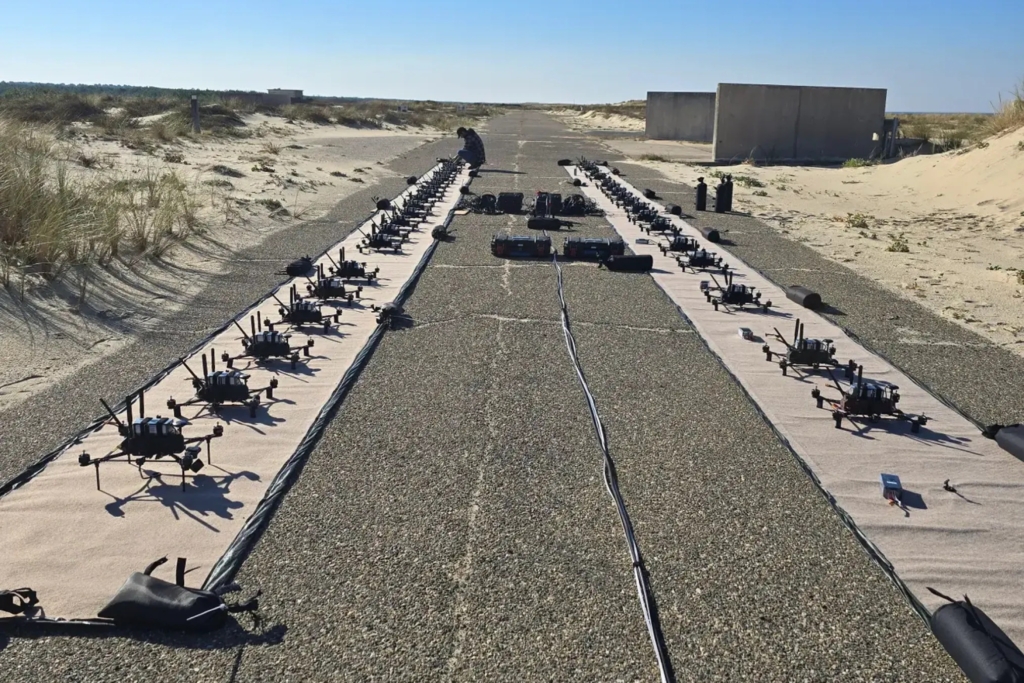
The CEPA study points to Ukraine’s growing use of AI-assisted drones designed to continue missions even after losing contact with operators. These systems can navigate, identify targets and continue towards objectives despite attempts to disrupt them electronically.
A separate analysis by the Council on Foreign Relations reaches a similar conclusion.
Analysts Michael Horowitz, Erin Dumbacher and Lauren Kahn argue that artificial intelligence is becoming increasingly important because it allows drones to function in contested environments where communications are degraded or denied.
The authors cite examples of Ukrainian systems that can continue pursuing targets after human operators lose contact with the aircraft.
The practical significance is clear.
In a heavily jammed environment, a drone that can continue its mission independently may have a far greater chance of reaching its target than one that depends entirely on constant operator control.
Russia is building a vast drone and AI ecosystem
One of the more striking conclusions emerging from recent research is how rapidly Russia has adapted.
The CEPA analysis notes that while Ukraine currently appears to maintain an advantage in some AI-enabled applications, Russia is only months behind rather than years behind.
Research by Kateryna Bondar, Senior Fellow at Wadhwani AI Center, provides insight in an article published by the Centre for Strategic and International Studies (CSIS).
In her study examining Russia’s drone industry, Bondar argues that Moscow has developed a broad ecosystem linking government agencies, private industry, educational institutions and volunteer networks.

Rather than focusing exclusively on breakthrough technologies, Russia has concentrated on scaling production, training operators and rapidly integrating battlefield lessons into new systems.
The report notes that innovation frequently begins outside traditional defence structures before being adopted and expanded through state support.
Russia has also invested heavily in workforce development. According to Bondar’s research, the country expects to require hundreds of thousands of specialists to support future drone operations and has launched extensive training initiatives to build that capability.
The result is an industrial and military system designed to absorb lessons from the battlefield and translate them into operational capabilities as quickly as possible.
Europe faces a military innovation gap
The CEPA study does not argue that Europe faces an immediate technological crisis.
Instead, it highlights a growing mismatch between the pace of battlefield innovation and the speed at which many military organisations acquire new capabilities.
Ukraine and Russia are learning under combat conditions. New systems are tested in real operations, modified rapidly and returned to the battlefield. Successes are copied. Failures are discarded.
European armed forces, by contrast, are largely observing these developments from outside the conflict.
That difference matters because future conflicts may not allow years for adaptation.
The Australian Army Research Centre notes that the war has demonstrated the importance of rapid experimentation and decentralised innovation. Small teams have repeatedly introduced new ideas that later reshaped broader military operations.
The challenge for Europe is not simply acquiring more drones. It is creating institutions capable of adapting as quickly as the technology itself.
Drones are moving deeper into logistics warfare
One of the most important trends identified by CEPA involves the changing role of drones on the battlefield.
Much of the public attention has focused on attacks against tanks, armoured vehicles and troops. Increasingly, however, drones are being used to strike logistics networks that sustain military operations.
The study highlights Ukraine’s use of AI-assisted medium-range drones against supply routes, fuel depots and transport infrastructure located behind Russian front lines.
The objective is often disruption rather than destruction.
By forcing supplies to travel longer routes, requiring additional security measures or delaying deliveries, relatively inexpensive drones can impose significant costs on larger military formations.
This shift reflects a broader evolution in how military planners view drone warfare. Rather than serving merely as airborne weapons, drones are increasingly being employed as tools to shape the battlefield and disrupt an opponent’s ability to sustain operations.
Ukraine’s biggest lesson is speed
The studies examined by AGN do not suggest that Russia has established dominance in AI-enabled drone warfare. If anything, several analysts argue that Ukraine retains a narrow lead in certain applications.
The warning emerging from the research is different.
Military advantage may increasingly depend not on who develops a capability first, but on who can adapt it fastest.
The Ukraine war has shown how quickly new technologies can transform combat. It has also demonstrated how rapidly those advantages can disappear once an opponent responds.
For defence planners studying the conflict, the most important lesson may not be about a particular drone, software package or artificial intelligence model.
It may be that future wars will be shaped by continuous adaptation, where innovation cycles are measured not in years but in months, and sometimes weeks.
That, according to the growing body of research examining Ukraine’s drone war, is the challenge many militaries are only beginning to confront.