


Balloons are back in the war, and Ukraine is using them to launch drones

4 min read
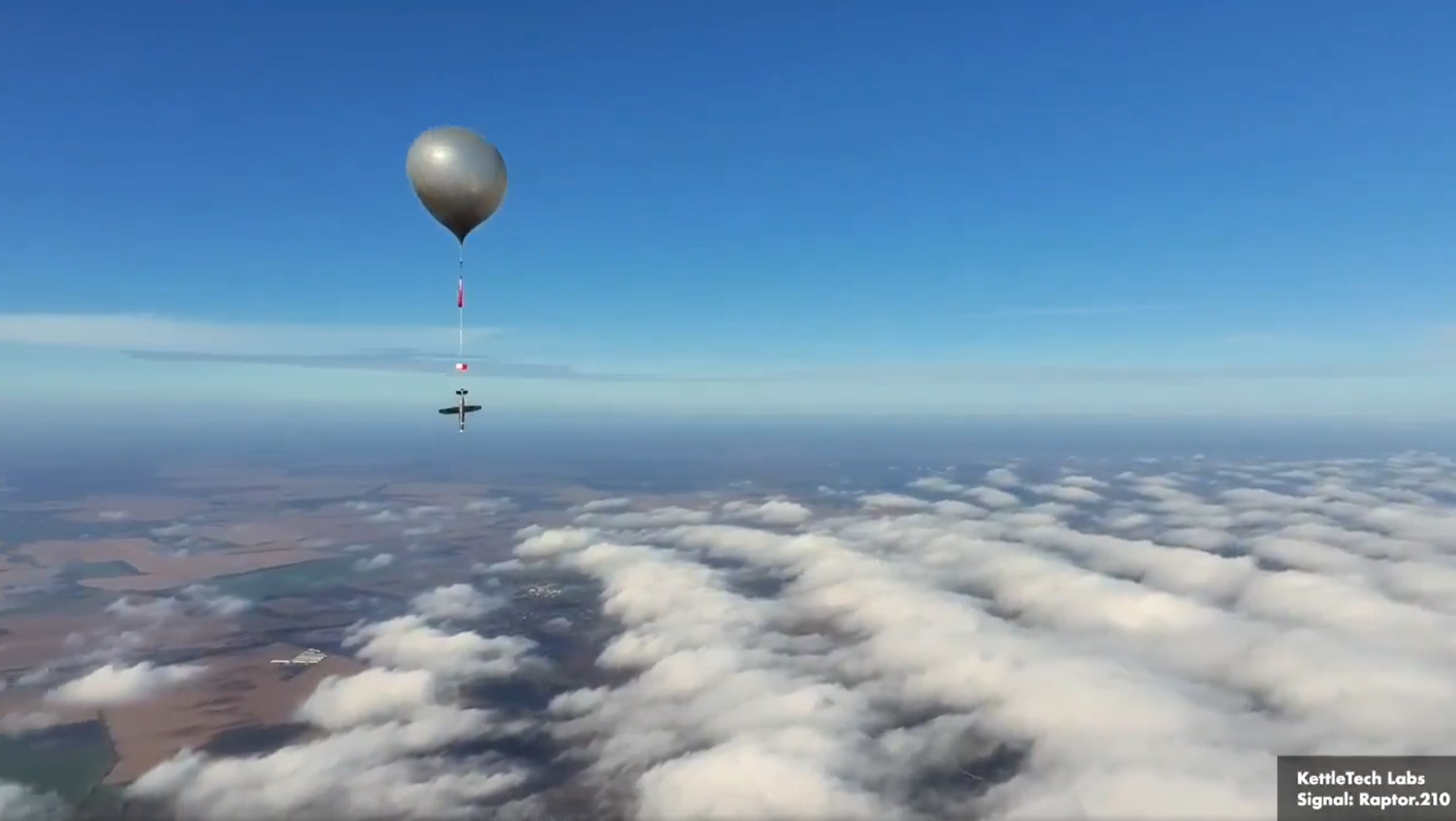
Ukraine is experimenting with using balloon drone carriers in an effort to extend range, while also using balloons as communication relays. Russia is developing its own analogues, including a replacement balloon-based system to replace Starlink.
Ukraine is using balloons to boost drone range
In July 2025, AGN reported that former Google CEO Eric Schmidt’s secretive drone manufacturing company, Swift Beat, was helping Ukraine develop advanced interceptor drones. This was early in Ukraine’s efforts to develop mass interceptor drones.
🚀 Balloon-launched drones for low-cost, long-range strikes?
— Louis.Saillans (@LSaillans) May 20, 2026
Just watched this impressive demo from KettleTech Labs: their “Hornet” fixed-wing UAV is carried by a simple weather balloon to high altitude, auto-released, and glides in with a full battery, dramatically extending… pic.twitter.com/c0Weg7Jutn
Little was (and still is) known about those drones. Meanwhile, KettleTech Labs has released footage showing it using a new balloon-launched system designed to deploy Swift Beat’s Hornet strike drones at altitude.
According to Defense Express, it is thought these drones have a range of around 150 km with a 4-5 kg warhead.
During the test, the balloon is reported to have carried the Hornet drone to an altitude of around 8,250 metres (close to the altitude of Mount Everest) before releasing the drone. The Hornet drone stabilised itself autonomously and then glided. It eventually landed around 42 kilometres from the launch point.
One of the greatest limiting factors for aircraft range is the energy required to push through thick air at low altitudes.
Importantly, the UAV is reported to have had 95% of its battery charge when it landed. This has big implications for the potential range of drones. It could also have big implications for payload, as engineers have to grapple with a trade-off between range and payload.
By exploiting favourable winds, Ukraine may also be able to float the balloons over long distances before releasing the drones.
Louis Saillans, founder of Askalon Industries, posted a video of the balloon test and added that they are “probably invisible to radar too.”
Get the latest aerospace defence news here on AGN.
An important development for mid-range strikes
Since late 2025, Ukraine has focused on mid-range strikes. This is a distance beyond artillery range (around 40-50 km) and less than the range of long-range strike capabilities (usually 200-300 km).
And strikes like that are happening on a daily basis. Here is today's USF compilation of strikes with FP-2 drones on multiple targets (no yet on the map), including, at the end, many trucks. pic.twitter.com/xD4lmGPyAz
— Clément Molin (@clement_molin) May 29, 2026
This has been enabled by Ukraine’s masses of upgraded drones (e.g., FP-1/-2) that have destroyed large amounts of Russian air defence. At the same time, more drones are appearing to sever Russia’s “land route” to Crimea.
Ukrainian drones are also increasingly attacking targets in Crimea. It is unclear to what degree balloons are playing a role in these increasingly successful strikes.
Ukraine has released the full video of Operation Spiderweb the daring container hidden drone operation which left over 40 Russian airforce aircraft damaged or destroyed last year. pic.twitter.com/GwiO0h1f5t
— WarMonitor🇺🇦🇬🇧 (@WarMonitor3) June 1, 2026
Another area where balloons are being used is as a communications relay, as they can pair high-altitude balloons with Starlink satellite communications terminals.
Balloons reclaiming their original signal role
In early 2026, SpaceX cut Starlink access to Russian forces by blacklisting all the terminals that were not whitelisted with Ukrainian forces. This had an enormous impact.
Russia Eyes Balloon Communications System To Fill Massive Gap Left After Losing Starlink
— TWZ (@thewarzonewire) February 19, 2026
SpaceX has cut off Russia's access to Starlink and now Moscow is scrambling to find a replacement.https://t.co/EWHn42LfYf
Among other things (like developing its own satellite-based internet system), Russia has looked to the Barrage-1 system balloons equipped with 5G Non-Terrestrial Network (NTN) relays to provide high-speed data links for troops and drones. These are stratospheric balloons that rise to around 20-30 km.
Balloons/rigid airships have long been used for surveillance, extending the range of other aircraft, and communications. It seems they are reclaiming all these roles in the Ukraine war.
The first manned balloon flight occurred in 1783 in France, and by the Napoleonic Wars, there were fears that Napoleon would invade Britain with an army carried by balloons.
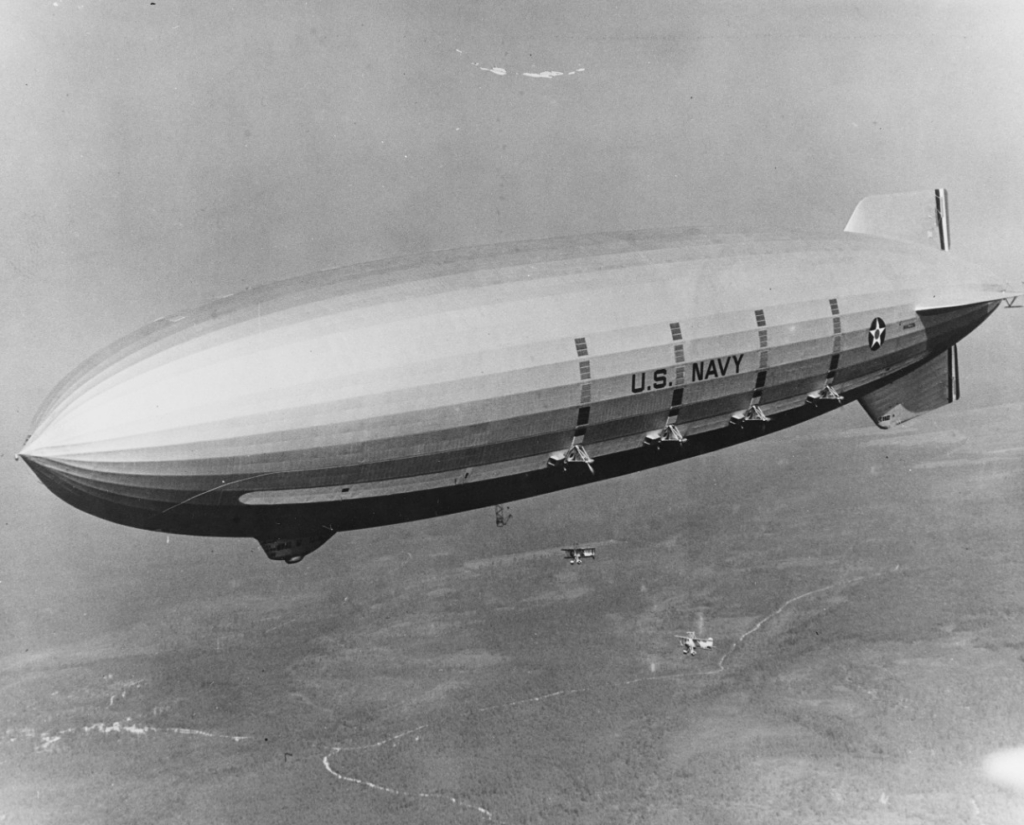
In the 1860s, the Union Army used them for observations during the American Civil War, and in the 1930s, the Navy built large Akron-class aircraft-carrying airships.
Notably, in WWII, the Japanese floated balloons up to the jet streams that carried them across to the Pacific Northwest, where they would fall and drop their bombs.
Featured Image: KettleTech Labs
Sign up for our newsletter and get our latest content in your inbox.


More from


October 4, 20264 min read


