MQ-9B SkyGuardian passes icing trials, moving closer to all-weather missions
4 min read
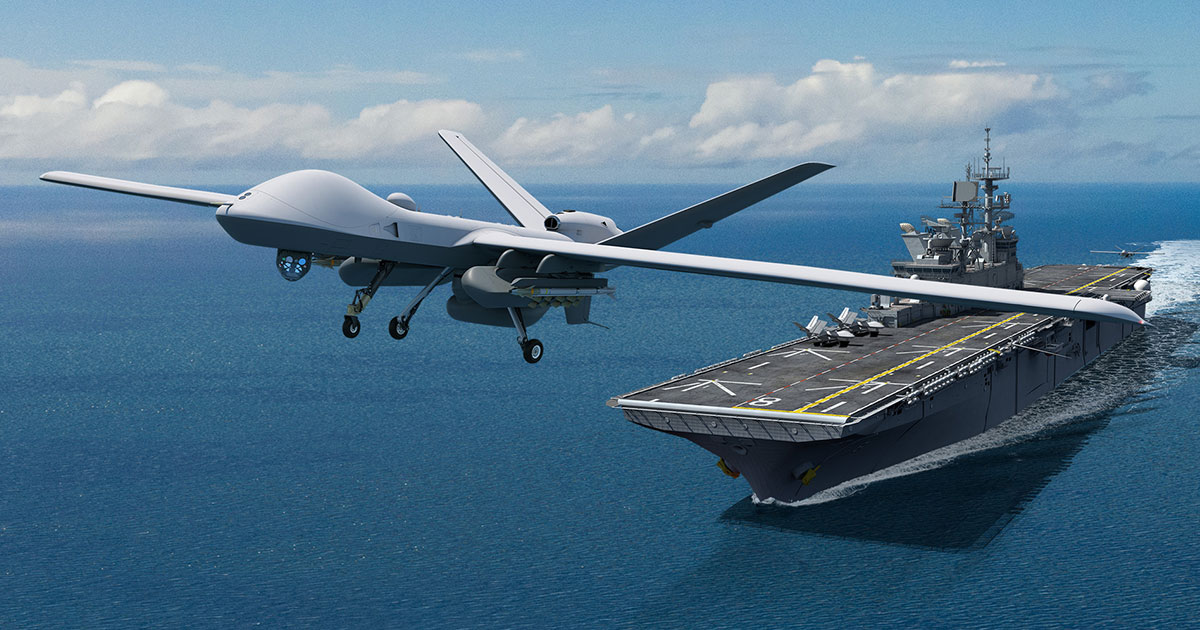
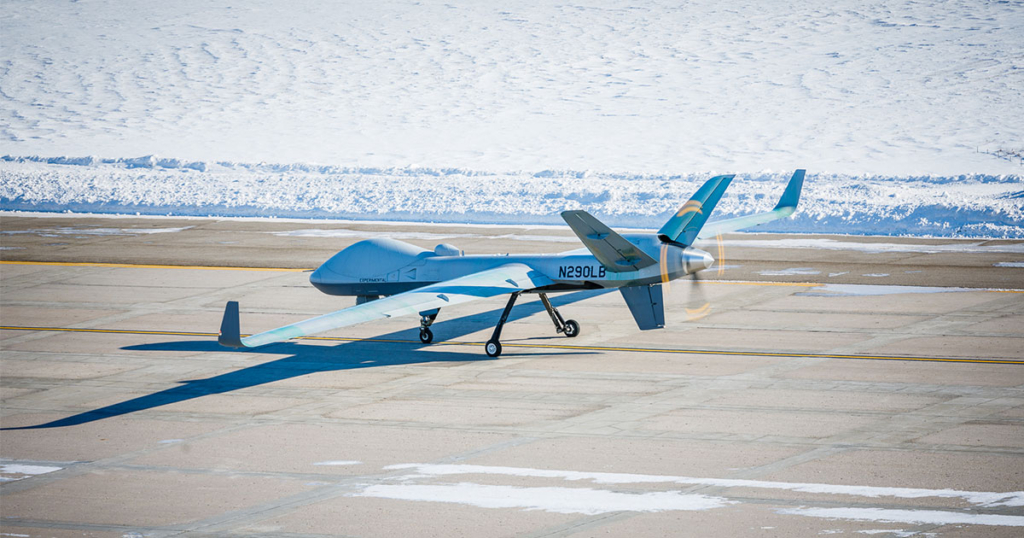
General Atomics Aeronautical Systems has completed a critical series of flight tests aimed at certifying its MQ-9B SkyGuardian remotely piloted aircraft for Flight Into Known Icing (FIKI), a milestone that moves the platform closer to unrestricted, all-weather operations.
Conducted from the company’s Flight Test and Training Center in Grand Forks, North Dakota, the trials wrapped up in early April, building on earlier cold-weather validation work and Arctic operations.
The effort is part of a broader push to ensure the MQ-9B can operate reliably in some of the most demanding environments now emerging as strategic priorities.
MQ-9B icing trials expand flight envelope for real-world operations
The latest FIKI campaign did not emerge in isolation. It builds on a structured series of tests designed to push the aircraft’s environmental limits.
Earlier cold weather validation exercises saw the MQ-9B subjected to extreme conditions, including a “cold soak” where the aircraft was held at temperatures below -21°C for extended periods before being prepared for flight using standard de-icing and anti-icing procedures.
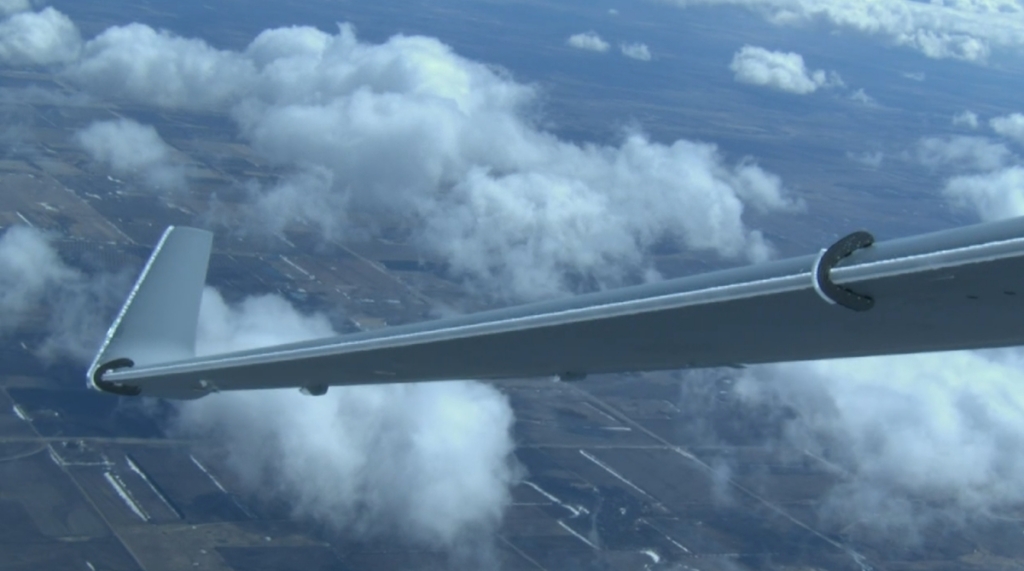
The aircraft was then flown under similarly harsh conditions, demonstrating consistent performance in both ground operations and airborne phases. These trials confirmed that the system could operate effectively using conventional support equipment, an important factor for deployability.
The FIKI tests take that a step further, moving from simulated conditions and procedural validation to certifying the aircraft for sustained operations in known icing environments.
Why Flight Into Known Icing (FIKI) certification matters for drone operations
Flight Into Known Icing certification is more than a technical checkbox.
For remotely piloted aircraft like the MQ-9B, which are designed for long-endurance missions, the ability to operate in icing conditions is critical.
Without it, missions can be restricted or delayed, particularly in regions where the weather is unpredictable.
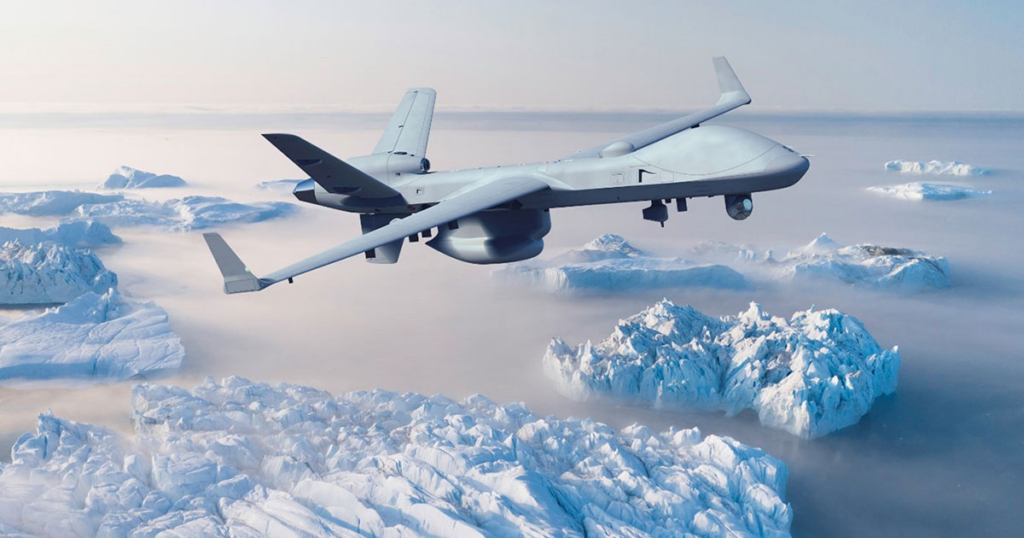
FIKI certification ensures that the aircraft can safely fly through environments where ice accumulation is expected, maintaining aerodynamic performance and sensor functionality.
For operators, this translates into greater mission availability, fewer weather-related constraints and a more reliable surveillance capability, particularly in high-latitude regions.
MQ-9B SkyGuardian Arctic operations prove high-latitude drone deployment
The MQ-9B’s development trajectory reflects a broader shift in operational focus.
A previous high-latitude flight demonstrated the aircraft’s ability to operate above 78 degrees north, an area where traditional satellite communications links often degrade due to geometry constraints.
By integrating an L-band satellite communications system, the aircraft maintained command-and-control and ISR data links even in these challenging conditions, enabling sustained operations over the Arctic.
The flight covered more than 4,500 miles over 25.5 hours, underscoring both endurance and connectivity-two defining characteristics of the MQ-9 family.
This capability is increasingly relevant as Arctic regions gain strategic importance for both NATO and North American defence frameworks.
Global demand grows as MQ-9B becomes an all-weather multi-mission platform
The push towards all-weather certification is closely tied to growing international demand.
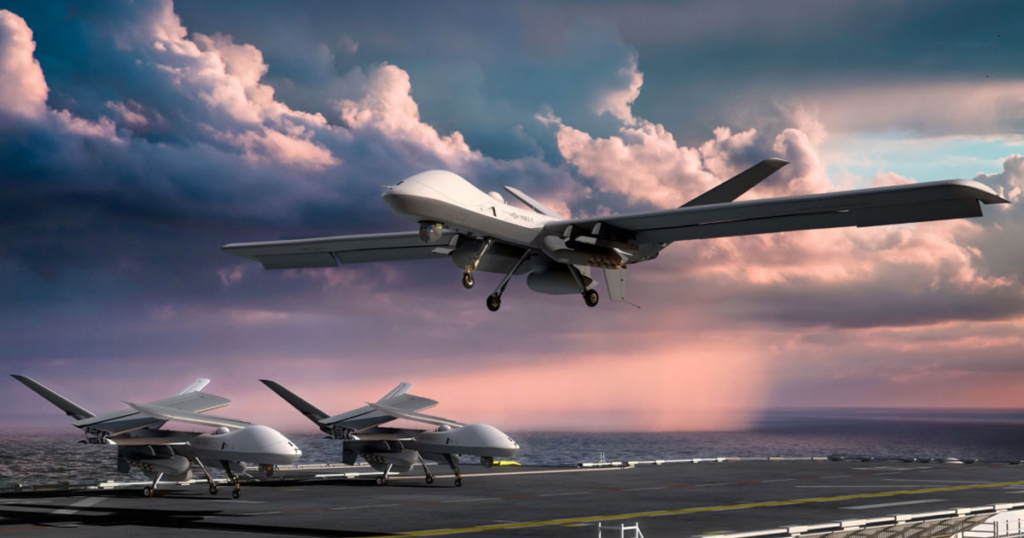
The MQ-9B SkyGuardian and its maritime counterpart, SeaGuardian, are already in service or on order with a wide range of operators, including the United Kingdom, Belgium, Japan and Canada, along with selections by countries such as Germany, Poland, Denmark, Taiwan and India.
Canada, which has ordered 11 aircraft, has been closely involved in the FIKI test process, with its airworthiness authority participating in parts of the campaign. The data collected will feed directly into national certification efforts.
For these operators, the ability to conduct missions across a full spectrum of environmental conditions, from extreme heat to Arctic cold, is becoming a baseline requirement rather than a niche capability.
A key differentiator for the MQ-9B platform is its focus on certification.
Unlike many earlier unmanned systems, the MQ-9B has been developed to meet stringent airworthiness standards, including compliance with NATO’s STANAG 4671.
Combined with features such as detect-and-avoid systems and collision-avoidance radar, this allows the aircraft to operate in controlled civil airspace, a critical factor as unmanned systems become more integrated into global air traffic networks.
The aircraft has already received a Military Type Certificate, marking a significant step towards broader operational acceptance.
Endurance, payload and automation define the next generation of the MQ-9 family
Technically, the MQ-9B represents a step forward from earlier variants.
The platform has demonstrated endurance of over 40 hours, with automatic take-off and landing capabilities controlled via satellite communications.
It is designed as a multi-mission system, capable of intelligence, surveillance and reconnaissance (ISR), maritime patrol and other roles.
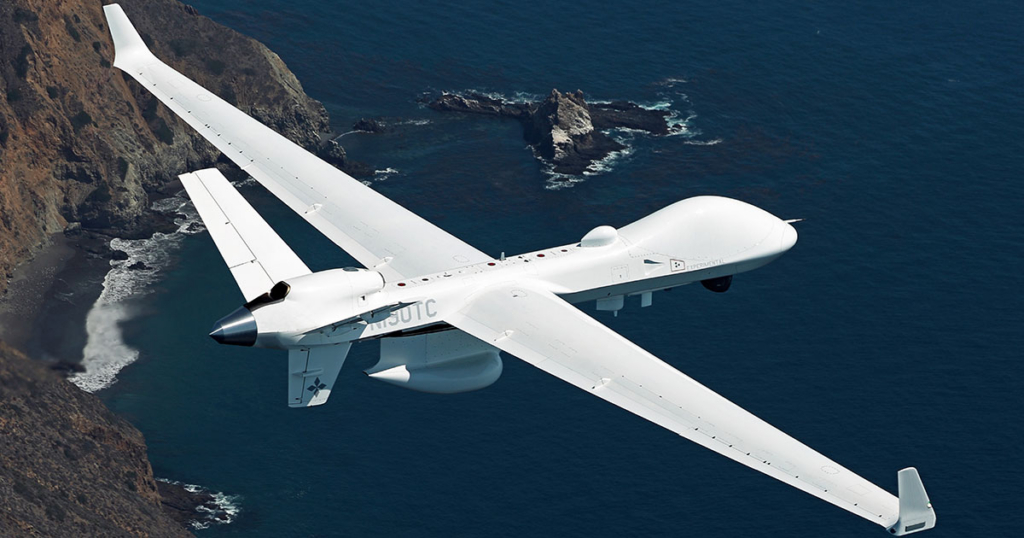
Earlier MQ-9A configurations have shown endurance exceeding 43 hours, speeds of around 220 knots and operational ceilings up to 45,000 feet, along with substantial payload capacity and advanced sensor suites.
The MQ-9B builds on this foundation while adding certification, survivability and environmental resilience.
All-weather capability becomes baseline for next-generation unmanned aircraft
The MQ-9B’s evolution points to a broader trend.
As unmanned systems take on more roles traditionally performed by manned aircraft, expectations around reliability, certification and operational flexibility are rising.
All-weather capability, once considered an advanced feature, is becoming a baseline requirement.
For platforms like the MQ-9B, the ability to operate in icing conditions, extreme cold and high-latitude environments is not just about performance; it is about relevance in a changing strategic landscape.
And as those demands continue to grow, the line between uncrewed and crewed aircraft capability is becoming increasingly blurred.
Featured image: GA-ASI