


India’s AMCA stealth jet set for export as New Delhi targets global fighter market

6 min read
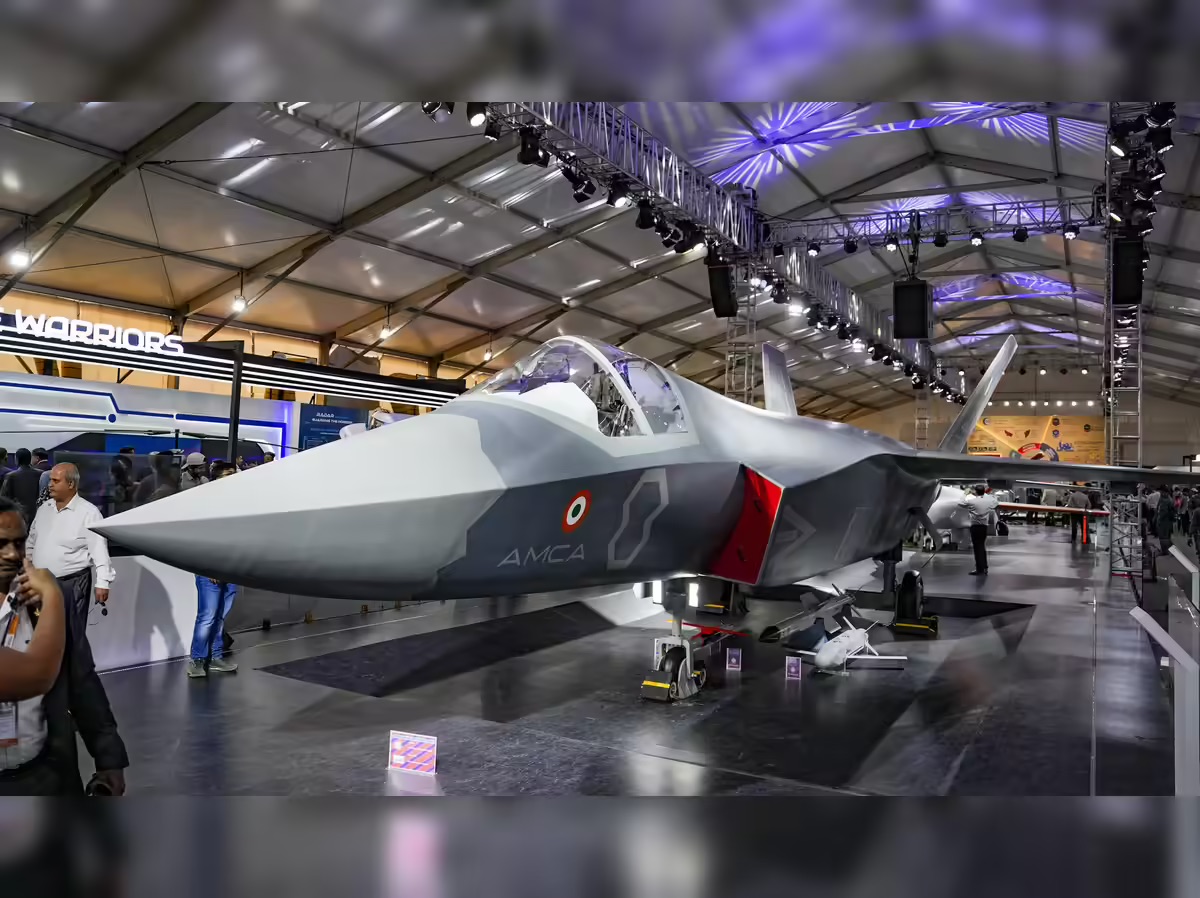
India is preparing to transform its flagship Advanced Medium Combat Aircraft (AMCA) programme from a purely domestic fighter development effort into a potential export platform, allowing the industrial consortium selected to build the aircraft to market it internationally once export clearances are secured.
The policy shift signals a broader strategic intent: New Delhi wants its next-generation combat aircraft not only to equip the Indian Air Force (IAF) but also to compete in the global fighter market as part of a rapidly expanding defence export ecosystem.
The move, first reported by Defence.in, comes as the AMCA programme itself enters a decisive industrial phase, with private-sector consortia emerging as the frontrunners for prototype development and eventual production.
India positions AMCA stealth fighter as a future export platform
Officials familiar with the programme say the industrial consortium chosen to lead AMCA development will be granted the authority to market the aircraft globally, subject to government approval and export controls.
Under the proposed framework, the consortium would be able to approach foreign air forces, participate in international tenders and offer customised versions of the aircraft to meet the operational requirements of prospective customers.

The policy reflects a shift in how India is approaching defence manufacturing. Rather than developing sophisticated platforms solely for domestic use, the government is increasingly encouraging industry to treat indigenous systems as potential export products from the outset.
The goal is twofold: strengthen the country’s defence industrial base and leverage major programmes such as AMCA as instruments of strategic influence in international partnerships.
India’s defence exports have grown rapidly over the past decade, climbing from just ₹686 crore in 2013–14 to more than ₹23,000 crore in 2024–25, with the government aiming to cross ₹50,000 crore by the end of the decade.
Private-sector consortia shortlisted to develop India’s AMCA fighter
The shift towards export ambitions is unfolding alongside a major structural change in the programme’s execution model.
India’s Aeronautical Development Agency (ADA), working under the Defence Research and Development Organisation (DRDO), is implementing the AMCA programme through an industry partnership model that opens the project to both public and private sector players.
Following an initial evaluation, three private-sector-led bidders have reportedly been shortlisted for the prototype development phase.
They include:
- Tata Advanced Systems Ltd (TASL) as an independent bidder
- A consortium led by Larsen & Toubro with Bharat Electronics Ltd (BEL)
- A group headed by Bharat Forge with BEML and Data Patterns
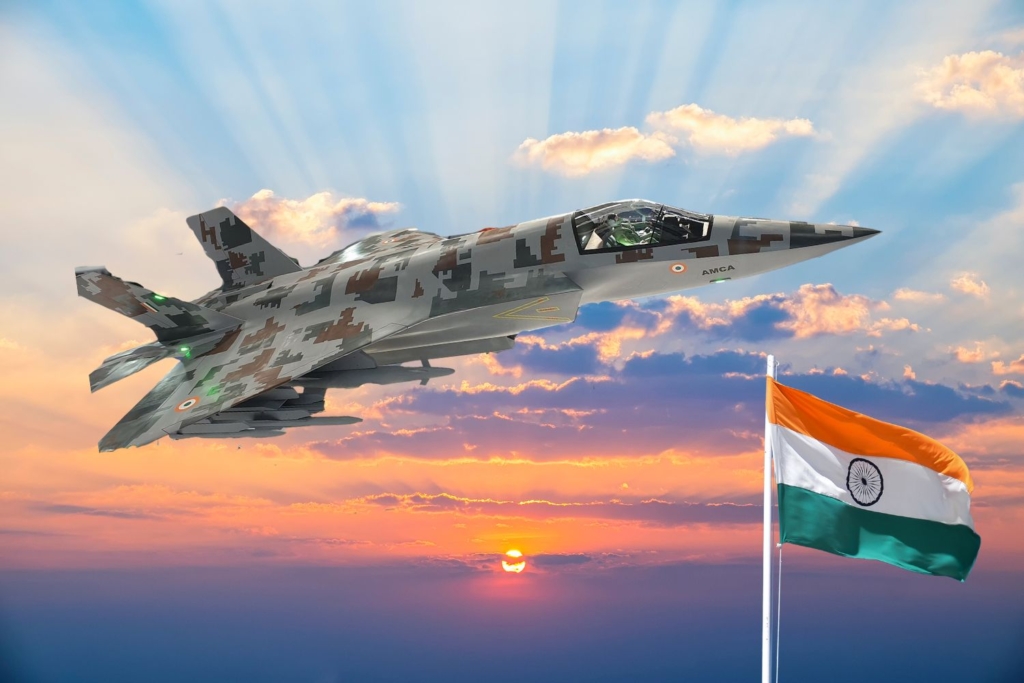
The project requires the selected consortium to develop five flying prototypes and a structural test article while also establishing a full-scale manufacturing ecosystem capable of delivering the aircraft in operational service.
Notably absent from this stage is Hindustan Aeronautics Limited (HAL), India’s state-owned aerospace giant, which did not advance to the next evaluation phase under the programme’s technical and financial criteria.
Officials involved in the process say the decision reflects a restructuring of execution responsibilities rather than a withdrawal of HAL from India’s combat aviation ecosystem.
The company currently manages an extensive pipeline that includes production of the LCA Tejas Mk1A, development of the Tejas Mk2, work on new helicopter platforms and sustainment of multiple legacy fleets.
Why India wants the AMCA to compete in the global fighter market
Allowing the programme’s industrial partners to market AMCA overseas is intended to help India replicate the export trajectory seen in other indigenous defence platforms.
Systems such as the Advanced Towed Artillery Gun System (ATAGS) and the WhAP 8×8 armoured vehicle have already demonstrated the potential for Indian-designed equipment to attract foreign interest.
Officials believe AMCA could eventually join that category if the programme succeeds in combining advanced capability with competitive pricing.
Export orders would also help expand production volumes, lowering unit costs for the Indian Air Force while stabilising the supply chain and ensuring long-term industrial sustainability.
Equally important are the diplomatic benefits. Defence exports often lead to decades-long maintenance, training and logistics partnerships, strengthening strategic ties with partner nations.
AMCA will form the backbone of India’s future air combat capability
The Advanced Medium Combat Aircraft represents India’s most ambitious indigenous fighter programme to date.
The aircraft is being designed as a twin-engine, medium-weight fifth-generation stealth fighter featuring low-observable shaping, internal weapons bays, sensor fusion and advanced avionics.
The programme is expected to produce two major variants.
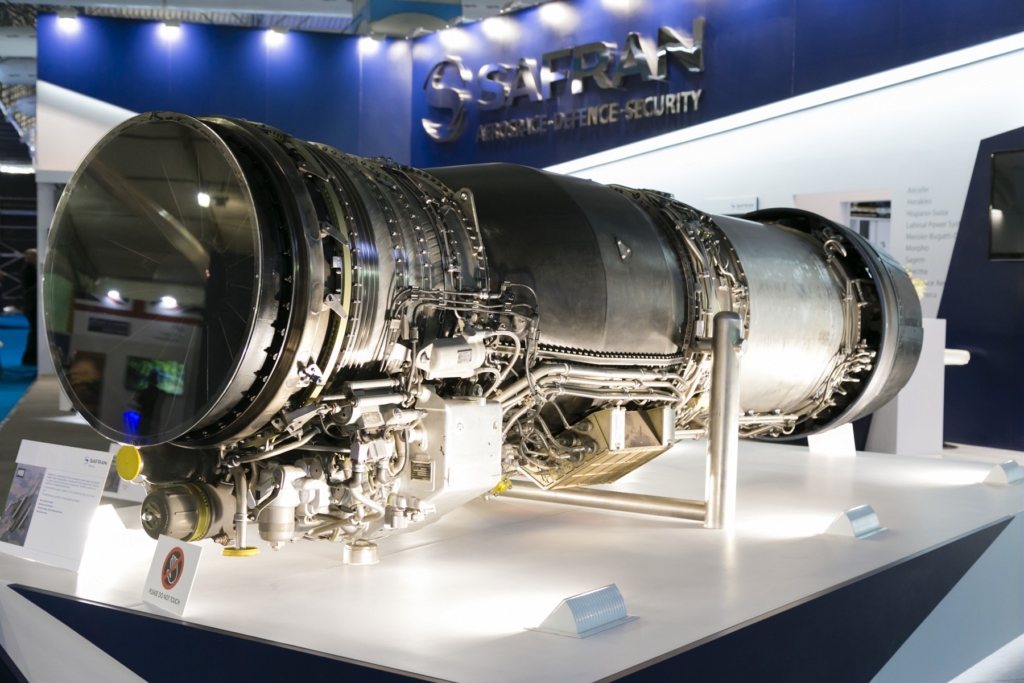
The AMCA Mk-1 will be powered by two GE F414 engines, while the AMCA Mk-2 is planned to incorporate a more powerful 120-kilonewton-class engine currently under development through cooperation between France’s Safran and India’s Gas Turbine Research Establishment.
The aircraft is also expected to include: AESA radar and advanced electronic warfare systems, sensor fusion and AI-assisted mission support, supercruise capability, and internal weapons carriage for stealth operations.
The prototype is expected to fly around 2029, with development targeted for completion by 2034 and production planned to begin in the mid-2030s.
The Indian Air Force currently plans to induct around 120 aircraft, forming the backbone of its future fighter fleet.
New intake design could improve AMCA stealth fighter performance
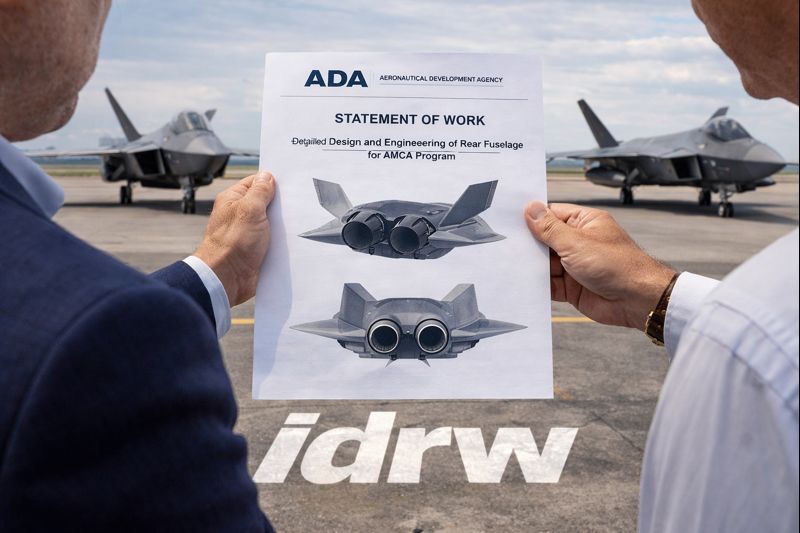
Recent research by the Aeronautical Development Agency has also demonstrated key aerodynamic advances that could strengthen the aircraft’s technical maturity.
In a study published in early 2026, researchers validated a new stealth fighter intake configuration capable of achieving around 98% pressure recovery at transonic speeds—an exceptionally high figure for curved stealth intake ducts.
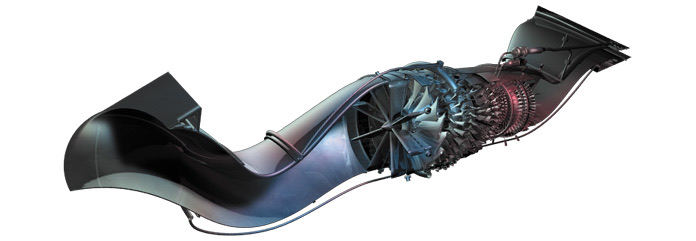
Stealth aircraft typically rely on serpentine or “S-duct” intakes to hide engine compressor blades from radar. While effective for reducing radar signatures, these curved intakes can disrupt airflow and degrade engine performance.
Wind-tunnel testing and computational modelling showed that the new design maintained stable airflow even during manoeuvres involving angles of attack of up to 60 degrees, suggesting that the configuration could support aggressive combat manoeuvres without compromising engine efficiency.
The findings provide important validation for the AMCA’s aerodynamic architecture and may also influence future sixth-generation fighter designs.
China’s J-20 and regional competition add urgency to India’s AMCA programme
India’s push to accelerate AMCA development is also driven by the rapid evolution of air combat capabilities in Asia.
China has already deployed the J-20 stealth fighter, is testing the J-35, and has unveiled additional next-generation concepts widely referred to as the J-36 and J-50.

Pakistan has also signalled interest in acquiring the J-35, raising concerns in New Delhi about maintaining long-term air superiority.
Against that backdrop, the Indian government approved roughly ₹150 billion for AMCA’s design and prototype development in 2024, underscoring the strategic importance attached to the programme.
Can the AMCA become India’s first globally exported stealth fighter?
If New Delhi’s export strategy succeeds, AMCA could become the first Indian-developed stealth fighter offered on the global market.
The plan to allow industrial partners to market the aircraft internationally marks a departure from earlier Indian defence programmes, which were largely built around domestic procurement.
It also reflects a broader transformation underway in India’s defence sector, where policy reforms, private-sector participation and export ambitions are reshaping the country’s military industrial landscape.
Whether AMCA ultimately succeeds in the highly competitive global fighter market will depend on cost, performance and delivery timelines.
But by opening the programme to exports even before the aircraft enters production, India is signalling that its next-generation fighter is intended not only to defend national airspace but also to become a symbol of the country’s growing aerospace ambitions.
Featured image: IDRW


