


Adani-Embraer E175 deal could bring India its first modern aircraft final assembly line


Just weeks after signalling their intent to collaborate, India’s Adani Defence & Aerospace and Brazil’s Embraer have taken a more concrete step towards establishing a Final Assembly Line (FAL) in India for the E175 regional jet, a move that could reshape the country’s civil aviation manufacturing ambitions.
The enhanced Memorandum of Understanding, exchanged in the presence of Brazilian President Luiz Inacio Lula da Silva and India’s Commerce and Industry Minister Piyush Goyal, builds directly on the initial pact signed on 27 January.
What was then a broad framework to explore cooperation has now evolved into a defined roadmap centred on India’s proposed Regional Transport Aircraft (RTA) programme.
At its heart is the E175, an 80-seat class jet that Embraer believes is ideally placed to serve India’s expanding network of regional routes.
Adani and Embraer move from MoU to E175 Final Assembly Line plans in India
The January understanding spoke of evaluating opportunities. The updated MoU moves further, outlining plans to create an integrated ecosystem around the E175, spanning final assembly, local supply chains, maintenance and repair operations, pilot training and aftermarket support.
Both companies are already working through industrial and commercial details, including the securing of aircraft orders that would underpin the viability of a Final Assembly Line.
Jeet Adani, Director of Adani Defence & Aerospace, described regional aviation as “the backbone of economic expansion”, pointing to the impact of the government’s UDAN scheme in connecting tier-2 and tier-3 cities.

“The need for an indigenous regional aviation ecosystem has become critical,” he said, adding that the partnership would also deepen strategic ties between India and Brazil.
For Embraer, the logic is equally clear. “The E175 has a global track record of enabling efficient, high-frequency regional operations and India is a key growth market in that segment,” said Francisco Gomes Neto, President and Chief Executive of Embraer.
He characterised the latest signing as a critical milestone as the two sides work across manufacturing and supply chain development.
Why the Embraer E175 fits India’s regional aviation growth plans
India is expected to require at least 500 aircraft in the 80-to-146 seat category over the next two decades, driven by thinner routes that cannot sustain larger narrowbody aircraft.
Delivery slots for bigger jets remain heavily booked, creating space for smaller, efficient regional aircraft.
The E175 sits squarely in that segment. Part of Embraer’s E-Jet family, it first flew in 2003 and has since secured certification in Brazil, Europe and the United States.
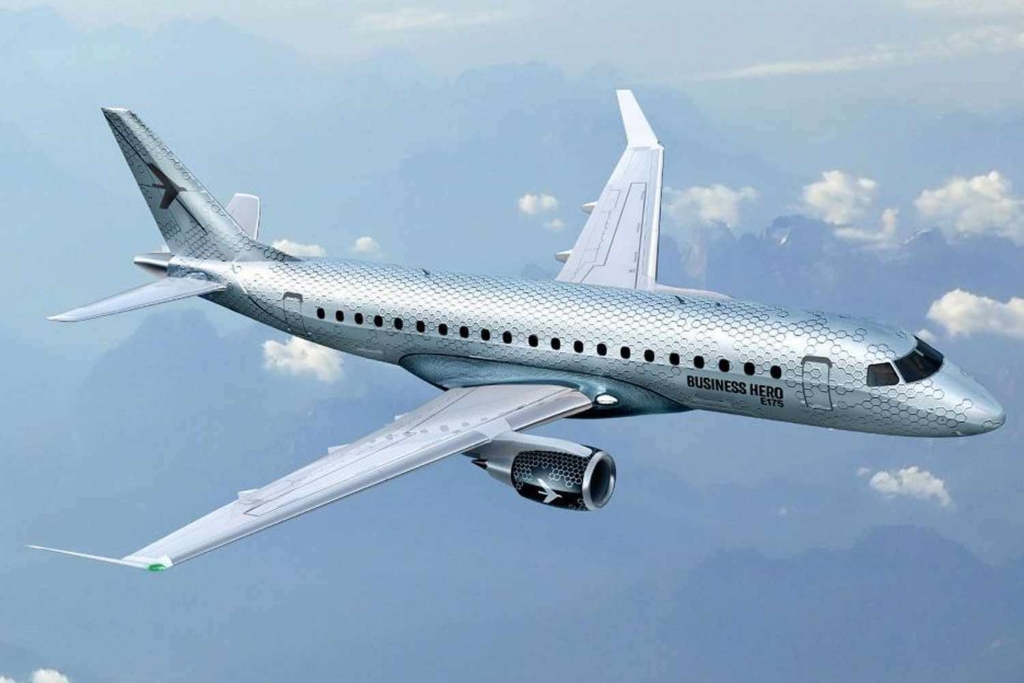
More than 600 E175 aircraft have been ordered globally, operating with airlines such as Air Canada, United Airlines and American Airlines.
In its standard configuration, the aircraft accommodates between 78 and 88 passengers in a four-abreast cabin designed around a double-bubble fuselage, which offers a wider aisle and generous overhead space.
The cabin measures roughly 21 metres in length and two metres in height, allowing passengers to stand comfortably.
Technically, the jet is 31.6 metres long with a 26-metre wingspan. It is powered by two GE CF34-8E engines producing up to 14,200 pounds of thrust.
The aircraft cruises at Mach 0.82, has a service ceiling of 41,000 feet and, depending on variant, can fly between 1,700 and 2,000 nautical miles. It requires just over 1,250 metres of runway for take-off, making it suitable for many secondary airports.
These characteristics are central to its appeal in India, where regional infrastructure varies widely in runway length and passenger demand.
Adani Defence and Embraer plan broader aerospace ecosystem beyond E175 assembly
Crucially, both sides are framing the initiative as more than simply building aircraft in India.
Ashish Rajvanshi, President and CEO of Adani Defence & Aerospace, spoke of shaping a broader ecosystem that would generate skilled employment and strengthen the country’s aerospace supply base.
Adani Defence has, in recent years, expanded across unmanned systems, avionics, maintenance services and pilot training. The proposed E175 assembly would sit within that larger aviation value chain, supported by what the company describes as the country’s largest private MRO platform.
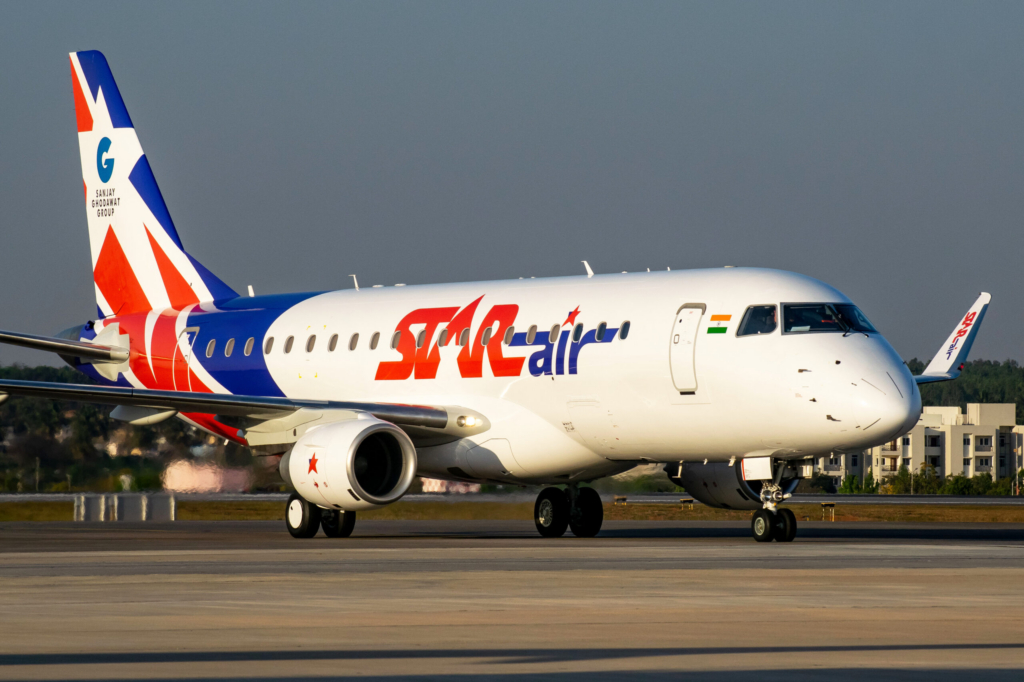
Embraer already has a footprint in India, with nearly 50 aircraft across commercial, defence and business aviation roles.
The Indian Air Force operates platforms based on the ERJ145, including the Netra airborne early warning aircraft.
That existing operational base offers familiarity with the manufacturer’s products and support network.
India-Brazil ties deepen as Adani and Embraer advance E175 partnership
The presence of senior political leaders at the exchange ceremony underscores the diplomatic dimension. India and Brazil have sought to deepen cooperation across technology and industry, and civil aerospace provides a visible platform for that alignment.
The move also reflects a broader ambition within New Delhi to anchor higher-value manufacturing at home. India currently hosts significant aerospace component production, but does not yet operate a commercial passenger jet FAL.
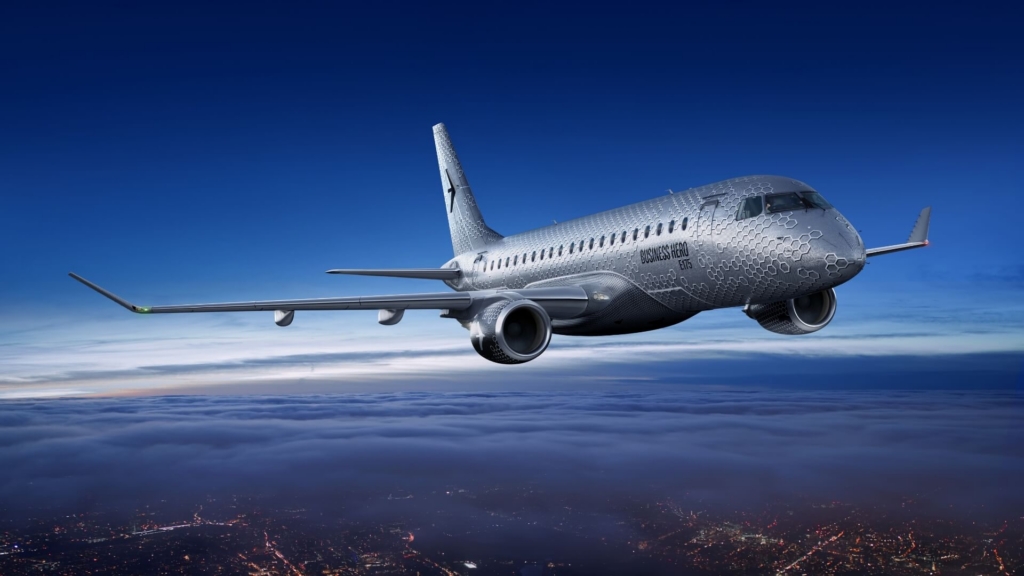
Should the project proceed as envisaged, it would place the country in a select group of nations assembling modern commercial aircraft.
Next steps for Adani-Embraer E175 Final Assembly Line in India
The enhanced MoU does not yet specify the site of the assembly line, investment levels or production targets.
Those details are likely to emerge as commercial discussions progress and firm aircraft orders are secured.
For now, the shift from exploratory agreement in January to a more structured roadmap signals intent. India’s civil aviation market is expanding rapidly, and regional connectivity remains a policy priority.
If Adani and Embraer can translate this framework into firm orders and infrastructure, the E175 could become the first modern commercial jet assembled on Indian soil.
Whether that ambition materialises will depend on market uptake and execution. But with both sides now moving beyond initial conversations, the prospect of a regional jet assembly line in India no longer appears distant.
Featured image: Embraer


