Embraer and Adani formalise partnership to build regional aircraft ecosystem in India

5 min read

After weeks of industry speculation, the contours of a long-anticipated tie-up are now clear. On 27 January, Embraer and Adani Defence & Aerospace signed a memorandum of understanding that could reshape India’s civil aviation manufacturing landscape, committing to jointly develop an integrated regional transport aircraft ecosystem in the country.
The agreement brings together one of the world’s most established regional aircraft manufacturers and India’s largest private aerospace and defence player, with collaboration spanning aircraft manufacturing, supply chain development, aftermarket services and pilot training.
While the MoU stops short of announcing production numbers or a site, it formally confirms a direction that industry watchers had increasingly expected: India is moving closer to hosting a commercial aircraft assembly capability.
From aircraft assembly to a regional aviation ecosystem in India
At the heart of the partnership is a plan to establish an aircraft assembly line in India, followed by a phased increase in indigenisation.
The approach aligns closely with the government’s Aatmanirbhar Bharat initiative and the UDAN regional connectivity programme, which has driven demand for smaller aircraft linking tier-II and tier-III cities.
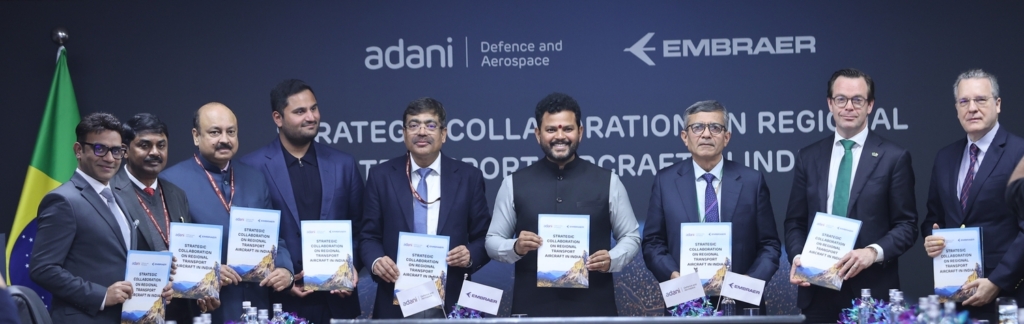
Rather than a standalone factory, the two companies are framing the effort as an ecosystem play. The collaboration is intended to cover not only assembly, but also local suppliers, maintenance and repair operations, training and long-term sustainment, elements that together determine whether aircraft manufacturing takes root or remains superficial.
Arjan Meijer, president and chief executive of Embraer Commercial Aviation, described India as central to the company’s long-term strategy.
“India is a pivotal market for Embraer, and this partnership combines our aerospace expertise with Adani’s strong industrial capabilities and commitment to indigenisation,” he said. “Together, we will evaluate the most viable, advanced and efficient solutions in support of India’s RTA ambitions and their potential for implementation.”
India is ready for regional aircraft manufacturing
Timing is a critical factor. India is the world’s fastest-growing major aviation market, with airlines holding orders for more than 1,800 aircraft.
Yet delivery slots for single-aisle jets from Airbus and Boeing are effectively sold out well into the next decade, creating a strategic opening for regional aircraft to absorb growth on thinner routes.
Embraer, whose commercial portfolio spans the 70- to 146-seat segment, has long argued that India represents one of the largest untapped regional jet markets globally.
The company already has a significant footprint in the country, with close to 50 Embraer aircraft operating across commercial, defence and business aviation roles.
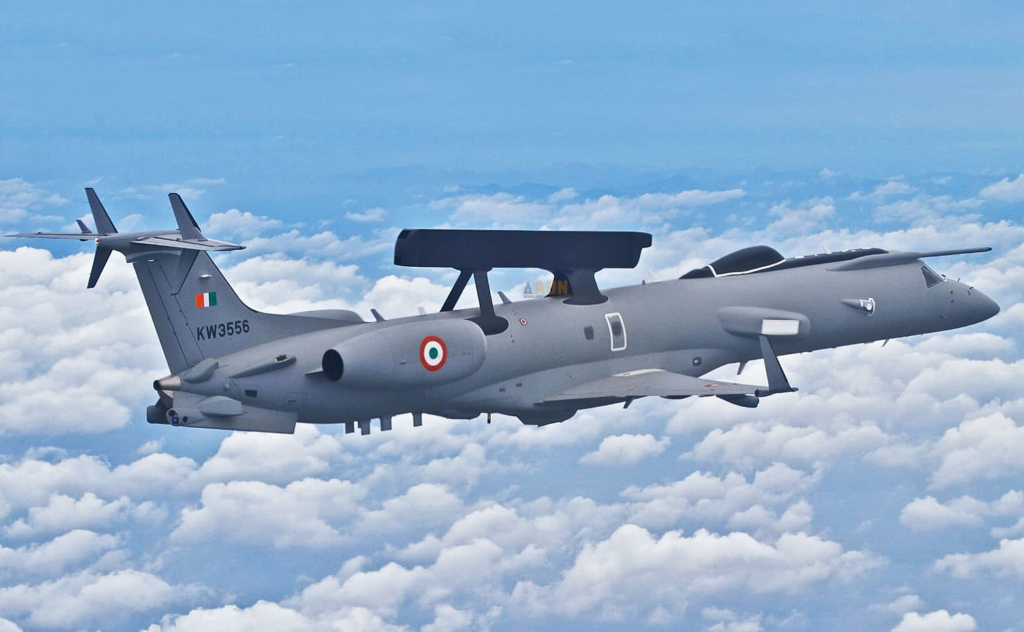
On the military side, the Indian Air Force flies the Legacy 600 and the Netra AEW&C aircraft based on the ERJ145 platform. In commercial service, Star Air operates E175 and ERJ145 aircraft on regional routes.
That existing base provides Embraer with operators, maintenance familiarity and regulatory experience that would underpin any expansion into local manufacturing.
For the Adani Group, the partnership fits into a broader aviation strategy that stretches well beyond airports.
Through its defence and aerospace arm, Adani has been building capabilities across manufacturing, MRO, avionics, unmanned systems and pilot training, creating an end-to-end aviation value chain that few Indian conglomerates can match.
Strategic and geopolitical implications of the Embraer–Adani partnership
Jeet Adani, director at Adani Defence & Aerospace, positioned the MoU not just as an industrial move, but as a strategic one.
“Regional aviation is the backbone of economic expansion,” he said. “With initiatives like UDAN transforming air connectivity across tier-II and tier-III cities, the need for an indigenous regional aviation ecosystem has become critical.”

He also highlighted the diplomatic dimension, noting that the partnership would “strengthen strategic relations between India and Brazil”, bringing together complementary industrial capabilities at a time when both countries are seeking to deepen south-south cooperation.
Ashish Rajvanshi, president and CEO of Adani Defence & Aerospace, framed the effort in broader terms. “We are shaping India’s regional transport aircraft ecosystem, a bold stride toward Aatmanirbhar aviation that bridges urban-rural divides, generates high-skill employment, and elevates India’s position in the global aerospace industry,” he said.
Jobs, skills and aerospace supply chains in India
While neither company has disclosed employment numbers, the proposed ecosystem is expected to generate significant direct and indirect jobs across engineering, manufacturing, logistics and support services.
Final aircraft assembly, unlike component manufacturing alone, typically drives deeper skill development, certification expertise and supplier maturity.
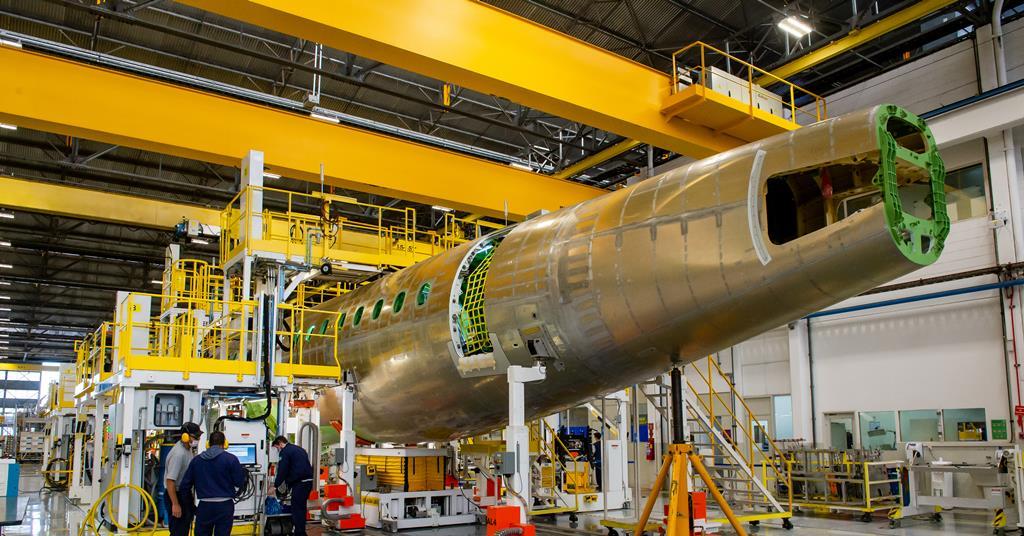
India already has companies capable of building complete aircraft, including Hindustan Aeronautics Limited, National Aerospace Laboratories, Tata Advanced Systems and Mahindra Aerospace, but none currently operate a commercial passenger aircraft final assembly line.
If realised, an Embraer-Adani facility would place India in a small global club that includes the United States, Brazil, Canada, France and China.
That context explains why the announcement has drawn close attention in policy circles. New Delhi has been exploring incentives to attract global OEMs to establish local assembly, viewing it as a way to reduce import dependence while embedding India more firmly into global aerospace supply chains.
Embraer–Adani MoU confirms regional aircraft assembly plans
Earlier this month, AGN reported that discussions between Adani and Embraer could bring commercial aircraft assembly to India, though both sides declined to comment at the time.
The signing of the MoU now confirms that those talks have matured into a formal partnership, even if many details remain under wraps.

Key questions, including the location of the assembly line, investment size, production rates and timelines, are expected to be clarified in subsequent phases. Industry sources suggest further announcements could follow at upcoming aviation and defence forums.
For now, the agreement is best understood as a framework rather than a final commitment to production. Its significance lies in what it signals: that India’s ambitions in civil aviation manufacturing are no longer confined to components and MRO, and that global OEMs see sufficient market depth to consider local assembly a viable proposition.
Featured image: Embraer
Sign up for our newsletter and get our latest content in your inbox.


More from


October 17, 20264 min read