Airbus A330 MRTT enables world-first automatic refuelling capability for RSAF

February 4, 2026
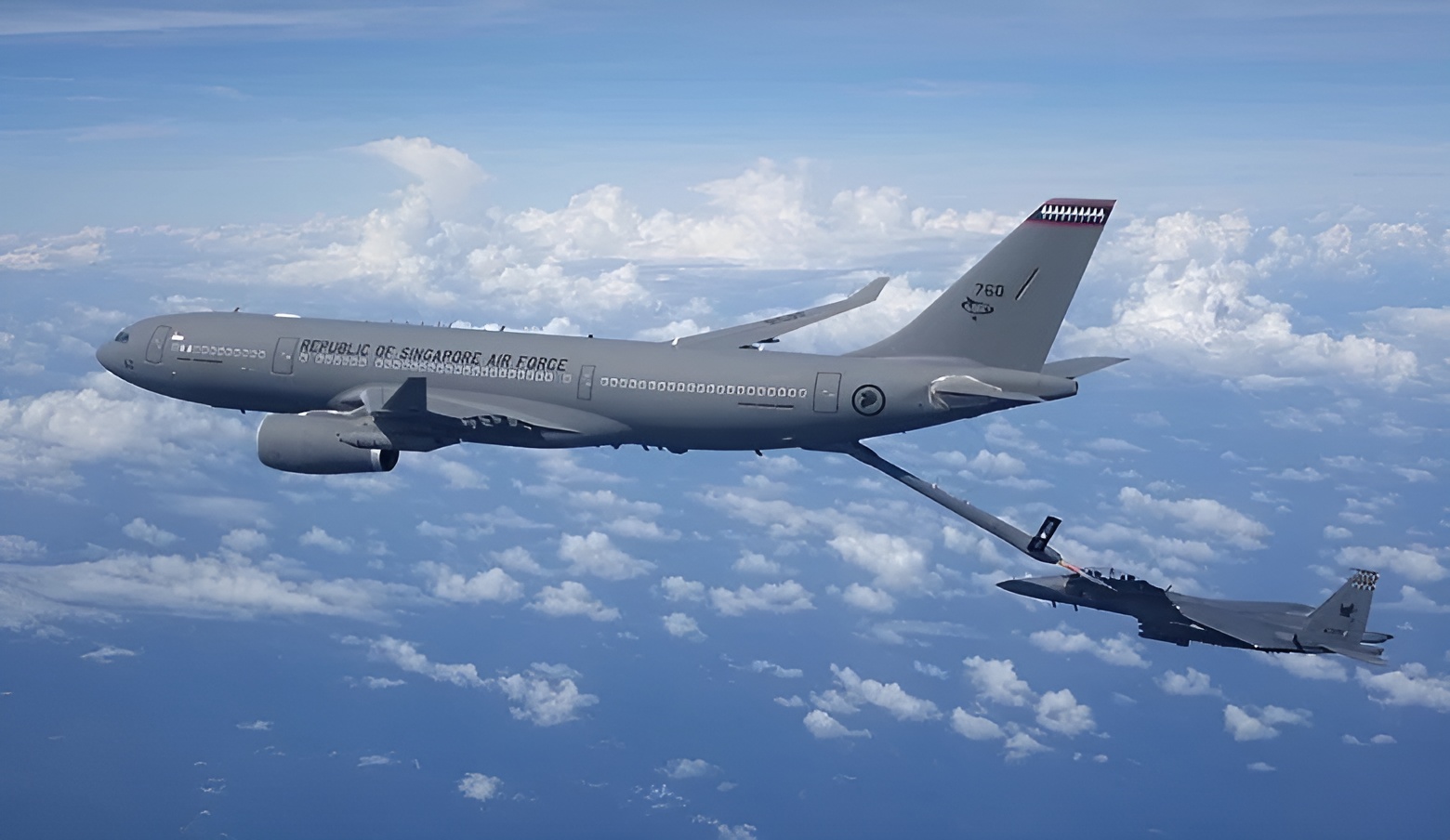
The Republic of Singapore Air Force (RSAF) has become the first air force in the world to achieve full operational certification for automatic air-to-air refuelling, marking a significant step forward in tanker operations and flight safety as global aerial refuelling demand continues to grow.
The milestone was announced on 4 February at the Singapore Airshow, following the successful certification of the Automatic Air-to-Air Refuelling (A3R) capability on the RSAF’s Airbus A330 Multi-Role Tanker Transport (MRTT) fleet.
Certification was granted by Spain’s National Institute for Aerospace Technology after an extensive flight-test campaign conducted jointly by Airbus Defence and Space, Singapore’s Defence Science and Technology Agency and the RSAF.
With the approval, Singapore becomes the first operator worldwide to field a fully certified tanker system capable of conducting boom refuelling automatically, without continuous manual input from a boom operator.
RSAF becomes the world’s first to certify automatic air-to-air refuelling
The A3R certification represents a global first for tanker operations, moving automated boom refuelling from assisted modes into fully certified operational use.
The system allows the tanker to carry out precise refuelling engagements using automation rather than continuous manual control, reducing workload while maintaining strict safety margins.
For air forces operating complex, high-tempo missions, this marks a fundamental shift in how refuelling sorties can be planned and executed.
How automatic refuelling works on the Airbus A330 MRTT
The A3R system forms part of Airbus’s SMART MRTT development roadmap and represents a step change in how aerial refuelling missions are conducted.
Using advanced automation and computer-vision technologies, the system can detect, track and engage receiver aircraft with a high degree of precision, maintaining safe separation and alignment throughout the refuelling envelope.
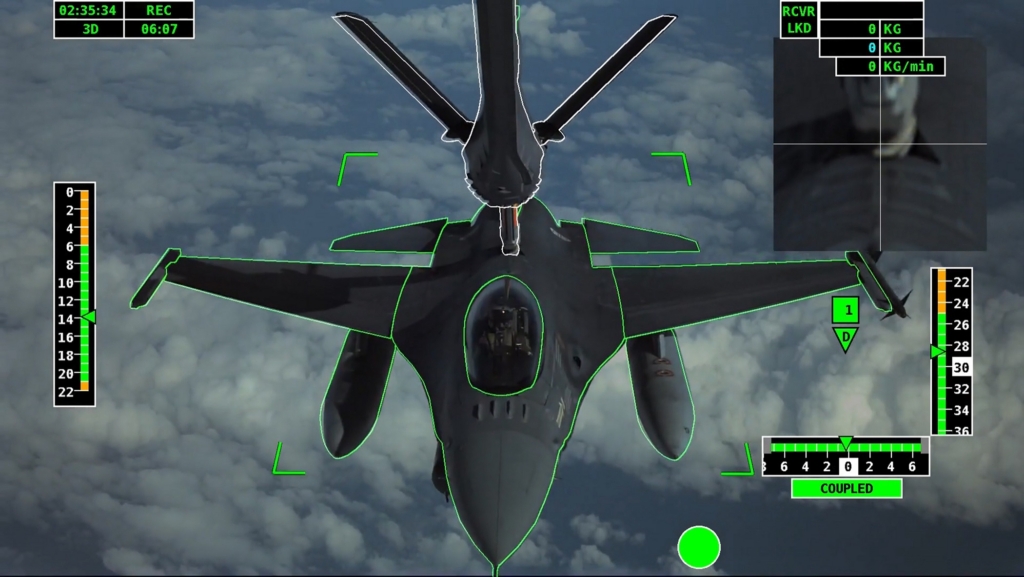
During the certification campaign, the system was validated across day and night operations, multiple flight regimes and expanded envelopes. It was tested with frontline RSAF receiver aircraft, including F-16s and F-15s, demonstrating reliability under operationally representative conditions.
For the RSAF, the technology reduces crew workload, enhances repeatability and lowers the risk associated with complex refuelling tasks, particularly during night or adverse-weather missions. It also aligns with Singapore’s broader push towards highly automated, digitally enabled air operations.
Singapore’s Airbus A330 MRTT fleet is a tanker automation pathfinder
The RSAF operates one of the most advanced MRTT fleets in service and has consistently acted as a launch customer for new tanker capabilities.
With A3R now fully certified, Singapore’s fleet effectively sets a new benchmark for tanker automation worldwide.
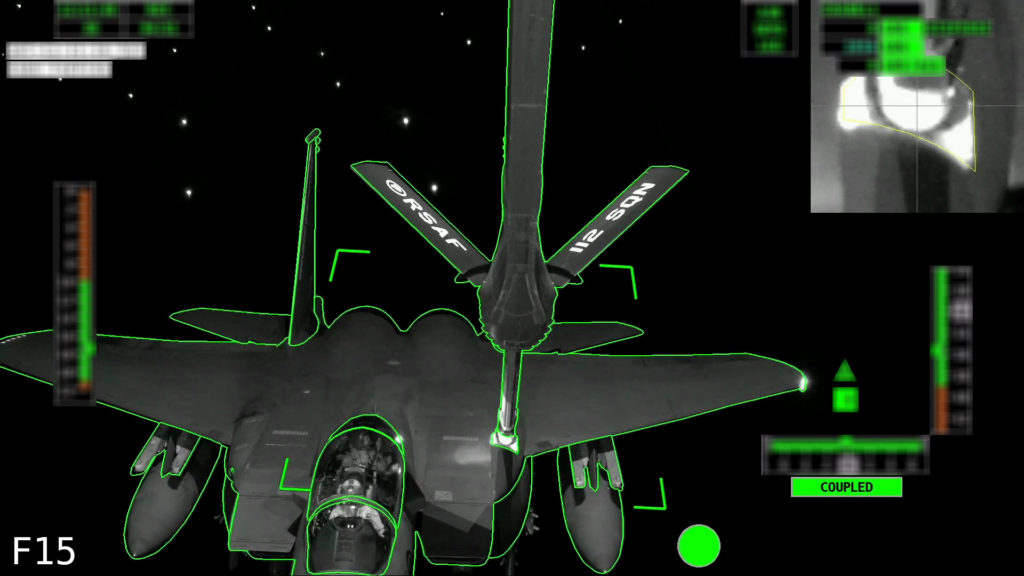
While Airbus stresses that the system does not remove human oversight, it fundamentally changes the role of the boom operator from hands-on control to system supervision, improving safety margins while retaining tactical flexibility.
The certification is expected to feed directly into future MRTT upgrades and inform next-generation tanker concepts, particularly as air forces look to operate with smaller crews and higher sortie rates.
Global demand for aerial refuelling aircraft accelerates
The Singapore milestone comes as Airbus reports a sharp increase in global demand for aerial refuelling aircraft. Speaking at the airshow, María Ángeles Martí, head of tanker and derivatives at Airbus Defence and Space, said the tanker market has effectively doubled compared with projections made several years ago.
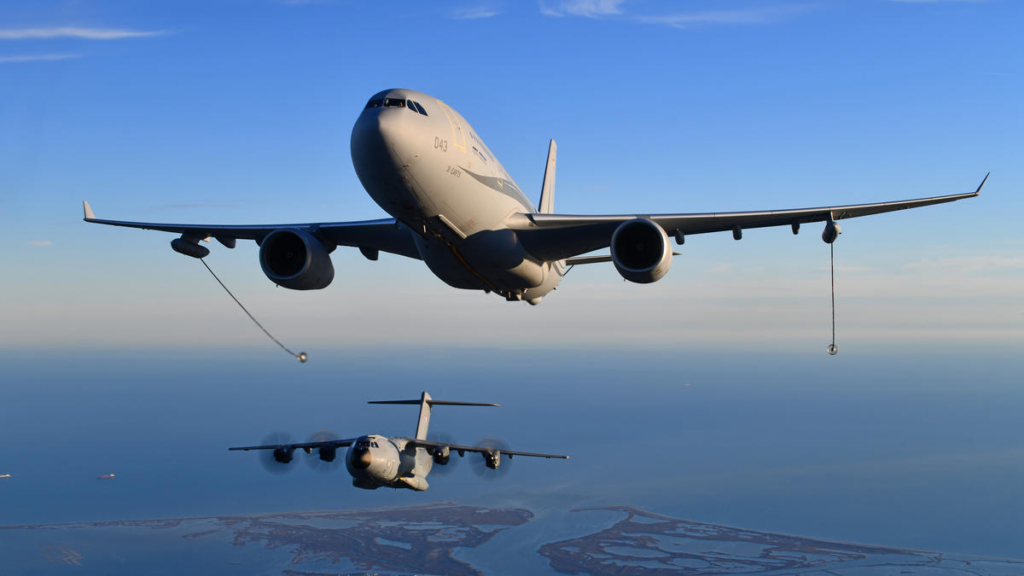
The surge is being driven by heightened geopolitical tensions, expanding fighter fleets and the growing need for long-range airpower projection. As more air forces induct advanced fighters with extended reach, tanker capacity has increasingly become a limiting factor.
Airbus has positioned the next-generation A330 MRTT+, based on the A330-800 airframe, as its response to these evolving requirements.
Airbus MRTT+ is pitched as the solution to surging tanker demand
Thailand became the launch customer for the MRTT+ in September, ordering a single aircraft.
The upgraded tanker offers a higher maximum take-off weight of 242 tonnes compared with 233 tonnes for the earlier MRTT, alongside an estimated 8 per cent fuel-efficiency improvement enabled by new wingtip devices.

Despite the upgrades, Airbus has retained around 95 per cent commonality with the existing MRTT, allowing current operators to introduce the new variant with minimal additional crew training and even operate mixed fleets.
Airbus continues to offer conversions of older A330-200s into MRTTs, but availability is shrinking. “The longer we wait, the fewer suitable airframes remain,” Martí said, explaining why Airbus is encouraging customers to move towards new-build platforms.
Singapore’s expanding role in the MRTT industrial ecosystem
On the industrial front, Singapore’s position in the MRTT ecosystem is also expanding. ST Engineering has signed a memorandum of understanding with Airbus to support engineering design, certification and aircraft modification work for the MRTT+, reinforcing the city-state’s role as a regional aerospace support hub.
The combination of rising tanker demand, a modernised platform and now fully certified automation strengthens the MRTT’s long-term relevance. The A3R milestone further reinforces the RSAF’s reputation as a technologically forward-leaning air force willing to operationalise cutting-edge capabilities.
As aerial refuelling evolves from manual precision to certified automation, Singapore has placed itself firmly at the leading edge of that transition.
Featured image: Airbus