


RoKAF Black Eagles back on course for World Defense Show after Japan approves T-50 refuelling
4 min read
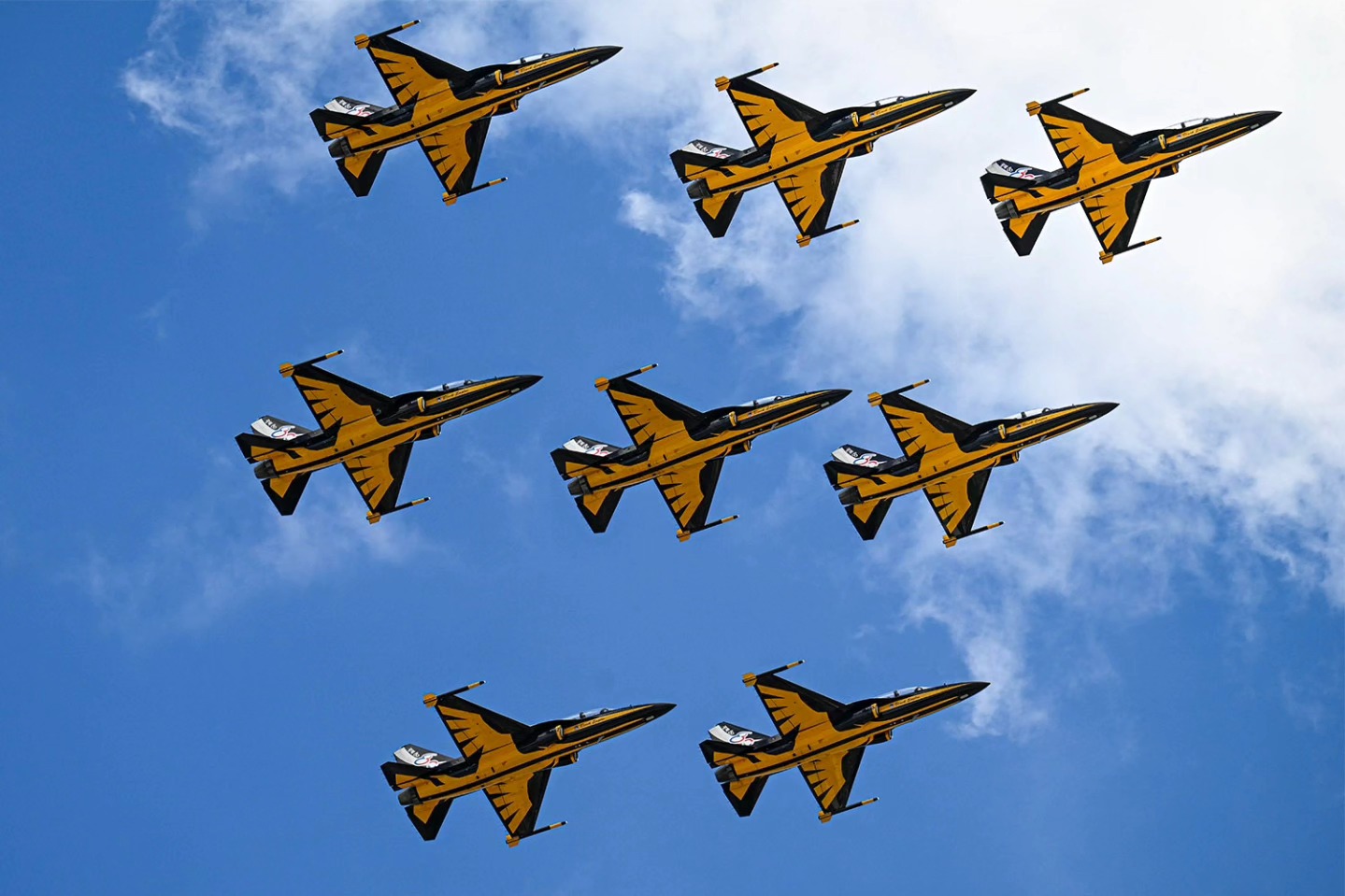
Japan’s decision to allow the Republic of Korea Air Force’s Black Eagles aerobatic team to refuel at Okinawa has cleared a critical logistical hurdle, enabling the team to attend the World Defense Show in Saudi Arabia and reversing a diplomatic impasse that last year forced them to miss the Dubai Airshow.
The clearance for a refuelling stop at Naha Air Base marks a quiet but significant shift. It restores a key transit route for the Black Eagles’ long-haul deployment and signals a willingness on both sides to prevent political sensitivities from spilling over into high-profile defence engagements.
For the Black Eagles, the green light from Tokyo means one thing above all: they are back on course for their first appearance at a major Middle Eastern defence exhibition.
From Dubai Airshow setback to World Defense Show in Riyadh
The contrast with events late last year is stark. The Black Eagles had been scheduled to make their Dubai Airshow debut, a high-visibility appearance aligned with South Korea’s expanding defence export push in the region. The plan relied on a refuelling stop at Naha, essential for the team’s westbound journey.
Japan withdrew refuelling permission after a Black Eagles training flight near Dokdo, islets administered by South Korea but claimed by Japan. Tokyo viewed the sortie as politically sensitive and rescinded access to Naha Air Base. With no alternative refuelling stop available in time, the team was forced to cancel its Dubai Airshow deployment.
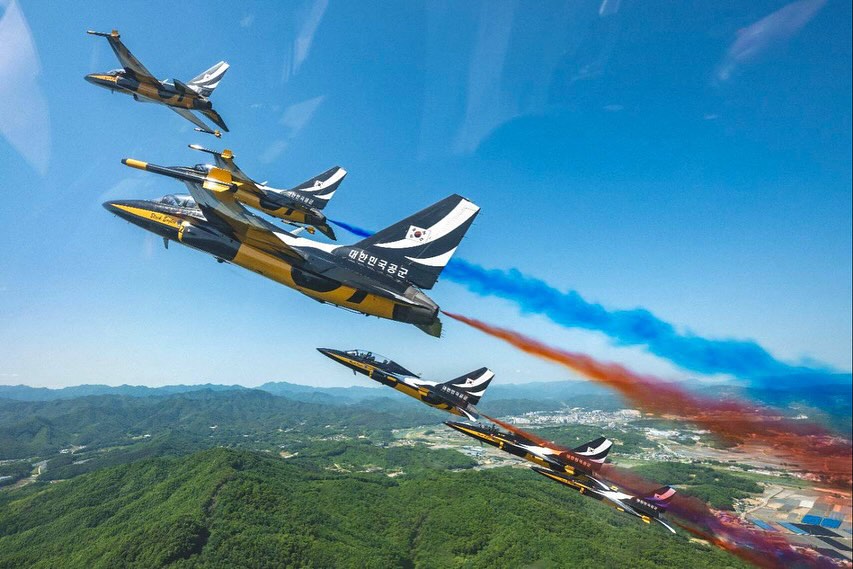
This time, the outcome is different. Japanese and South Korean media report that Japan has approved the Naha refuelling stop for the Saudi deployment, removing the bottleneck that grounded the team previously and allowing preparations for World Defense Show to proceed as planned.
Both diplomacy and refuelling are needed for the Black Eagles’ long-range flights
The importance of the Okinawa stop highlights a practical reality of the Black Eagles’ aircraft.
The team flies the T-50B, an aerobatic variant of the T-50 Golden Eagle advanced jet trainer developed by Korea Aerospace Industries. While the aircraft offers fighter-like performance and agility, it does not have an air-to-air refuelling capability.
Long-distance deployments therefore depend on a carefully sequenced chain of ground refuelling stops and diplomatic clearances.
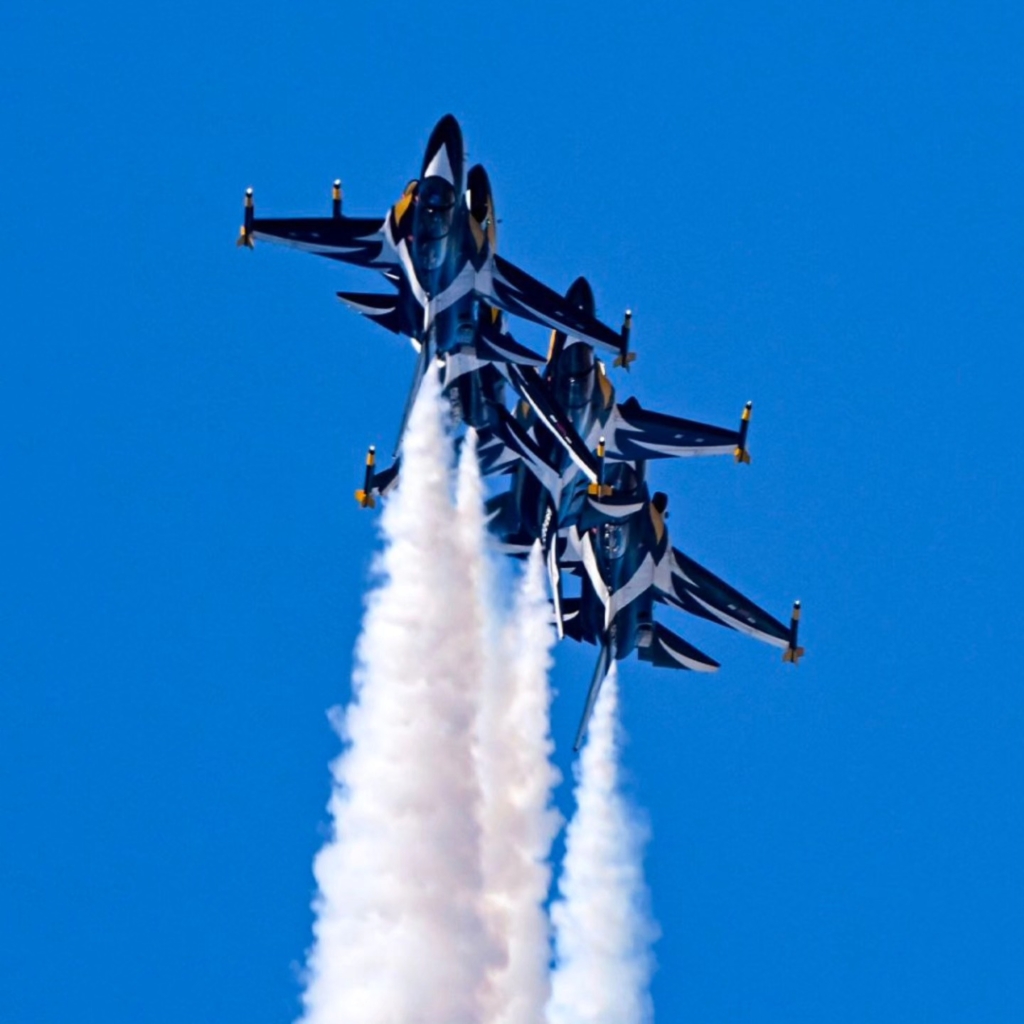
For the World Defense Show, the Black Eagles are undertaking one of their longest overseas journeys, covering almost 6,000 nmi from South Korea to Saudi Arabia.
The deployment involves nine T-50B aircraft, supported by transport aircraft and a large ground team, with multiple refuelling points across Asia and the Middle East. Without Japanese approval at Naha, that route would have been extremely difficult to execute.
South Korea’s Black Eagles and the T-50B display aircraft
Formed in 1994, the Black Eagles are South Korea’s official military aerobatic display team and among Asia’s most internationally active.
They transitioned to the T-50B in 2010, replacing older trainer aircraft with a supersonic platform capable of high-energy manoeuvres more commonly associated with frontline fighters.
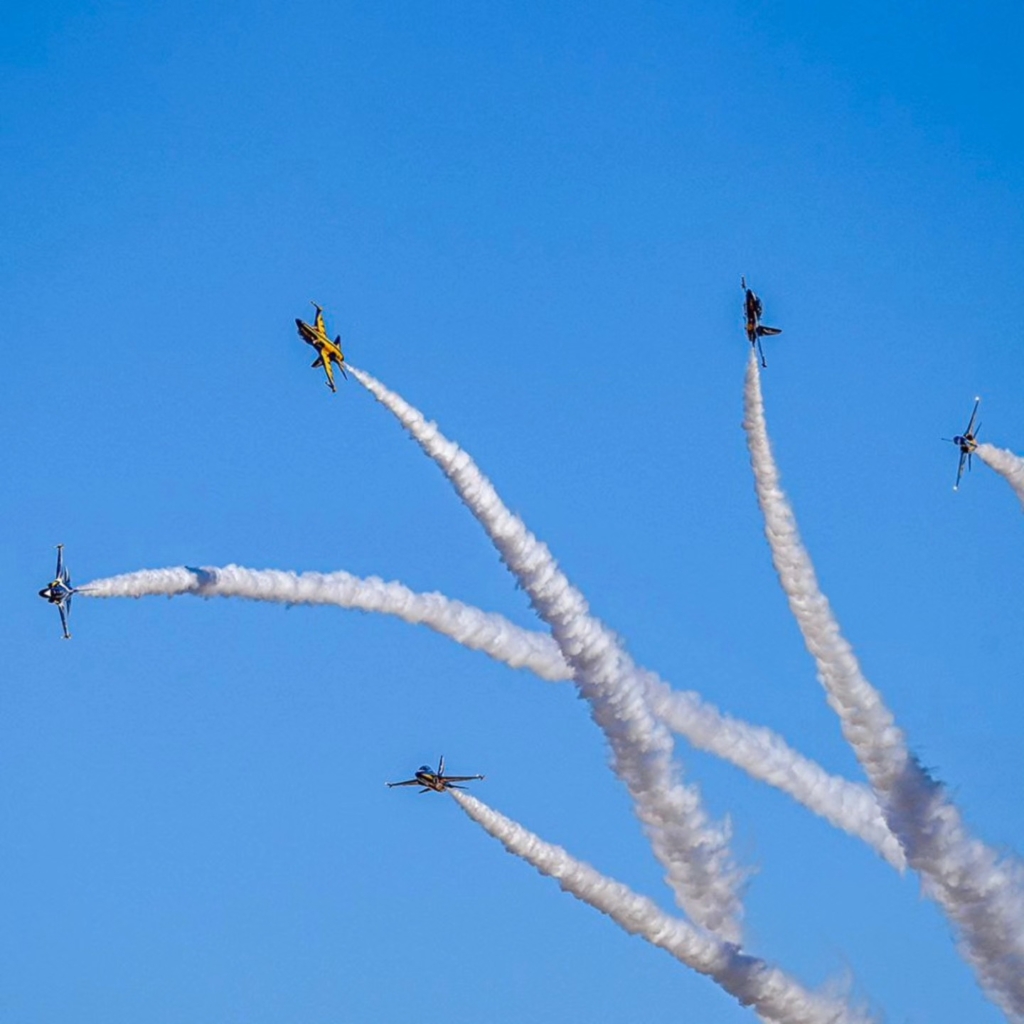
The T-50B is powered by a General Electric F404 engine and shares its lineage with the FA-50 light combat aircraft, which has been exported to multiple air forces worldwide.
Overseas displays by the Black Eagles are therefore closely watched, not just for their flying precision, but for what they signal about South Korea’s aerospace capabilities.
At World Defense Show, the team is expected to fly a full display programme featuring more than 20 manoeuvres, combining tight formations with aggressive vertical profiles designed to highlight both pilot skill and aircraft performance.
Why the World Defense Show matters for South Korea’s defence industry
The Middle East has become an increasingly important target for South Korea’s defence industry. Saudi Arabia’s capital, Riyadh, the host of World Defense Show, is investing heavily in defence modernisation and localisation, while the wider region continues to diversify its supplier base.

Although the Black Eagles’ role is ceremonial rather than commercial, their presence serves as a high-profile statement of intent. Airshow appearances have long been used by exporting nations to reinforce political relationships and showcase industrial credibility alongside formal negotiations.
Missing Dubai was therefore more than a symbolic setback. Attending Riyadh restores a key element of South Korea’s defence diplomacy calendar.
T-50 and FA-50 range limits back in the spotlight
The episode has also refocused attention on the operational limits of the T-50 and FA-50 family.
KAI has acknowledged the need for greater range and endurance and is working on several options, including an air-to-air refuelling probe for future FA-50 variants, a larger external centreline fuel tank and a proposed single-seat configuration that replaces the second cockpit with additional fuel volume.

While these upgrades are aimed primarily at operational users, the Black Eagles’ dependence on refuelling stops underscores why endurance remains a critical factor for customers evaluating light combat aircraft.
Japan’s refuelling approval signals reset with South Korea
Allowing the Black Eagles to refuel at a Japan Air Self-Defence Force base represents a deliberate effort to lower tensions after the Dokdo-related dispute and prevent future friction from disrupting defence engagement.
The Okinawa stop is also expected to include an exchange with Japan’s Blue Impulse aerobatic team, adding a layer of symbolism to what might otherwise be seen as a routine refuelling halt.
Sign up for our newsletter and get our latest content in your inbox.


More from


August 16, 20265 min read


