


Dassault Rafale vs Tejas MkII: Where should India invest for air dominance?

India stands at a critical juncture in its defence modernisation. The Indian Air Force (IAF) currently operates just 31 fighter squadrons against a sanctioned strength of 42, creating a sharp capability deficit at a time of heightened tension with both China and Pakistan.
Two paths now present themselves: scaling up investment in the indigenous Tejas MkII programme, or deepening reliance on Dassault’s Rafale fighters through a new round of procurement under the Multi-Role Fighter Aircraft (MRFA) tender. Each option carries distinct advantages, risks and long-term implications for India’s airpower and strategic sovereignty.
Dassault Rafale: Capability, cost and readiness for the Indian Air Force
India has already invested heavily in the Rafale. The 36 aircraft contracted from France in 2016 are fully operational at Ambala and Hasimara, supported by established infrastructure, simulators, hangars and supply chains. Pilots and ground crews are trained, and both the Air Force and Navy are moving towards commonality with an order for 26 Rafale-Marine jets for carrier operations.
On 3 October, Air Chief Marshal A P Singh confirmed that 114 additional Rafales are under consideration, describing the aircraft as “easy to absorb” given India’s existing ecosystem. Starting a new competition would reset the procurement clock and delay induction by several years, time the IAF does not have.

In late 2025, Dassault and Tata Advanced Systems confirmed plans to begin manufacturing Rafale fuselages in Hyderabad, the first time this has been done outside France, under expanded Make in India commitments. Meanwhile, reports suggest India may pursue a government-to-government route for the MRFA procurement, expediting delivery of 114 aircraft without a full open tender process.
The Rafale’s combat credentials are undisputed. Its Thales RBE2 AESA radar, combat-proven Meteor beyond-visual-range missile, SCALP cruise missile and advanced electronic-warfare suite have all seen operational use in Libya, Mali and Syria. With a maximum take-off weight of 24.5 tonnes and a payload capacity of 9.5 tonnes, it can carry more weapons than any Tejas variant.
However, capability comes at a cost. Analysts estimate each Rafale built in India under “Make in India” terms could exceed $150 million, roughly on par with the fifth-generation F-35, despite Rafale being a 4.5-generation fighter. The MRFA’s projected 114 jets could therefore total more than $24 billion, delivering just six squadrons of 18 aircraft each.
Tejas MkII fighter jet: India’s push for sovereignty and self-reliance
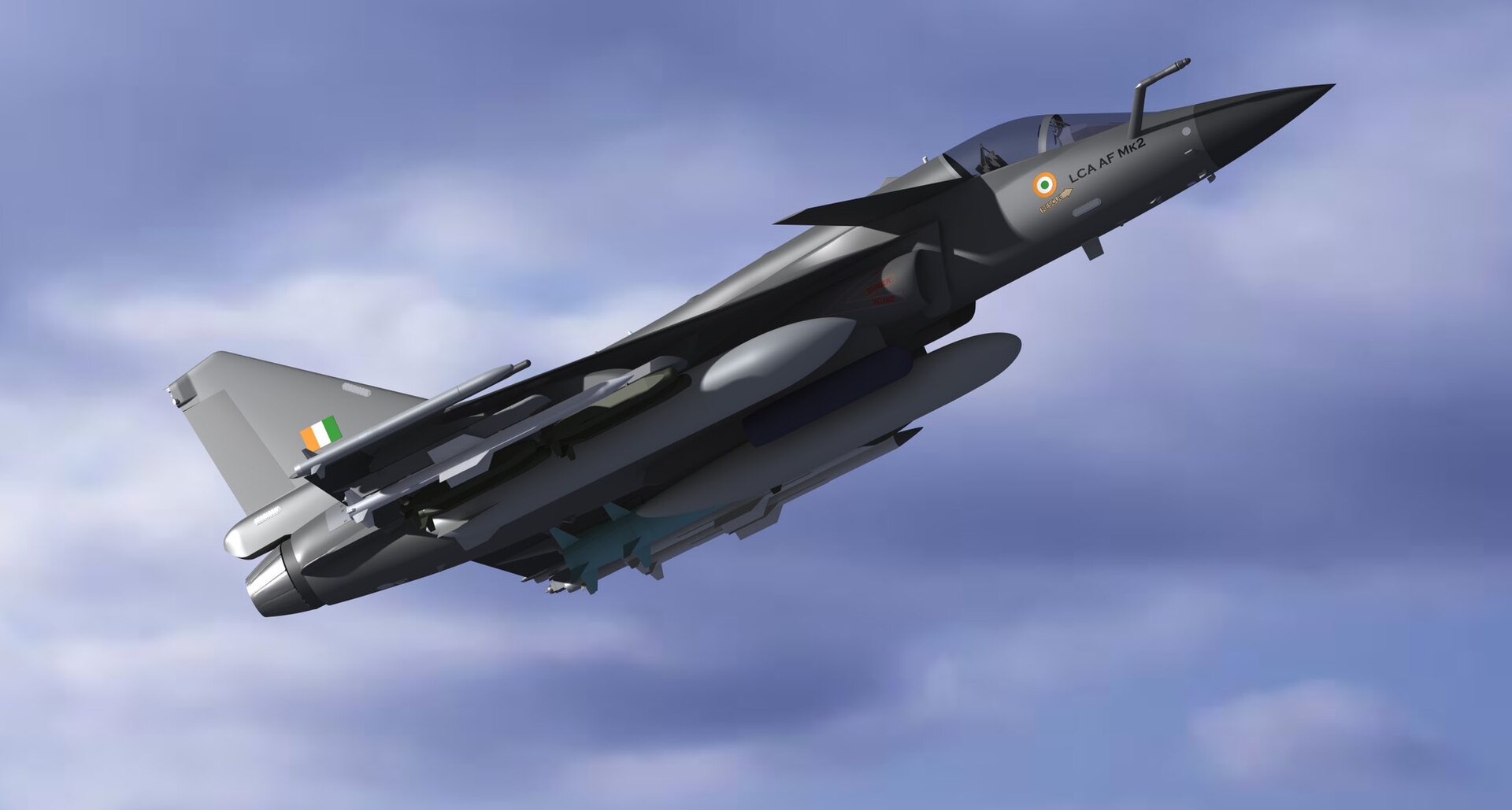
The Tejas MkII, designed by the Aeronautical Development Agency (ADA) and built by Hindustan Aeronautics Limited (HAL), represents India’s bid for self-reliance. This medium-weight fighter has a projected take-off weight of 17.5 tonnes and is powered by the GE F414 engine producing 98 kN of thrust. With a combat range of 2,500 km using external tanks and a payload of 6.5 tonnes, it is intended to replace the Jaguar, MiG-29 and Mirage 2000 fleets.
Now in the prototype stage, the first flight is expected by the end of 2026. Crucially, its cost per aircraft is estimated at $70–80 million — less than half that of Rafale. For the $24 billion earmarked for the MRFA, India could potentially acquire 250 Tejas MkIIs, creating 12 or 13 squadrons instead of six.
Technologically, the Tejas MkII incorporates India’s indigenous Uttam AESA radar, featuring more than 900 gallium-nitride (GaN) modules. Analysts say it offers greater power efficiency, detection range beyond 200 km and improved jamming resistance compared to Rafale’s gallium-arsenide (GaAs) radar. Dassault plans to introduce comparable GaN radar technology only in its Rafale F5 variant around 2033 — potentially giving Tejas an edge in this area.
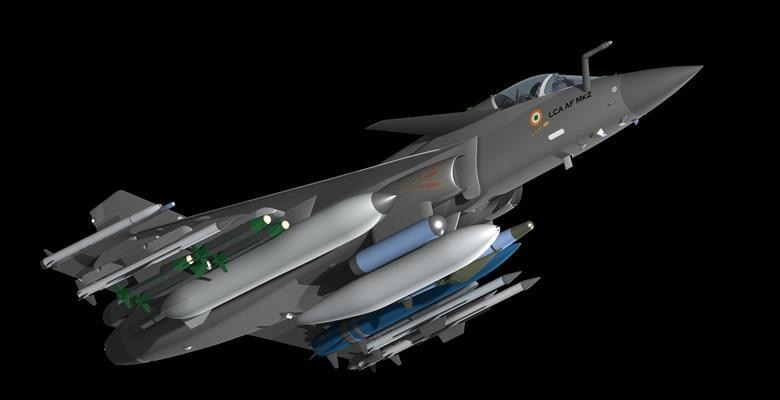
The MkII is designed to carry Astra Mk2 and Mk3 long-range missiles, the Rudram anti-radiation missile and the BrahMos-NG supersonic cruise missile. As DRDO chief Dr Ravi Shankar has emphasised, such indigenous integration gives India full autonomy over its combat systems without foreign approval requirements.
Tejas MkII cockpit design and pilot-centric technology
The Tejas MkII also rethinks the pilot interface. Its modern cockpit replaces many manual buttons and switches with touch panels and a large-area display, allowing pilots to manage systems and targets with fingertip precision.
Dual ergonomic joysticks control throttle and stick functions, enabling faster reactions in combat. A senior IAF official explained that systems such as radar and weapons automatically activate as needed, allowing pilots to focus on tactics rather than workload — a vital advantage in high-intensity engagements.
Beyond ergonomics, the MkII represents a wholesale evolution over the MkI and MkIA, combining increased range, payload, and sensor fusion with lower maintenance requirements.
Fighter jet engines and technology transfer in India’s defence industry
Both aircraft grapple with the question of propulsion. The Rafale’s Snecma M88 engine is entirely French, keeping India reliant on Dassault and Safran for spares and upgrades.
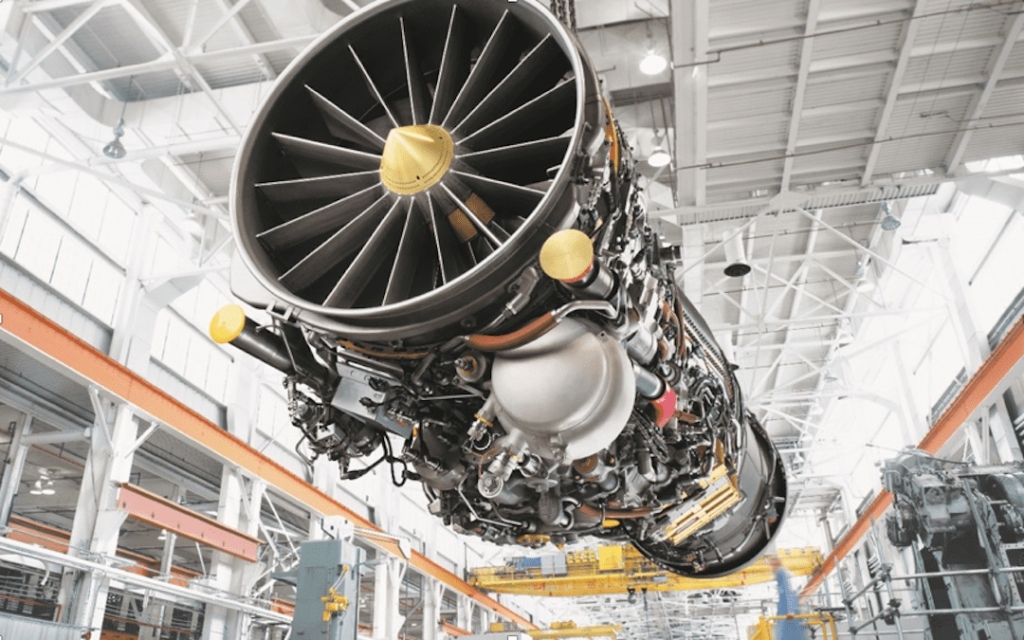
By contrast, the Tejas MkII will use the GE F414-INS6 engine under a landmark agreement transferring 80 per cent of the technology to India. Over 240 engines will be manufactured in Bengaluru, including advanced hot-section technologies such as crystal blades and coatings. While not eliminating dependence on U.S. supply chains, it represents a major step toward localisation.
In parallel, India and Safran are co-developing a 120–140 kN engine for future AMCA stealth fighters. Success here could eventually power Tejas successors and further reduce foreign reliance.
However, even with 80% technology transfer for the F414-INS6 engine, key components, including certain alloys and electronic subsystems, will continue to depend on U.S. supply chains. This partial dependence highlights why India’s parallel engine co-development project with Safran remains strategically vital.
Tejas MkII production, exports and economic impact for India
While Rafale provides assured capability today, every rupee spent on imported aircraft leaves the domestic economy. A scaled-up Tejas MkII programme would circulate billions within India’s aerospace ecosystem, sustaining HAL, hundreds of MSMEs, and thousands of skilled jobs.
Defence Minister Rajnath Singh has linked such efforts to the vision of Atmanirbhar Bharat. Analysts note that if scaled, the Tejas could form the basis for exports to Southeast Asia, Latin America and Africa, turning India from buyer to supplier.
The Parliamentary Standing Committee on Defence has warned, however, of HAL’s slow delivery record. The first Tejas Mk1A is due in 2026 — five years after contract signature — raising concerns that relying solely on Tejas might be risky in the short term. Nevertheless, India has placed a fresh $7 billion order for 97 LCA Tejas aircraft as the MiG-21 fleet retires.
Rafale vs Tejas MkII: the debate over India’s airpower modernisation
Pro-Rafale advocates argue that India faces immediate threats and cannot wait until the 2030s for Tejas MkII squadrons. “Numbers are important,” one analyst noted, “but proven capability today is priceless when adversaries are inducting stealth platforms at speed.”

Tejas supporters counter that sovereignty cannot be achieved through perpetual imports. As DRDO’s Dr Ravi Shankar put it, “The Tejas Mk-II will match the capabilities of the French Rafale fighter jet — and may even surpass it in key areas.” Investing in Tejas, they argue, is not just about aircraft but about technological independence.
The IAF itself has taken a pragmatic line. Air Chief Marshal A P Singh acknowledges Rafale’s advantages but insists any deal must include indigenous weapons integration and technology transfer.
India’s fighter jet strategy: Balancing Rafale and Tejas MkII
India’s best solution may not lie in choosing one over the other. A hybrid strategy could balance short-term readiness with long-term sovereignty:
- Acquire a limited batch of Rafales to plug immediate operational gaps and maintain deterrence against China and Pakistan.
- Accelerate Tejas MkII development and guarantee production funding to rebuild squadron strength in the 2030s.
- Tie Rafale offset obligations to engine co-development and technology absorption within India.
Such a path would meet today’s security needs without sacrificing tomorrow’s independence. Rafale may guard the skies today, but Tejas may own them tomorrow.


