More than 120 US military aircraft head towards the Middle East as airpower surge intensifies

The US military buildup in the Middle East has ramped up significantly over the past 48 hours, with dozens of fighter jets, tankers, and those all-important AWACS aircraft crossing the Atlantic and heading east.
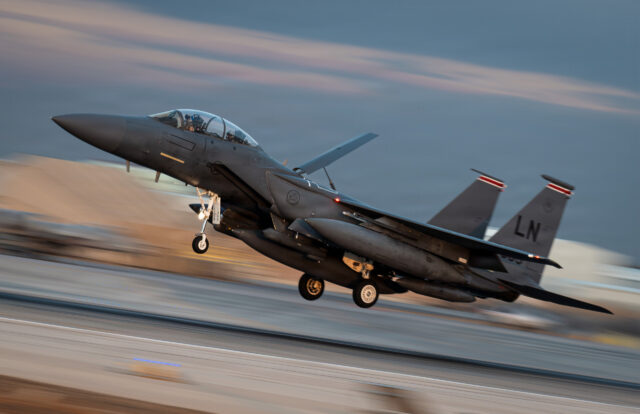
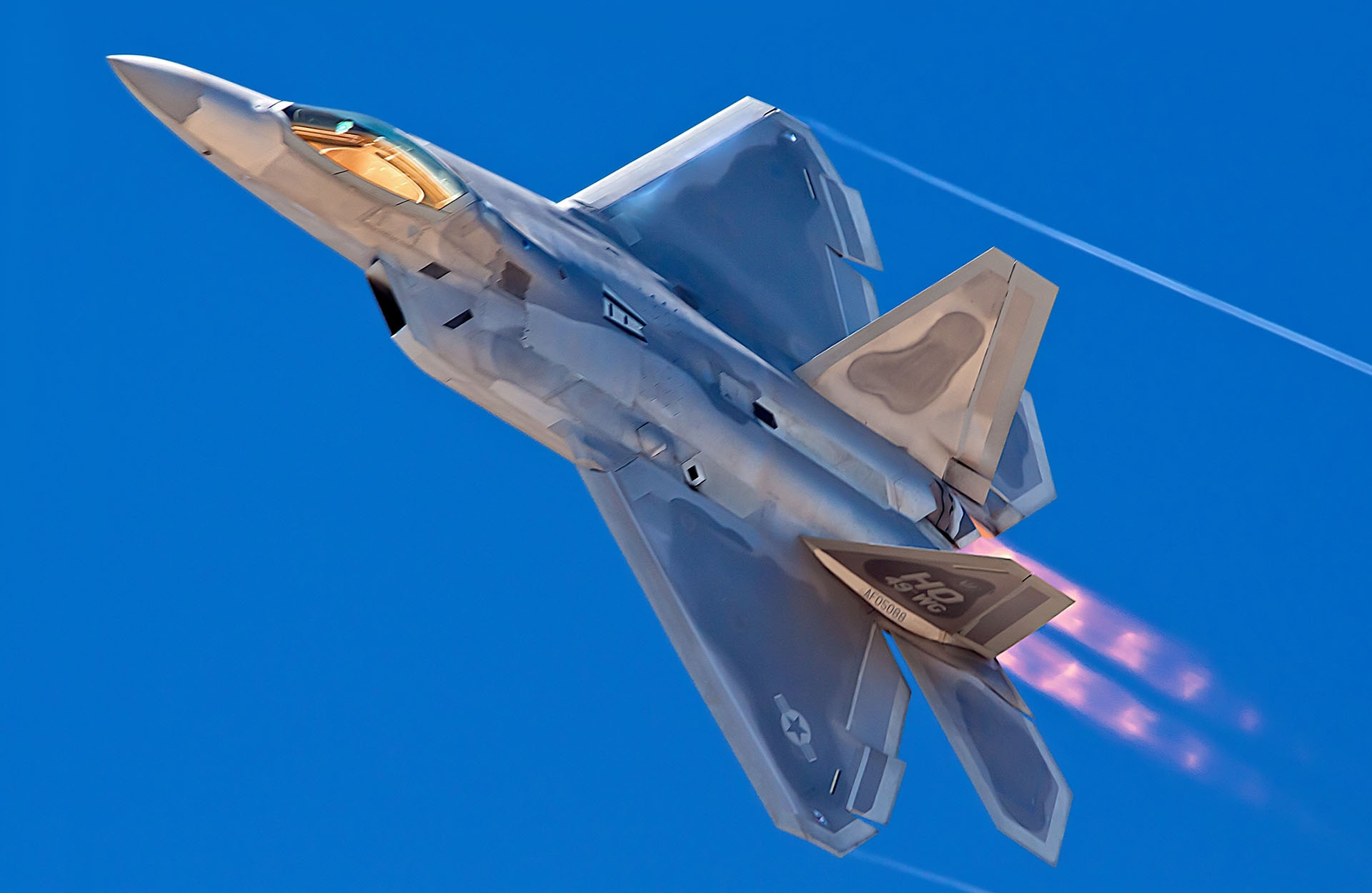
Over 120 aircraft crossed the pond in the space of a couple of days. Four dozen F-16s, three squadrons of F-35As and 12 F-22 Raptor stealth fighters.
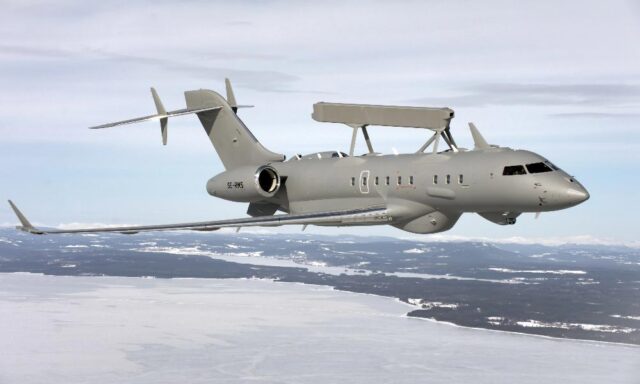
Accompanying this huge deployment of firepower is a massive flotilla of tankers – reportedly more than 40 KC-46 and KC-135. Providing eyes in the skies are at least six E-3G Sentrys.
🚨Alert: War is Coming! Massive movement of aircraft to US Bases in Europe and the Middle East in the past 48 hrs:
— US Homeland Security News (@defense_civil25) February 18, 2026
🔺48 x F-16
🔺12 x F-22
🔺18 x F-35A
🔺6 x E-3G Sentry
🔺1 x E-11A BACN
🔺40 x KC-46A or KC-135 Tankers
US and Israel are preparing for the next War with Iran!! pic.twitter.com/wqvl9rCO4i
Although most aircraft are still in transit or stopped off at points along the route to the Middle East, the consensus in the OSINT community is that this is indeed the final destination.
USAF F-22 Raptors arrive in the UK at RAF Lakenheath
Late in the day yesterday, Tuesday 17 February, a squadron of US Air Force F-22s arrived at RAF Lakenheath in the UK. The air force base has previously hosted the F-22 ahead of Middle East deployments, and it seems the same is taking place again.
However, not all has gone to plan. The F-22 cannot cross the Atlantic without refuelling en route. Multiple tankers would have supported the six F-22s that have arrived at Lakenheath to make the crossing.
An additional six F-22s were due to join their fleet-mates in the UK today. They took off from Langley AFB earlier today, but had to turn back due to a tanker suffering an electrical fault. Reports suggest the same thing happened yesterday, and that the squadron is planning to try again tomorrow.
✈️⚠️ The 6 remaining F-22s at Langley expected to fly to RAF Lakenheath are turning around, due to tankers' "electrical issues".
— MenchOsint (@MenchOsint) February 18, 2026
There was also such issue yesterday, they will try again tomorrow. (ACARS Messages via @thebaldgeek site) https://t.co/r2FHWoqbSZ pic.twitter.com/cm99MSbmMh
The role of stealthy, fast jets like the F-22 is to clear the way for the bombers to move in. As of yet, no bomber activity has been reported.
Additional E-11A BACN deployed to the Middle East
A fourth Northrop Grumman E-11A BACN, tail 22-9046, is set to transit via Ramstein Air Base to the Middle East, joining three already at Prince Sultan Air Base.
BACN aircraft are not numerous. The USAF operates a very small fleet. Deploying four into one operational area represents a significant concentration of capability.
A USAF E-11A Battlefield Airborne Communications Node (BACN) appears to be on its way to Europe, currently tracking eastbound over the North Atlantic from the U.S. pic.twitter.com/xBwqyf14Ma
— OSINT Spectator (@osint1117) February 17, 2026
The E-11A acts as an airborne communications gateway, translating between incompatible datalinks and relaying voice and data across the battlespace.
In a potential Iran scenario, multiple BACNs enable persistent, redundant connectivity, linking F-22s, F-35s, naval assets and command centres. It signals preparation for sustained, network-centric air operations rather than routine patrol activity.
KC-135 tankers become FlightRadar’s most tracked aircraft
Almost as notable as the huge deployment that is currently taking place is the level of public interest in the activity.
Popular flight tracking website Flightradar24 noted today that the bulk of its ‘most tracked’ flights were made up of US military KC-135 tankers.
The top nine most tracked aircraft on Flightradar24 right now are US military Boeing KC-135R Stratotankers. pic.twitter.com/9t3ExwfJES
— Flightradar24 (@flightradar24) February 18, 2026

Tankers are the quiet backbone of US airpower. Fighters, bombers, ISR aircraft and even transports depend on them to extend range, increase time on station and operate from safer bases further from the threat.
A spike in tanker sorties almost always suggests the preparation of a significant operation.
What the deployment of the U-2 Dragon Lady means
At least one Lockheed U-2 Dragon Lady appears to be repositioning towards the Middle East. Early yesterday morning, a US Air Force U-2 departed RAF Fairford and routed southeast, with tracking indications suggesting a move into the CENTCOM area of responsibility.
08:13 DRAGON 51 USAF U-2/s Dragon Lady
— Andy (@Andyyyyrrrr) February 17, 2026
Departed from RAF Fairford to relocate downrange/to the Middle East.#DRAGON51 wkg Swanwick 135.150 (No Mode-S) pic.twitter.com/bz693H42cB
This high-altitude surveillance aircraft would be essential to any strike against Iran.
Flying at altitudes over 70,000 ft, it can gather detailed imagery and signals intelligence deep inside contested airspace, providing critical information directly to battle managers.
Potentially more important than that, the U-2 has been proven to be competent at networking the F-35 with the F-22, delivering information from the F-22’s advanced sensors directly to the Lightning II, bypassing their otherwise incompatible datalinks.

Moreover, the U-2 is a communications hub, relaying information between air, ground and naval assets in real time. Any strike operation would almost always have a U-2 or a similarly capable platform deployed high above the battlefield.
Could a US strike on Iran happen soon?
One timeline that observers are now watching closely comes from June 2025. During Operation Midnight Hammer, there were four days between F-22 Raptors departing Langley and B-2 Spirit bombers launching for the strike phase.
Some analysts have noted the parallel and are tracking whether a similar sequence unfolds this time. However, no B-2s or other USAF bombers have been publicly observed deploying.

Until long-range strike aircraft begin moving, there is no clear outward indicator that kinetic action is imminent, despite the surge in fighters, tankers and enablers.
At the same time, the diplomatic track remains active. A second round of indirect US–Iran nuclear talks in Geneva has reportedly made limited progress on broad principles, with both sides agreeing to continue discussions.
Significant gaps remain, and US officials have reiterated that military options stay on the table. For now, the military build-up and the negotiations appear to be unfolding in parallel, suggesting calibrated pressure rather than confirmation of an impending strike.
Featured image: Lockheed Martin