


Inside Ukraine’s layered defence against Russian jet-powered drones

4 min read
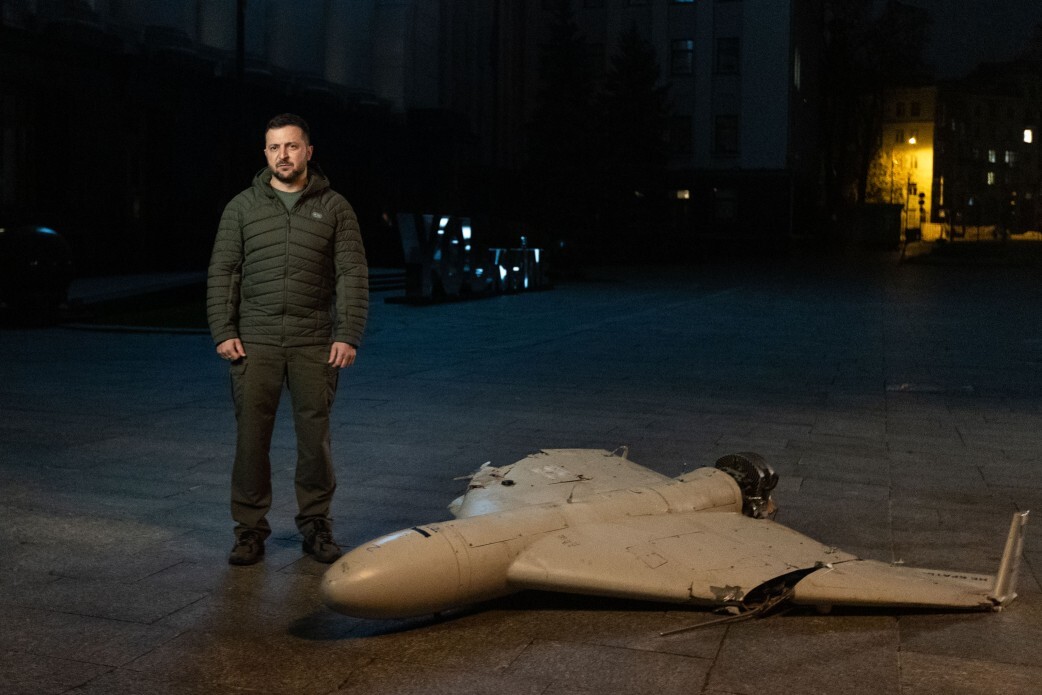
AGN recently reported that Russia’s one-way attack drone strikes have decreased in recent months relative to Ukraine’s. This has been partly due to Russia transitioning from slower piston-engine Geran-2 (Shahed) drones to faster jet-powered Geran-4 and Geran-5 drones.
Why the jet-powered Geran-4 drones are a problem for Ukraine
This has posed an issue for Ukraine’s air defence, as they are much more difficult for Ukraine’s interceptor drones to intercept. Ukraine is rapidly responding by expanding the range of systems able to intercept the fast drones.
At this stage, the rate of Ukrainian interceptions of Russian one-way attack munitions has decreased, although the rate remains substantial.
Ukraine’s interception rates are difficult to determine, as Ukraine stopped reporting the data, fearing it would provide useful information to Russia about its air defence strengths and gaps.
Ukraine is building new layers of air defense to counter evolving Russian drone threats. President Volodymyr Zelenskyy outlined three systems now being developed or deployed: interceptor drones, automated gun turrets and small missiles. The Bars interceptor is currently showing the best results among Ukraine’s interceptor drones, with a reported interception rate of about 30%. Ukraine and Germany plan to jointly produce 2,000 of them. Another layer is automated fire. Under the Turrets program, dozens of automated systems are planned for deployment at critical sites to defend them against aerial attacks. Ukraine is also developing small missiles as a cheaper and more scalable option against drones. The first results from this effort are expected in the second half of October. The logic: no single weapon can cover every threat. Ukraine is turning battlefield experience into a layered air defense of its own — adapting faster, scaling new weapons and building more ways to stop Russia’s evolving drone threat. #Ukraine #AirDefense #DroneWarfare #DefenseTech #UkraineWar
— Army Media 🇺🇦 (@armyinformcomua) October 5, 2026
Ukraine can’t afford to expend its high-end interceptor missiles, such as Patriots, on masses of cheap one-way attack drones. But there are various other systems that can be used.
For example, Ukrainian soldiers have been filmed intercepting jet-powered drones with MANPADS. These are proving effective, but it does raise at least a moderate cost-exchange question.
An impressive layered air defence system
Ukrainian Defence Minister Yevhenii Khmara has reported successful results from the deployment of interceptor drones to counter jet-powered drones. He also said that Ukraine has hundreds of heavy-calibre turrets that are also being deployed to counter the drones.
During a meeting with journalists, Ukrainska Pravda reported he said, “Ukraine is already achieving successful results using interceptor drones against jet-powered unmanned aerial vehicles. One unit destroyed five aerial assets using five [Bars] interceptors during a combat operation. That’s a 100% success rate.”
Ukraine’s Army Media suggested a week ago that the reported Bars interception rate is around 30%.
First published footage of a russian jet Geran-4 killed by a Vampire system of Ukraine’s 208th Anti-Aircraft Missile Brigade. Rocket-based short range air defense, that was the answer all along. https://t.co/GQPjrMFVGa
— Dimko Zhluktenko 🇺🇦⚔️ (@dim0kq) October 13, 2026
The Defence Minister noted, “The use of heavy-calibre turrets against jet-powered UAVs is also getting results.”
It said, “Ballistic missiles remain a challenge for Ukraine’s air defence. At the same time, the enemy is increasingly using jet-powered drones that fly at speeds of around 400 km/h, reducing the time available to detect and intercept them.”
Meanwhile, the Ukrainian account, Dimko Zhluktenko, posted, “First published footage of a russian jet Geran-4 killed by a Vampire system of Ukraine’s 208th Anti-Aircraft Missile Brigade. Rocket-based short-range air defence, that was the answer all along.”
RFE/RL takes apart a Russian Geran-4 drone to uncover what makes the jet-powered unmanned aerial vehicle (UAV) faster, harder to intercept, and capable of operating deep inside Ukraine — from its turbojet engine and advanced camera to foreign-made communications and navigation components. @cxemu @radiosvoboda
— Radio Free Europe/Radio Liberty (@RFERL) September 25, 2026
The L3Harris Vampire system fires low-cost 70mm laser-guided rockets like the APKWS II.
September’s claimed Ukrainian interceptions of Russian air targets
Yesterday, the Ministry of Defence of Ukraine stated its air defence has destroyed over 4,700 drones and missiles during the month of September. It says more than 48,000 tactical-level drones were also neutralised. AGN can not verify these numbers.
Air defence is achieved through a layered system that includes aviation (e.g., F-16s, MiG-26s, Yak-52s, helicopters), surface-to-air missile forces (e.g., Patriot, IRIS-T, NASAMS), electronic warfare, unmanned systems units (e.g., interceptor drones), and mobile fire groups.

Fighter jets like F-16s and MiG-29s can intercept Geran-4 drones both with guided rockets and with their autocannon.
At this stage in the war, the Ukrainian Air Force is primarily focused on air defence. Of the roughly 1,600 sorties it conducted, around 1,300 were related to air defence, while 250 were offensive strikes against Russian targets and in support of Ukrainian ground forces.
Sign up for our newsletter and get our latest content in your inbox.


More from


October 13, 20263 min read

October 13, 202612 min read

October 13, 202612 min read




