


Turkey to provide airborne surveillance for all 60 hours of NATO’s Ankara summit: here’s how

4 min read
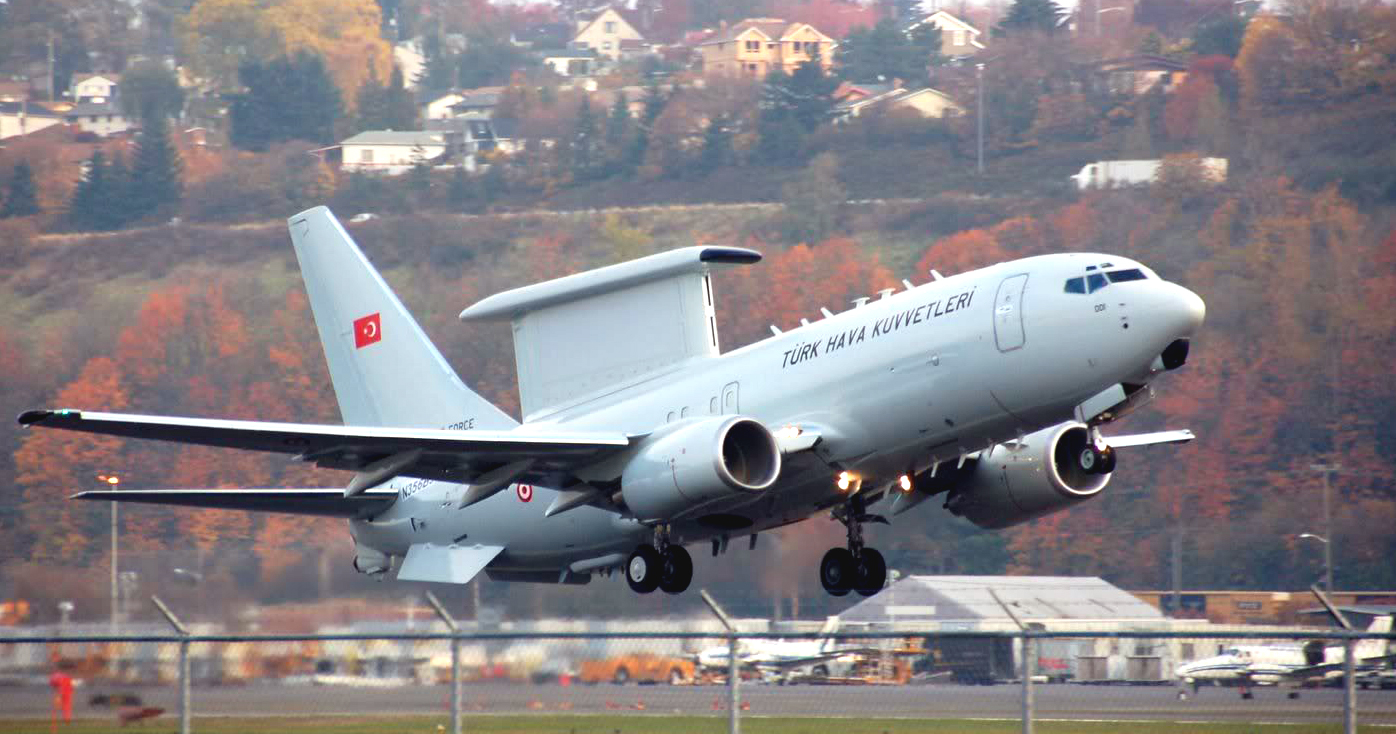
Türkiye is putting its Boeing E-7T Peace Eagle airborne early warning and control aircraft at the centre of NATO summit security, using the 737-based surveillance platform to maintain continuous coverage during the alliance’s 36th summit in Ankara.
The Turkish Air Force aircraft will conduct 11 sorties across a 60-hour period, monitoring Turkish airspace, providing early warning and helping identify any unknown aircraft approaching the country while NATO leaders and delegations gather in the Turkish capital.
The operation gives Türkiye a high-profile opportunity to demonstrate one of its most important airborne command-and-control assets. While often described in simple terms as an AWACS aircraft, the Peace Eagle is a more modern AEW&C platform, built around a Boeing 737 airframe and equipped to track airborne and maritime targets while sharing data with commanders and other forces in real time.
Turkish Peace Eagle aircraft to secure NATO summit airspace
According to Anadolu, the E-7T aircraft will operate from the 3rd Main Jet Base Command in Konya, the main operating base for Türkiye’s Peace Eagle fleet.
Maj Fatih Kulak, an AEW&C mission crew commander, said the aircraft would be used to monitor Turkish airspace during the NATO Summit, provide early warning and support the identification of any unidentified aircraft approaching the country.
He said the aircraft would patrol over the Black Sea region on Tuesday, monitoring potential threats and reporting them to the relevant authorities.
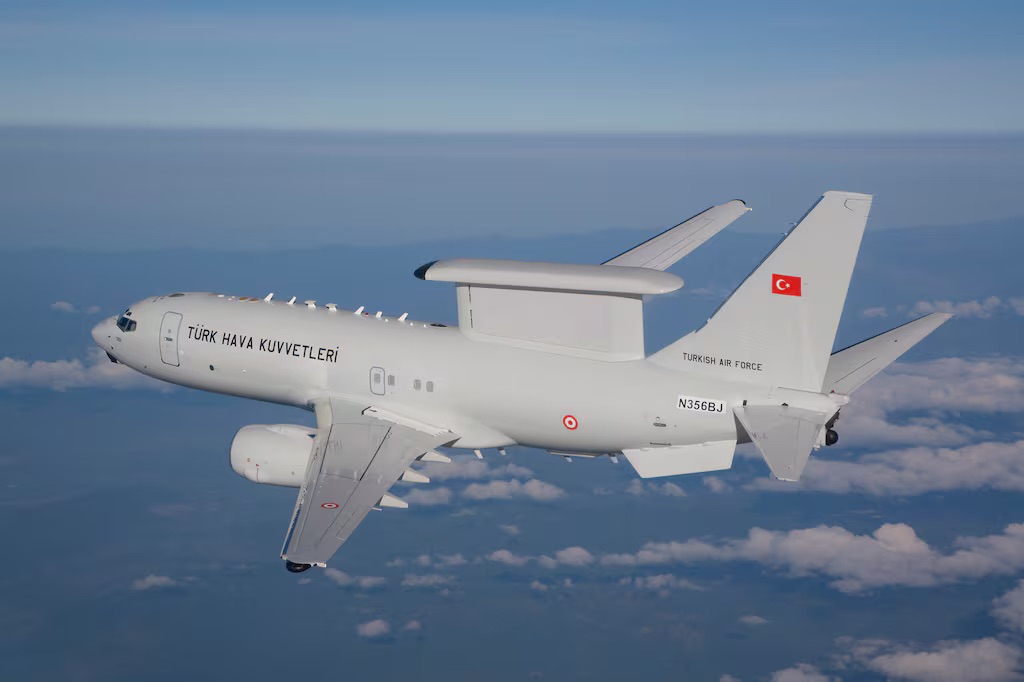
The 60-hour operation will be conducted through 11 sorties, allowing the Turkish Air Force to maintain an uninterrupted airborne surveillance mission throughout the summit period. Kulak said one of the flights would be conducted with a crew of 15 and was expected to last around eight and a half hours, with crews prepared for extensions if required.
What is Türkiye’s E-7T Peace Eagle aircraft?
The E-7T Peace Eagle is Türkiye’s version of Boeing’s 737 airborne early warning and control aircraft family.
It is based on the Boeing 737-700 and uses a fixed, electronically scanned radar mounted above the fuselage, rather than the rotating radar dome associated with older AWACS aircraft such as the Boeing E-3 Sentry.
That distinctive radar installation gives the aircraft its characteristic blade-like profile. It also reflects the shift in airborne early warning from mechanically rotating radar dishes to electronically scanned arrays capable of tracking multiple targets and supporting command-and-control missions.
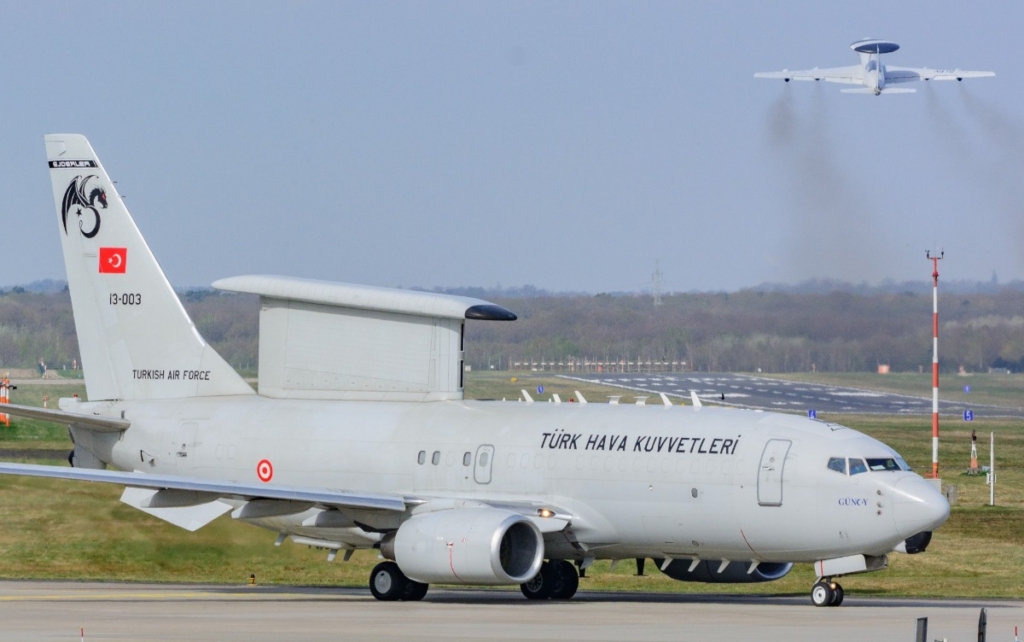
Türkiye’s aircraft are equipped with active and passive sensors, allowing them to detect and identify targets in the air and at sea. The aircraft can transmit information to ground operations centres, other aircraft and naval units, giving commanders a wider and faster view of the airspace around the summit.
In practical terms, Peace Eagle acts as a flying command post. It is not there simply to “watch” the skies. It helps build the recognised air picture, supports identification of unknown tracks and enables air defence forces to respond in a coordinated way if required.
Why Peace Eagle matters to NATO
The NATO Ankara summit comes at a time when the alliance is placing renewed emphasis on air defence, industrial resilience, deterrence and support for Ukraine. Against that backdrop, Türkiye’s use of the E-7T is more than a national security measure. It is also a demonstration of an allied airborne surveillance capability that remains highly relevant to NATO operations.
Peace Eagle aircraft have already supported national and international missions, including counterterrorism operations, exercises and NATO-assigned air surveillance tasks over European airspace. Kulak said Turkish crews have operated with NATO naval forces in regions including the Eastern Mediterranean and the Baltic Sea.
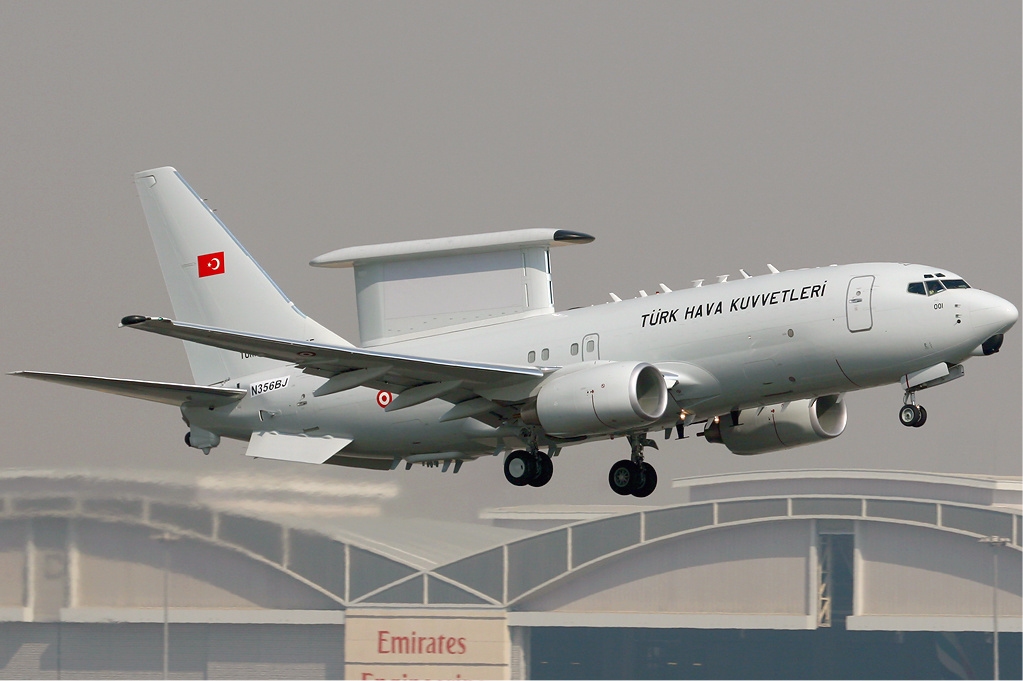
AEW&C aircraft sit at the centre of modern air operations. Fighters, ground radars, air defence units and naval forces all generate data, but that information has to be fused, shared and acted on quickly. Aircraft such as the E-7T help turn individual sensors into a wider operational picture.
For NATO, the summit security mission underlines the importance of airborne early warning at a moment when the alliance is reassessing its own long-term surveillance fleet. NATO’s ageing E-3A AWACS aircraft are approaching the end of their service lives, while several allies are turning towards newer 737-based E-7 variants.
Türkiye’s Peace Eagle operation in Ankara carries a message beyond summit security. It shows how a modern AEW&C aircraft can provide persistent surveillance, command-and-control support and alliance-ready airspace monitoring during one of NATO’s highest-profile gatherings.
Featured image: Seattle Aviator / Wikimedia


