


SUHPA brings its award-winning pedal-powered aircraft to Farnborough Airshow

4 min read
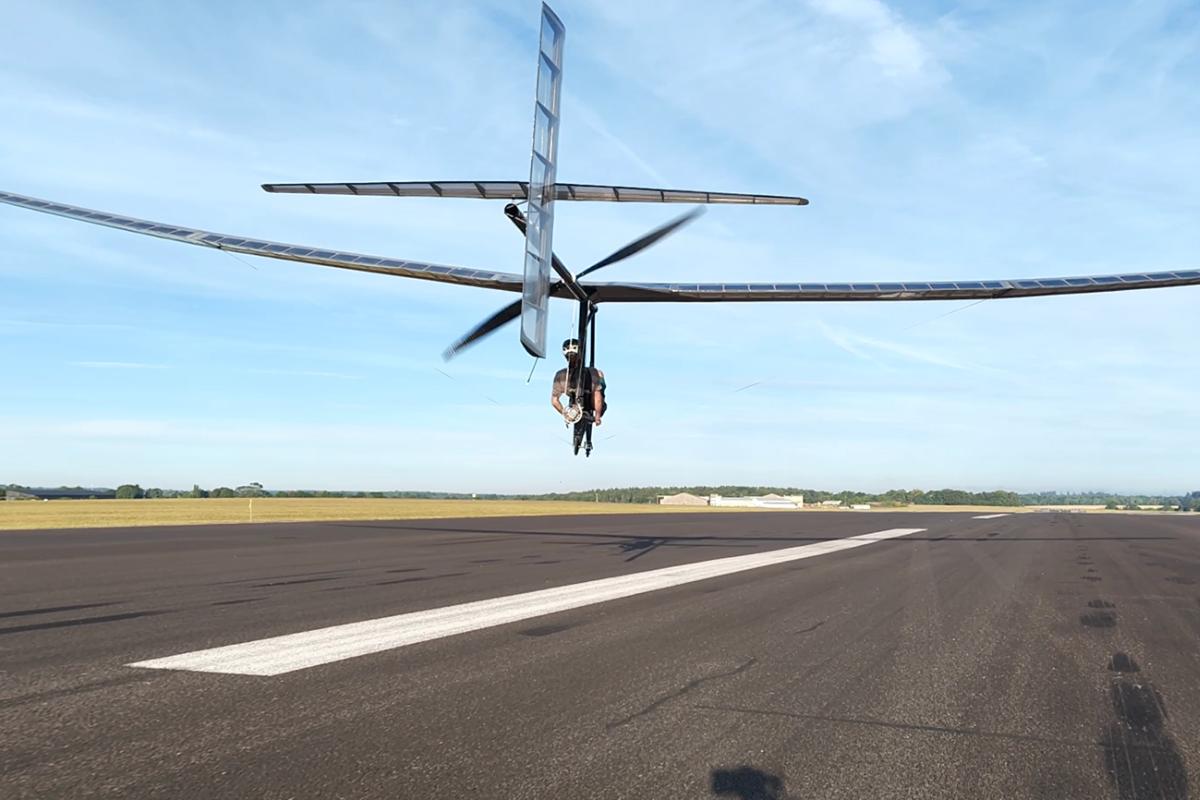
A pedal-powered aircraft designed, built and flown by University of Southampton students has arrived at the Farnborough International Airshow fresh from a double victory at the 2026 Icarus Cup.
The Southampton University Human Powered Aircraft Society (SUHPA) won the competition’s two principal awards after nine days of flying at Lasham Airfield in Hampshire.
Third-year aerospace engineering student Leith Bowman received the Icarus Cup as the competition’s leading pilot, while the team’s AeroLazarus aircraft secured the Roper Shield as the highest-scoring aircraft.
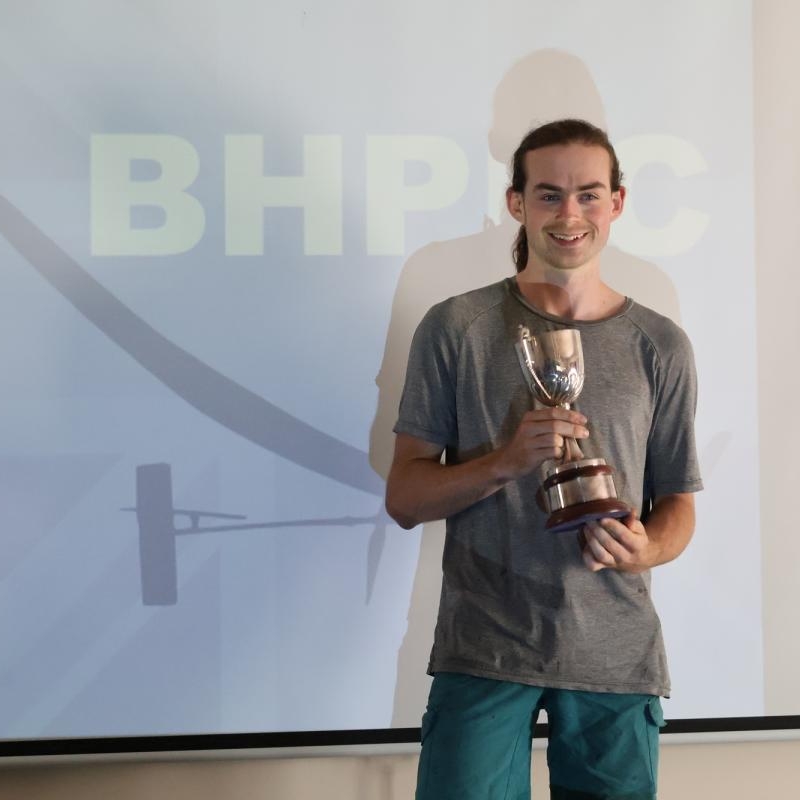
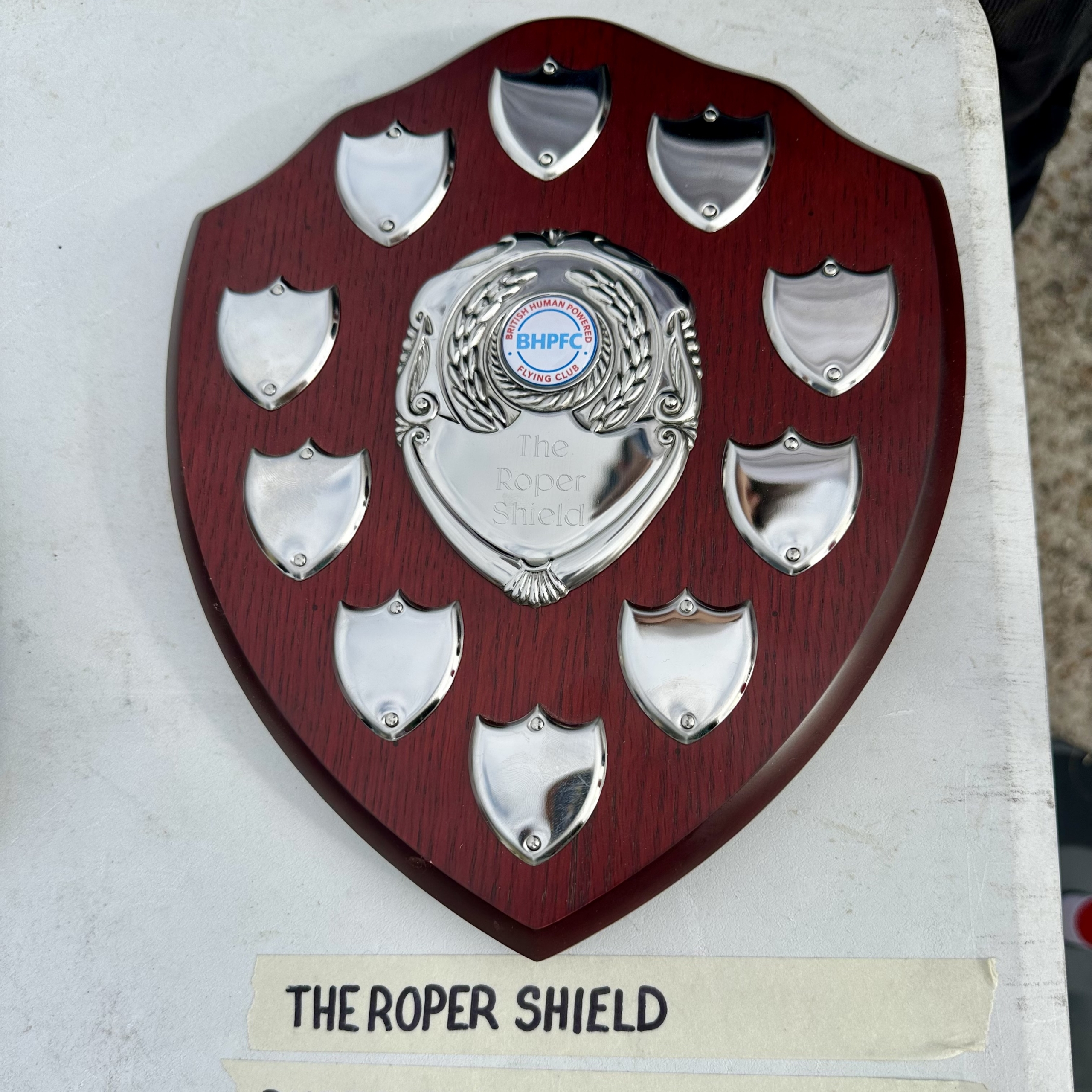
It is the first time SUHPA has won the Icarus Cup since the present-day society was established in 2018.
Six human-powered aircraft participated in this year’s competition, completing challenges intended to test endurance, speed and manoeuvrability. These included precision landings, unassisted takeoffs and a slalom course requiring pilots to cross the runway centerline repeatedly over 500 meters.
Flying AeroLazarus
AeroLazarus has a wingspan comparable to that of a business jet but weighs only around 40 kg. Its sole powerplant is the pilot, who drives a rear-mounted propeller through a bicycle-style pedal system.
Speaking to Aerospace Global News at Farnborough, SUHPA vice president James Denton said the aircraft requires maximum effort during takeoff before the pilot can ease back once established in flight.
“For takeoff, it is pedal as hard as you can,” he explained. “Then you can pull it back a little bit. If you stop pedalling, it glides, so that is basically how you land.”
Three ground crew members normally assist with the launch. Two keep the aircraft’s long, delicate wings level while another steadies and pushes the tail, helping it accelerate to around 10 mph. The pilot must then pedal the aircraft through to its flying speed of approximately 20 mph.
AeroLazarus flew the length of Lasham’s nearly mile-long runway during the competition and remained airborne for around two-and-a-half minutes. Denton said his flight exceeded Bowman’s endurance mark by one second, while Bowman secured the overall pilot’s title through his performance across the full range of challenges.

Bowman also completed an unassisted takeoff, during which the ground crew stabilises the wings but does not push the aircraft.
“Winning the cup was a great feeling of accomplishment, having spent hundreds of hours building the aircraft,” Bowman said. “The aircraft performed perfectly and came home in one piece, a first for our team.”
From Guy Martin to AeroLazarus
Although today’s aircraft has been extensively redesigned, parts of the project can be traced to an earlier University of Southampton human-powered aircraft built in 2011 and subsequently rebuilt for the television series Speed with Guy Martin.
That aircraft flew successfully in 2013 but did not break the world speed record. It was later placed in storage before the newly formed SUHPA group recovered its remains in 2018.

“We picked it up and have been modifying it ever since,” Denton said. “I think the last part of the Guy Martin aircraft came off it a year or two ago. The oldest part now is probably about six years old, which is the fuselage frame around the pilot.”
The structure is made predominantly from carbon fibre, foam and some fibreglass, minimising weight while providing the enormous wing area needed to fly on human power alone.
The project continues a much longer Southampton tradition. In November 1961, the university’s SUMPAC aircraft completed what is recognised as the world’s first human-powered flight involving an unassisted takeoff. The aircraft completed around 40 flights and is now displayed at Southampton’s Solent Sky museum.
SUHPA targets an English Channel crossing
AeroLazarus is also serving as a stepping stone toward SUHPA’s most ambitious project yet: returning a human-powered aircraft to the skies over the English Channel.
The crossing was last completed by a human-powered aircraft in 1979, when Bryan Allen flew the Gossamer Albatross from England to France.
SUHPA is developing a Channel-crossing aircraft with a proposed wingspan of around 32 meters. The team expects to replace AeroLazarus’ relatively heavy fuselage and add substantial wing extensions while keeping the overall weight close to that of the present aircraft.

Any attempt will be highly dependent on the weather. The aircraft’s crosswind limit is only around three knots, although it could tolerate a headwind of up to approximately eight knots if aligned directly with the nose.
Beyond competition trophies and record attempts, Denton believes AeroLazarus gives students something conventional university teaching cannot easily replicate: the opportunity to turn classroom knowledge into a real, flying aircraft.
“It’s a brilliant learning tool for aerospace students,” he said. “You actually get to build a proper aircraft.”
For the students of SUHPA, that means learning by designing, manufacturing, testing and, ultimately, taking to the skies in an aircraft powered entirely by human effort. And with the English Channel now in their sights, AeroLazarus could be the beginning of an even more remarkable chapter.


