


Spain arrests Plus Ultra airline executives in investigation into alleged laundering of Venezuelan funds

7 min read
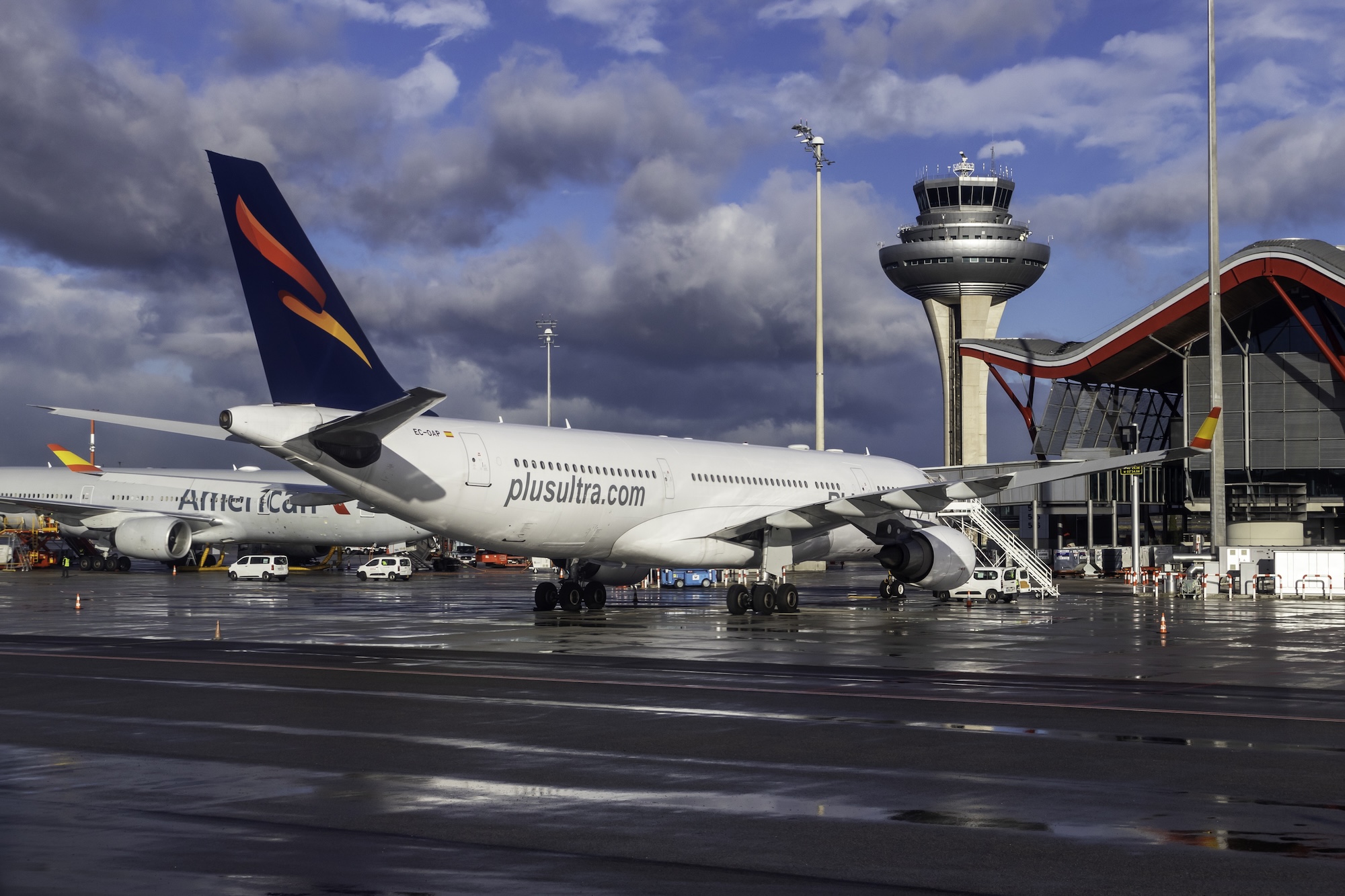
Spain’s long-running political row over the rescue of small long-haul carrier Plus Ultra has escalated into a full-blown criminal case, after police arrested the airline’s president and chief executive on suspicion of money laundering linked to Venezuela’s illicit gold trade and other corrupt schemes.
Plus Ultra executives arrested in probe of alleged money laundering
As reported by El País and other Spanish and Venezuelan news outlets, on Thursday, 11 December, officers from the National Police’s economic crimes unit, UDEF, entered Plus Ultra’s Madrid headquarters on orders from Investigative Court No. 15, detained company president Julio Martínez and CEO Roberto Roselli, and seized financial records.
Prosecutors now allege that part of the €53 million in COVID recovery aid the airline received in 2021 was used not to stabilise the company, but to launder embezzled Venezuelan public funds, including money traced to gold sales and the government’s CLAP food-box programme.
Julio Martínez is a co-founder of Plus Ultra, the airline’s president and the main Spanish face, previously linked to the failed carrier Air Madrid.
Roberto Roselli, the airline’s CEO, is one of the Venezuelan investors who helped keep the loss-making airline afloat through loans and capital injections.
The pair were detained on suspicion of money laundering as part of an investigation overseen by Judge Esperanza Collazos at Madrid’s Court No. 15. The case is under secreto de sumario (judicial secrecy), meaning formal charges and detailed evidence have not yet been made public.
Media reports emphasise that, at this stage, they are under investigation, not convicted, and both men are expected to appear before the examining judge to have their legal status clarified.
The controversial €53m Plus Ultra COVID bailout
Plus Ultra’s current legal troubles are inseparable from the controversy surrounding the 2021 public bailout that kept the airline alive during the pandemic.
On 9 March 2021, Spain’s government approved a €53 million rescue (€19m ordinary loan + €34m participative loan) from the Solvency Support Fund for Strategic Companies, managed by state holding SEPI. The justification was that Plus Ultra operated strategic long-haul routes connecting Spain with Latin America and parts of Africa.
From the outset, the decision was criticised by opposition parties PP and Vox, as well as the civil association Manos Limpias (Clean Hands), which questioned the company’s chronic losses, its small market share, and the prominent role of Venezuelan investors based in Panama in the airline.
Those complaints triggered a criminal case examining whether the bailout itself was an abuse of public funds. That investigation was closed in 2023 after a judge concluded there was no evidence that granting the airline aid constituted a crime and that procedural time limits had expired.
The new case switches focus from whether the government should have granted the rescue to how the airline allegedly used the money it received.
Prosecutors allege Plus Ultra used COVID aid to launder illicit money
The key shift came in October 2024, when Spain’s Anti-Corruption Prosecutor’s Office (Fiscalía Anticorrupción) filed a detailed complaint after receiving mutual legal assistance requests from France and Switzerland.
According to that complaint, summarised by Cadena SER and El País, prosecutors allege that Plus Ultra was a signatory and beneficiary of loan contracts with three companies described as part of a criminal organisation involved in trading Venezuelan gold.
These companies were already being investigated in France and Switzerland for laundering funds embezzled by Venezuelan public officials.
Spanish prosecutors describe the money as public funds from the CLAP programme—referring to the government’s subsidised food-box scheme (Comités Locales de Abastecimiento y Producción)—and sales of gold from the Venezuelan central bank obtained through opaque state gold operations that have been criticised and sanctioned internationally.
Plus Ultra allegedly took Spanish bailout money to clean Venezuelan loot
The crux of the allegation is that Spanish taxpayers’ money was used to “clean” Venezuelan loot. Before the bailout, Plus Ultra allegedly took loans from the Venezuela-linked companies. Shortly after receiving the €53m in public aid, the airline allegedly repaid the loans in rapid succession to foreign accounts held by the same companies in France, Switzerland, and elsewhere.
Prosecutors argue that this pattern suggests the aid was used as cover for repatriating illicit funds, effectively turning state rescue money into apparently legitimate repayments in the books of the Venezuelan network.
An order from Spain’s National Court summarised the alleged mechanism as loans that provided cover for transfers from Plus Ultra to the suspected criminal organisation after the airline received public aid.
El País further reports that investigators are examining a €30 million gold sale by one of the firms involved to a company in the UAE, as well as transfers to a Panama account, alongside purchases of luxury properties and watches allegedly used to obscure the origin of funds.
How the Venezuelan capital came to dominate Plus Ultra
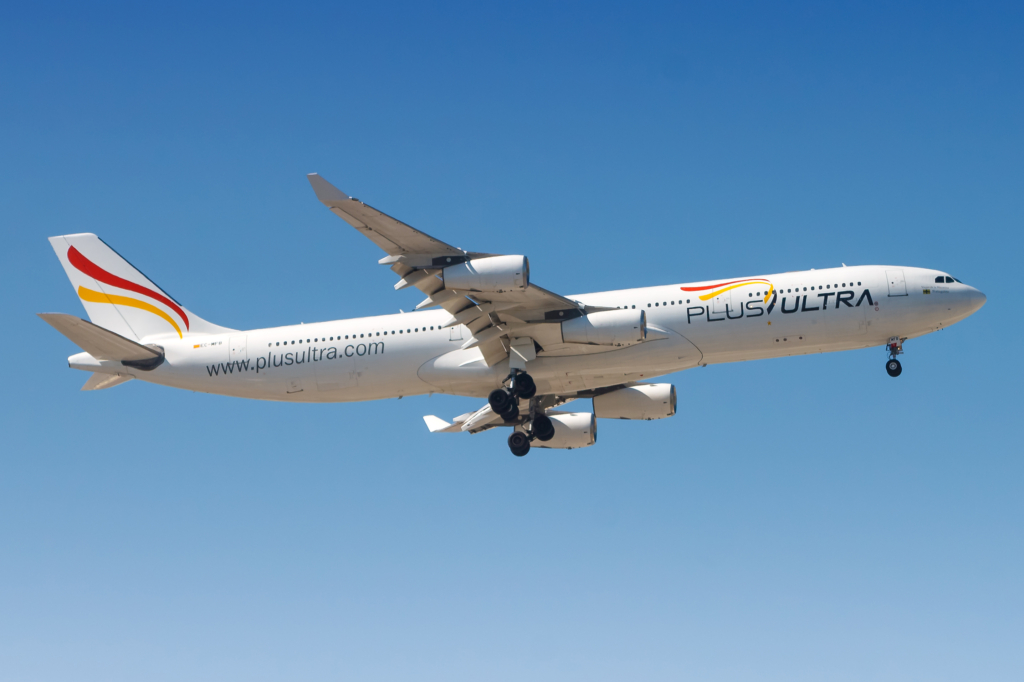
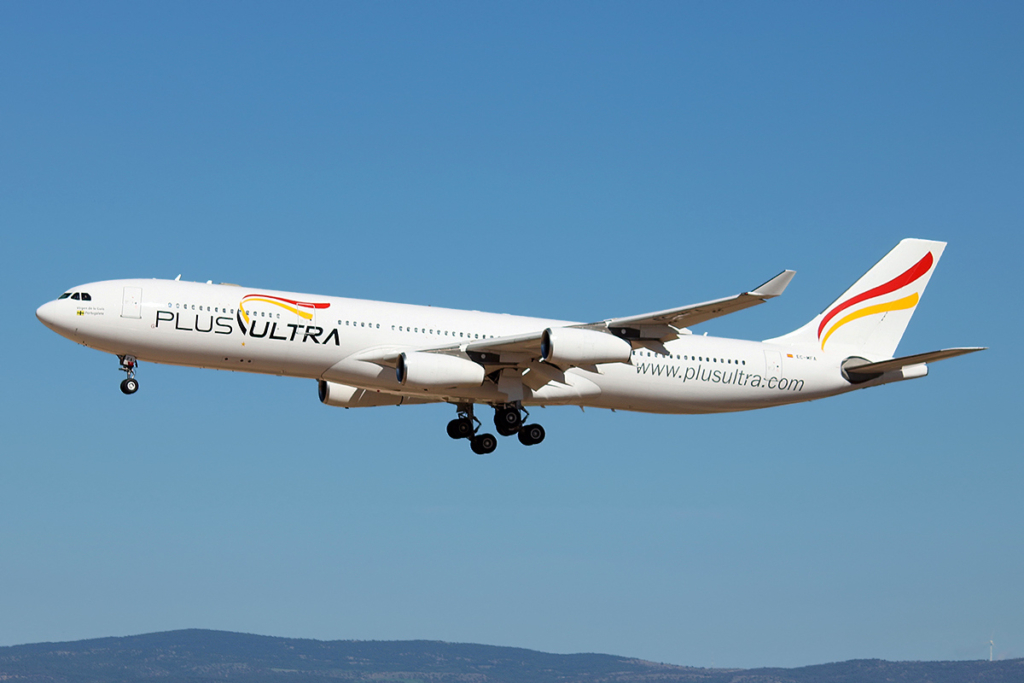
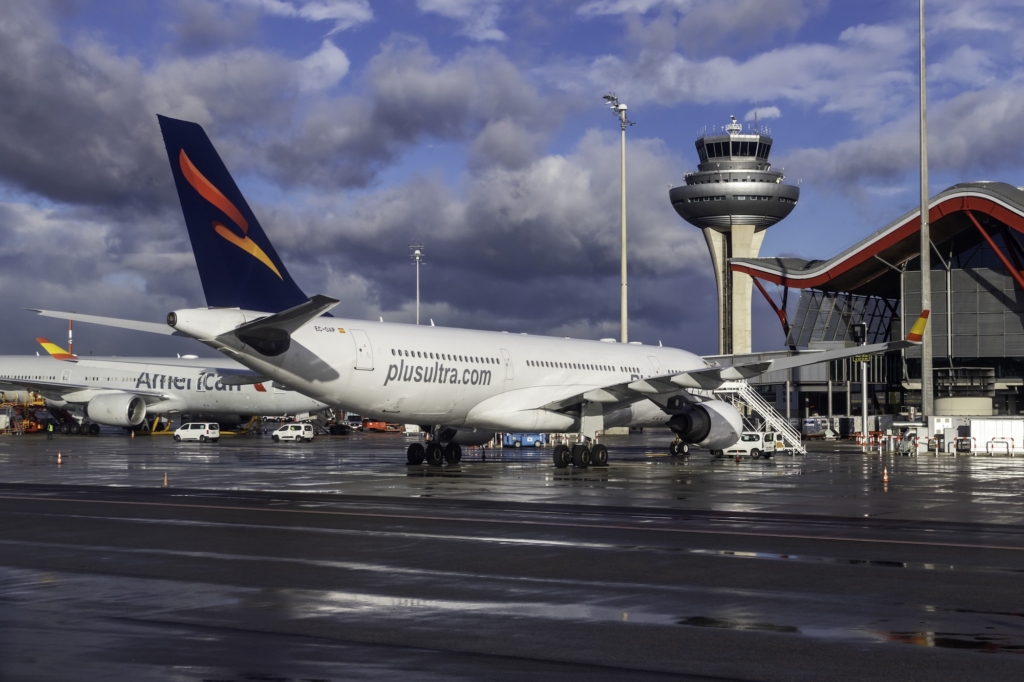
Plus Ultra began operations in 2015, promoted by Spanish executives with experience at Air Madrid. Plus Ultra is a niche long-haul operator focused on a handful of Latin American routes, as well as ACMI and charter work. It currently operates a fleet of seven Airbus A330s (five A330-200s and two A330-300s) with an average age of 18 years.
The airline never posted sustained profits and survived through repeated capital increases and loans, becoming heavily reliant on Venezuelan funding.
Over time, companies linked to Venezuelan businessmen Rodolfo José Reyes Rojas, Raif El Arigie Harbie and Roberto Roselli Mieles – notably Snip Aviation and FlySpain – came to control more than half of the share capital, keeping the airline flying but raising questions about the origin of funds and the use of structures in Panama, which Spain regards as a tax haven.
Those ownership links meant that, when the government approved the COVID bailout in 2021, critics immediately highlighted the intersections between Spanish public money, Venezuelan political-economic elites and opaque offshore vehicles.
Spanish media have also previously reported questions about whether part of the bailout was used to settle a debt with the Venezuelan state oil company PDVSA, a practice that court-appointed experts considered irregular, which has now resurfaced in light of the new case.
What Plus Ultra says of the new charges
In comments reported by the Spanish News agency EFE, Plus Ultra insisted it is “fully cooperating” with law enforcement and supplying all requested documentation related to its economic and financial activity. The airline downplayed the operation as an information-gathering exercise rather than a classic police raid.
Plus Ultra continues flying through the investigation
As of now, the airline continues to operate, with flight PUE 301 departing from Madrid for Lima on Friday at 11:33 CET.
On its website, Plus Ultra lists scheduled connections between Madrid and Latin American cities, including Lima, Peru; Bogotá and Cartagena in Colombia and Malabo in Equatorial Guinea. The airline also operates service from Madrid and Tenerife to Caracas, Venezuela, which was suspended in late November due to escalating tensions between Venezuela and the US.
The immediate next steps in the judicial process are expected to include court appearances by Martínez and Roselli before Judge Collazos, who will decide whether to release them, impose bail or precautionary measures, or order pre-trial detention.
A deeper forensic review of Plus Ultra’s banking records is expected to examine loan contracts and internal correspondence, in coordination with prosecutors and courts in France, Switzerland, and possibly the UAE, to potentially identify and charge other suspects in Spain and abroad linked to the alleged Venezuelan laundering network.
Because the case is under a secrecy order, details may emerge only gradually through court orders and media leaks. For now, all those implicated, including Plus Ultra and its executives, remain presumed innocent until a court rules otherwise.
Featured Image: Bene Riobó | Wikimedia Commons
Sign up for our newsletter and get our latest content in your inbox.


More from

October 25, 20266 min read

October 25, 20265 min read


