


Ryanair Boeing 737-800 suffers uncontained engine failure over Greece

5 min read
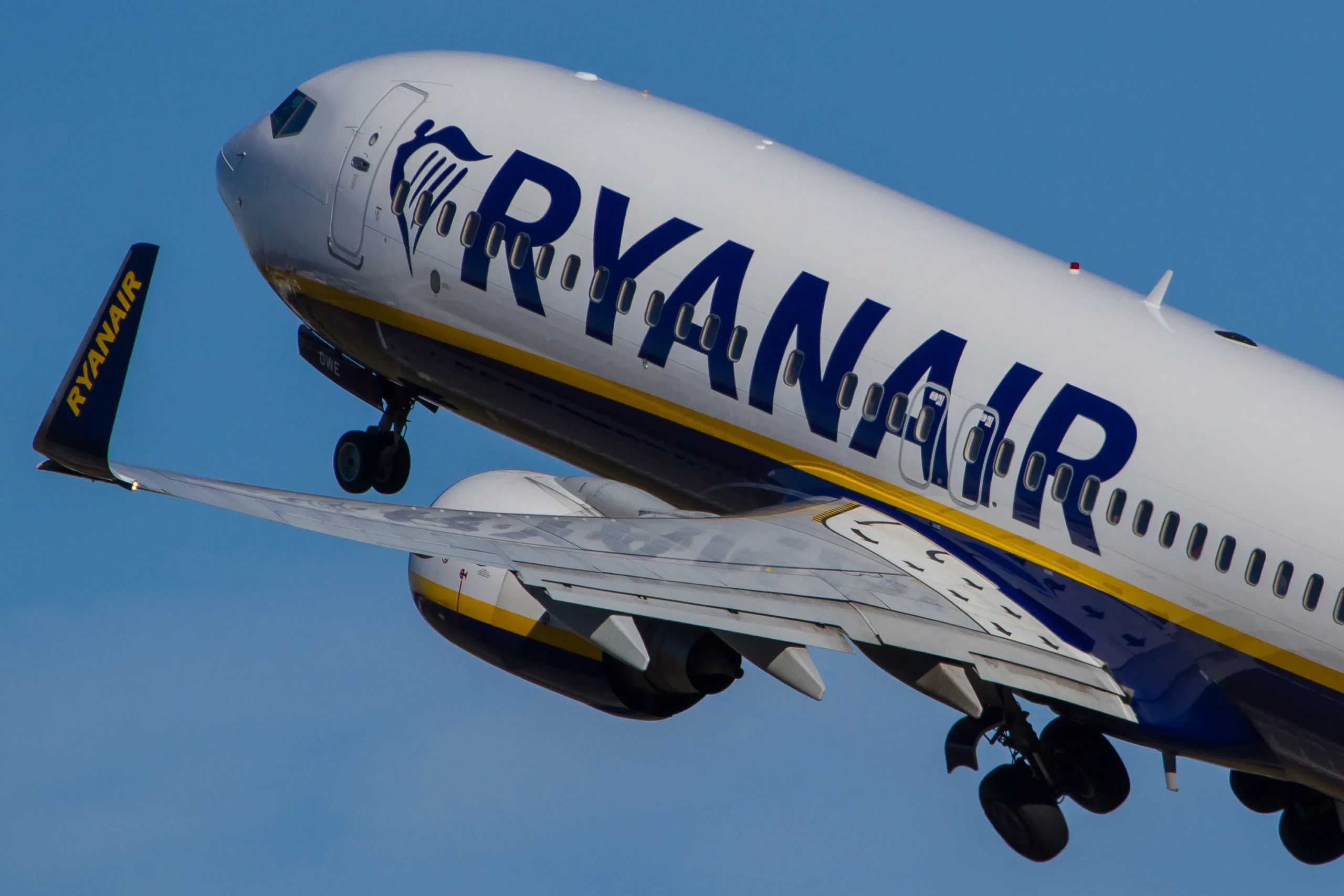
On 10 July, a Ryanair Boeing 737-800 suffered an uncontained engine failure near Thessaloniki Airport (SKG) in Greece. Fortunately, there were no major injuries caused to anyone on board, although reports indicated that one passenger was partially sucked out of the aircraft when the window he was sitting next to was damaged by fragments of the engine.
The aircraft managed to make an emergency landing back at Thessaloniki Airport, where passengers were disembarked via the aircraft stairs.
Ryanair Boeing 737-800 suffers uncontained engine failure
The incident unfolded on the morning of 10 July, as Ryanair flight FR1879 took off from Thessaloniki Airport at 06:12 local time for a two-hour flight to Memmingen Airport in Germany (FMM).
The aircraft operating the flight was an 18.3-year-old Boeing 737-800 registered as 9H-QEU and operated by Ryanair subsidiary Malta Air.
Having climbed to around 15,0000ft within ten minutes of taking off, passengers reported hearing a loud bang in the cabin. The number two CFM International CFM56 engine had suffered an uncontained engine failure, with fragments of the engine piercing the aircraft fuselage, including the shattering of a passenger window on the right-hand side of the fuselage.
The broken cabin window caused a cabin depressurisation, with reports indicating the passenger seated next to the window became partially pulled into the opening due to the pressure differential and was subsequently pulled back inside by others. It remains unclear whether the passenger was wearing his seat belt at the time of the incident.
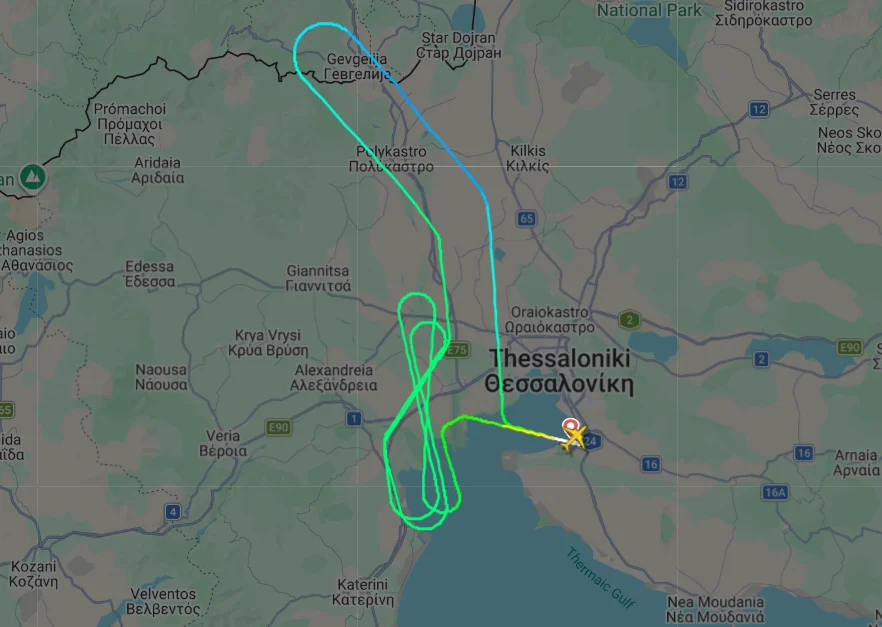
Declaring an emergency, the aircraft subsequently landed safely back at Thessaloniki Airport at 07:10 local time, an hour after departing. Passengers were disembarked using the aircraft doors and were flown to Germany later that day on a replacement aircraft.
How uncontained engine failures can occur
Images posted online indicate that a fan blade in the number two engine detached, causing major damage to the rest of the fan blades, plus damage to the engine cowl itself. It would also appear that fragments of the engine, which would have been rotating at high speed as the aircraft climbed, exited the engine structure and pierced the fuselage in several placesd, including a passenger window.
This phenomenon is known as an uncontained engine failure. While such failures are rare, they are a serious event in which parts of a jet engine break away at high speed and escape the protective engine casing.

Modern turbofan engines are designed so that if a fan blade or internal component fails, the surrounding containment ring should trap the debris.
When this protection is breached, fragments can strike the aircraft’s fuselage, wings, fuel tanks, hydraulic systems, or windows, creating hazards beyond the loss of engine power itself.
The most common causes of uncontained failures include metal fatigue, manufacturing defects, foreign object damage, inadequate maintenance, or the failure of rotating components such as fan blades, compressor discs, or turbine discs.
Because these parts rotate at thousands of revolutions per minute, they possess enormous kinetic energy. If one breaks apart, fragments can travel at extremely high speeds, making them capable of penetrating aircraft structures.
WATCH: Video showing the damaged engine that caused debris to smash through a Ryanair 737 cabin window earlier today. https://t.co/oWAPFHOt76 pic.twitter.com/ZSOAu0oOE2
— Breaking Aviation News & Videos (@aviationbrk) July 10, 2026
Despite their dramatic nature, uncontained engine failures are exceptionally uncommon due to strict certification standards and maintenance requirements.
Aircraft engines undergo extensive testing, including blade-off tests in which manufacturers deliberately release a fan blade to demonstrate that the engine casing can safely contain the debris.
Airlines also perform regular inspections using advanced techniques such as ultrasonic and eddy-current testing to detect tiny cracks before they grow into dangerous failures.
A brief history of notable uncontained engine failures
Several notable accidents following uncontained engine failures have shaped aviation safety. In 1989, United Airlines Flight 232, operated by a McDonnell Douglas DC-10, suffered an uncontained failure of its tail-mounted engine caused by a fractured titanium fan disc.
Debris severed all three hydraulic systems, leaving the crew with almost no flight controls. Although the aircraft crashed during landing, the pilots’ exceptional skill allowed many people to survive.
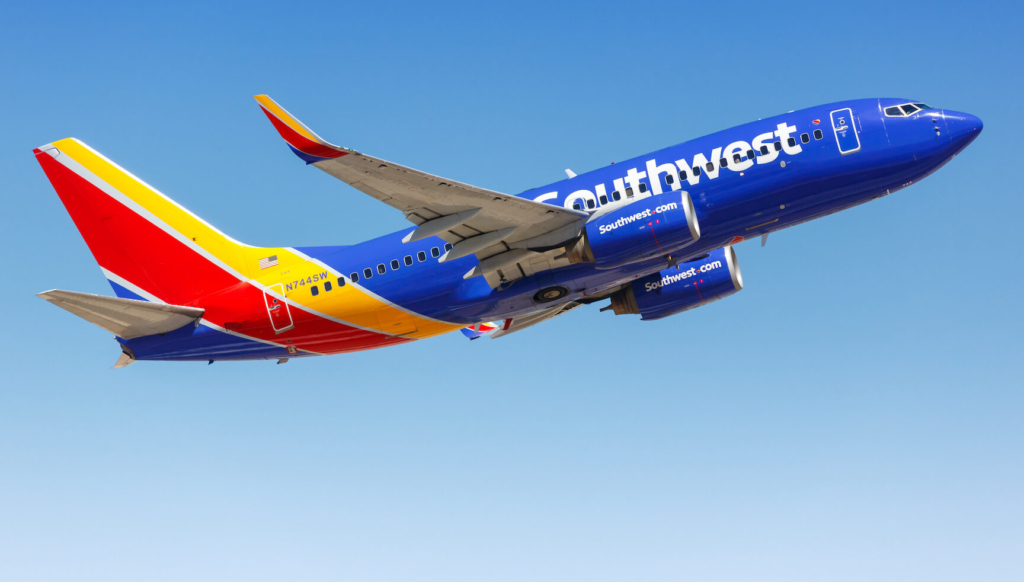
More recently, in 2018, a Southwest Airlines Boeing 737-700 experienced a very similar incident to that on the Ryanair. The aircraft suffered an uncontained fan blade failure that shattered a cabin window.
The resulting rapid decompression led to the death of one passenger who was sucked out of the aircraft. Like the recent Ryanair incident, the Southwest crew safely landed the aircraft.
Another high-profile incident occurred in 2021 when United Airlines Flight 328, operated by a Boeing 777-200, suffered an uncontained fan blade failure shortly after take-off from Denver. Large pieces of the engine fell onto residential areas, although the aircraft landed safely without any injuries to those on board.
Measures have been taken to reduce uncontained engine failures
Investigations into these events have led to improvements in inspection procedures, engine design, and regulatory oversight. Manufacturers have strengthened fan blade inspection techniques, revised maintenance intervals, and enhanced engine monitoring systems that detect unusual vibration or temperature changes.
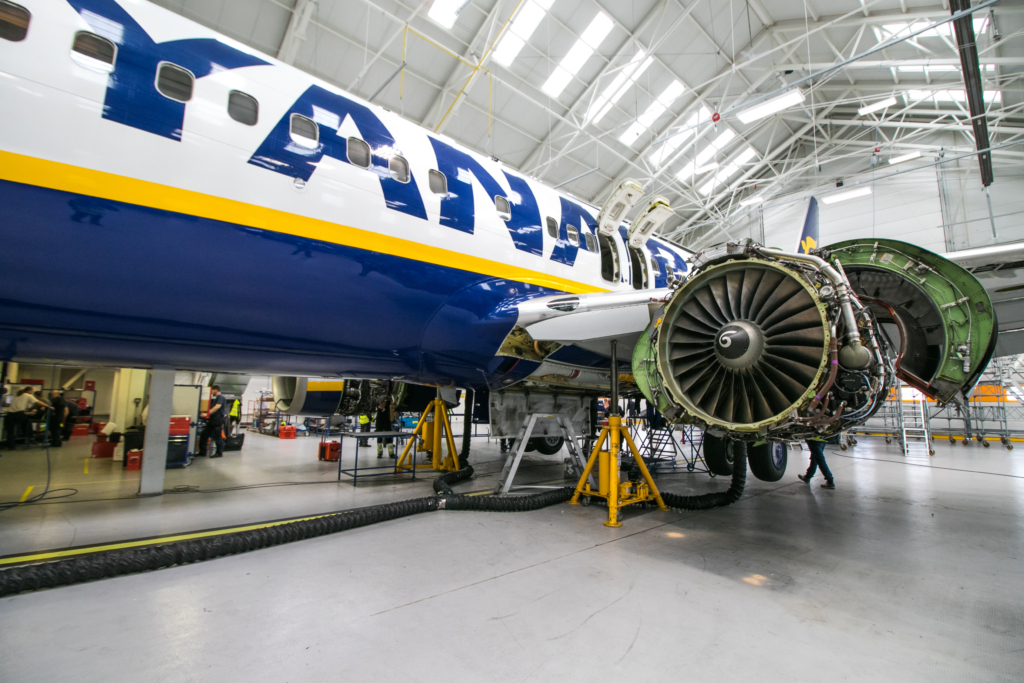
Overall, uncontained engine failures remain among the most serious mechanical failures in aviation, but they are also among the rarest. Continuous advances in engineering, materials science, maintenance practices, and pilot training have significantly reduced their likelihood and improved the industry’s ability to respond safely should one occur.
As of the time of writing, the Ryanair aircraft remains on the ground at Thessaloniki Airport and, apart from a new engine, it will require extensive repairs to the aircraft fuselage skin before it can be cleared to fly again.
Featured image: Photofex / stock.adobe.com
Sign up for our newsletter and get our latest content in your inbox.


More from

October 4, 20264 min read

October 3, 20267 min read


